
Setting up a home gym in a Singapore apartment requires balancing personal fitness goals with the realities of high-density urban living. Whether you reside in a cozy HDB flat or a modern condominium, space is at a premium, and neighbors are often only a wall or floor away. When you introduce a heavy piece of cardio equipment like an exercise bike, a dedicated exercise bike mat becomes an indispensable accessory. It serves as a critical barrier that protects your expensive flooring, dampens disruptive vibrations, and ensures your workout sessions do not disturb your household or the neighbors living directly below you.
Choosing the right mat involves understanding your specific flooring, the mechanics of your bike, and the unique environmental challenges of a tropical climate. A generic rug or a spare yoga mat cannot provide the specialized support and protection required for heavy, dynamic fitness equipment. By evaluating key material properties, sizing your space accurately, and establishing a consistent maintenance routine, you can create a safe, stable, and quiet workout environment that fits seamlessly into your home layout.
Protecting Apartment Floors and Managing Noise
Singapore apartments feature a variety of flooring materials, each with its own set of vulnerabilities. Homogeneous tiles, luxury vinyl tiles (LVT), engineered timber, and natural parquet are the most common surfaces found in local homes. When an exercise bike is loaded with the weight of the machine and the rider, its small metal or hard plastic leveling feet exert immense point pressure on the floor. Over time, this concentrated force can crack grout lines, dent vinyl planks, or leave permanent scratches and gouges on delicate wood surfaces.
Products mentioned in this guide
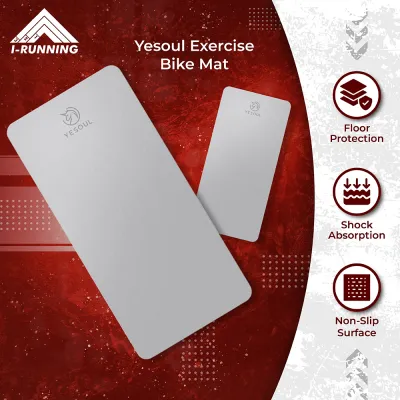
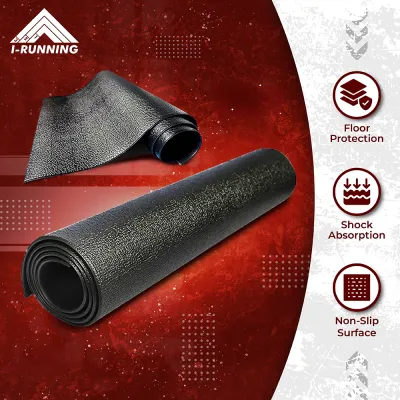
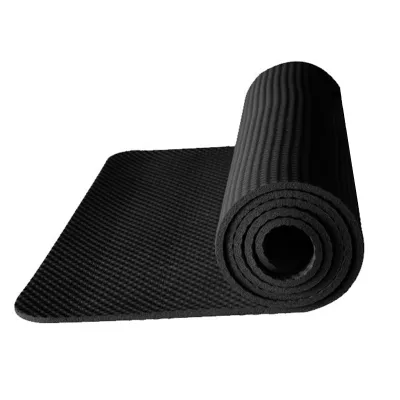
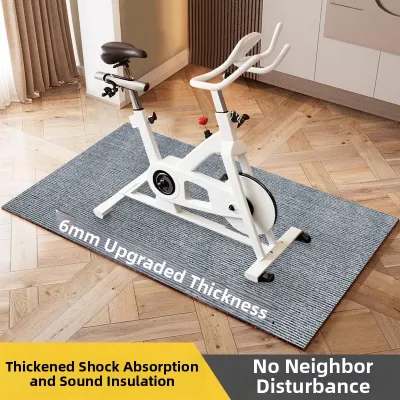
![[SG STOCK]2021 Treadmill Floor Mat High Density Anti Slip Treadmill Exercise Bike Trainer Fitness Equipment Mat](https://img.lazcdn.com/g/p/5c625ccb198ff1ecd86b05111f6e4ae8.jpg_400x400q80.jpg_.webp)
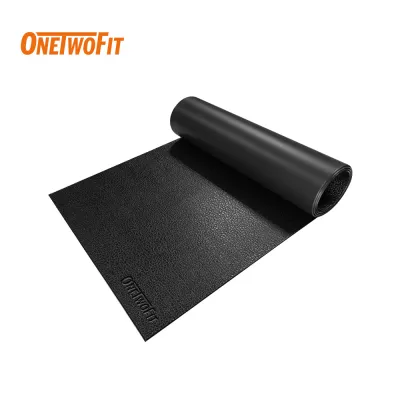
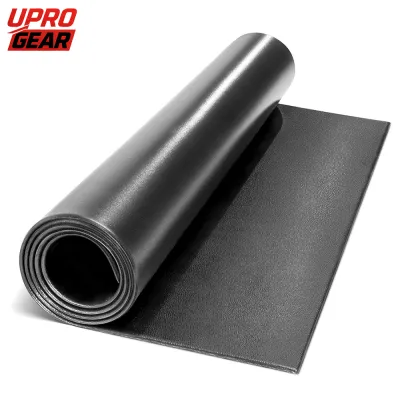
Prices are valid at publication and may change. Please refer to the product page for the latest price.
Sweat damage poses another significant threat to apartment flooring. During an intense indoor cycling session, sweat drips directly onto the floor beneath the bike. Sweat contains salt and acids that can be highly corrosive. On parquet or engineered wood, moisture can seep into the seams between planks, leading to wood swelling, warping, discoloration, and the growth of mold. On tiled floors, persistent moisture can degrade grout and create stubborn stains that are difficult to remove without professional restoration.
Beyond physical floor protection, managing acoustic transfer is a primary concern in high-rise living. The concrete floor slabs of local apartments are highly efficient conductors of structure-borne noise. The high-speed rotation of a magnetic flywheel, the hum of a drive belt, and the physical rocking motion of a rider during a sprint all generate low-frequency vibrations. These vibrations travel down through the bike’s frame and stabilizers, penetrating the concrete slab and radiating into the apartment below as a persistent, low-pitched drone.
A dedicated, high-density equipment mat is specifically engineered to address these challenges. Unlike soft, low-density yoga mats or decorative area rugs, an equipment mat utilizes dense, compressed materials designed to absorb and disperse heavy loads. This density prevents the bike’s feet from bottoming out and contacting the hard floor, while the specialized material structure dampens high-frequency vibrations before they can transition into structure-borne noise. Investing in a proper mat is the most effective way to maintain a peaceful relationship with your downstairs neighbors.
Essential Features to Evaluate Before You Buy
When browsing online marketplaces or visiting local fitness retailers, evaluating the material density and thickness of a mat is your first priority. The ideal thickness for an exercise bike mat typically ranges between 4mm and 6mm. While it might seem intuitive to choose the thickest mat available for maximum cushioning, overly thick or soft mats (such as those made from cheap EVA foam) compromise the stability of the bike. A soft mat allows the bike to sway and rock during out-of-the-saddle climbs, which reduces your power transfer and increases the risk of the machine tipping over.

Surface texture and moisture resistance are equally critical for safety and hygiene. Look for mats featuring a closed-cell construction, which prevents liquids from penetrating the surface. A closed-cell mat ensures that sweat pools on top where it can be easily wiped away, rather than soaking into the core of the mat and breeding bacteria. Additionally, a textured surface—such as a raised pebble or diamond-plate pattern—provides essential traction. This texture keeps the bike’s stabilizers firmly in place and prevents your cycling shoes from slipping when you mount or dismount.
Edge design is a frequently overlooked safety feature, especially in multi-use rooms where space is shared with daily household traffic. Mats with straight, vertical edges can easily curl over time, creating a significant trip hazard in tight spaces. Opt for mats designed with beveled, tapered edges that lie completely flush against the floor. This design allows robot vacuums to transition smoothly over the mat and minimizes the risk of catching your foot when walking past the exercise area.
Finally, consider the odor and off-gassing properties of the mat material. Many synthetic rubber and low-grade PVC mats release strong chemical odors when first unpacked. In a typical air-conditioned Singapore bedroom or living room with limited natural ventilation, these fumes can quickly become overwhelming and irritate your respiratory system. Prioritize mats that specify low-VOC emissions or phthalate-free compositions. Regardless of the material, plan to air out any newly unboxed mat in a well-ventilated service yard or sheltered balcony for a few days before placing it in your main living space.
Matching Mat Formats to Your Bike and Room Layout
Standard rectangular mats are the most common format available and are highly suited for traditional upright stationary bikes and indoor spin bikes. These mats typically measure around 120cm to 150cm in length and 60cm to 75cm in width, mirroring the compact, linear footprint of standard fitness equipment. A rectangular mat provides a clean, self-contained boundary that easily aligns with walls, bed frames, or TV consoles, making it simple to integrate your workout zone into an existing room layout.
For riders using smart trainers paired with road bikes, or those utilizing recumbent bikes, extended or modular formats are often necessary. A road bike mounted on a smart trainer has a significantly longer footprint than a dedicated spin bike, often requiring a mat length of 180cm or more to catch sweat dripping from both the handlebars and the rear drive unit. If you use additional accessories, such as a front-wheel riser block, a rocker plate, or a dedicated training desk, modular interlocking rubber tiles allow you to customize the shape and size of your protective barrier to match your exact setup.
When selecting a mat, you must also weigh the trade-offs between rollable and foldable designs. Rollable mats, typically made of high-density PVC or natural rubber, offer a completely seamless surface that lies flat once unrolled, ensuring maximum stability under the bike. However, they can be bulky to store and may retain a curl at the ends if kept rolled up for long periods. Foldable mats are highly convenient for dual-purpose spaces where the bike must be put away after use, but the crease lines can create minor structural weak points and may unevenly support the bike’s stabilizers if the floor underneath is not perfectly level.
How to Measure and Fit the Mat to Your Space
To ensure a perfect fit, never rely solely on the generic dimensions listed in your exercise bike’s user manual. Begin by physically measuring the maximum footprint of your assembled bike. Use a tape measure to record the distance between the outermost edges of the front and rear stabilizers, as well as the total width of the widest stabilizer bar. This gives you the absolute minimum dimensions required for floor protection, but you will need to add a buffer to accommodate real-world usage.
Your measurements must account for dynamic clearance and user movement. When riding, your body shifts, and your knees and elbows may extend slightly beyond the physical frame of the bike. Furthermore, the handlebars often overhang the front stabilizer, and the pedals extend laterally beyond the sides of the frame. To prevent sweat from dripping onto bare flooring and to ensure you have adequate room to move, select a mat that extends at least 10cm to 15cm beyond the bike’s physical footprint on all four sides.
Next, evaluate the mounting and dismounting zone. You need a stable, non-slip surface to step on when getting on and off the bike, especially if you wear stiff cycling shoes with plastic or metal cleats. Ensure your chosen mat is wide enough to provide a safe landing zone for your feet on at least one side of the bike. If your workout space is tight, verify that the edges of the mat do not obstruct the swing paths of bedroom doors, wardrobe doors, or main walkways, as a misplaced mat can quickly become a daily household nuisance.
Cleaning and Maintenance for Humid Climates
Singapore’s tropical climate, characterized by high humidity and warm temperatures, accelerates the growth of mold, mildew, and bacteria on damp surfaces. Sweat left on an exercise bike mat will not evaporate quickly in these conditions; instead, it will pool and create persistent odors. Establish a daily cleaning routine by wiping down the mat immediately after every ride. Use a clean microfiber cloth dampened with a mild solution of water and a few drops of gentle dish soap, or a specialized, non-abrasive mat spray.
Avoid using harsh household chemicals, bleach, or high-concentration alcohol sprays to clean your mat. These substances can dry out and degrade synthetic rubber and PVC, causing the material to become brittle, crack, or lose its non-slip texture over time. Once a week, perform a deeper clean and allow the mat to air dry completely before placing the bike back on top. If your workout room is air-conditioned, running a dehumidifier can help speed up drying times and keep moisture levels under control.
Regularly inspect the floor directly beneath the mat. Condensation and trapped moisture can accumulate between the underside of the mat and the floor surface, particularly on cold homogeneous tiles in air-conditioned rooms. This trapped moisture can damage wood adhesives or cause mold to develop unseen. Lift the mat at least once a month to inspect, clean, and dry both the underside of the mat and the subfloor. If you notice permanent deep indentations that do not bounce back, cracking material, or edges that remain curled up despite flattening efforts, it is time to replace the mat to ensure continued safety and floor protection.
Frequently Asked Questions (FAQ)
Can I use a thick yoga mat instead of a dedicated bike mat?
Using a thick yoga mat under an exercise bike is not recommended. Yoga mats are designed to cushion human joints and are made from soft, low-density materials like TPE or open-cell foam. Under the heavy, concentrated weight of an exercise bike, a yoga mat will compress completely, offering virtually no protection for your floor or dampening for vibrations. Furthermore, the soft, squishy texture of a yoga mat compromises the stability of the bike, causing it to wobble during active riding, which can damage the machine’s frame and pose a safety risk to the rider.
Will a bike mat completely eliminate noise for downstairs neighbors?
While a high-density exercise bike mat is highly effective at dampening structure-borne vibrations, it will not completely eliminate all noise. A mat specifically targets the low-frequency vibrations that travel through the floor slab. It cannot stop airborne sounds, such as the whirring of a chain drive, the hum of a magnetic flywheel, or your own heavy breathing. To minimize noise transfer further, combine a high-quality mat with regular bike maintenance (such as lubricating the drivetrain) and consider placing the bike in a carpeted room or using additional acoustic wall panels.
How do I prevent the mat from sliding on smooth tiles?
If your exercise bike mat shifts or slides on smooth homogeneous tiles during high-intensity rides, start by thoroughly cleaning both the underside of the mat and the tiled floor to remove any dust, hair, or oil buildup. Ensure both surfaces are completely dry before repositioning the mat. If sliding persists, look for mats that feature a high-traction, rubberized underside specifically designed for hard floors. Alternatively, you can place thin, double-sided non-slip rug grippers designed for hard surfaces under the corners of the mat to secure it in place without damaging your tiles.
Community discussion
Share your experience or ask a question. Comments are reviewed before publication.