
Selecting the ideal exercise foam pad requires balancing two competing physical needs: cushioning for joint protection and stability for safe force transfer. Thicker pads generally offer more shock absorption but can compromise your balance, while higher-density pads provide a solid foundation but less impact protection. To find the right balance, you must evaluate thickness and density conditionally based on the specific movements, impact levels, and stability requirements of your primary workout routines.
In compact urban apartments where hard tiled or vinyl flooring is common, a high-quality foam pad is essential for protecting your joints and reducing noise. However, a pad that is perfect for floor-based core work can be highly unstable for standing exercises or heavy lifting. By understanding how thickness and density interact, you can select a specification that matches your fitness goals and keeps your workouts safe and effective.
Understanding the Trade-Off: Thickness vs. Density
To make an informed purchase, you must first understand that thickness and density are two distinct physical properties that affect your workout experience in different ways. Thickness refers to the physical height of the pad, typically measured in millimeters or inches. This dimension determines the distance between your body and the hard floor, serving as the primary barrier for shock absorption and joint protection. A thicker pad provides more material to compress, which is highly beneficial when you are kneeling, lying down, or performing high-impact landing movements.
Products mentioned in this guide

![[BEST SELLER]Balance Foam Pad Yoga Mat Exercise Non-slip Waterproof Soft for Fitness Training](https://img.lazcdn.com/g/p/ecdbe1ded9c6362a36a977bc38118d05.jpg_400x400q80.jpg_.webp)
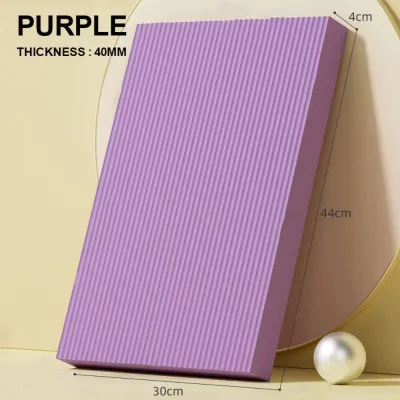
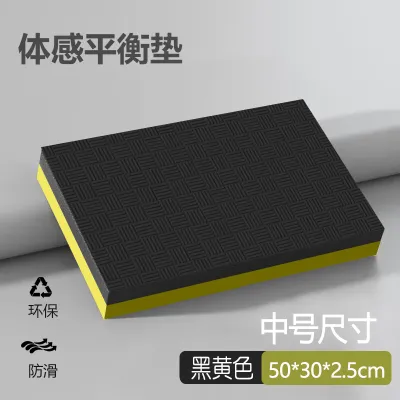
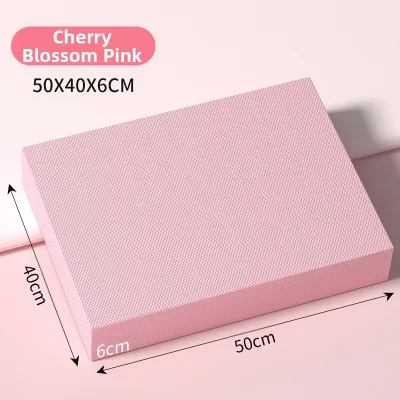
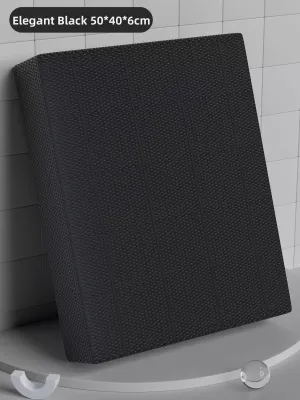
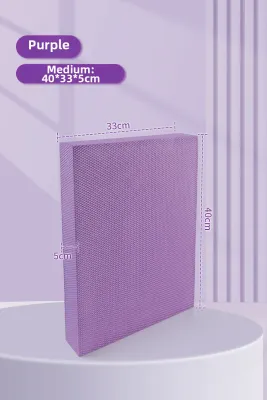

Prices are valid at publication and may change. Please refer to the product page for the latest price.
Density, on the other hand, refers to the mass of the foam material per unit volume, which dictates how tightly packed the foam cells are. This property determines the pad’s structural support, durability, compression resistance, and overall stability. A high-density pad resists collapsing under your body weight, ensuring that you do not sink completely through the foam to the hard floor beneath. It also provides a firmer, more predictable surface that helps you maintain balance during standing or single-leg movements.
The practical trade-off between these two properties is critical to understand. If you choose a very thick pad with low density, your body will sink unevenly into the foam, causing your ankles, wrists, or spine to lose alignment. Conversely, a thin pad with extremely high density may feel too hard, offering insufficient cushioning for sensitive joints during floor exercises. Balancing these two specifications is the key to finding a pad that supports your specific movement patterns without compromising your safety.
Matching Pad Specifications to Your Workout Type
Aligning your pad’s specifications with the physical demands of your routine is the most reliable way to ensure comfort and stability. Workouts can generally be categorized by their primary physical demands, which typically fall into either impact absorption or ground stability. Because different exercises place unique stresses on your body, a single pad may not be suitable for every routine in your fitness regimen.

When selecting a pad, you should evaluate whether your workouts consist primarily of dynamic, high-impact movements, static floor work, or heavy standing lifts. If your routine is highly varied, you may need to consider a mid-range compromise specification or even invest in multiple specialized pads. This approach ensures that you always have the correct level of support and stability for each specific exercise, reducing the risk of joint strain or balance-related slips.
High-Impact and Dynamic Movements
For exercises involving jumping, plyometrics, or high-impact cardio, your primary priority is shock absorption to protect your joints from repetitive impact forces. Every time you land from a jump, your knees, ankles, and hips absorb several times your body weight in force. A pad designed for these movements must have sufficient thickness to cushion these landings and reduce the cumulative stress on your skeletal system.
However, thickness alone is not enough; the foam material must also resist bottoming out under dynamic, heavy loads. If the foam is too soft, your feet will push straight through to the hard floor, rendering the pad ineffective. You should look for a medium-to-high density foam that offers a controlled rebound, allowing you to push off quickly for the next movement without feeling stuck in the material.
Stability is another critical factor during rapid lateral movements or quick direction changes. A pad that is too thick and soft can cause your ankles to roll as you land or push off sideways. To verify suitability, check the pad’s stability by performing light lateral steps on it before committing to full-intensity workouts. If the surface feels mushy or shifts underfoot, it may lack the density required for safe dynamic training.
Floor-Based Core and Mobility Work
If your routine consists of Pilates, yoga, stretching, or abdominal exercises, your focus shifts toward static comfort and joint protection. During these movements, your body weight is often concentrated on small, bony areas such as your knees, elbows, hips, or spine. A hard floor can cause significant discomfort or pain in these contact points, which can distract you from maintaining proper form.
For floor-based work, a thicker pad with medium density is often highly beneficial. This combination provides a plush, comfortable barrier that conforms slightly to your body shape, relieving pressure on sensitive areas. However, you must still avoid pads that are so soft that you sink completely to the floor, as this can misalign your wrists during planks or your spine during core roll-ups.
Additionally, surface texture and grip are essential secondary checks for floor-based mobility work. Because you will often hold poses for extended periods, the pad must grip the floor securely to prevent sliding. Look for textured surfaces on both the top and bottom of the pad to ensure a stable connection, especially if you tend to sweat during your sessions.
Heavy Lifting and Standing Stability
For weightlifting, kettlebell training, or standing balance exercises, force transfer and grounding are your absolute priorities. When you perform a squat, deadlift, or overhead press, your feet must push against a completely stable, non-compressible surface to transfer force efficiently and safely. Any instability at the base of support can travel up your kinetic chain, leading to poor form or acute injury.
For these activities, you should prioritize high-density, low-thickness pads or mats. A thin, dense surface protects your floor from dropped weights while ensuring your ankles remain stable and aligned. You should strictly avoid using thick, low-density foam pads for heavy lifting, as the soft material will compress unevenly under the load, creating a highly unstable platform that increases the risk of joint strain or loss of balance.
Before using a pad for standing strength work, verify its compression rating and structural integrity under static loads. A suitable lifting mat should feel firm to the touch and show minimal indentation when you stand on it with weights. If you can easily pinch the foam together with your fingers, the material is too soft for heavy lifting and should be reserved for floor stretching instead.
How to Verify Product Specifications Before Buying
When shopping for an exercise foam pad, it is easy to get lost in vague marketing terms like “extra thick,” “ultra-dense,” or “professional grade.” To make an objective decision, you should look for exact numerical measurements rather than relying on promotional buzzwords. Reliable manufacturers typically provide thickness measurements in millimeters or inches, allowing you to compare options accurately.
The material composition of the pad is another crucial factor to verify, as different materials offer distinct density and durability characteristics. Common materials include Ethylene-Vinyl Acetate (EVA), Thermoplastic Elastomer (TPE), Nitrile Butadiene Rubber (NBR), and Polyurethane (PU). NBR is often used for thicker, softer pads, while TPE and high-density EVA are common in firmer, more stable mats. If the specific density metrics are not listed on the product page, consider contacting the manufacturer directly to ask for the material’s density rating or shore hardness.
When comparing options within your budget, which might range from S$20 to S$80 or more in Singapore, prioritize brands that disclose exact specifications and offer clear return policies. This transparency allows you to inspect the pad in person and test its real-world firmness before committing to long-term use. If a product listing lacks basic technical details and relies solely on hype, it is best to look for an alternative that provides verifiable specifications.
Decision Framework: Which Specification Fits Your Routine?
To finalize your purchase decision, you can use a simple, condition-based framework to match your primary workout routine with the correct pad specifications.
Choose a thicker (typically 10mm to 15mm) and lower-to-medium density pad if your routine is strictly focused on joint comfort, low-impact floor work, light stretching, or Pilates. This setup provides the necessary cushioning to protect your knees, hips, and spine from hard surfaces during static poses and slow, controlled movements.
Choose a thinner (typically 4mm to 8mm) and high-density pad if your routine involves standing exercises, heavy lifting, kettlebell swings, or balance-heavy movements. This specification ensures a solid, non-compressible connection to the ground, minimizing ankle instability and maximizing force transfer during strength training.
Verify first and consider a compromise if you practice mixed-modality workouts that combine both floor work and standing movements. In this scenario, a medium-thickness (around 8mm to 10mm) pad with high density can offer a safe middle ground. Alternatively, you might consider a dual-mat setup, using a thin, dense mat as your primary base and layering a smaller, thicker foam pad specifically under your knees or elbows when performing floor-based exercises.
Frequently Asked Questions (FAQ)
Can I use a thick foam pad for weightlifting if I place a rigid board underneath?
No, you should avoid using makeshift modifications like placing a rigid board over a thick, soft foam pad for heavy lifting. This setup introduces significant safety risks, as the layers can easily shift or slide against each other during dynamic movements or heavy loads. Additionally, the uneven compression of the underlying foam can cause the board to tilt, leading to sudden balance loss, joint strain, or tripping hazards. For safe weightlifting, always use a purpose-built, high-density rubber mat or perform your lifts directly on a solid, non-slip floor.
How do I clean and maintain my foam pad without degrading the material?
To prolong the lifespan and maintain the hygiene of your foam pad, always check the manufacturer’s care label before applying any cleaning agents. Generally, you should wipe the pad down after each use with a damp cloth and mild, diluted soap. Avoid using harsh chemical cleaners, bleach, or abrasive scrubbing brushes, as these can break down the cellular structure of the foam, causing it to lose its density and cushioning properties. After cleaning, allow the pad to air dry completely in a shaded, well-ventilated area, keeping it out of direct sunlight to prevent the material from cracking or warping.
Community discussion
Share your experience or ask a question. Comments are reviewed before publication.