
Fitting a treadmill into a typical Housing & Development Board (HDB) flat requires a careful balance of fitness utility and spatial efficiency. Because HDB bedrooms and living rooms are highly optimized for space, a standard commercial treadmill is rarely practical. Instead, a foldable treadmill offers a flexible solution that can be deployed for a workout and tucked away to preserve precious floor area. Finding the right model involves analyzing physical dimensions, storage mechanisms, and structural safety to ensure the equipment fits both your home layout and your daily routine.
Measuring Your HDB Space and Access Routes
Before browsing online marketplaces or visiting showrooms, you must establish the exact physical limits of your home. Begin by measuring the dedicated floor area where you plan to use the treadmill. Keep in mind that this space must accommodate not only the machine itself but also the necessary safety buffers around it. Use a reliable measuring tape to map out the length and width on your floor, marking the boundaries with masking tape to visualize how the machine will impact room traffic.
Beyond the final workout spot, you must map the entire delivery and transit route within your HDB block and flat. Measure the width of your main gate, front door, and any hallway corners or bedroom doors the packaged box must pass through. Standard HDB bedroom doors typically measure between 80 to 85 centimeters in width, but older flats or modified door frames can be significantly narrower. Additionally, verify the dimensions of your estate’s passenger lift; a packaged treadmill is often bulky and heavy, and if it cannot fit inside the lift cabin, delivery teams may face severe transit limitations.
Products mentioned in this guide
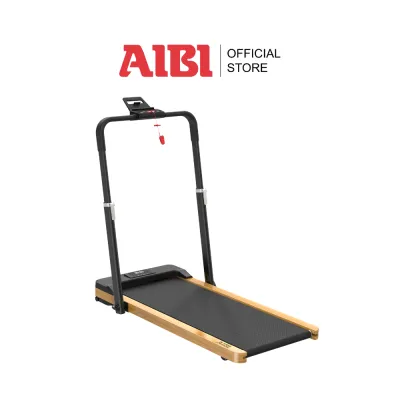
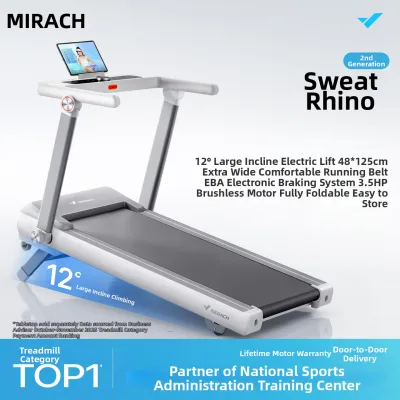
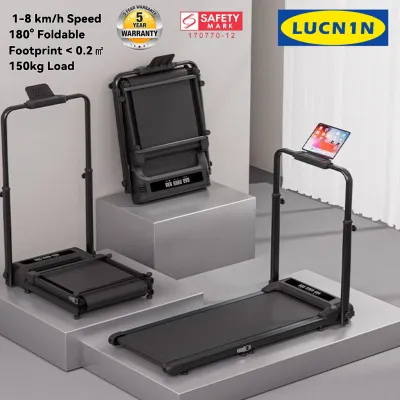

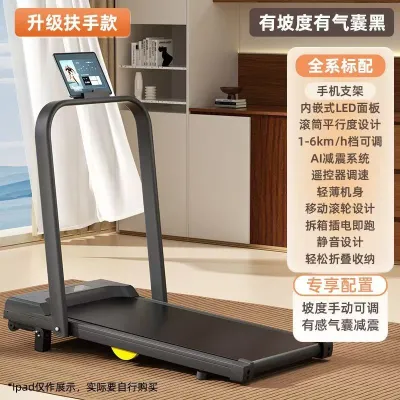
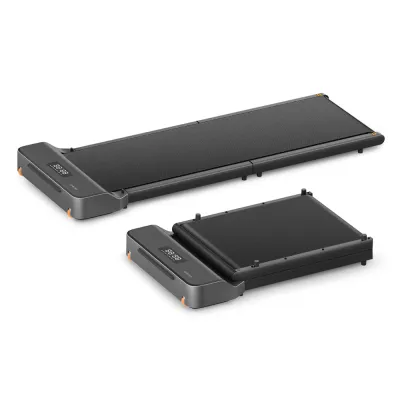
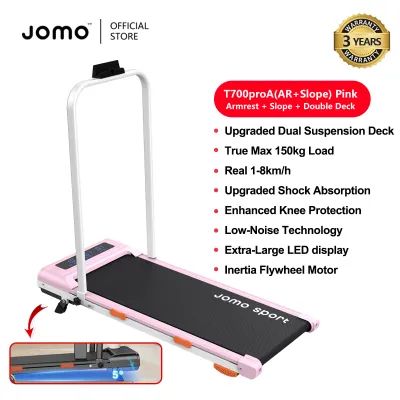
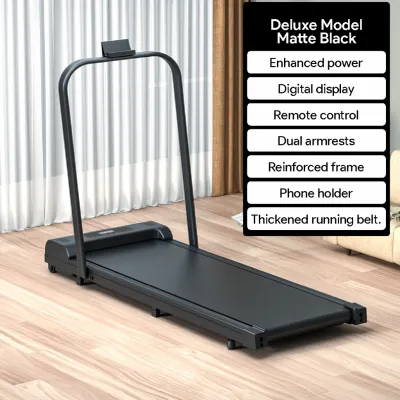
Prices are valid at publication and may change. Please refer to the product page for the latest price.
Ceiling height is another critical dimension, especially if you are considering vertical storage or if you are a taller runner. Standard HDB ceilings generally hover around 2.6 meters. When you run, your body rises several centimeters above the treadmill deck. You must calculate your height plus the deck’s step-up height to ensure ample head clearance, keeping a safe distance from ceiling fans, light fixtures, or low-hanging beams.
Comparing Unfolded and Folded Treadmill Footprints
When evaluating treadmill specifications, it is vital to distinguish between the running surface and the overall machine footprint. The running surface—the actual moving belt—is always smaller than the machine’s frame. For example, a belt measuring 120 centimeters in length and 40 centimeters in width will require a frame that is at least 150 centimeters long and 70 centimeters wide to accommodate the motor housing, side rails, and console uprights. Always use the total frame dimensions, rather than the belt size, when planning your layout.

Your physical size and running style should dictate the minimum belt dimensions you require. A casual walker or a user with a shorter stride can comfortably use a compact belt of 100 centimeters by 40 centimeters. However, if you plan to run at higher speeds or if you are taller, you will need a wider and longer belt—ideally at least 120 centimeters by 45 centimeters—to prevent your feet from accidentally stepping off the side rails. Matching the belt size to your specific physical needs is a crucial safety step that directly influences how much floor space you must allocate.
Folded dimensions vary significantly depending on the folding style of the machine. Flat-folding treadmills fold the console and handrails down parallel to the running deck, resulting in a low-profile shape that typically measures under 25 centimeters in height. This style is highly suited for sliding under low furniture or standing flat against a wall. Conversely, traditional folding treadmills lift the deck upward at an angle toward the console. While this reduces the horizontal length by about half, it increases the depth and height of the folded unit, creating a triangular footprint that requires a dedicated corner.
The physical weight of the machine directly dictates how easily you can transition it from storage to active use. Foldable treadmills can range from a manageable 30 kilograms to a heavy 80 kilograms or more. To ensure daily setup is feasible, verify that the unit features built-in transport wheels. Look for models with multi-directional or four-wheel systems, which allow you to roll the machine sideways into tight corners, rather than basic two-wheel designs that require you to tilt the entire weight of the machine before moving it.
Selecting Folding Mechanisms for Daily Storage
The mechanism used to fold and unfold your treadmill determines how safe and convenient the machine is to use on a daily basis. Manual lift designs require you to physically lift the weight of the running deck until it clicks into a locked position. If you have back concerns or limited upper-body strength, lifting a heavy deck daily can lead to strain. For these situations, a hydraulic assist or “soft-drop” system is highly recommended. These systems use pressurized shocks to help lift the deck with minimal effort and slowly lower it to the floor automatically when released, preventing sudden drops.
If you plan to store your treadmill vertically against a wall or inside a household shelter, you must verify that the machine is explicitly rated by the manufacturer for upright storage. Never lean a standard treadmill vertically unless it features built-in, rubberized standing feet or a dedicated wall-mounting bracket designed for this purpose. An unrated machine stored vertically is highly unstable and poses a severe tipping hazard, especially in households with children, pets, or high foot traffic.
Safety locks are non-negotiable features for any foldable exercise equipment. Ensure the treadmill has a physical locking pin or an automatic safety latch that engages securely when the machine is folded. This latch prevents the deck from accidentally dropping down if bumped. Before purchasing, check the manufacturer’s product manual to confirm how the locking mechanism operates and ensure it cannot be easily disengaged by curious children.
Allocating Safety Clearances and Floor Protection
Operating a treadmill safely in a compact HDB flat requires setting aside adequate clearance zones. Manufacturers generally recommend leaving at least 1 to 2 meters of clear space behind the rear of the treadmill and at least 0.5 meters on both sides. This rear clearance is a critical safety buffer; if you lose your balance or slip while running, the moving belt will rapidly push you backward, and a lack of clearance can cause you to become trapped between the moving belt and a solid wall.
Floor protection and weight distribution are equally important when placing heavy fitness equipment on residential flooring. While HDB floor slabs are engineered to support standard household loads, the concentrated weight of a treadmill combined with the dynamic impact of a running user can stress delicate flooring materials. Placing a heavy-duty, high-density rubber equipment mat under the treadmill is highly recommended. This mat helps distribute the machine’s weight, preventing permanent indentations, scratches, or scuffs on vinyl, laminate, or polished tile surfaces.
Living in a multi-story HDB flat means that structural noise and vibrations can easily transfer to your neighbors downstairs. The impact of your feet hitting the treadmill deck creates low-frequency vibrations that travel through the concrete floor slab. To maintain good neighborly relations, look for treadmills equipped with built-in deck cushioning or shock-absorption systems. Combining these built-in features with a thick rubber isolation mat will significantly dampen the sound and vibration transfer, allowing you to exercise without causing a disturbance.
Before starting any workout session, always perform a quick safety check. Ensure the safety clip and emergency stop key are fully functional and attached to your clothing. This key is designed to immediately cut power to the motor and stop the belt if you fall or drift too far back. Equipment and safety features are vital, but they cannot replace proper training, situational awareness, and knowing your physical limits.
Frequently Asked Questions (FAQ)
Can I store a foldable treadmill under my bed?
Yes, but this depends entirely on matching the treadmill’s folded height with your bed frame’s clearance. Measure the vertical gap between your floor and the lowest point of your bed frame, taking into account any center support legs. You will need a flat-folding treadmill model, which typically folds down to a height of 15 to 20 centimeters. Additionally, verify that the treadmill’s transport wheels are made of a non-marking material like polyurethane to prevent scratching your bedroom floor as you slide the heavy unit in and out.
Do I need an equipment mat for HDB flooring?
Using an equipment mat is highly recommended for any treadmill setup in an HDB flat. The mat serves multiple critical functions: it dampens the structural vibrations that travel through the concrete floor to neighboring units, protects your flooring from sweat and mechanical grease, and prevents the treadmill from sliding during intense workouts. Some manufacturers also specify the use of a protective mat in their warranty terms to prevent carpet fibers or floor dust from entering the motor housing, making it a practical choice for both floor protection and machine longevity.
Community discussion
Share your experience or ask a question. Comments are reviewed before publication.