
Selecting the right GenuTrain knee brace requires balancing your specific physical symptoms with the physical demands of your chosen sport or daily routine. Because these braces range from flexible compression sleeves to structured, hinged supports, choosing the wrong model can lead to inadequate joint stabilization or unnecessary restriction of movement. By analyzing your knee’s stability, identifying your primary pain points, and measuring your leg accurately, you can find a model that supports your recovery and enhances your performance.
Assessing Your Knee Condition and Activity Demands
To find the most effective support, you must first evaluate the nature of your knee discomfort. Mild support needs typically arise from minor swelling, overuse soreness, or a general feeling of vulnerability during exercise. This level of discomfort generally benefits from circular compression, which helps improve proprioception—your body’s awareness of joint position and movement. Improved proprioception can help you maintain better alignment during repetitive motions like running or cycling, reducing the risk of micro-trauma to the joint.
Targeted pain relief, such as discomfort behind the kneecap (patellofemoral pain) or localized joint line pain, requires a different approach. Here, the focus shifts to tracking guidance and targeted pressure points to relieve tension during specific movements. If your pain is concentrated around the kneecap during stairs or squats, you will want to look for a brace designed to guide the patella and reduce lateral drifting. This targeted guidance helps distribute forces more evenly across the joint surface.
Products mentioned in this guide
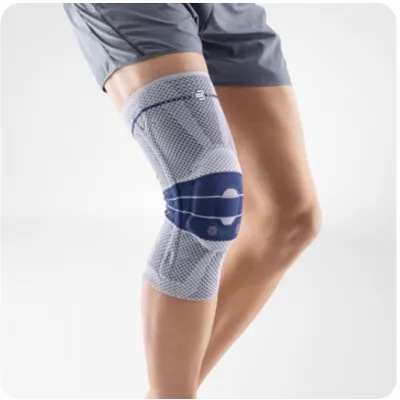
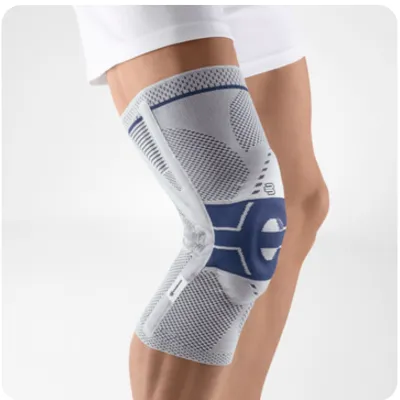
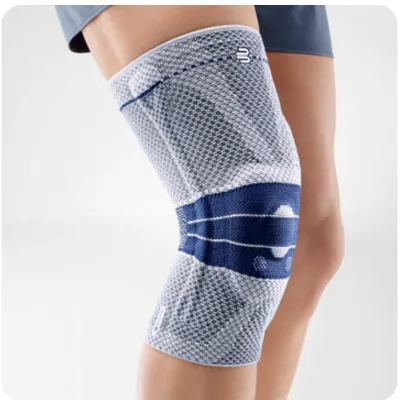
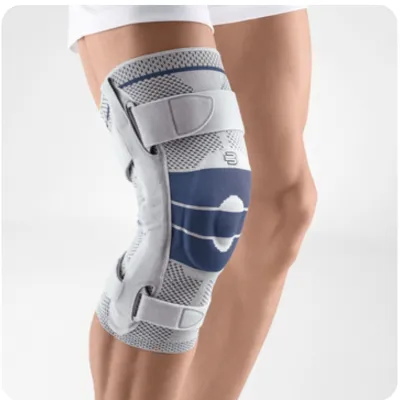
Prices are valid at publication and may change. Please refer to the product page for the latest price.
Structural instability, which often follows ligament sprains or meniscus tears, demands mechanical reinforcement. If your knee feels like it might give way, or if you experience lateral shifting, a simple compression sleeve is insufficient. You will need a model with rigid or semi-rigid side stays to physically limit unwanted lateral movement. Matching the brace’s structural rigidity to your level of instability is crucial for preventing further joint strain and protecting healing tissues.
Activity intensity and the nature of your movements play a massive role in your decision. Low-impact activities like walking or light cycling place predictable, linear loads on the joint, where a flexible knit brace is often sufficient. High-impact court sports, running, or skiing involve rapid deceleration, pivoting, and lateral forces that place extreme stress on the ligaments. Your brace must match these forces without slipping or restricting the natural flexion needed for your sport.
For high-risk sports or activities involving extreme lateral movement, remember that equipment cannot replace proper physical training, technique, or medical clearance. If you are returning to a sport after a major injury, you must verify your joint’s readiness with a healthcare professional before relying on a brace. A support device is meant to assist your recovery, not to allow you to bypass safe physical limits or ignore pain signals.
Recognize red flags that require immediate medical attention rather than self-treatment with a brace. If you experience sudden, severe swelling within hours of an injury, hear a distinct popping sound, cannot bear weight on the leg, or find the joint locked in place, you must seek professional medical evaluation. Using a brace to mask these symptoms can lead to long-term joint damage, chronic instability, and delayed healing.
Navigating the Core GenuTrain Models and Their Use Cases
The standard GenuTrain is the baseline model, designed primarily for active individuals experiencing mild joint instability, minor swelling, or general knee pain. It utilizes a medical-grade knit fabric to deliver graduated compression, combined with a contoured silicone insert that surrounds the kneecap. This combination helps stabilize the joint during linear movements like running or gym workouts while promoting circulation to reduce swelling. The knit is specifically woven to be softer and more elastic at the back of the knee, minimizing irritation during deep flexion.

The GenuTrain A3 is designed for more complex, degenerative pain patterns or patellar tracking issues. The “A3” variant features a specially shaped silicone pad with multiple friction zones that target common pain areas around the kneecap. It is particularly suited for individuals dealing with early-stage osteoarthritis or persistent patellar misalignment, offering guidance to keep the kneecap tracking correctly during low-to-moderate impact activities. The design also incorporates a corrective strap to help prevent the patella from drifting outward.
The GenuTrain S and GenuTrain Plus models are engineered for moderate to high joint instability, often during post-injury recovery or chronic ligament weakness. The GenuTrain S incorporates rigid side joints (hinges) and adjustable, inelastic straps that physically restrict lateral movement while allowing natural flexion and extension. The GenuTrain Plus provides a middle ground, offering enhanced lateral stabilization through flexible stays and targeted strap configurations to secure the joint during more dynamic movements. These models are ideal when the knee requires physical boundaries to prevent hyperextension or lateral buckling.
Always verify current model availability, official manufacturer indications, and specific medical approvals before purchasing. Product lines can update, and certain regions may offer specialized variations. Checking the manufacturer’s official documentation ensures you select a model currently certified for your specific condition and activity level.
Comparing Support Features and Design Elements
The foundation of these braces is the medical-grade knit fabric. Unlike standard neoprene sleeves, which trap heat and moisture, this knit is designed to be highly breathable and moisture-wicking. It provides a compression gradient—meaning the pressure is highest around the joint and gradually decreases toward the edges—which supports healthy blood flow and prevents fluid accumulation during prolonged wear. This gradient is essential for managing post-exercise swelling and maintaining comfort during long training sessions.
The anatomical silicone pad, often referred to as the pelotte, is a critical component. It does not simply cushion the kneecap; it actively redistributes pressure away from the patella to the surrounding soft tissues. As you move, the pad’s integrated massage points stimulate sensory receptors in the skin and muscles, which can help reduce pain perception and improve muscle activation around the joint. This active stimulation helps your body naturally stabilize the knee during movement.
When evaluating these features, consider whether your activity requires additional mechanical support. If your sport involves sudden changes of direction, such as tennis or basketball, flexible side stays may not provide enough lateral resistance. In these cases, verifying the presence of rigid hinges or adjustable strap systems is essential to prevent the joint from buckling under lateral loads. Conversely, if your activity is purely linear, heavy hinges may add unnecessary weight and restrict your natural stride.
Getting the Right Fit: Measurement and Sizing Guidelines
An improperly fitted knee brace can cause more harm than good, leading to restricted blood flow, skin irritation, or a complete lack of support if the brace slips down. To get an accurate fit, you must measure your leg at specific anatomical landmarks defined by the manufacturer. Typically, this requires measuring the circumference of your thigh 14 centimeters above the center of the kneecap, and your calf 12 centimeters below the center of the kneecap, while keeping your knee slightly bent at a 30-degree angle. Use a flexible measuring tape and ensure it is snug but not compressing the skin.
Once you have these measurements, consult the official manufacturer size chart. If your measurements fall between two sizes, consider your specific physical build and activity goals. A tighter fit (the smaller size) may offer more intense compression but could feel restrictive during long workouts, while a slightly looser fit (the larger size) might offer better comfort but risk slipping during high-impact movement. If your thigh and calf measurements point to different sizes, look for specialized “comfort” or “wide” sizing options that accommodate different leg shapes.
After putting on the brace, verify its position during movement. The silicone pad should perfectly encircle your kneecap without pinching, and there should be no painful bunching of fabric behind the knee. Perform a few gentle squats and walk a short distance to check if the brace stays securely in place. If the brace rolls down at the thigh or slides down your calf during a brief walk, the sizing is incorrect, and you should exchange it to ensure proper therapeutic benefit.
Care, Maintenance, and Usage Boundaries
To preserve the elasticity of the medical-grade knit and the integrity of the silicone inserts, proper maintenance is crucial. Always wash the brace by hand or on a gentle machine cycle in cold water, using a mild, liquid detergent. Avoid fabric softeners, bleach, or harsh chemical cleaners, as these can break down the elastic fibers and degrade the silicone pad over time. Regular washing is actually beneficial, as it removes body oils and sweat that can otherwise degrade the elastane fibers.
Air-drying is the only recommended method for drying your brace. Never place it in a tumble dryer, expose it to direct sunlight, or lay it on a radiator, as high heat will permanently damage the elastic knit and cause the silicone components to warp or detach. Lay the brace flat on a towel in a well-ventilated, shaded area to dry completely before your next use.
Regularly inspect your brace for signs of material degradation. Over months of active use, the knit may lose its compressive tension, the side stays may become bent, or the silicone pad may show signs of cracking. If you notice a significant reduction in support or if the brace no longer fits snugly, it is time to replace it to maintain proper joint protection. Most high-quality braces have a functional lifespan of six to nine months of regular use.
Remember that a knee brace is a supportive aid, not a replacement for physical rehabilitation. While it can help manage pain and stabilize the joint during activity, long-term joint health relies on targeted muscle strengthening, flexibility training, and proper movement mechanics. Consult a physical therapist to develop a comprehensive recovery plan alongside your brace usage, focusing on strengthening the quadriceps, hamstrings, and hip stabilizers.
Frequently Asked Questions (FAQ)
Can I wear a GenuTrain knee brace all day?
While these braces are designed for comfortable, extended wear during active periods, wearing them continuously all day is generally not recommended. You should wear the brace during physical activities, sports, or periods of prolonged standing and walking. Remove the brace during long periods of rest, sitting, or sleeping to allow your skin to breathe and to prevent your leg muscles from relying too heavily on external support. Continuous wear without activity can lead to muscle weakness over time.
How do I wash the silicone pad without damaging it?
The silicone pad is permanently integrated into the knit fabric and should be washed along with the rest of the brace. Use a mild, residue-free liquid detergent and cold water to prevent oils and sweat from building up on the silicone surface. Avoid using bar soaps or powder detergents, which can leave a film that attracts lint and irritates the skin. Always allow the brace to air-dry completely in a shaded area before wearing it again, and avoid scrubbing the silicone directly with abrasive materials.
Community discussion
Share your experience or ask a question. Comments are reviewed before publication.