
Selecting the right knee support requires matching the specific biomechanical demands of your sport with the structural needs of your joint. A patella support, such as those from Gounod, is designed to manage localized pressure, stabilize the kneecap, and reduce discomfort during movement. However, choosing the wrong style can lead to restricted circulation, skin irritation, or inadequate joint stabilization. By understanding your specific knee condition, the intensity of your activity, and the design features of different supports, you can make an informed decision that protects your joint and enhances your performance.
Every sport places unique stresses on the knee joint, meaning a support that works for a long-distance runner may not be suitable for a weightlifter or a basketball player. Additionally, individual anatomy and the specific nature of your knee discomfort dictate whether you need a minimalist strap or a structured compression sleeve. Taking the time to evaluate these factors ensures that your selected support provides the necessary stabilization without hindering your natural range of motion.
Identify Your Knee Condition and Activity Level
Before selecting a patella support, it is essential to pinpoint the source of your knee discomfort and evaluate how your daily activities or sports impact the joint. Different knee issues require distinct types of physical support, and using the wrong style can sometimes aggravate the condition rather than relieve it.
Products mentioned in this guide
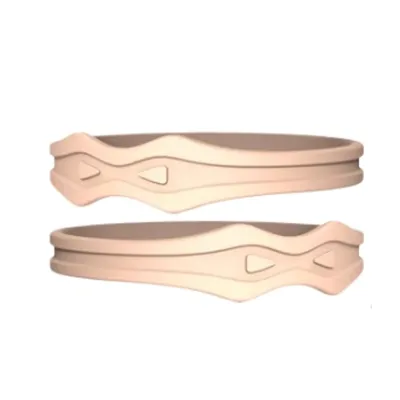
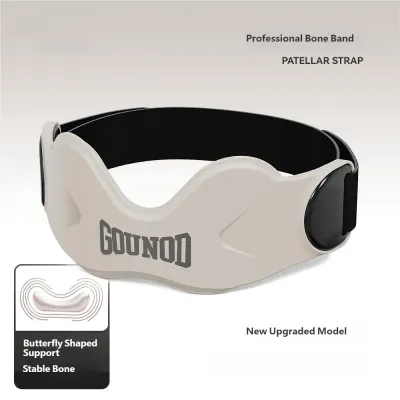
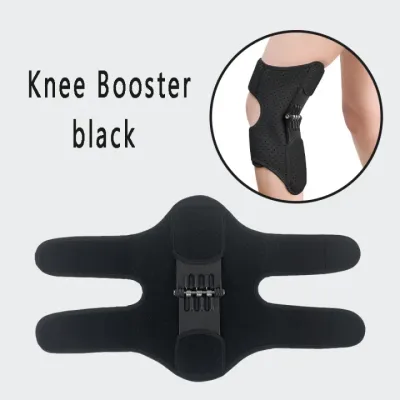
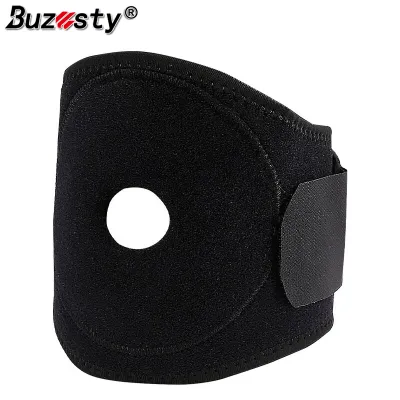
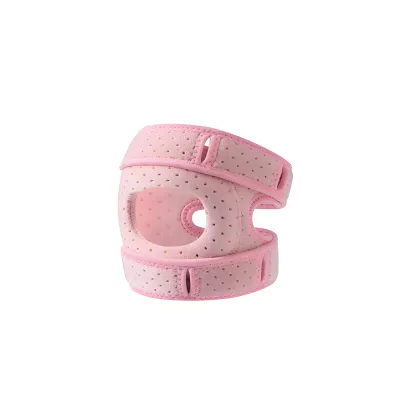
Prices are valid at publication and may change. Please refer to the product page for the latest price.
Patellofemoral pain syndrome, commonly known as runner’s knee, typically presents as a dull, aching pain behind or around the kneecap. This condition is often caused by abnormal tracking, where the patella shifts out of its optimal groove during flexion and extension. For runner’s knee, a support that offers lateral stabilization or a tracking guide is generally recommended to keep the kneecap aligned.
Patellar tendonitis, frequently referred to as jumper’s knee, involves inflammation of the tendon connecting the kneecap to the shinbone. This condition is characterized by localized pain directly below the kneecap, which often intensifies during jumping, running, or climbing stairs. To manage patellar tendonitis, targeted compression directly over the tendon is highly effective, as it helps distribute the load away from the inflamed tissue.
General joint instability or mild arthritis may present as a diffuse ache throughout the entire knee joint, accompanied by a feeling of weakness or giving way. In these cases, uniform compression across the entire joint capsule is often more beneficial than localized pressure. This compression increases blood flow, enhances proprioception (the brain’s awareness of joint position), and provides a general sensation of stability.
Your activity intensity also dictates the level of support required. Low-impact daily wear, such as walking or light office movement, requires a flexible, highly breathable support that can be worn comfortably for extended periods. High-impact competitive sports, which involve rapid acceleration, deceleration, and sudden changes of direction, demand a more robust support system with reinforced stabilization features.
It is crucial to recognize red-flag symptoms that indicate a more serious injury. If you experience acute swelling within hours of an injury, a popping sound accompanied by immediate pain, the inability to bear weight, or a sensation that the knee is locked in place, do not attempt to self-treat with an over-the-counter support. These symptoms suggest potential ligament tears, meniscus damage, or fractures, all of which require immediate professional medical evaluation.
Understand Gounod Patella Support Designs
Gounod offers several patella support designs, each engineered to address specific anatomical needs and movement patterns. Understanding the structural differences between these designs allows you to select the model that best aligns with your recovery goals and comfort preferences.

Patella straps, or knee bands, are minimalist supports designed to wrap tightly around the leg just below the kneecap. They feature a small, firm insert that applies direct pressure to the patellar tendon. This targeted compression alters the angle at which the tendon pulls on the kneecap, reducing the mechanical strain on the tendon insertion point. Because they do not cover the entire joint, straps offer maximum freedom of movement and excellent heat dissipation, making them highly suitable for warm climates.
Patella sleeves are longer, tubular supports that slide over the entire knee joint. They typically incorporate a circular or oval gel pad that surrounds the kneecap. This gel ring serves to cushion the patella, keeping it centered in its natural groove while providing gentle, uniform compression to the surrounding soft tissues. Sleeves offer the added benefit of retaining joint warmth, which can help keep synovial fluid viscous and reduce stiffness during movement.
When choosing a sleeve, you will encounter both open-patella and closed-patella designs. An open-patella design features a cutout over the kneecap, which relieves direct pressure on the patella itself while stabilizing the perimeter. This is particularly beneficial for individuals who experience pain when the kneecap is pressed backward against the femur. A closed-patella design covers the entire joint with continuous fabric, offering uniform compression and maximum warmth, which is ideal for general swelling or mild arthritis but may cause discomfort if you have direct patellar tracking issues.
Match Support Levels to Your Sport
Different athletic activities subject the knee joint to distinct biomechanical forces. Matching the support level of your Gounod brace to the specific movement patterns of your sport is critical for both safety and performance.
For endurance and linear sports, such as running, cycling, or brisk walking, the knee moves primarily in a single plane of motion. The primary challenges in these activities are repetitive strain, friction, and heat accumulation. A lightweight, highly breathable patella strap or a thin, seamless compression sleeve is ideal for these sports. These designs provide the necessary tendon support or mild compression without adding unnecessary bulk or causing chafing behind the knee during long-distance sessions.
Multi-directional and high-impact sports, such as basketball, tennis, badminton, and soccer, involve sudden pivots, lateral cutting, rapid stops, and jumping. These movements subject the knee to significant lateral and rotational forces. For these activities, a patella sleeve equipped with flexible lateral stabilizers (such as spiral steel stays) and a reinforced gel tracking ring is highly recommended. The lateral stabilizers help resist side-to-side joint deviation, while the gel ring keeps the patella secure during explosive movements.
Heavy load-bearing activities, such as weightlifting, powerlifting, or cross-training, involve deep knee flexion under significant axial loads. During these movements, the knee requires maximum compression to assist with joint tracking and to provide a mechanical rebound effect at the bottom of a squat. A thick, high-density compression sleeve with a secure, non-slip grip is essential here. The high compression level increases intra-articular pressure, stabilizing the joint capsule under heavy loads, while the robust material prevents the sleeve from rolling down or bunching during deep bends.
Key Checks and Fitting Guide Before You Buy
To ensure your Gounod patella support performs effectively, you must select the correct size and verify the material specifications before making a purchase. A poorly fitting support can restrict circulation, cause skin irritation, or fail to provide any therapeutic benefit.
Never guess your size based on your standard clothing size or height. To find your correct size, use a flexible tape measure while standing with your leg slightly bent (approximately 30 degrees). Measure the circumference of your knee directly across the center of the kneecap. Additionally, many manufacturers require measurements taken 10 centimeters above and 10 centimeters below the mid-patella. Compare these precise measurements to the specific Gounod sizing chart for the model you intend to buy.
Evaluate the material composition of the support, especially if you plan to use it in warm or humid environments. Look for moisture-wicking, breathable fabrics that draw sweat away from the skin to prevent chafing and dermatitis. If you have sensitive skin or a known allergy to neoprene, check for hypoallergenic, neoprene-free alternatives. Additionally, ensure the support features medical-grade silicone anti-slip strips along the inner cuffs, which prevent the brace from migrating during vigorous activity.
When purchasing your support, verify that you are buying from an authorized distributor, official online store, or reputable physical sports pharmacy. This ensures you receive an authentic product made with high-quality, durable materials rather than a counterfeit alternative. Always check the retailer’s return and exchange policy before purchasing, as you may need to swap the item if the initial fit is too tight or too loose.
Usage Limits and When to See a Professional
While a patella support is a valuable tool for managing discomfort and providing stability, it is important to recognize its limitations. A brace should be viewed as a temporary aid or a protective measure during activity, rather than a permanent cure for underlying joint issues.
Pay close attention to how your body responds to wearing the support. Signs of an improper fit or excessive wear time include numbness, tingling, coldness in the lower leg or foot, deep red indentations on the skin, or an increase in pain during or after use. If you experience any of these symptoms, remove the support immediately and adjust the fit or consult a professional.
Over-reliance on a knee brace can lead to muscle dependency and subsequent weakness. If a support is worn constantly during daily rest periods, the stabilizing muscles around the knee—such as the quadriceps, hamstrings, and calves—do not have to work as hard, which can lead to muscle atrophy over time. To prevent this, combine the use of a patella support with a targeted strengthening and mobility program designed by a physiotherapist to address the root cause of your knee instability.
Be aware of conditions where a simple patella support is insufficient. Severe structural damage, such as complete ligament tears (ACL, PCL, MCL), meniscus tears, or advanced osteoarthritis, requires specialized medical intervention, which may include custom rigid bracing, physical therapy, or surgical consultation. If your knee pain persists for more than a few weeks despite using a support and modifying your activity, seek a professional medical diagnosis.
Frequently Asked Questions (FAQ)
Can I wear a Gounod patella support all day for general knee pain?
It is generally not recommended to wear a patella support continuously all day, especially during periods of rest or inactivity. These supports are designed to assist the joint during active movement by managing dynamic forces and improving tracking. Wearing a tight strap or compression sleeve while sitting or lying down can restrict blood circulation and lead to muscle dependency, where the surrounding stabilizing muscles weaken due to lack of engagement. Limit wear to times of physical activity, and remove the support when resting.
How should I wash and maintain my knee support to preserve its grip and elasticity?
To extend the lifespan of your knee support and maintain its elastic properties and silicone grips, hand-wash it in cold water using a mild, liquid detergent. Avoid using fabric softeners, bleach, or harsh chemicals, as these can degrade the synthetic fibers and break down the anti-slip silicone strips. After washing, gently squeeze out excess water without wringing or twisting the fabric. Air-dry the support flat in a shaded, well-ventilated area, keeping it away from direct sunlight, radiators, or clothes dryers, as high heat will damage the elastic structure.
Community discussion
Share your experience or ask a question. Comments are reviewed before publication.