
Selecting the right gym exercise bench for a typical Singapore HDB flat is a balancing act between your fitness goals and the physical realities of compact urban living. Whether you reside in a cozy 3-room BTO flat or a more spacious resale unit, floor space is a premium asset that requires careful management. The ideal bench must provide a stable, secure platform for your workouts while remaining unobtrusive enough to be tucked away when not in use. To make an informed decision, you must look beyond generic product descriptions and focus on precise physical dimensions, folding mechanisms, and structural safety checks.
A common mistake is purchasing a commercial-grade bench designed for spacious public gyms, only to find it permanently blocks a bedroom walkway or dominates the living room. By understanding how to measure your space, evaluate footprint specifications, and assess storage features, you can select a gym exercise bench that supports your strength training routine without turning your home into an obstacle course. This guide outlines the essential criteria and practical steps to help you choose the perfect bench for your HDB layout.
Measure Your Available Space Before Buying
Before browsing online marketplaces or visiting local fitness showrooms, you must accurately assess the physical space where you plan to exercise. Start by identifying the exact spot in your HDB flat where the bench will be used, whether that is a corner of the master bedroom, a study room, or a designated section of the living room. Use a physical measuring tape to map out the floor area, keeping in mind that the bench’s footprint is only one part of the spatial equation.
Products mentioned in this guide
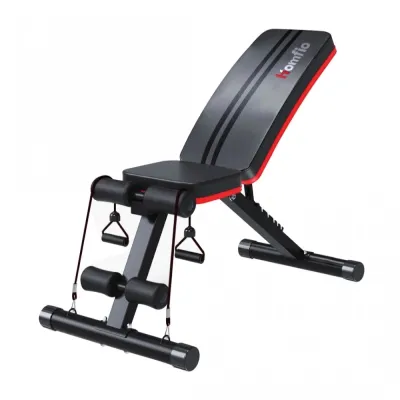
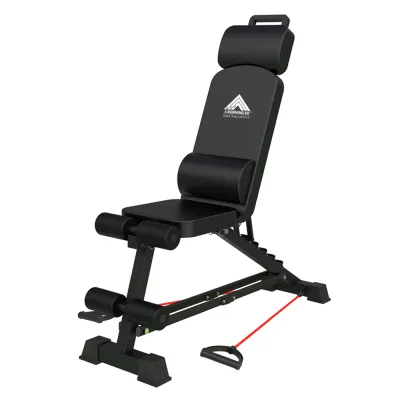
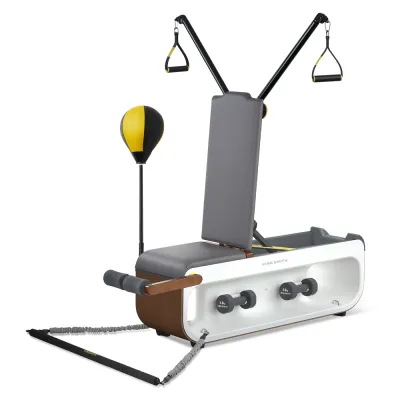
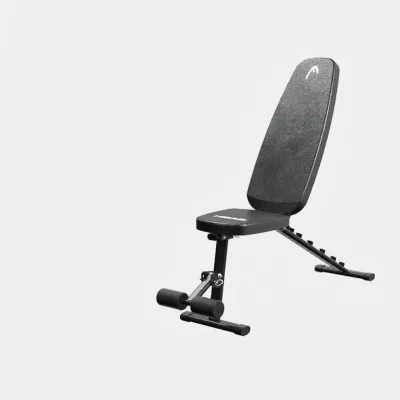
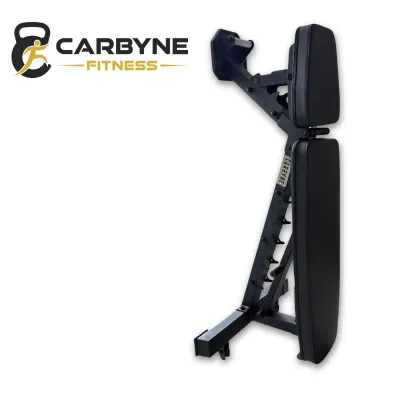
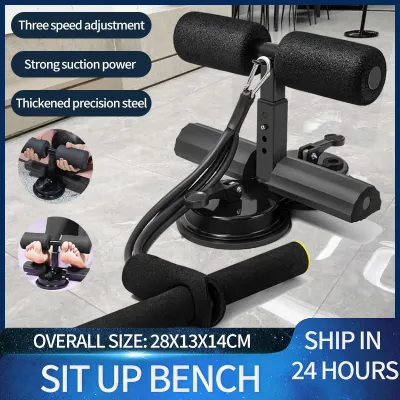
Prices are valid at publication and may change. Please refer to the product page for the latest price.
You must also calculate the necessary clearance around the bench to ensure safe and unrestricted movement during your workouts. For exercises like dumbbell chest presses, flyes, or seated shoulder presses, you require at least 60 to 90 centimeters of clear space on either side of the bench to prevent your weights from striking nearby walls, wardrobes, or glass doors. Additionally, ensure there is sufficient overhead clearance if you plan to perform seated overhead lifts, especially if your room features low-hanging ceiling fans or decorative light fixtures.
Once you have mapped out the active workout zone, turn your attention to the storage phase. Identify where the bench will live when you are not exercising. Common storage spots in HDB flats include the gap under a queen-sized bed frame, the interior of a utility closet, the household shelter, or the narrow space behind a bedroom door. Measure the height, width, and depth of this storage area carefully. This step is crucial because even a highly compact bench is useless if it is just a few centimeters too tall to slide under your bed frame or too wide to fit inside your wardrobe.
Key Dimensions and Footprint Considerations
When evaluating a gym exercise bench, you must scrutinize the manufacturer’s detailed specification sheet rather than relying on vague marketing terms like “space-saving” or “compact.” The three primary dimensions to analyze are the unfolded length, the base width, and the pad height. A standard flat bench typically ranges from 110 to 130 centimeters in length. If you are taller, you will need a longer backrest to support your head and neck during lying exercises, but you must verify that this extra length does not obstruct room doors or walkways when the bench is fully extended.

The width of the bench’s base stabilizers is another critical factor. A wider base, usually between 35 and 45 centimeters, provides superior lateral stability, preventing the bench from rocking or tipping sideways when you shift your body weight. However, a wider base also occupies more floor space and can make the bench more cumbersome to maneuver in tight quarters. Look for a design that tapers slightly or features a streamlined frame that offers a stable foundation without unnecessary bulk.
Ergonomic alignment is heavily influenced by the bench’s height from the floor to the top of the seat pad. The standard height for a flat bench is between 40 and 45 centimeters. This height allows most users to plant their feet firmly on the floor, which is essential for maintaining proper spinal alignment, generating leg drive during presses, and ensuring overall balance. If a bench is too tall, your feet may dangle or only touch the floor with the toes, which compromises your stability and increases the risk of lower back strain. Conversely, a bench that is too low can make it difficult to transition in and out of exercises comfortably.
Foldability and Storage Features for Small Rooms
For most HDB dwellers, a foldable gym exercise bench is the most practical choice. However, not all folding mechanisms are created equal, and choosing the wrong style can lead to frustration. The most common design is the fold-flat bench, which collapses into a slim, linear profile. When folded, these benches often have a height of 20 centimeters or less, making them ideal for sliding horizontally under a bed or standing vertically inside a wardrobe or utility closet.
When comparing foldable models, pay close attention to the physical effort and time required to transition the bench from its storage state to its workout state. Some heavy-duty adjustable benches require you to unscrew multiple threaded knobs or manually remove several locking pins to fold the frame. While secure, this process can become tedious if you exercise multiple times a week. Look for benches that utilize quick-release pull-pins or spring-loaded locking systems that allow you to fold or unfold the unit in a single, smooth motion.
Portability features are equally important, especially if your storage spot is in a different room from your workout area. Look for a bench equipped with built-in transport wheels on the rear stabilizer bar and a comfortable grab handle on the front. This allows you to tilt the bench and roll it effortlessly across your vinyl, laminate, or parquet flooring without scratching the surface or straining your back. If you are considering vertical wall-mounting options to save floor space, you must verify that your HDB walls are solid concrete rather than lightweight drywall partitions, and use heavy-duty wall anchors specifically rated for the bench’s weight.
Balancing Versatility with Space Constraints
One of the biggest decisions you will face is choosing between a flat bench and an adjustable incline-decline (FID) bench. A flat bench is structurally simpler, lighter, easier to fold, and generally more compact, making it an excellent choice if your routine focuses on basic dumbbell presses, rows, and core work. However, it limits your ability to target different muscle angles. An adjustable bench offers far greater workout versatility, allowing you to perform incline presses, seated shoulder presses, and decline exercises, but this versatility comes at the cost of added weight, a larger folded profile, and a more complex frame.
Many modern gym benches also come with optional attachments, such as leg developer rollers, preacher curl pads, or resistance band attachment points. While these features sound appealing, they can significantly increase the overall footprint and weight of the bench. In a space-constrained HDB flat, these add-ons often become clutter. If you do choose a bench with extra features, ensure that the attachments are fully detachable. This allows you to remove them when the workout is over, storing them separately so they do not interfere with the bench’s primary folding mechanism.
Ultimately, you should prioritize core bench functionality over gimmicky add-ons. A high-quality, streamlined adjustable bench that transitions smoothly between flat and incline positions will serve you much better in a tight space than a bulky, multi-functional machine that takes up half your bedroom and is too heavy to move. Keep your training goals realistic and select a bench that matches your actual routine rather than a hypothetical one.
Safety and Stability Checks for Compact Benches
When dealing with space-saving fitness equipment, safety must never be compromised. A folding bench has more moving parts and joints than a solid, non-folding commercial bench, which means you must be diligent in verifying its structural integrity. Start by checking the manufacturer’s certified maximum weight capacity. This rating must represent the combined weight of your body and the heaviest weights you plan to lift. For safety, look for a bench with a rated capacity of at least 200 to 250 kilograms to ensure a safe margin of error.
Next, inspect the design of the locking mechanisms at the folding joints. The hinges and pivot points are the most common failure areas on cheap foldable benches. Ensure the bench uses thick steel locking pins that insert fully through the frame, or a robust ladder-style adjustment system with deep, secure slots that prevent the backrest from slipping under load. Avoid benches that rely solely on friction knobs or thin, flimsy pins that could shear under sudden impact.
Finally, examine the base stabilizers and footpads. The bench should feature wide, non-slip rubber end caps on the feet. These caps serve two critical purposes: they provide essential grip to prevent the bench from sliding or shifting on smooth HDB flooring surfaces during explosive movements, and they protect your tiles, vinyl, or timber floors from scratches and dents. Before every workout, perform a quick visual check to ensure all pins are fully engaged and the bench is resting on a completely flat, level surface.
Frequently Asked Questions (FAQ)
Can I keep a gym exercise bench permanently set up in an HDB bedroom?
Keeping a gym exercise bench permanently unfolded in an HDB bedroom is possible, but it requires careful planning to avoid disrupting the room’s flow. In a typical bedroom layout, a permanently set-up bench can create visual clutter and make daily tasks like making the bed, vacuuming, or accessing wardrobe doors difficult. If you prefer not to fold the bench after every session, try positioning it parallel to a wall or at the foot of your bed to minimize its impact on walkways. You can also use a lightweight, folding room divider to visually separate your workout zone from your sleeping area, maintaining a clean and relaxing environment.
Do foldable exercise benches compromise on stability?
Not necessarily. While early designs of foldable benches were often prone to wobbling, modern engineering has significantly improved their structural rigidity. A high-quality foldable gym exercise bench can be just as stable as a non-folding model, provided it features a well-designed locking system, thick steel tubing, and a wide stabilizer base. To ensure you are not compromising on safety, always verify the manufacturer’s structural specifications, check for certified weight limits, and look for models that utilize heavy-duty locking pins rather than simple friction joints.
Community discussion
Share your experience or ask a question. Comments are reviewed before publication.