
Selecting the ideal basketball requires matching the ball’s construction to your primary playing surface. In Singapore, where players transition between polished indoor sports halls and abrasive outdoor community courts, this decision directly impacts the ball’s lifespan and your performance. Molten offers a diverse lineup of basketballs engineered with distinct materials, panel designs, and grip profiles. By understanding how these characteristics interact with different playing environments, you can choose a ball that delivers consistent bounce, reliable grip, and excellent durability.
Understanding Court Surfaces and Ball Materials
Indoor and outdoor basketball courts present vastly different physical demands that dictate which ball material will perform best. Indoor courts, typically constructed from polished hardwood or smooth synthetic materials, offer a clean, high-traction surface that minimizes abrasive wear. In contrast, outdoor courts in Singapore—often made of asphalt, concrete, or textured acrylic coatings—are highly abrasive and prone to accumulating dust, grit, and moisture from the tropical environment. Playing with an incompatible ball on these rough surfaces can quickly degrade its outer cover, ruining its grip and flight characteristics.
To meet these varying demands, basketballs are manufactured using three primary material categories: genuine leather, composite (synthetic) leather, and rubber. Genuine leather is the traditional choice for professional indoor play, offering unmatched feel and moisture absorption once fully broken in. Composite leather serves as a highly versatile alternative, mimicking the soft feel of genuine leather while offering immediate playability without a break-in period. Rubber is the most rugged option, designed specifically to withstand the punishing friction of concrete and asphalt while remaining highly cost-effective.
Products mentioned in this guide
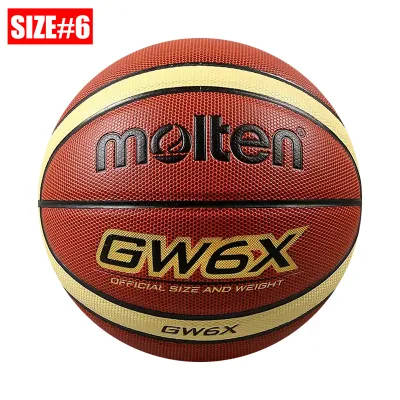
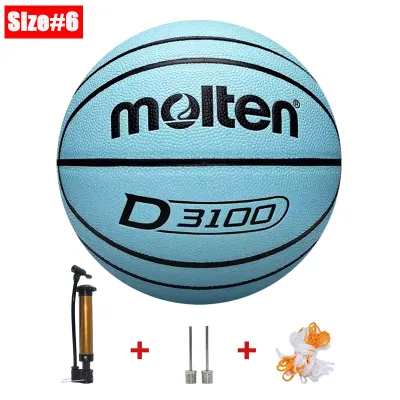
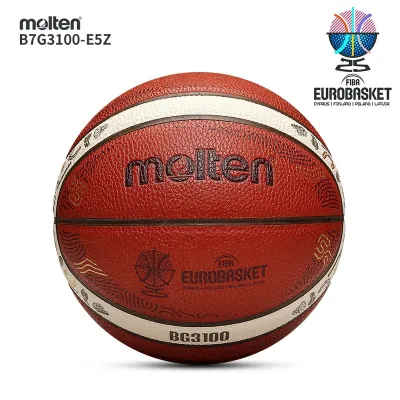
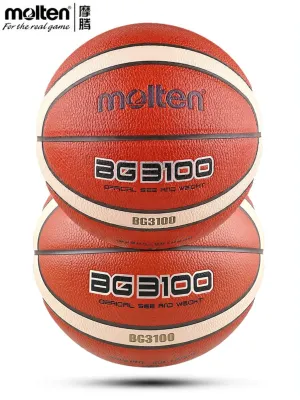
Prices are valid at publication and may change. Please refer to the product page for the latest price.
The material you select directly influences how the ball behaves during a game. Genuine and high-grade composite leathers absorb sweat from your hands, maintaining a reliable grip even during intense, high-perspiration sessions. However, these premium materials wear down rapidly when exposed to the abrasive friction of outdoor concrete. Rubber covers do not absorb moisture, but their deep, molded textures provide excellent mechanical grip on dusty outdoor courts. Additionally, the structural composition of the cover material affects the consistency of the bounce, with premium composites and leathers offering a more predictable rebound off the backboard and rim.
Selecting a Molten Basketball for Indoor Courts
When playing on smooth indoor hardwood or synthetic courts, your primary focus should be on tactile feedback, sweat absorption, and precise control. Indoor environments allow you to utilize premium materials that would otherwise degrade outdoors. For these settings, prioritize basketballs made from genuine leather or high-quality composite leather. These materials offer a soft, cushioned feel that conforms to your fingertips, allowing for better control during complex dribbling sequences and a cleaner release when shooting.

To ensure you are selecting a ball optimized for indoor play, always inspect the product packaging and the ball’s surface for explicit manufacturer designations. Look for labels indicating “Indoor Use” or official competition approval markers, such as the FIBA Approved stamp. These markers verify that the ball meets strict international standards for bounce consistency, sphericity, and weight. Choosing a certified indoor ball ensures that your practice sessions closely replicate the conditions of official league matches and tournament play.
Another critical factor to evaluate is the ball’s surface texture, specifically the pebbling density and channel depth. Molten basketballs are renowned for their signature 12-panel design, which features additional seams compared to traditional 8-panel balls. When selecting an indoor model, check that the pebbles are uniform and densely packed across the surface to maximize friction against your skin. The depth and width of the channels should feel comfortable in your hands, allowing your fingers to find natural alignment quickly during fast breaks and catch-and-shoot scenarios.
Selecting a Molten Basketball for Outdoor Courts
Outdoor play in Singapore requires a basketball that can endure harsh, abrasive surfaces and unpredictable weather conditions. Concrete and asphalt courts act like sandpaper, quickly grinding down soft composite covers and stripping away their grip. Therefore, durability must be your primary consideration when shopping for an outdoor ball. Look for models constructed from heavy-duty rubber or specialized, wear-resistant composite covers engineered specifically for outdoor environments. These rugged materials resist scuffing, tearing, and structural warping even after repeated impacts on rough ground.
Dust and light moisture are common challenges on outdoor community courts, often making the ball slippery and difficult to handle. To combat this, select an outdoor ball featuring deeper and wider channels. These pronounced grooves help channel away dust, dirt, and sweat, allowing your fingers to maintain a secure hold on the ball. The aggressive pebbling found on outdoor rubber balls also helps cut through surface debris, ensuring you can maintain control during crossovers and layups without the ball slipping from your grasp.
Before making a purchase, verify the manufacturer’s recommended usage guidelines printed on the ball or its packaging. Outdoor-rated balls are specifically designed with tougher bladders and reinforced covers to handle the high-impact nature of concrete play. Using a ball that is not explicitly rated for outdoor use will result in rapid deterioration, flat spots, and a compromised valve system. Checking these specifications beforehand ensures you invest in a ball that maintains its shape and performance over months of outdoor play.
Evaluating Cross-Surface Compatibility
Many players in Singapore find themselves transitioning between indoor sports halls and outdoor neighborhood courts, leading them to consider a single “Indoor/Outdoor” hybrid ball. While a hybrid ball offers convenience, it is important to understand the performance trade-offs involved. A composite leather hybrid ball used outdoors will inevitably wear out faster than it would indoors, gradually losing its soft texture and premium grip. Conversely, using a rugged rubber ball on a polished indoor court can feel excessively stiff, offer less tactile control, and become slippery if the indoor floor has any accumulated dust.
The ideal user for an “Indoor/Outdoor” hybrid ball is a casual player who splits their playing time relatively evenly between different venues and does not require professional-grade performance. These hybrid models typically feature a modified composite cover that is tougher than pure indoor leather but softer than standard rubber. If your routine involves spontaneous weekend games at a local community court followed by occasional indoor sessions with friends, a hybrid ball provides a practical, cost-effective compromise that saves you from carrying multiple balls.
To decide whether to buy a dedicated ball or a hybrid, establish a clear decision framework based on your play frequency, budget, and performance expectations. If you play more than twice a week on a specific surface, investing in a dedicated ball for that environment is highly recommended. For instance, serious league players should always use a dedicated indoor composite ball to preserve its pristine grip for game days. If budget constraints are your primary concern, starting with a durable outdoor rubber ball is a sensible choice, as it offers the longest lifespan per dollar spent across all surfaces.
Essential Maintenance and Storage Practices
Proper maintenance is essential to preserve your basketball’s grip, shape, and structural integrity over time. The cleaning method you use should match the ball’s material. For rubber and outdoor composite balls, regularly wipe down the surface with a damp cloth and mild soapy water to remove accumulated dirt, sweat, and court dust. Avoid using harsh chemical solvents or submerging the ball completely in water, as moisture can seep into the seams and damage the internal bladder. For premium genuine leather balls, use a dry or slightly damp cloth, and consider specialized leather conditioners to keep the material supple.
Singapore’s hot and highly humid climate poses unique challenges for basketball storage. High humidity can accelerate the degradation of synthetic glues, cause composite covers to peel, and promote mold growth. To prevent these issues, always store your basketball in a cool, dry, and well-ventilated indoor space away from direct sunlight. Never leave your ball inside a hot car trunk or exposed on an outdoor balcony, as extreme heat can cause the air inside the bladder to expand, leading to warping, structural bubbles, or permanent loss of shape.
Maintaining the correct air pressure is vital for ensuring a consistent bounce and protecting the ball’s internal structure. Always use a reliable pressure gauge to check the inflation level before you play. The recommended pressure range is printed directly around the inflation valve of every Molten basketball. Moisten the inflation needle with a drop of water or valve oil before inserting it to prevent damaging the self-sealing rubber valve. Keeping the ball within its specified pressure range prevents the bladder from stretching excessively and ensures optimal energy transfer during play.
Frequently Asked Questions (FAQ)
What size Molten basketball should adults and youth players use?
Basketball sizes are standardized based on the player’s age, gender, and competition level. For adult men and male youth players aged 15 and older, Size 7 is the official standard used in most leagues. Adult women and youth players aged 12 to 14 typically use Size 6, which has a slightly smaller circumference and lighter weight to facilitate better control and shooting form. For younger players under the age of 12, Size 5 is recommended to help them develop proper handling and shooting mechanics. Always check the specific regulations of your local school, league, or tournament organizer before purchasing to ensure compliance with their competition rules.
How often should I check the air pressure of my basketball?
For regular players, it is best practice to check the air pressure before every playing session, or at least once a week. Basketballs naturally lose small amounts of air over time due to temperature fluctuations and regular use. Playing with an under-inflated ball results in a sluggish, inconsistent bounce that disrupts your dribbling rhythm and shooting accuracy. Conversely, over-inflating a ball puts excessive strain on the seams and internal bladder, which can cause permanent warping, a harsh and unpredictable bounce, or even a sudden rupture. Keeping the pressure within the manufacturer’s recommended range ensures a true bounce and extends the overall lifespan of the ball.
Community discussion
Share your experience or ask a question. Comments are reviewed before publication.