
Selecting the right self-adhesive bandage—commonly known as a cohesive bandage—is essential for protecting your joints and muscles during physical activity. Unlike traditional athletic tape, these wraps adhere only to themselves rather than your skin or hair, making them highly versatile and pain-free to remove. However, a bandage that works perfectly for a runner might fail for a weightlifter or a martial artist. The key to choosing the right wrap lies in matching the material’s structural properties, such as elasticity, thickness, and breathability, to the specific physical demands of your sport.
To make an informed decision, you must evaluate how your sport impacts your body. Repetitive, high-impact movements require flexible support that moves with you, while heavy, static loads demand rigid stabilization to prevent joint hyperextension. By understanding these mechanical differences, you can select a bandage that provides optimal compression, stays secure throughout your workout, and minimizes the risk of skin irritation or restricted blood circulation.
Core Features to Check Before Buying a Self-Adhesive Bandage
Before purchasing a self-adhesive bandage, understand the difference between cohesive and true adhesive properties. Cohesive bandages stick only to themselves, eliminating skin tearing, hair pulling, and sticky residue. True adhesive bandages bond directly to the skin; while they offer highly rigid placement, they can cause significant skin irritation and discomfort during removal, especially when used frequently.
Products mentioned in this guide
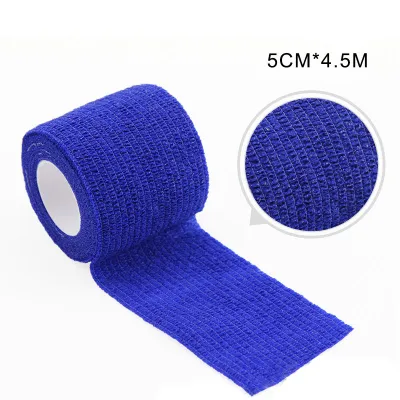
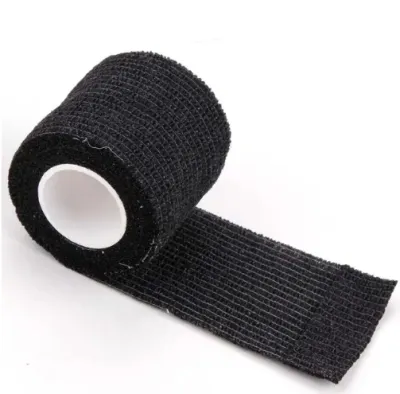
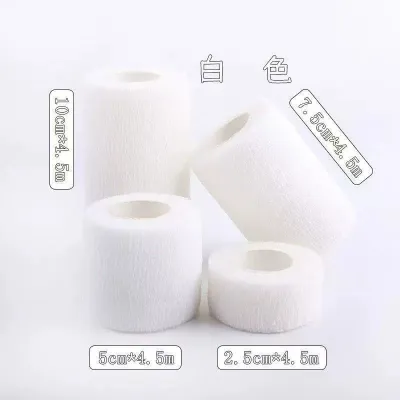
Prices are valid at publication and may change. Please refer to the product page for the latest price.
Elasticity and stretch limits dictate how much support and mobility the bandage will provide. High-stretch bandages offer gentle compression and allow a full range of joint motion, making them ideal for active, repetitive movements. Low-stretch or non-elastic bandages provide rigid, splint-like stabilization, which is necessary for protecting joints under heavy loads or preventing unwanted lateral movement.
Breathability and moisture-wicking capabilities are vital for maintaining comfort and grip, particularly during intense workouts in warm, humid climates. Look for bandages made from porous, non-woven fabrics or lightweight cotton blends that allow sweat to evaporate. If moisture becomes trapped beneath the wrap, the bandage can lose its cohesive grip, slip out of place, or cause skin maceration and chafing.
Finally, compare standard widths and lengths to match the specific dimensions of the target joint or muscle group. A narrow 1-inch or 2-inch wrap is perfect for wrapping fingers, wrists, or ankles, providing precise coverage without excess bulk. For larger areas like the knees, calves, or thighs, a wider 3-inch or 4-inch bandage ensures even pressure distribution and faster application.
Running: Selecting Bandages for Lower Limb Impact and Mobility
Running subjects the lower limbs to continuous, repetitive impact forces that can fatigue muscles and stress joints over long distances. To manage this, runners should prioritize high-stretch cohesive bandages that provide mild compression to help control muscle oscillation. This gentle compression can reduce muscle fatigue in the calves and thighs while allowing the ankles and knees to flex and extend naturally through a full range of motion.

Moisture management is a critical factor for runners, especially when training in humid conditions where sweat accumulates quickly. Selecting lightweight, highly porous fabrics ensures that sweat can escape, preventing the bandage from becoming heavy and waterlogged. A wet bandage is prone to slipping down the leg, which not only compromises support but also increases the risk of painful chafing and blisters where the fabric rubs against the skin.
Choosing the correct width is essential for maintaining comfort during long runs. A 2-inch bandage is typically ideal for wrapping the ankle, as it conforms easily to the complex contours of the joint without bunching. For larger muscle groups like the calves or hamstrings, a 3-inch or 4-inch wrap is more appropriate, ensuring that pressure is distributed evenly across the muscle belly without creating tight, restrictive ridges.
Always monitor your skin for friction hotspots during and after your runs. If you notice redness, irritation, or chafing along the edges of the bandage, adjust your wrapping technique to ensure the edges lie completely flat. If the irritation persists, consider switching to a softer material or applying a thin layer of non-adhesive pre-wrap to protect the skin before applying the cohesive bandage.
Weightlifting: Choosing Bandages for Wrist and Thumb Load Bearing
Weightlifting places immense static loads on the wrists and thumbs during heavy pressing, pulling, and overhead lifts. To protect these joints from hyperextension under load, lifters should look for cohesive bandages with low elasticity and high stiffness. These stiffer materials create a rigid, supportive splint effect that stabilizes the wrist joint, allowing you to maintain proper alignment and transfer force efficiently to the barbell.
Some sports bandages feature built-in thumb loops to help anchor the wrap securely before you begin wrapping the wrist. If you are using a standard flat-ended cohesive bandage, ensure that your initial anchor wraps around the wrist are flat and secure. This prevents the bandage from shifting or sliding down your forearm when you grip the bar or apply maximum tension during a lift.
Always follow the manufacturer’s tension guidelines to avoid cutting off distal circulation during peak exertion. Because weightlifting involves intense muscle contraction and breath-holding phases, wrapping a joint too tightly can quickly restrict blood flow and cause numbness or loss of grip strength. To maintain safety, make it a habit to loosen or remove the bandage between heavy sets to allow your muscles and blood vessels to recover.
Ensure the width of the bandage allows for adequate overlap without creating a bulky, uneven mass around your wrist or hand. A standard 2-inch wrap is generally the most effective size for wrist support, as it provides sufficient coverage while remaining thin enough to avoid interfering with your barbell grip or hook grip setup.
Martial Arts: Picking Bandages for Hand Wrapping and Joint Protection
Martial arts training involves high-impact striking and intense grappling, both of which require robust hand and wrist protection. When selecting a self-adhesive bandage for hand wrapping, verify that the roll has sufficient length and width to cover the knuckles, thumb, and wrist thoroughly. Standard hand wraps for striking arts often require longer rolls to ensure adequate padding over the knuckles and secure alignment of the wrist bones.
Strong cohesive properties are absolutely essential in martial arts to withstand the friction of grappling and the impact of punching. The bandage must bond tightly to itself so that the layers do not shift, roll up, or unravel during rapid ground exchanges or repetitive heavy bag work. A loose wrap can expose your joints to injury and disrupt your training session.
Because hand wraps are applied directly over the knuckles and sensitive skin of the hands—often without gloves during light training or pad work—it is vital to choose skin-safe, non-toxic materials. Look for latex-free cohesive bandages to avoid allergic reactions, especially since sweat and friction can increase skin sensitivity during intense training sessions.
Before purchasing bandages for competitive use, always review the specific regulations of your gym or the sport’s governing body. Many martial arts organizations have strict rules regarding the allowed colors, widths, materials, and fastening methods for hand wraps. Ensuring your bandages comply with these standards beforehand prevents last-minute gear changes on competition day.
Safe Application, Maintenance, and Replacement Signals
Applying a self-adhesive bandage safely requires constant attention to your body’s feedback. Immediately after wrapping any joint, and periodically throughout your workout, perform a distal circulation and nerve sensation check. You can do this by pressing firmly on a fingernail or toenail distal to the wrap to check capillary refill; the color should return to pink within two seconds. If you experience numbness, tingling, coldness, or a pale tint in your extremities, loosen the wrap immediately.
To extend the lifespan of reusable cohesive bandages, always follow the manufacturer’s specific cleaning and drying instructions. Most reusable wraps should be gently hand-washed in cold water with a mild detergent and laid flat to air-dry. Avoid machine washing, tumble drying, or using harsh chemicals, as excessive heat and agitation can degrade the cohesive coating and destroy the material’s elastic fibers.
Recognizing when a bandage has reached the end of its useful life is key to maintaining proper joint support. Inspect your wraps regularly for signs of material degradation, such as a noticeable loss of self-adhesion, permanent stretching where the fabric no longer snaps back, frayed edges, or persistent odors that remain after washing. Using a degraded bandage compromises your safety by providing inadequate joint stabilization.
It is important to remember that external wraps are supportive aids, not a cure for underlying injuries. If you experience persistent or worsening joint pain, swelling, or instability despite using a self-adhesive bandage, stop the activity immediately. Do not rely on tighter wrapping to mask the pain; instead, consult a qualified physiotherapist or sports medicine professional for a proper diagnosis and treatment plan.
Frequently Asked Questions (FAQ)
Can I use a self-adhesive bandage directly over an open wound?
No, self-adhesive cohesive bandages are not sterile and are not designed to act as primary wound dressings. You should always apply a sterile, non-stick gauze pad or a suitable adhesive plaster directly over the open wound first to protect it from contamination. Once the wound is safely covered, you can use the cohesive bandage to secure the dressing in place. Avoid wrapping the bandage too tightly over the wound, as excessive compression can restrict localized blood flow, trap moisture, and delay the natural healing process.
How do I know if my bandage is wrapped too tightly during exercise?
You can identify if a bandage is wrapped too tightly by monitoring for physical symptoms distal to the wrapped area, such as numbness, tingling, a cold sensation, or a pale or bluish skin tone in your fingers or toes. A reliable field check is the capillary refill test: press firmly on a nail bed until it turns white, release the pressure, and verify that the pink color returns within two seconds. If the color takes longer to return, or if you feel a throbbing sensation under the wrap, immediately loosen and reapply the bandage with less tension to restore proper circulation.
Community discussion
Share your experience or ask a question. Comments are reviewed before publication.