
Finding the right balance between a rewarding cardio workout and maintaining a clutter-free home is a common challenge in Singapore’s high-density housing. In a typical Housing & Development Board (HDB) flat, where living room and bedroom floor space is highly optimized, choosing fitness equipment requires careful spatial planning. An aerobic stepper is an excellent, low-impact cardio tool, but selecting one that is too large can quickly turn your living room into an obstacle course.
To keep your home functional, a compact or standard-sized aerobic stepper measuring between 68 cm and 80 cm in length is generally the most practical choice. This size provides a stable platform for a wide range of exercises while remaining small enough to slide under a standard bed frame, tuck into a wardrobe, or store in a household shelter. Selecting the right size involves evaluating not just the physical dimensions of the equipment, but also the dynamic clearance required to perform exercises safely without risking injury or damaging your home interior.
Assessing Your HDB Floor Space and Safety Clearances
Before purchasing an aerobic stepper, you must map out your dedicated workout zone. In HDB flats, this area is usually located in the living room in front of the television console or in a clear pathway within a bedroom. Start by measuring the static footprint of the space you have available. Keep in mind that you will need to move surrounding furniture, such as coffee tables or study chairs, to clear this zone before every workout.
Products mentioned in this guide
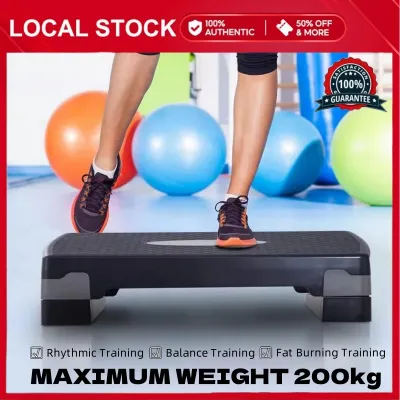
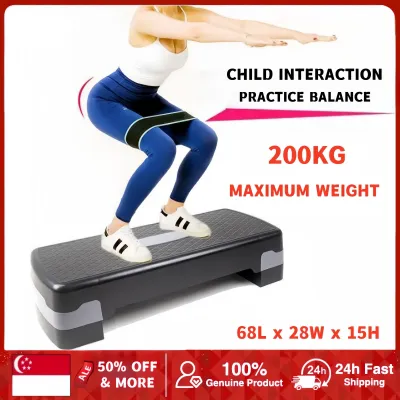
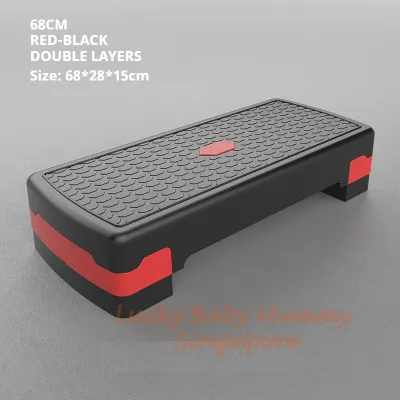
Prices are valid at publication and may change. Please refer to the product page for the latest price.
However, measuring the physical dimensions of the stepper itself is only the first step. You must calculate the dynamic clearance, which is the active zone required when your body is in motion. During a high-energy stepping routine, your movements are not confined to the top of the platform. You will need at least 50 cm to 100 cm of clear space on all sides of the stepper to accommodate wide arm swings, lateral lunges, and quick step-offs. Failing to account for this dynamic zone increases the risk of colliding with walls, cabinets, or sharp furniture corners.
Floor stability and safety are equally critical when planning your workout space. High-impact stepping exercises exert significant downward force. You should verify that your chosen workout spot has a flat, level surface. If you live in an upper-floor HDB unit, using a high-quality, shock-absorbing exercise mat beneath the stepper is highly recommended. This not only protects the floor but also helps dampen the vibrations and noise that could otherwise travel through the concrete slab to your neighbors below. Always check the manufacturer’s guidelines regarding the recommended floor types and stability requirements for high-impact use.
Matching Aerobic Stepper Dimensions to Your Layout
Aerobic steppers generally fall into three main size categories: compact, standard, and wide-platform. Compact steppers, which typically measure around 68 cm in length and 28 cm in width, are highly suited for smaller HDB bedrooms. While they save considerable floor space, they require more precise foot placement. If you are new to stepping or have a larger frame, a compact platform might feel restrictive during fast-paced routines when fatigue sets in.

Standard and wide-platform steppers, ranging from 90 cm to over 100 cm in length, offer a much larger target area for your feet, reducing the risk of stepping off the edge accidentally. These larger models are ideal if you plan to use the stepper as a weight bench for strength training. However, they require a larger permanent storage spot and a wider clear workout zone. When choosing between these sizes, match the platform dimensions to your height, stride length, and confidence level.
Another key dimension to consider is the height of the platform and its risers. Most aerobic steppers come with adjustable blocks or risers that allow you to set the height to 10 cm, 15 cm, or 20 cm. Adding risers increases the intensity of your workout, but it also increases the vertical storage space required. Before finalizing your purchase, verify the product specifications for the maximum weight capacity. Ensure the structural design and locking mechanisms of the risers are robust enough to support your body weight plus any additional hand weights you plan to use.
Space-Saving Storage and Design Features
In a compact apartment, how you store your fitness equipment is just as important as how you use it. Look for aerobic steppers designed with smart, space-saving features. Many modern steppers feature stackable risers that can be stored directly underneath the main platform when not in use. This self-containing design prevents loose parts from cluttering your closets or getting lost in your household shelter.
Some advanced models offer multi-functional designs. For instance, certain steppers can be adjusted to serve as an inclined weight bench, a plyometric box, or even a low stool. Choosing a multi-functional piece of equipment reduces the need to buy multiple items, saving both money and valuable floor space. Alternatively, look for lightweight models with integrated carrying handles, making it easy to transport the stepper from your bedroom closet to the living room.
When planning your storage strategy, identify specific spots in your HDB flat that are often underutilized. A stepper with a low profile (around 10 cm to 15 cm high without risers) can easily slide under most platform beds, sofas, or TV consoles. If under-bed space is unavailable, consider storing the stepper vertically. Placing the platform upright against a wall inside a wardrobe, behind a bedroom door, or in a utility closet keeps it completely out of sight while maintaining quick access for your daily workouts.
Common Sizing and Space Planning Mistakes to Avoid
One of the most common mistakes apartment dwellers make is confusing the static footprint of the stepper with the actual space needed during a workout. A stepper might look perfectly small when tucked away in a corner, but once you begin performing lateral steps, straddles, and repeater knees, you will quickly realize how much room your body occupies in motion. Always plan your workout zone based on your maximum physical reach rather than the physical boundaries of the plastic board.
Another frequent oversight is ignoring ceiling height restrictions. While HDB flats generally have standard ceiling heights, adding a 20 cm stepper platform to your height can bring your head surprisingly close to ceiling fans, light fixtures, or low-hanging beams. This is especially dangerous during high-impact jump routines or exercises that involve overhead arm extensions. Always measure your vertical clearance before performing any jumping or overhead movements.
Finally, do not compromise on platform size solely to save space if it compromises your safety. Choosing a stepper that is too narrow or short for your natural stride can lead to missteps, ankle sprains, or falls. If you have longer legs or prefer high-tempo choreography, a slightly larger standard stepper is a safer investment than a micro-sized model. Prioritize a stable, slip-resistant surface that comfortably accommodates your entire foot during active movement.
Frequently Asked Questions (FAQ)
Can I use an aerobic stepper on HDB vinyl or laminate flooring?
Yes, you can use an aerobic stepper on vinyl or laminate flooring, but you must take precautions to protect the surface. Repetitive, high-impact stepping can cause the plastic feet of the stepper to slide, which may scratch or scuff the floor. To prevent this, verify that the stepper has non-slip rubber feet. Additionally, always place a dense, non-slip exercise mat or rubber tiles beneath the equipment. This stabilizes the stepper, prevents sliding, and absorbs the impact forces that could otherwise damage your flooring over time.
What is the minimum ceiling height needed for stepping exercises?
To calculate the safe minimum ceiling height for your workouts, add your physical height, the maximum height of the stepper with all risers attached (typically 20 cm), and an additional 30 cm to 50 cm of safety clearance. If your routine includes overhead arm reaches or jump steps, you will need even more overhead space. Ensure that your workout zone is positioned well away from any ceiling fans or low-hanging light fixtures to prevent accidental contact during high-energy movements.
Community discussion
Share your experience or ask a question. Comments are reviewed before publication.