
To fit a vibration plate into a typical Singapore Housing & Development Board (HDB) flat without disrupting your daily living space, you should target a machine with a compact footprint—ideally between 50 to 70 centimetres in length and 35 to 45 centimetres in width. These dimensions allow the platform to be easily tucked under a sofa, bed, or wardrobe when not in use. While larger vertical models with integrated handlebars offer excellent stability, they demand a permanent floor presence and a height clearance that must be carefully measured against standard HDB ceiling heights. The key to successful integration lies in balancing the machine’s physical dimensions with a designated active zone of at least one metre of clear space around the plate for safe, unrestricted movement.
Understanding HDB Space Constraints and Equipment Footprints
HDB flats, particularly modern 3-room and 4-room layouts, are highly optimized environments where every square metre counts. While the living and dining areas offer some flexibility, bedrooms often serve multiple functions, leaving limited open floor space once a queen-sized bed and wardrobe are installed. Introducing a piece of fitness equipment like a vibration plate requires a clear understanding of how it occupies both physical floor space and visual volume. A compact, flat platform might only take up a small patch of floor, but a tall vertical model with a console and handlebars can dominate a room visually, making a small bedroom feel cramped and cluttered.
The internal mechanics of a vibration plate directly influence its size, weight, and overall design. Oscillating plates, which mimic a seesaw motion, and tri-planar or linear plates, which move up and down or in multiple directions, require different motor configurations. High-performance motors and dual-motor systems often necessitate a larger, heavier chassis to house the internal components and provide a stable base. Consequently, more powerful or versatile machines are naturally bulkier.
Products mentioned in this guide
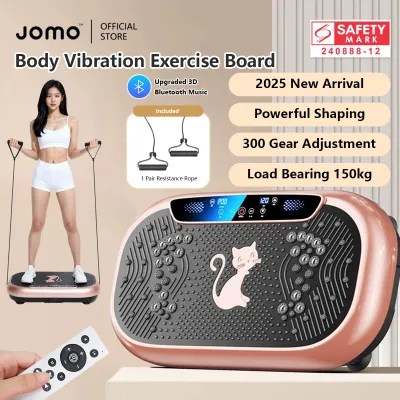
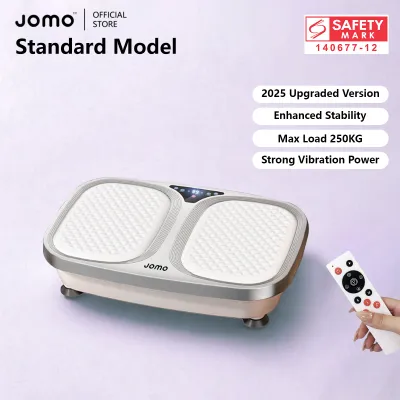
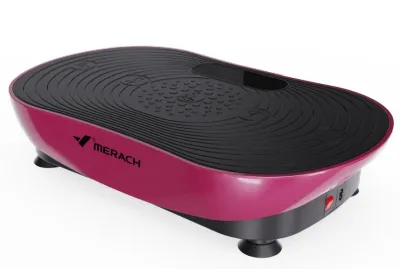
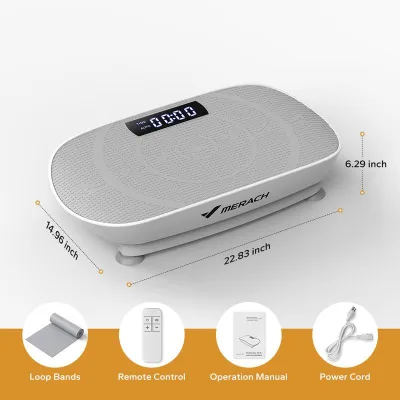
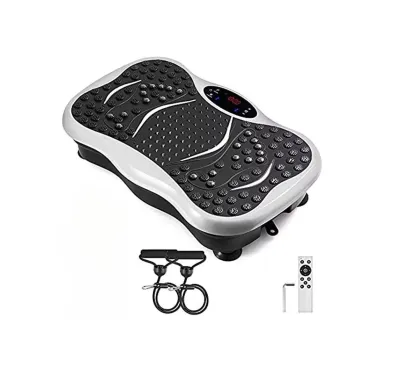
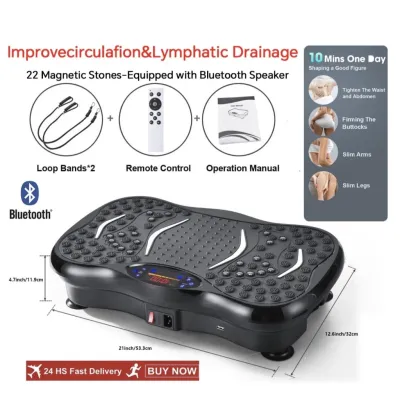
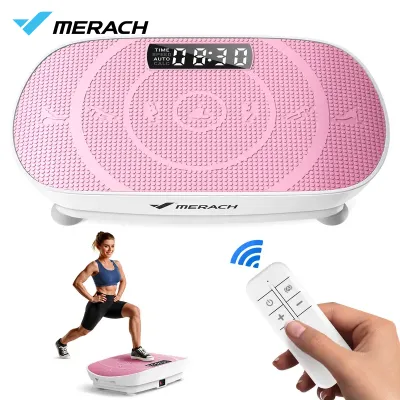
Prices are valid at publication and may change. Please refer to the product page for the latest price.
When selecting a model, you must balance your fitness goals and physical needs against your available space. If your workout routine requires high-intensity training or if you experience balance issues, a model with sturdy, built-in handlebars is highly beneficial for safety. However, if your primary constraint is space, a flat, handle-less platform that can be easily stowed away is often the most practical choice. Understanding this trade-off between structural stability and spatial economy is the first step in making an informed purchase.
How to Measure Your Room for Safe Vibration Plate Use
Before purchasing a vibration plate, conducting precise measurements of your intended workout area is essential for both safety and comfort.

Dynamic Space vs. Static Footprint
It is a common mistake to measure only the static footprint of the machine’s base. During a workout, your body moves dynamically through exercises like deep squats, lunges, and push-ups. For instance, lunges require stepping well off the platform, while push-ups need space on either side of the plate. You must calculate this swing space, which typically requires extending measurement boundaries by at least one metre in all directions from the plate’s edge.
Clearance Boundaries
Establish clear boundaries between the active vibration plate and surrounding obstacles like walls, mirrors, or glass doors. High-frequency vibrations can shift your balance, and nearby sharp furniture edges increase the risk of injury if you need to step off quickly. Ensure a safe buffer zone of at least one metre, and check that the overhead area is clear of low-hanging light fixtures or ceiling fan blades before standing on the platform.
Access and Delivery Checks
Measure the narrowest points of your entry path, including HDB lift doors, the main entrance, internal doors, and tight corridor turns. Vibration plates often arrive in bulky packaging. Confirming these dimensions beforehand ensures a smooth delivery and prevents receiving an item that cannot physically enter your flat.
Power and Cable Management
Plan your machine’s placement close to an existing wall outlet. Loose cables running across the floor in a compact HDB room present a tripping hazard, especially when stepping off a vibrating platform. If an extension cord is necessary, use heavy-duty cable protectors or secure the cord flat against the baseboard to keep the walkway clear.
Best Vibration Plate Designs for Compact HDB Layouts
Selecting the right form factor depends heavily on how much permanent floor space you can dedicate to your fitness routine.
Foldable and Ultra-Compact Platforms
For homes with limited space, flat vibration platforms offer the most practical solution. These low-profile models, often under 15 centimetres tall, slide easily under a bed, sofa, or into a narrow wardrobe gap. Their lightweight design makes them highly portable, allowing you to bring the machine out for a workout and quickly stow it away afterward.
However, flat platforms lack built-in handlebars, requiring you to rely entirely on your core strength and balance. For beginners or those with mobility concerns, this can be a safety issue. If using a flat platform, position it near a sturdy wall or heavy furniture for support during high-frequency exercises. If you opt for a model with foldable handlebars, inspect the durability of the folding hinges and locking pins to ensure they remain rigid during use.
Vertical Models with Removable Handles
If you require the stability of a vertical machine but have limited space, models with detachable handles offer an excellent middle ground. These machines feature a vertical column and console for support but can be dismantled when not in use. Removing the handlebar assembly converts the bulky unit into a flat base that fits inside a standard closet or utility room.
When evaluating these models, check the locking mechanisms and connection points. High-quality quick-release clamps or heavy-duty threaded bolts are essential to ensure the handles do not wobble under continuous micro-vibrations. Although the base unit remains heavy, dismantling the column makes navigating tight HDB corridors much easier.
Smart Placement and Storage Solutions for Small Rooms
Integrating a vibration plate into a small flat requires strategic thinking about storage and daily usage patterns.
Vertical Storage
Some vibration plates can be stored vertically on their side to save floor space. Always check the manufacturer’s user manual to confirm if vertical storage is supported, as storing an unsupported machine upright can damage internal motor mounts. If permitted, ensure the unit has dedicated rubber feet on its side and place it securely against a wall or inside a wardrobe to prevent tipping.
Utilizing Dead Spaces
Look for underutilized spots like room corners or the space behind a bedroom door, provided the door’s swing path remains clear. Ensure there is sufficient room to step onto and off the platform safely. The machine must never block emergency exits, narrow hallways, or the natural traffic flow of your home.
Floor Protection
Protecting your flooring is essential. The high-frequency micro-movements of a vibration plate can scratch ceramic tiles, dent vinyl planks, or loosen tile grout over time. To prevent this, always place a high-density, anti-vibration rubber mat beneath the machine. This mat protects your floors from point-loads and scratches while providing grip to keep the machine from walking across smooth surfaces during use.
Common Sizing and Placement Mistakes to Avoid
Avoiding common pitfalls during the planning phase can save you from buyer’s remorse and potential safety hazards.
Ignoring Handle Height
Many buyers focus solely on the base dimensions, neglecting the overall height of the handlebars. In rooms with lower ceilings or overhead ceiling fans, standing on a platform elevated 15 to 20 centimetres off the ground can bring you dangerously close to fixtures. Always measure your ceiling height and account for the platform’s elevation before buying a vertical model.
Underestimating Weight and Mobility
Heavy, commercial-grade plates offer superb stability, but their weight can make them impractical. If you must drag a unit weighing over 30 kilograms out of a closet for every workout, it will quickly become a chore. Look for models equipped with built-in transport wheels and grab handles, and verify that the machine’s weight aligns with your physical ability to move it safely.
Poor Acoustic Planning
In high-density HDB flats, sound and vibration easily transmit through the reinforced concrete structure. Placing a vibration plate on a bare floor or directly against a shared party wall can create a low-frequency hum that travels to adjacent units. Keep the machine away from walls and always use an anti-vibration mat to decouple it from the building’s structure.
Skipping the Return Policy Check
Because fitness equipment is difficult to evaluate online, verify the retailer’s return and exchange policies before purchasing. Some retailers charge high restocking or transport fees for heavy items, while others reject returns once the box is opened. Confirming these terms provides a safety net if the machine does not fit your layout.
Frequently Asked Questions (FAQ)
Can I use a vibration plate on HDB vinyl or tile flooring?
Yes, you can use a vibration plate on standard HDB vinyl or tile flooring, but you must take steps to protect the surface. Refer to your specific machine’s user manual for any explicit flooring restrictions. To prevent the high-frequency vibrations from scratching ceramic tiles, denting resilient vinyl, or degrading the floor grout over time, always place a thick, high-density rubber anti-vibration mat directly under the machine.
Will the vibration noise disturb my downstairs neighbours?
Low-frequency vibrations can travel through the concrete slabs of HDB blocks and may be felt or heard by downstairs neighbours. To minimize this risk, use a specialized anti-vibration pad or a thick rubber gym mat under the machine’s feet to absorb the mechanical energy. Additionally, place the unit away from shared party walls, and avoid scheduling your workouts during late-night or early-morning hours when ambient noise levels are low and disturbances are more noticeable.
Community discussion
Share your experience or ask a question. Comments are reviewed before publication.