
A slide board, commonly known in fitness circles as a lateral training board or 滑盘, is an excellent tool for low-impact cardio, core conditioning, and lower-body agility. For residents living in a Singapore Housing & Development Board (HDB) flat, the primary challenge is not the workout itself, but finding an option that fits within a compact floor plan. A 1.5-metre to 1.8-metre (5 to 6 feet) slide board is generally the ideal size for most HDB layouts, offering a balanced lateral glide without permanently obstructing walkways or living spaces. Selecting the correct size requires evaluating your height, fitness goals, and the physical constraints of your home.
While longer professional boards exist, they are often impractical for typical apartment living. Choosing the wrong dimensions can lead to cramped movements, damaged furniture, or equipment that simply sits unused in a closet. By understanding how standard sizes translate to active workouts and storage requirements, you can maintain an effective home fitness routine without compromising your living environment.
Standard Slide Board (滑盘) Sizes and Training Needs
Slide boards are generally categorized by their length, which directly dictates the lateral distance you can glide. The most common retail lengths are 1.5 metres (5 feet), 1.8 metres (6 feet), 2.1 metres (7 feet), and 2.4 metres (8 feet). Almost all models maintain a standard width of approximately 50 centimetres (20 inches). This width is designed to accommodate standard athletic footwear while providing a stable, uniform track for lateral movement.
Products mentioned in this guide
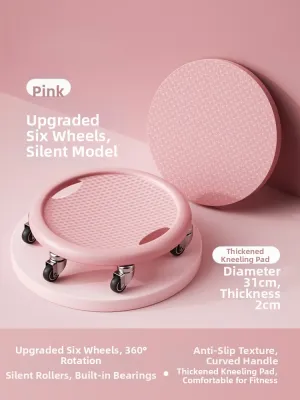
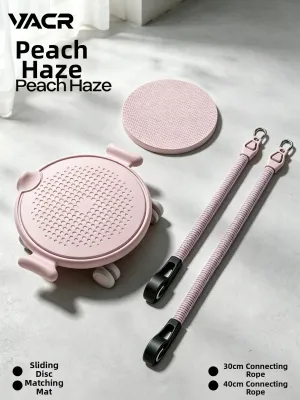
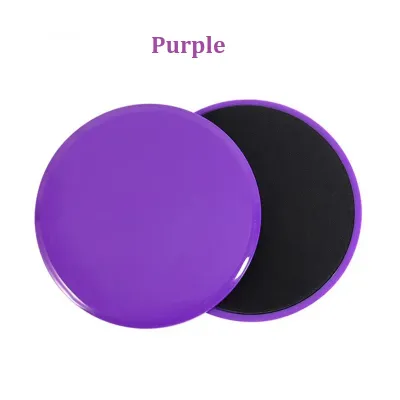

Prices are valid at publication and may change. Please refer to the product page for the latest price.
The length of the board determines the stride mechanics and the level of physical exertion required. A shorter 1.5-metre board limits the lateral range of motion, making it highly suitable for shorter individuals, children, or those recovering from injuries through physical therapy. It is also highly effective for targeted core exercises, such as mountain climbers, plank jacks, and static lunges, where a wide lateral stride is not required.
For the majority of average-height adults, a 1.8-metre board serves as the standard training baseline. This length allows you to achieve a natural skating stride, engaging the glutes, adductors, and core muscles through a complete range of motion. It provides enough distance to build lateral momentum, forcing your stabilizing muscles to work harder to decelerate and push off in the opposite direction.
Advanced fitness enthusiasts, speed skaters, and taller individuals (typically those over 1.8 metres in height) often require a 2.1-metre or 2.4-metre board to prevent short-striding. Short-striding on a board that is too small can lead to poor biomechanics and joint strain, as you are forced to stop your momentum prematurely. However, these longer boards require substantial physical space and a higher level of conditioning to utilize safely and effectively.
Measuring Your HDB Layout for Safe Workouts
Before purchasing a slide board, you must calculate its “active footprint” rather than just its static physical dimensions. The active footprint includes the physical length of the board plus the necessary clearance zone on all sides. When you slide laterally, your torso leans forward, your arms swing outward for balance, and your trailing leg extends. To prevent injuries, you must maintain at least 60 centimetres of completely clear space beyond each end bumper, and at least 1 metre of clear space in front of and behind the board.

In a typical 3-room or 4-room HDB flat, the living room is usually the most viable space for this activity. The open area between the sofa and the television console typically measures between 2.5 and 3.2 metres wide. A 1.8-metre board, which requires an absolute minimum clear path of 3 metres when accounting for arm swings, will fit snugly within this space. If your living room features a heavy coffee table, you must be prepared to roll or slide it out of the way before every workout session.
To ensure an accurate fit, do not rely on visual estimation. Use a physical tape measure to mark out the exact dimensions of the board on your floor. Applying low-tack masking tape to outline the boundaries is a highly effective way to visualize the setup. Once the tape is down, stand within the boundary and perform a few slow, controlled lateral leans and arm swings to verify that you will not make contact with any surrounding objects.
Safety checks should also extend vertically and diagonally. Look upward to ensure there are no low-hanging pendant lights, decorative chandeliers, or ceiling fan blades within reach of an upright or slightly elevated posture. Additionally, check the immediate perimeter for sharp furniture corners, glass doors, or fragile home decor. A minor slip on a high-friction surface can result in a fall, and having clear surroundings is the best way to prevent a simple balance loss from turning into a household injury.
Smart Storage Solutions for Compact Flats
Living in an HDB flat requires smart space management, meaning your workout gear must disappear when not in use. Fortunately, slide boards are relatively low-profile, making them easier to store than bulky stationary bikes or treadmills. Finding the right storage method depends on whether you choose a rigid, semi-rigid, or flexible roll-up model.
Under-Furniture Storage
Many semi-rigid slide boards can be stored completely flat. The space beneath a queen-sized bed, a raised sofa, or a dining table is ideal for this. Most standard HDB bed frames offer a clearance height of at least 10 to 15 centimetres, which is more than enough to slide a flat board out of sight. If you store the board under a bed, consider placing it on a thin protective sleeve or dust cover to prevent fibers and dust from settling on the slick sliding surface.
Vertical and Wall Storage
If under-furniture space is unavailable, storing the board vertically is a highly space-efficient alternative. A rigid board can be stood upright in the narrow gap between a wardrobe and the wall, or behind a bedroom door. To prevent the board from tipping over and causing injury or damage, secure it with a simple wall-mounted utility strap or bungee cord. Avoid placing vertical storage in high-traffic HDB corridors or narrow entryways where it could easily be knocked over.
Foldable and Roll-Up Options
Roll-up slide boards made of flexible polymers (such as thin polypropylene) are highly popular for small apartments because they can be rolled into a tight cylinder and stored in a carrying bag. This reduces their storage footprint to a fraction of their active size, allowing them to fit into standard HDB bomb shelters, utility closets, or deep drawers. However, flexible boards can retain a curl at the ends when first unrolled, sometimes requiring weights on the bumpers to keep them flat during a workout. Foldable boards feature hinged segments that fold flat, offering a compromise between rigidity and portability, though the hinges can sometimes create minor bumps along the sliding surface.
Hidden Gaps
Take advantage of the unique architectural gaps in your flat. The space beside a refrigerator, the narrow gap next to a washing machine in the service yard, or the unused floor space at the bottom of a built-in wardrobe are all excellent locations to store a rolled or folded slide board. Keeping the board near its point of use ensures that the setup process remains quick and convenient.
Common Sizing and Setup Mistakes to Avoid
One of the most frequent mistakes is purchasing an oversized board under the assumption that a larger surface always yields a better workout. An 8-foot (2.4-metre) professional board is highly difficult to deploy in a standard HDB flat without blocking major walkways. If setting up your workout gear requires reorganizing your entire living room, you are far less likely to use it consistently.
Another common oversight is ignoring the physical dimensions added by the end bumpers. The advertised length of a slide board often refers solely to the usable sliding surface. The heavy-duty plastic or wooden bumpers on either end can add an additional 10 to 20 centimetres to the total physical length of the product. Always verify the total end-to-end product specifications before purchasing to ensure it fits within your measured floor space.
Never use a slide board directly on bare HDB flooring without a protective barrier. The intense lateral force and friction generated during a workout can cause the slide board to shift slightly, which can leave permanent scuff marks or scratches on vinyl, laminate, or polished parquet floors. Additionally, a board placed directly on glossy ceramic tiles may slip during use, creating a serious safety hazard. Always place a dedicated non-slip rubber mat, a thin yoga mat, or a specialized equipment underlay beneath the slide board to absorb impact, prevent movement, and protect your home’s flooring.
Finally, do not assume that all models labeled “compact” or “travel-friendly” are automatically foldable or roll-up. Some manufacturers use these terms simply to describe shorter, rigid boards (such as 1.2-metre models). While these boards have a smaller physical footprint, they cannot be bent or rolled, meaning they still require a long, flat storage space. Always read the material specifications carefully to confirm whether the board is rigid, hinged, or flexible.
Frequently Asked Questions (FAQ)
Can I use a slide board directly on HDB vinyl or tile flooring?
Using a slide board directly on bare HDB vinyl, laminate, or ceramic tile flooring is not recommended. The lateral forces exerted during a workout can cause the underside of the board to rub against the floor, potentially causing permanent scratches, scuffs, or wear marks. Furthermore, without an intermediate layer, the board itself may slide out of position during intense exercise, increasing your risk of falling. To protect your flooring and ensure your safety, always consult the manufacturer’s care instructions and place a thin, high-grip rubber equipment mat or a non-slip rug pad underneath the board before use.
Are foldable slide boards as durable as solid ones?
Foldable and roll-up slide boards offer excellent space-saving benefits, but they do involve structural trade-offs compared to solid, rigid boards. Flexible roll-up boards can occasionally experience edge curling, while segmented foldable boards rely on hinges that can wear down over time or create minor surface unevenness. For high-intensity athletic training or heavy daily use, a solid board offers a perfectly smooth, uninterrupted glide and superior long-term durability. However, for standard home fitness, light cardio, and core workouts, a high-quality roll-up or foldable board provides more than enough durability while offering the portability required for compact HDB living.
Community discussion
Share your experience or ask a question. Comments are reviewed before publication.