
When selecting a table tennis racket specifically for hanging ball practice, the most critical features to prioritize are tactile feedback, blade balance, and grip comfort rather than raw speed or extreme spin. Hanging ball training involves high-volume, repetitive strokes against a fixed target. This unique setup shifts the equipment requirements away from the explosive power needed in competitive match play. Instead, you need a racket that helps you feel the exact point of contact, supports a relaxed grip, and minimizes physical fatigue over hundreds of consecutive swings. In humid tropical climates like Singapore, where moisture can quickly affect rubber performance, choosing materials that maintain consistent grip is also essential for productive home training.
Understanding the Mechanics of Hanging Ball Training
Hanging ball practice utilizes a table tennis ball suspended by a string or flexible tether. Unlike regular rally play, where you must constantly adjust to an opponent’s varied spin, speed, and ball placement, the hanging ball returns to a relatively fixed spatial coordinate after each strike. This predictability allows you to isolate and refine specific elements of your technique, such as your swing path, hip rotation, and contact angle. Because the ball’s position is constant, you can focus entirely on developing consistent muscle memory without the distraction of moving around the table.
This high-volume, repetitive training means tactile feedback is far more valuable than raw speed. In a standard match, a fast carbon blade helps push the ball past an opponent. In hanging ball training, however, an overly fast racket makes it difficult to feel how the ball is compressing against the rubber and wood. You need a setup that transmits clear, subtle vibrations through the handle to your hand. This sensory feedback tells you whether you hit the ball cleanly in the sweet spot or off-center, allowing you to make micro-adjustments to your stroke mechanics in real time.
Products mentioned in this guide
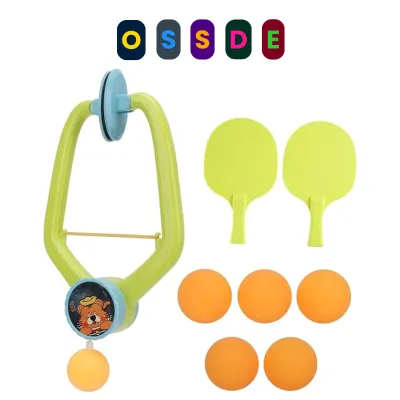
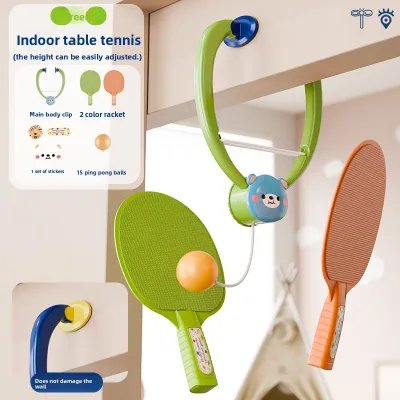
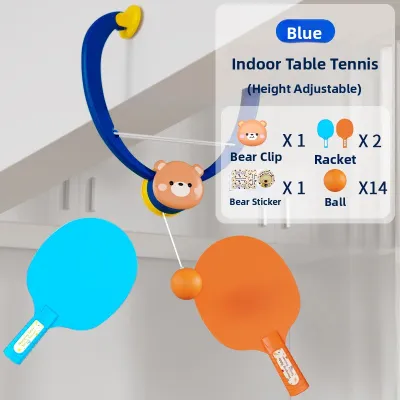
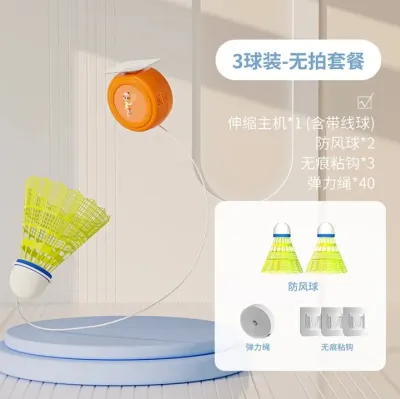
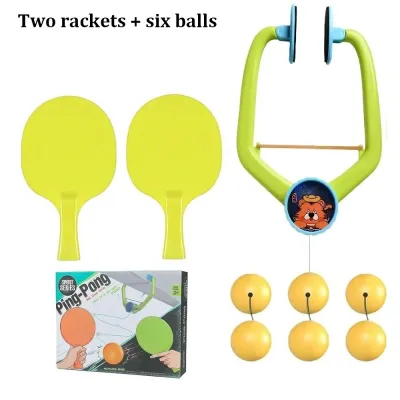
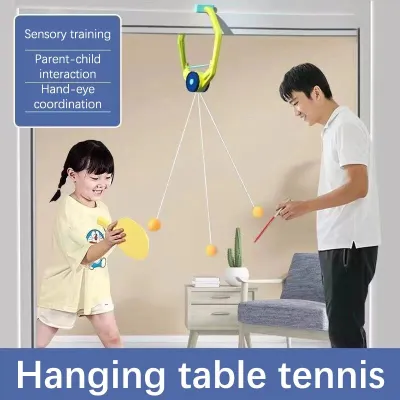
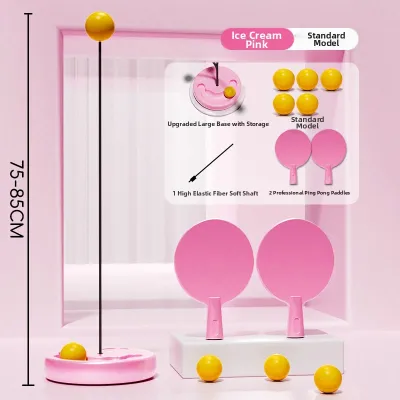

Prices are valid at publication and may change. Please refer to the product page for the latest price.
Furthermore, the cumulative impact shock of hitting a ball hundreds of times in a single session can take a toll on your body. Every time the racket strikes the ball, vibrations travel up the shaft and into your hand, wrist, and elbow. If your racket is too stiff, too heavy, or poorly balanced, these repetitive forces can lead to muscle fatigue or joint strain. Selecting a racket that dampens harsh vibrations while maintaining a comfortable weight distribution is essential for preventing injury and ensuring you can sustain long, productive practice sessions.
Evaluating Key Racket Specifications for Consistency
Rubber Type and Sponge Thickness
Inverted, or smooth, rubbers are highly recommended for hanging ball practice. These rubbers provide a uniform, predictable surface that allows you to practice both topspin drives and flat hits with consistent friction. Because the primary goal of this training is to build reliable muscle memory, a smooth rubber surface ensures that any variation in the ball’s flight or rebound is a direct result of your stroke technique, rather than erratic behavior from the rubber itself. Avoid highly specialized rubbers like long pips or anti-spin for general stroke development, as they do not provide the standard feedback needed to master basic offensive strokes.

Sponge thickness plays a major role in determining how much “feel” is transmitted from the ball to your hand. Thinner sponges, typically ranging from 1.5 mm to 1.8 mm, offer less speed but provide excellent tactile feedback. They allow you to feel the ball make contact with the underlying wooden blade, which is incredibly helpful for developing a precise touch. Thicker sponges, such as 2.0 mm or maximum thickness, provide more cushioning and speed. While thicker sponges can absorb some of the impact shock, they can also dull the sensory feedback, making it harder to tell if your contact was clean. For pure technique training, a medium-to-thin sponge is generally the most effective choice.
When choosing your rubber, always check the manufacturer’s specifications for tackiness, grip levels, and speed ratings on the product packaging. In highly humid environments, extremely tacky Chinese-style rubbers can attract airborne moisture rapidly, creating a slippery film on the surface that causes the ball to slip off the racket. If you train in a non-air-conditioned space, look for mildly tacky or grippy tension rubbers that are designed to perform consistently in humid conditions. Regularly wiping the rubber with a damp sponge and storing it with protective sheets will help maintain its grip.
Blade Weight and Balance
The balance point of a table tennis blade is a critical factor in preventing wrist fatigue during repetitive training. Blades are generally categorized as head-heavy or handle-heavy. A head-heavy blade shifts the center of gravity toward the tip of the racket. While this can help generate more momentum and power for looping, it also increases the leverage force acting on your wrist, requiring more muscle effort to control. A handle-heavy blade shifts the weight closer to your hand, making the racket feel lighter, more maneuverable, and much easier to control during rapid, continuous swings.
Before selecting a blade, check the manufacturer’s weight specifications and tolerances, which are usually listed on the packaging or the official brand website. Most standard wooden blades weigh between 80 and 90 grams. For high-volume hanging ball practice, aiming for a total racket weight—including the rubbers—that feels comfortable and light is highly beneficial. All-wood blades, particularly those with five plies, are often lighter and offer a softer, more controlled feel than blades reinforced with heavy carbon fiber layers. Keeping the overall weight manageable allows you to focus on correct form rather than fighting the weight of the racket.
Pay close attention to how your body responds during your practice sessions to identify if your blade’s balance is incorrect. If you experience a dull ache in your forearm, tightness in your wrist, or find yourself struggling to keep the racket head up after ten minutes of continuous swinging, your setup is likely too heavy or too head-heavy. A well-balanced, lighter racket allows you to maintain a relaxed grip throughout your session. This relaxation is crucial, as tension in your hand can travel up your arm and alter your natural stroke mechanics, defeating the purpose of the training.
Grip Size and Handle Shape
The shape and size of your racket handle determine how securely and comfortably you can hold the racket without squeezing too tightly. For shakehand players, the two most common handle shapes are flared (FL) and straight (ST). A flared handle is wider at the base, which naturally prevents the racket from slipping out of your hand and encourages a secure, consistent grip that is highly suited for forehand-dominant play. A straight handle maintains a uniform width from top to bottom, allowing you to easily adjust your finger placement and transition between forehand and backhand grips during practice.
Penhold players must carefully consider the handle design to ensure proper finger placement and wrist flexibility. Chinese penhold (CPEN) handles are shorter and thicker, designed to fit comfortably in the palm while allowing the fingers on the back of the blade to spread out for support. Japanese penhold (JPEN) handles feature a prominent cork block that provides a very secure anchor point for the index finger. Whichever style you use, the handle must allow your wrist to move freely and naturally, as any restriction can lead to awkward contact angles and unnecessary strain on your wrist joints.
If you find that your current handle is slightly too small or causes your hand to cramp, you can easily adjust the fit. Applying an approved table tennis overgrip is a simple, reversible way to increase the handle’s circumference and improve sweat absorption in warm weather. If the wooden shoulders of the blade have sharp edges that pinch your fingers, you can use fine-grit sandpaper to gently smooth those areas down. Always proceed with caution when sanding, as modifying the wood can void the manufacturer’s warranty, so make only minor, gradual adjustments until the grip feels comfortable.
Assessing Your Current Racket Before Making Changes
Before spending money on a new setup, it is highly practical to evaluate your existing racket to see if it can be adapted for hanging ball practice. Begin by inspecting the rubber surface under a bright light. Look for visible signs of wear, such as oxidation, cracking along the edges, or a dull, faded appearance. Press your thumb into different areas of the rubber to check for “dead spots” where the sponge has lost its elasticity. If the rubber is dry, slippery, or uneven, it will not provide the consistent grip and rebound needed to develop accurate muscle memory.
Next, conduct a physical comfort test during your next practice session. Set a timer and perform moderate-tempo, continuous swings against your hanging ball for 15 to 20 minutes. Throughout this test, pay close attention to any physical sensations in your upper body. If you begin to feel tightness, tingling, or sharp discomfort in your wrist, elbow, or shoulder, your current racket’s weight, balance, or grip size is likely unsuitable for high-repetition training. A proper training setup should allow you to complete the session feeling muscle fatigue from the workout, but absolutely no joint pain.
It is vital to establish clear stopping conditions to protect your physical health. If you experience any joint pain, sharp muscle strain, or if you find that you must alter your natural stroke mechanics to compensate for a heavy or slippery racket, stop training immediately. Practicing through pain or using a flawed setup will only reinforce poor habits and increase the risk of repetitive strain injuries. If discomfort persists, pause your training program and consult a qualified table tennis coach or an equipment specialist to help you configure a safer, more ergonomic racket setup.
Setting Up a Safe and Effective Practice Station
The physical setup of your hanging ball station is just as important as the racket you choose. Start by adjusting the hanging height and string length so that the ball rests precisely within your natural strike zone. For most players, this is around hip-to-waist height when standing in an active ready stance. The ball should hang at a distance that allows you to complete a full, unrestricted swing path without overreaching or crowding your body. Correct height alignment ensures that you are practicing strokes that will translate directly to a standard table tennis table.
Ensure that the mounting point for your hanging ball is structurally secure and safe for indoor use. Whether you are using a ceiling mount, a door frame anchor, or a freestanding training base, the structure must be able to withstand repeated impacts and accidental off-center hits from your racket. In typical indoor residential environments, such as HDB flats or apartments, make sure there is ample clearance—at least two meters of open space—around the station. This prevents your racket from striking walls, furniture, or light fixtures, protecting both your equipment and your home.
Always prioritize safety and equipment maintenance during your practice sessions. Stop your training immediately if the hanging string becomes tangled, if the mounting anchor begins to loosen, or if the ball’s rebound trajectory becomes erratic due to wear and tear. Inspect the string and the ball attachment point regularly for signs of fraying, cracking, or loss of elasticity. Replacing worn components promptly ensures that the ball returns along a predictable path, allowing you to maintain a safe, consistent, and highly productive training routine.
Frequently Asked Questions (FAQ)
Can I use a pre-assembled recreational racket for hanging ball practice?
While a basic, pre-assembled recreational racket can be used by absolute beginners to learn basic ball contact, it has significant limitations for serious technique training. These rackets often use low-grade, dense sponges that offer very little tactile feedback and highly inconsistent rebound characteristics. Additionally, their weight distribution can be uneven, which often contributes to rapid wrist fatigue during long, repetitive sessions. If you are committed to improving your stroke consistency, transitioning to an entry-level custom blade paired with controlled, ITTF-approved rubbers will provide much more reliable feedback and a safer training experience.
Does the string material affect how the ball reacts to the racket?
Yes, the thickness, stiffness, and elasticity of the hanging string directly affect how the ball behaves upon impact. A highly elastic string will absorb a portion of the stroke’s energy, resulting in a slower, more cushioned rebound that is excellent for practicing slow, controlled strokes. A stiff, inelastic string or wire will cause the ball to bounce back more aggressively, which can disrupt your timing if you are trying to focus on smooth, relaxed mechanics. Regularly check your string for fraying or loss of elasticity, and choose a medium-thickness nylon or braided cord to ensure a stable, predictable return path.
Community discussion
Share your experience or ask a question. Comments are reviewed before publication.