
Choosing the right Tourna overgrip for Singapore’s humid tennis courts comes down to matching your personal sweat level with the grip’s material technology. In a tropical climate where relative humidity regularly exceeds 80 percent, a standard racket handle can quickly become slippery, leading to poor control, frame twisting, and painful blisters. Tourna offers two distinct styles of overgrips: dry-feel grips that absorb moisture like a sponge, and tacky-feel grips that offer a sticky, adhesive hold. For beginners, selecting the wrong variant can result in a racket that slips out of your hand mid-swing, while the right choice provides the confidence needed to develop proper stroke mechanics. By assessing how much your hands sweat and understanding how these materials interact with moisture, you can find the ideal grip to keep your racket secure in any playing condition.
Understanding Your Sweat Level and Grip Needs
Before comparing specific overgrip models, you must evaluate your own physical response to playing in a tropical environment. Singapore’s high temperatures and humidity prevent sweat from evaporating efficiently off your skin. During a typical tennis session, this moisture accumulates on your palms and runs down your forearms, directly onto your racket handle. To determine your sweat level, observe your hands during a warm-up. If your palms remain relatively dry or only slightly warm, you fall into the low-to-moderate sweat category. If you find yourself wiping your hands on your towel or clothing after every few rallies, or if sweat actively drips from your wrists, you are a high-sweat player.
The physical impact of this moisture on your racket control is immediate. When water sits between your hand and the grip, it creates a lubricating barrier that reduces friction. You will likely notice the racket twisting in your hand when you hit off-center shots, or you may feel the handle sliding upward or downward during serves. To compensate for this instability, beginners often make the mistake of squeezing the handle much harder than necessary. This excessive grip tension not only ruins your shot control and power transfer but also strains the muscles in your forearm and wrist, significantly increasing the risk of tennis elbow and friction blisters. Recognizing these early signs of grip failure is the first step toward choosing a material that restores stability.
Products mentioned in this guide
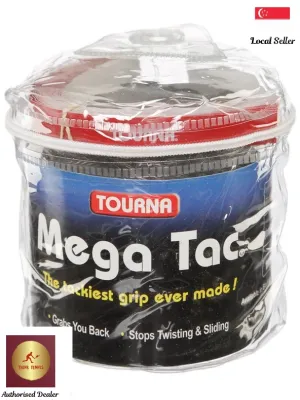
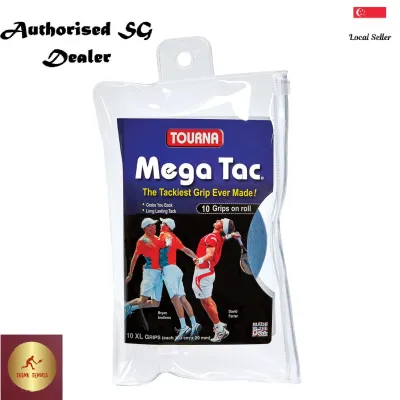
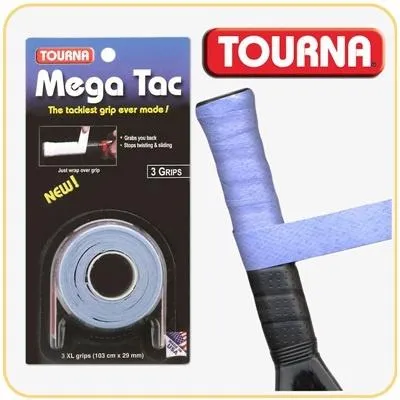
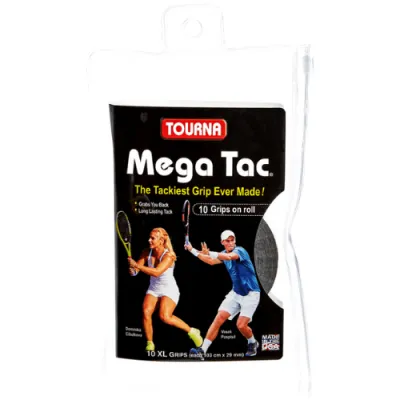
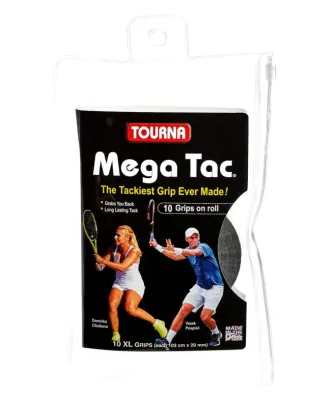
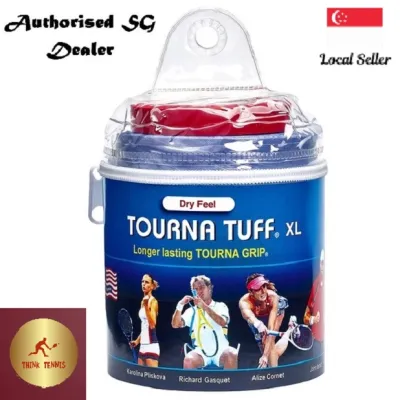
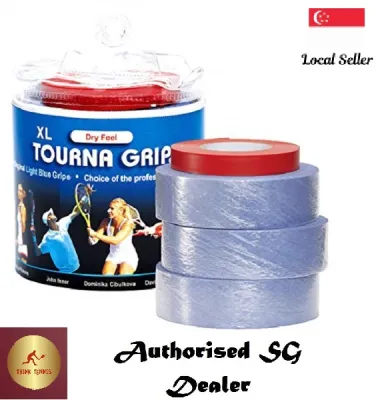
![[2 SIZES] Tourna Tuff Grip XL](https://img.lazcdn.com/g/p/cca898070b0b2e9e21615a807f6ddf96.png_400x400q80.png_.webp)
Prices are valid at publication and may change. Please refer to the product page for the latest price.
Comparing Tourna Overgrip Variants by Feel and Function
Tourna overgrips are broadly divided into two functional categories based on their material composition and how they manage moisture. The first category consists of dry and absorbent grips, epitomized by the classic Tourna Grip. Often recognized by its distinct light blue color, this grip is manufactured from a proprietary paper-like composite material. Unlike synthetic rubber grips, it does not feel sticky when you first apply it to the racket. Instead, it has a dry, suede-like texture. The unique property of this dry grip is that its performance improves as it gets wet. The fibers are designed to absorb moisture directly into the grip, expanding slightly to create a high-friction, non-slip surface. When your hands sweat, the grip pulls the moisture away from your skin, maintaining a dry feel throughout your session.

The second category comprises tacky overgrips, such as Tourna Mega Tac or Tourna Tac. These grips are made from polyurethane materials designed to offer an immediate, sticky sensation. When you hold a freshly wrapped tacky grip, it feels as though it is adhering to your palm, allowing you to hold the racket with an incredibly relaxed hand. This tackiness is highly effective in dry conditions or when sweat production is minimal. However, polyurethane is non-porous, meaning it cannot absorb large volumes of water. When subjected to heavy sweat or extreme tropical humidity, moisture can pool on the surface of a tacky grip. This creates a slick, greasy barrier that can cause the racket to slide unexpectedly, making it difficult to maintain a secure hold without constant wiping.
When purchasing these products at local sports shops or online marketplaces, it is essential to read the product labels carefully to verify their intended use. Manufacturers typically label dry grips with terms like “dry feel,” “maximum sweat absorption,” or “the light blue grip that won’t slip.” Tacky grips will be clearly marked with terms like “tacky feel,” “wet grip,” or “ultimate tack.” Understanding these labels helps you avoid purchasing a grip that is physically unsuited to your personal sweat profile or the local playing environment.
Matching the Variant to Your Playing Style and Conditions
Selecting the right overgrip requires balancing your personal sweat level with the specific court environment and time of day you play. If you primarily play on outdoor courts during the daytime, you will face the combined challenges of direct sunlight, high ambient temperatures, and intense humidity. Under these conditions, even players who do not normally sweat heavily will experience damp hands. For outdoor daytime play, prioritizing moisture absorption is essential. A dry-feel overgrip is the most reliable choice here, as it continuously manages the high volume of sweat, ensuring your racket remains stable during fast swings and heavy impacts.
Conversely, if you schedule your sessions for indoor courts or sheltered outdoor facilities in the evening, the playing conditions change. While the humidity remains high, the absence of direct sunlight reduces overall heat stress, resulting in moderate sweat levels for many players. If your hands only sweat moderately, a tacky overgrip can provide an excellent balance of comfort and control. The sticky surface helps you maintain a light, relaxed hold on the racket, which is highly beneficial for beginners learning to control their shots. However, you should still keep a small towel handy to dry your hands and the grip surface between games to prevent moisture buildup from compromising the tackiness.
For beginners unsure of which direction to go, a practical testing strategy is highly recommended. Instead of purchasing a large bulk roll of a single variant, buy a small three-pack of both the classic dry grip and a tacky variant. Wrap one racket with the dry grip and, if you have a second racket, wrap it with the tacky grip; otherwise, test them on the same racket in consecutive weeks. Play a full, high-intensity session with each under your typical playing conditions. Note how secure the racket feels during off-center hits, whether you feel the need to squeeze the handle excessively, and how long the grip retains its functional feel before becoming slippery. This hands-on comparison is the most accurate way to identify your ideal setup.
Application and Maintenance Tips for Humid Climates
Proper installation and regular maintenance are critical to maximizing the lifespan and performance of your overgrip in Singapore’s tropical climate. Before applying a new overgrip, you must inspect and prepare the base grip of your racket. If the base grip is dirty, worn, or damp from a previous session, it will transfer moisture, bacteria, and unpleasant odors to the new overgrip. Wipe the base grip clean with a dry cloth and allow it to air out completely before proceeding. Wrapping a fresh overgrip over a wet base grip will cause the adhesive backing to fail, leading to shifting and bunching during play.
When wrapping the overgrip, start from the butt cap at the bottom of the handle and work your way up to the throat. Maintain consistent tension throughout the process. For dry-feel grips, which have less elasticity, avoid pulling too tightly as this can thin out the material and reduce its absorbent capacity; instead, overlap each turn by approximately 2 millimeters to ensure a smooth, uniform surface. For tacky grips, apply moderate tension to stretch the material slightly, which helps eliminate air bubbles and wrinkles. Secure the top of the grip firmly using the finishing tape provided in the package, ensuring it does not unravel during fast swings.
In humid environments, overgrips degrade much faster than in dry climates. You must monitor your grip for observable signs of material breakdown. For dry grips, look for color changes—the bright light blue will fade to a dark, dirty grey—and check for a rough, cardboard-like texture or fraying edges. For tacky grips, the primary indicator of wear is a loss of stickiness, resulting in a slick, rubbery surface that feels greasy when damp. If you notice any of these signs, or if the racket begins to twist during normal play, stop your session and replace the overgrip immediately. Continuing to play with a degraded grip compromises your safety and can lead to accidental racket damage.
Frequently Asked Questions (FAQ)
Can I use a tacky overgrip if my hands sweat heavily?
You can use a tacky overgrip if you sweat heavily, but you must accept significant trade-offs in performance and durability. Because tacky polyurethane materials cannot absorb water, sweat will quickly pool on the surface, creating a slippery barrier. To maintain a secure hold, you will need to dry your hands and wipe down the racket handle with a towel after almost every point. Additionally, the salt and oils from your sweat will degrade the tacky coating rapidly, requiring you to replace the overgrip much more frequently than a player with dry hands to maintain safe racket control.
How often should a beginner replace their overgrip?
Rather than following a strict calendar schedule, you should replace your overgrip based on visual and tactile indicators of wear. For a beginner playing once or twice a week in high humidity, a dry overgrip typically lasts between three to five sessions before the absorbent fibers become saturated with sweat salts and dirt, losing their effectiveness. A tacky overgrip may lose its adhesive feel even sooner, often after two to four sessions. If the grip feels slick, looks heavily discolored, or emits a sour odor, it is time to replace it to ensure optimal grip stability and prevent hand fatigue.

Community discussion
Share your experience or ask a question. Comments are reviewed before publication.