
Fitting cardio equipment into a Singapore Housing & Development Board (HDB) flat requires balancing a compact footprint, easy storage, and low noise levels. UREVO offers several space-saving treadmills and ellipticals designed specifically for tight urban spaces, but the right choice depends on your specific floor plan, ceiling height, and noise tolerance. By evaluating your home’s physical constraints and understanding how different machines operate, you can select a model that supports your fitness goals without compromising your living space.
To make an informed decision, you must look beyond the aesthetic appeal of a machine and analyze its physical dimensions, mechanical design, and operational impact. This guide breaks down the essential steps to measure your home, compare UREVO product types, and set up your equipment safely.
Measuring Your HDB Space for Cardio Equipment
Before browsing any UREVO catalog, you must establish the precise physical boundaries of your workout area. HDB flats, particularly newer BTO layouts, feature highly optimized room dimensions where every centimeter counts. Start by measuring the dedicated floor area of your intended workout spot using a standard measuring tape, noting both the length and the width.
Products mentioned in this guide
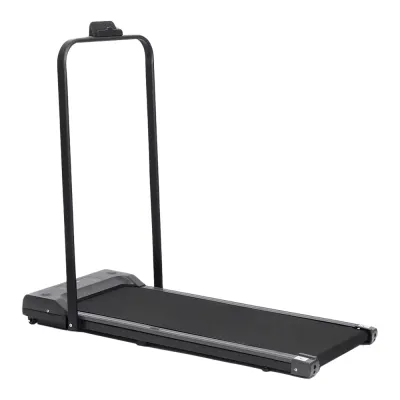
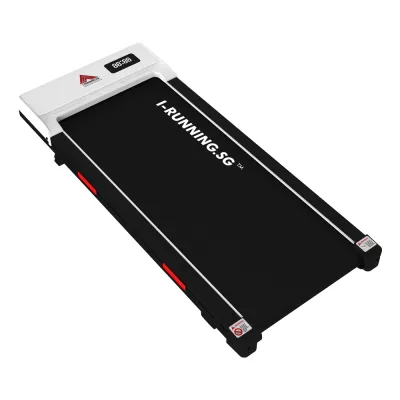
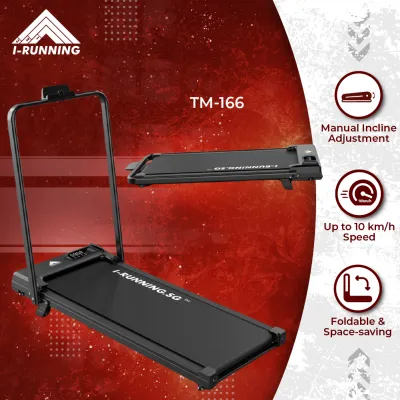
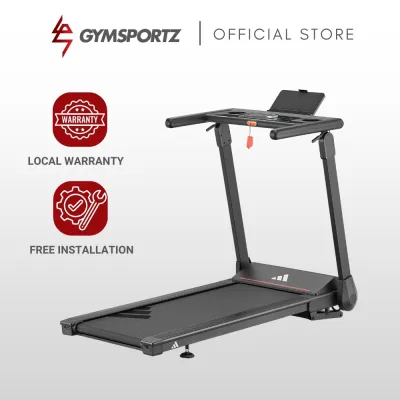
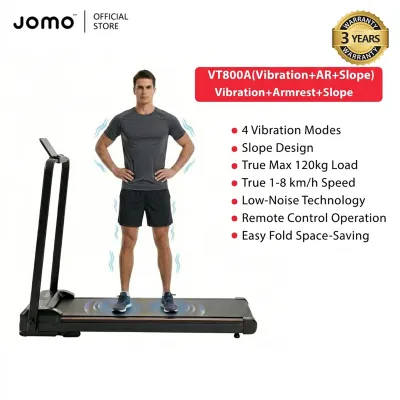
Prices are valid at publication and may change. Please refer to the product page for the latest price.
Ceiling height is another critical dimension that buyers frequently overlook. Standard HDB ceilings typically measure between 2.6 and 2.8 meters. If you select an elliptical or a treadmill with an incline feature, your head will rise significantly higher than your standing height during use. You must ensure there is enough clearance to prevent head injuries during high-intensity workouts.
Do not forget to measure the transit path from your front door to the final room. Measure the clearance width of your HDB main entrance, bedroom doors, and any tight corridor corners. Many compact cardio machines arrive semi-assembled in large boxes; if your doorways are narrower than the box dimensions, you will face major delivery and installation challenges.
Finally, distinguish between the stored footprint and the active footprint. The stored footprint is the space the machine occupies when folded or tucked away. The active footprint includes the space required to operate the machine safely, which must include a generous safety buffer behind the unit to protect you in the event of a slip or fall.
Evaluating UREVO Treadmills for Compact Layouts
UREVO is widely recognized for its compact, low-profile treadmills and walking pads. When evaluating these models for an HDB flat, your first step should be to check the manufacturer’s official specification sheet for both the unfolded and folded dimensions. This ensures the machine fits your room in both states.

A key feature to look for in a UREVO treadmill is a reliable folding mechanism. Many space-saving models feature flat-folding designs where the handrails fold down flush with the running deck, allowing you to slide the unit under a bed or sofa. If you choose a model with a upright folding design, verify that it uses a secure locking system or a soft-drop hydraulic mechanism to prevent the deck from dropping abruptly onto your flooring.
Running belt dimensions directly affect both your safety and the machine’s overall footprint. A wider and longer belt provides a more comfortable stride, but it also increases the machine’s physical size. For walking or light jogging, a belt width of 40 to 42 centimeters is generally sufficient and keeps the overall machine width highly manageable for small bedrooms.
Always verify that the treadmill has built-in transport wheels at the base. Because HDB rooms often serve multiple purposes, you will likely need to roll the treadmill out to the center of the room for your workout and push it back into a corner afterward. High-quality, smooth-rolling wheels prevent scratches on your flooring and make daily relocation effortless.
Assessing UREVO Ellipticals for Small Rooms
Unlike treadmills, most compact ellipticals do not fold flat. Purchasing a UREVO elliptical represents a permanent spatial commitment in your HDB flat, meaning you must dedicate a fixed piece of floor space to the machine year-round. This makes precise initial measurements even more critical.
When comparing elliptical designs, consider the spatial differences between front-drive and rear-drive models. Front-drive ellipticals typically have a longer, more rectangular footprint but offer a flatter, more natural walking stride. Rear-drive models are often more vertically compact, making them easier to tuck into a tight corner, though they may have a slightly steeper, stepping-like motion path.
To calculate your required ceiling clearance for an elliptical, use a simple formula. Find the maximum pedal height specification in the UREVO user manual, add your own height, and then add a safety buffer of at least 20 centimeters. If the sum of these numbers exceeds your HDB ceiling height, you risk hitting your head during workouts and should consider a lower-profile walking pad instead.
Stride length is another essential specification to check on compact ellipticals. To save space, some ultra-compact models shorten the stride length to under 35 centimeters. While this keeps the machine small, a stride length that is too short for your height can feel unnatural and cause joint strain over time, so ensure the mechanical path matches your natural biomechanics.
Treadmill vs. Elliptical: Space and Noise in HDB Flats
Choosing between a UREVO treadmill and an elliptical for HDB living involves a direct trade-off between storage convenience and acoustic impact. Understanding how each machine interacts with your home’s structure will help you maintain peace with both your family and your downstairs neighbors.
Spatial Flexibility
- Treadmills: These offer superior spatial flexibility because they can fold flat and be stored out of sight under furniture or vertically against a wall when not in use.
- Ellipticals: These require a permanent, non-foldable footprint, making them less suitable for multi-functional rooms where floor space must be cleared daily.
Noise and Vibration
- Treadmills: Running generates significant impact noise as your feet strike the deck. This kinetic energy travels down through the machine's frame and directly into the concrete floor slab of your HDB block, resulting in low-frequency thuds that your downstairs neighbors will hear.
- Ellipticals: These operate using a continuous, low-impact gliding motion. Because your feet never leave the pedals, there is virtually no impact noise, making them the quietest option for early morning or late-night workouts.
Your building’s age and floor level should also influence your choice. Older HDB estates may have thinner concrete floor slabs that transmit vibrations more easily than newer developments. If you live on a high floor and plan to run at high speeds, a treadmill will require significant noise-dampening modifications, whereas an elliptical will naturally run much quieter without extra effort.
Safe Setup, Clearance, and Vibration Control
Once you select your UREVO machine, proper installation is vital to ensure safe operation and protect your HDB flat’s interior. Placing cardio equipment too close to walls or furniture is a major safety hazard that can lead to severe injury if you lose your balance.
Establish Safety Clearance Zones
Always maintain a clear zone of at least 1 meter behind a treadmill and 0.5 meters on both sides of any cardio machine. Never position the rear of a treadmill belt directly against a wall, wardrobe, or glass door. If you fall while the belt is moving, you need open space behind you to safely slide off the machine rather than becoming trapped against an obstruction.
Use a High-Density Equipment Mat
Always place a thick, high-density rubber or PVC equipment mat underneath your UREVO machine. This mat serves three essential functions in an HDB flat:
- Floor Protection: It prevents the heavy metal frame and transport wheels from scratching or denting your vinyl, laminate, or tiled floors.
- Vibration Absorption: It dampens the mechanical vibrations and footfall impacts before they can travel into the building's concrete structure.
- Stability: It keeps the machine from shifting or sliding on smooth floors during high-intensity exercise sessions.
Manage Power Cords Safely
Route all electrical cords along the walls and away from active walking paths to prevent tripping hazards. Never run a power cord underneath the treadmill deck or elliptical frame, as the weight of the machine or its moving parts can pinch and damage the protective insulation, creating a serious electrical fire hazard.
Ensure Proper Motor Ventilation
Keep the motor housing clear of obstructions to prevent overheating. HDB rooms can become warm and humid, especially if you exercise with the windows closed or in a small study. Ensure there is at least 30 centimeters of open space around the motor vents, and regularly vacuum any accumulated dust or pet hair from the grilles to keep the cooling system working efficiently.
Community discussion
Share your experience or ask a question. Comments are reviewed before publication.