
Selecting the ideal victor shuttlecock depends primarily on your current playing level, budget, and how often you mis-hit the shuttle. While beginners require highly durable synthetic options or entry-level duck feather models to withstand frequent frame strikes, intermediate and advanced players need the precise flight dynamics, spin control, and predictable deceleration that only natural duck or goose feather shuttlecocks can provide. Matching your skill level to the correct Victor model ensures you do not overspend on fragile tournament-grade gear or hinder your skill development with unpredictable flight paths.
Using the wrong equipment can also lead to physical strain. For instance, playing with a heavy, damaged synthetic shuttlecock often forces players to swing with excessive force, increasing the risk of shoulder or elbow injuries. By understanding the specific design intentions behind each Victor series, you can select a model that supports your technique, matches your playing venue, and fits your budget.
Understanding Victor Shuttlecock Categories and Materials
To make an informed decision, you must first understand the structural differences that define the Victor shuttlecock lineup. The brand categorizes its products based on raw materials, manufacturing precision, and intended use. The primary division lies between natural feather shuttlecocks and synthetic alternatives, each serving distinct roles on the court.
Products mentioned in this guide
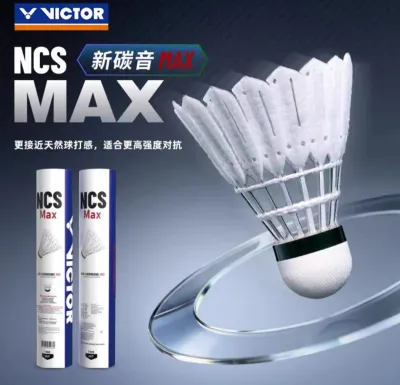
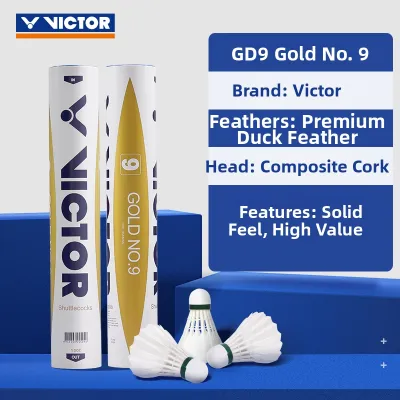
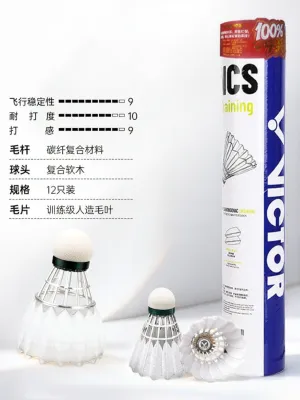
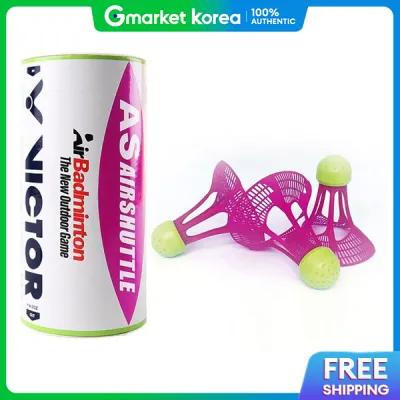
Prices are valid at publication and may change. Please refer to the product page for the latest price.
Natural feather shuttlecocks are crafted using either duck or goose feathers. Goose feathers are generally considered the premium choice due to their thicker, stronger fiber structure, which offers superior wind resistance and a highly consistent flight path. Duck feathers, while slightly less durable under high-impact smashes, provide an excellent, cost-effective alternative for regular club play. Within these natural categories, Victor further distinguishes its products by the quality of the cork base. Premium models feature solid natural cork, which delivers a crisp impact feel and optimal energy transfer, while entry-level and mid-tier models often utilize composite or sandwich cork (a mix of natural and synthetic cork layers) to balance cost and performance.
Synthetic shuttlecocks, often referred to as nylon or plastic shuttles, replace natural feathers with a molded nylon skirt. Victor’s synthetic series, such as the Nylon or Carbo-Sonic lines, are engineered to mimic the flight of natural feathers while offering exceptional durability. The trade-offs between these materials are clear:
- Natural Goose Feather: Offers the most authentic flight trajectory, precise spin, and rapid deceleration, but has a higher cost per tube and lower durability.
- Natural Duck Feather: Provides a balanced flight path and moderate durability at a more accessible price point, making it ideal for intermediate training.
- Synthetic Nylon: Delivers extreme durability and low cost per session, but lacks the precise spin control, crisp impact feel, and natural deceleration of real feathers.
Understanding these material characteristics prevents the common mistake of buying premium tournament shuttlecocks for casual backyard play, or using heavy synthetic shuttles in competitive club matches where precise net play is required.
Choosing Victor Shuttlecocks for Beginners: Durability and Value
When you are new to badminton, your primary focus should be on developing consistent stroke mechanics, footwork, and hand-eye coordination. During this learning phase, off-center hits and frame strikes are incredibly common. If you use fragile, high-end feather shuttlecocks, a single mis-hit can easily bend or snap a feather, instantly ruining the shuttlecock’s flight path and forcing you to discard it. For this reason, beginners should prioritize durability and value over absolute flight precision.

Victor’s synthetic nylon shuttlecocks are the most practical starting point for novice players. These models are designed to withstand repeated impacts with the racket frame without losing their shape or tearing. A single synthetic shuttlecock can often last for multiple sessions, significantly lowering your overall cost of play. The slower, more forgiving flight dynamics of nylon models also give beginners slightly more reaction time to position themselves and execute a proper swing, which is crucial for building muscle memory.
If you prefer the feel of natural feathers from the start, look for Victor’s entry-level duck feather models. These are specifically designed for training and casual recreational play. While they will break faster than nylon options when struck with the frame, they offer a more authentic introduction to how a shuttlecock spins and drops. When purchasing these entry-level options from official sports retailers, keep the following guidelines in mind:
- Check the Skirt Material: Ensure the packaging clearly states "Nylon" or "Duck Feather" rather than premium goose feather.
- Verify the Speed Rating: For beginners playing in typical indoor sports halls, a standard speed rating of 76 or 77 is recommended to keep rallies manageable.
- Inspect the Cork Base: Look for composite or synthetic cork bases, which offer excellent durability against repeated mis-hits compared to fragile, solid natural cork.
Choosing Victor Shuttlecocks for Intermediate Players: Flight and Longevity
As an intermediate player, your technique is becoming more consistent, and you are likely executing fewer frame strikes. You are starting to develop a feel for slice shots, net drops, and powerful smashes. At this stage, synthetic nylon shuttlecocks can begin to limit your progress, as they do not decelerate or spin in the same way natural feathers do. However, jumping straight to expensive tournament-grade goose feathers can quickly become a financial burden, especially if you play multiple times a week.
The key for intermediate players is finding the sweet spot between authentic flight trajectories and longevity. This is where Victor’s mid-tier duck feather and lower-grade goose feather training lines excel. These shuttlecocks are engineered to provide the true aerodynamic deceleration and spin control required for advanced drills and club play, while utilizing slightly thicker, more robust feathers that can survive intense rallies and hard smashes.
When evaluating the cost-to-performance ratio of intermediate Victor shuttlecocks, consider your weekly usage. If you are playing three to four times a week in a local club, a tube of mid-tier duck feather shuttlecocks (typically priced in the S$30 to S$45 range) offers the best balance. They allow you to practice precise drop shots and net play with realistic feedback, without the stress of ruining a premium S$60 tube in a single session. To maximize your investment, always check the feather alignment and glue quality on the shuttlecocks before play; well-aligned feathers and a solid glue ring around the base are strong indicators of a shuttlecock that will maintain its flight path even after several hard hits.
Choosing Victor Shuttlecocks for Advanced Players: Precision and Consistency
Advanced and competitive players operate at a level where every millimeter counts. A shuttlecock that wobbles in the air, decelerates inconsistently, or fails to spin predictably can directly impact the outcome of a match. At this level, there is no substitute for premium goose feather shuttlecocks, such as Victor’s top-tier Master or Champion series. These models are crafted from highly selected, uniform goose feathers and feature premium, solid natural cork bases.
The performance metrics that matter most to advanced players include:
- Strict Flight Consistency: The shuttlecock must follow a highly predictable trajectory from the moment it leaves the racket, regardless of the force applied.
- Precise Deceleration: High-end goose feathers expand slightly during flight to create natural drag, allowing the shuttlecock to drop sharply near the baseline on clear shots.
- Reliable Spin on Net Plays: The structural integrity of premium feathers allows players to execute tight, spinning net shots that tumble unpredictably over the tape.
The trade-off for this elite performance is lower durability and a significantly higher cost per tube. Because these shuttlecocks are designed for optimal aerodynamics rather than ruggedness, a single high-intensity rally involving heavy smashes can bend or weaken the feathers, altering the flight path. Advanced players must accept that they will go through multiple shuttlecocks per match to maintain competitive integrity.
To ensure optimal performance, pre-game preparation is essential. Before stepping onto the court, inspect the shuttlecock’s glue lines and feather stems for any pre-existing cracks or deformities. If you notice any loose feathers or a softening cork base, set that shuttlecock aside for low-intensity warm-ups rather than competitive rallies.
Storing and Maintaining Feather Shuttlecocks in Singapore
Singapore’s tropical climate presents unique challenges for badminton players. While the high ambient humidity generally prevents natural feathers from drying out as quickly as they would in arid climates, the widespread use of air-conditioning in sports halls and homes can rapidly dehumidify your gear. Storing your Victor shuttlecocks in dry, air-conditioned rooms makes the feathers brittle, leading to premature cracking and splitting during play.
To preserve the lifespan and flight characteristics of your natural feather shuttlecocks, proper storage is critical. Always store your shuttlecock tubes vertically with the cork facing downward to prevent the feathers from warping under their own weight. Keep the tubes in a cool, dark place away from direct sunlight and extreme heat, such as the trunk of a car parked outdoors, as excessive heat can dry out the natural oils in the feathers and degrade the adhesive holding them together.
If you frequently store your gear in air-conditioned environments, you can use safe, reversible humidification methods to restore moisture to the feathers. One common technique is to gently apply steam to the inside of the tube using a garment steamer or a kettle, allowing the warm moisture to coat the feathers before sealing the tube. Alternatively, you can place a slightly damp cloth or sponge at the feather end of the tube for a few hours before play.
However, you must establish clear safety boundaries when humidifying your shuttlecocks. Over-humidification can ruin the equipment. If the feathers become waterlogged, they will become too heavy, drastically altering the flight speed and trajectory. Furthermore, excess moisture can cause mold to grow on the feathers or soften the natural cork base, rendering the shuttlecock unusable. If you notice any signs of mold, waterlogging, or a soft, spongy cork, stop using the shuttlecock immediately and consult the manufacturer’s care guidelines.
Frequently Asked Questions (FAQ)
How do I choose the right speed rating for my shuttlecock?
Shuttlecock speed ratings (typically ranging from 75 to 79) indicate how fast and far a shuttlecock will fly under specific atmospheric conditions. Warmer temperatures and higher altitudes reduce air density, causing shuttlecocks to fly faster and further. In Singapore’s hot and humid tropical climate, you should generally opt for slower speed ratings, such as 76 or 77. Using a faster speed rating like 78 or 79 in a warm indoor hall will often result in the shuttlecock consistently flying out of bounds, disrupting the flow of your game.
Can I use synthetic shuttlecocks for official local tournaments?
While synthetic nylon shuttlecocks are highly recommended for casual recreational play, training sessions, and school physical education classes due to their durability, they are generally not permitted in official local tournaments. Most competitive events sanctioned by national badminton associations or local sports bodies strictly require natural feather shuttlecocks. This rule ensures that all players compete under standardized aerodynamic conditions, where precise spin, deceleration, and control are fully realized.
How can I verify the authenticity of Victor shuttlecocks bought online?
To protect yourself from counterfeit products when purchasing Victor shuttlecocks from online marketplaces, always look for the official holographic security label on the packaging. Genuine Victor tubes feature a unique scratch-off code or QR code that you can verify directly on the manufacturer’s official website. Additionally, prioritize buying from authorized sports retailers, official brand flagship stores, or reputable local distributors to ensure you are receiving authentic, high-quality gear.
Community discussion
Share your experience or ask a question. Comments are reviewed before publication.