
Setting up a home gym in a Housing & Development Board (HDB) apartment requires balancing your fitness goals with the realities of high-density vertical living. Unlike commercial gyms with reinforced concrete floors and professional soundproofing, an HDB flat demands careful consideration of noise, vibration, floor protection, and space efficiency. Choosing the right weight plates is the most critical decision in this process, as the material and design you select will directly impact your relationship with your downstairs neighbors and the longevity of your home’s tiled or vinyl flooring. To build a successful setup, you must evaluate how different plate types fit your specific workout routine, your available square footage, and your storage capabilities.
Assessing Your HDB Space and Workout Needs
Before purchasing any fitness equipment, you must measure your designated workout area and plan for safe clearance. A standard Olympic barbell is approximately 2.2 meters long, which means you need a clear path of at least 2.8 meters in width to load and unload weight plates safely without striking walls, wardrobes, or glass doors. Mark out this footprint on your floor using masking tape to visualize how much space remains for movement, bench placement, or a squat stand.
Your choice of exercises dictates the physical demands placed on your flooring. If your routine consists of controlled, slow lifts such as squats, bench presses, and strict overhead presses, the risk of dropping weights is minimal. However, if you plan to perform deadlifts, cleans, or snatches, you must account for the inevitable impact of the barbell hitting the ground. In an HDB environment, dropping weights directly onto the floor is highly discouraged due to the risk of cracking floor tiles, damaging the underlying screed, and transmitting disruptive low-frequency vibrations through the building’s concrete structure.
Products mentioned in this guide
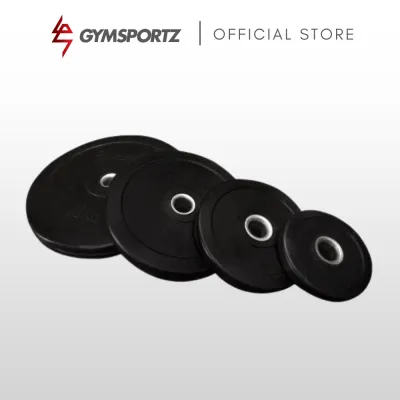
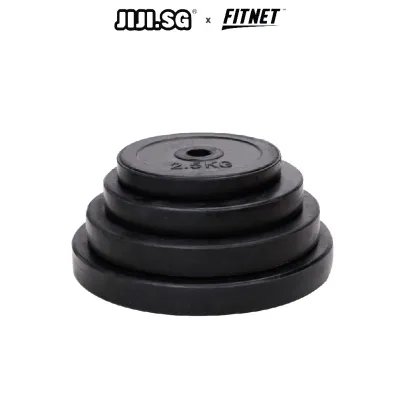
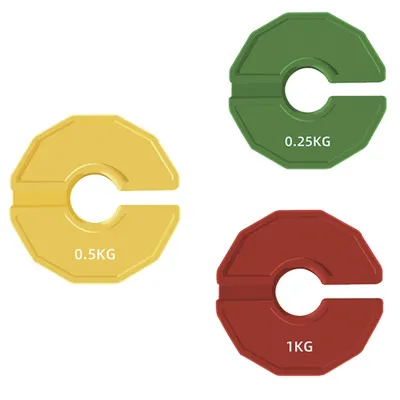
![🇸🇬 [READY STOCK] Fractional Weight Plates For Olympic Barbell Dumbbell Bar Fractional Weight Plate 0.5kg 1kg 1.5kg 2kg 2.5kg](https://img.lazcdn.com/g/p/2d05b8e2f3c4341113a4e0e148c680c9.jpg_400x400q80.jpg_.webp)
Prices are valid at publication and may change. Please refer to the product page for the latest price.
Acoustic management is a courtesy that keeps your home gym viable over the long term. Sound travels exceptionally well through shared concrete slabs, and the sharp clanging of metal plates or the dull thud of a heavy drop can easily disturb neighbors. To mitigate this, you must assess whether your floor can support thick rubber gym mats or a dedicated lifting platform, which will influence the type of weight plates you can safely use.
Comparing Weight Plate Materials for Compact Spaces
Weight plates are available in several distinct materials, each offering unique trade-offs in terms of thickness, noise dampening, durability, and cost.

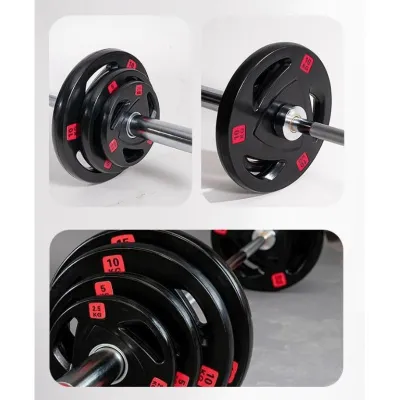
Rubber Bumper Plates: These plates are constructed from high-density vulcanized rubber or urethane surrounding a central steel collar. Their primary advantage is impact absorption; they are designed to be dropped, making them the safest choice for protecting your HDB floor and reducing structural noise. However, because rubber is less dense than iron, bumper plates are significantly thicker. This bulkiness means they consume more space on your barbell’s sleeves, limiting the total amount of weight you can load. They also require more storage space when not in use.
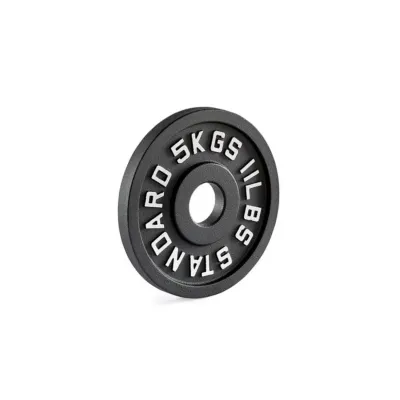
Iron and Steel Plates: Traditional cast iron or machined steel plates are highly valued for their slim profiles and space efficiency. Because they are thin, you can load a substantial amount of weight onto a short barbell sleeve, and they take up very little room on a storage rack. The major drawback in an HDB setting is the noise. Iron plates clang loudly during use, and dropping them even from a few inches can easily shatter ceramic tiles or dent vinyl flooring. Additionally, bare or painted iron is highly susceptible to rust in Singapore’s humid climate, requiring regular maintenance or a protective coating to prevent corrosion.
Vinyl or Concrete-Filled Plates: Often sold as budget-friendly starter sets, these plates consist of a plastic vinyl shell filled with sand or concrete. While they are inexpensive and relatively quiet when bumped together, they are incredibly bulky—often twice as thick as rubber bumper plates of the same weight. This extreme thickness severely limits progressive overload, as you will quickly run out of space on your barbell. Furthermore, the vinyl shells are prone to cracking over time, which can lead to concrete dust or sand leaking onto your floor.
Evaluating Plate Shapes and Storage Solutions
The physical shape of your weight plates and how you store them when they are not in use will determine the daily usability of your workout space.
Round vs. Hex-Shaped Plates: Standard round plates are the industry norm because they allow the barbell to roll smoothly along the floor, which is essential for positioning yourself during deadlifts and floor presses. However, in a small room, rolling plates can pose a safety hazard if the floor is slightly uneven. Hexagonal plates have flat edges that prevent the barbell from rolling away, making them highly stable for storage and certain floor exercises like push-ups on the bar. The downside is that hex plates do not rotate smoothly when they touch the ground during a deadlift, often causing the bar to land awkwardly and shift out of alignment, which can strain your back or damage your floor mats.
Storage Options: Keeping your plates off the floor is essential for maintaining a clean, safe HDB gym. A vertical plate tree is the most space-efficient option, utilizing vertical height rather than horizontal floor space. Wall-mounted storage pegs are another alternative, but you must verify whether your walls are structural concrete or non-load-bearing partition walls before drilling. Mounting heavy weight racks to partition walls can lead to structural failure. If drilling is not an option, a compact horizontal toaster rack can keep your plates organized, though it occupies more floor area.
Safety Clearances: Always maintain a clear path around your storage units. When loading a barbell, you should not have to squeeze into tight corners or lift heavy plates at awkward angles, as this increases the risk of lower back strain or dropping a plate on your toes. Ensure there is at least 60 centimeters of open space around your storage rack for safe lifting and carrying.
Building a Space-Conscious Starter Setup
When assembling your initial weight plate collection, focus on versatility and gradual progression to avoid cluttering your limited space with unnecessary gear.
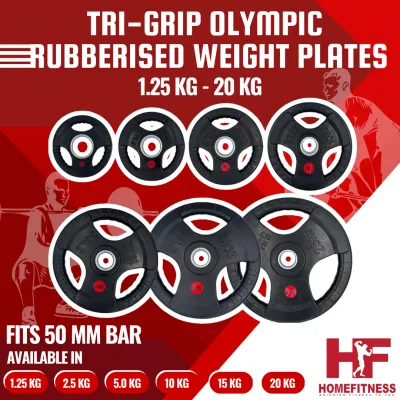
Plate Increments: A practical starter set should allow you to make small, incremental jumps in weight without requiring dozens of individual plates. A standard progression includes pairs of 20kg, 10kg, 5kg, 2.5kg, and 1.25kg plates. This combination allows you to load almost any target weight while keeping your storage footprint minimal. Avoid buying multiple pairs of mid-range weights like 15kg plates early on, as you can easily replicate that weight using combinations of smaller plates.
Hole Diameter: Ensure the center hole of your plates matches your barbell’s sleeve diameter. Olympic barbells require plates with a 2-inch (50mm) center hole, while standard barbells use plates with a 1-inch (25mm) hole. Mixing these standards is highly unsafe; using a 2-inch plate on a 1-inch bar causes the plate to slide and wobble violently, which can lead to loss of control during a lift.
Sizing Mistakes: A common error is purchasing only large-diameter bumper plates to make the setup look impressive. This quickly fills up your barbell sleeves and limits your ability to micro-load with smaller increments. Always check the maximum loadable sleeve length of your barbell before buying thick plates to ensure you have enough room for both the plates and the safety collars.
Frequently Asked Questions (FAQ)
Can I use 2-inch bumper plates on a standard 1-inch barbell?
No, you should never use 2-inch Olympic bumper plates on a standard 1-inch barbell. The difference in diameter creates a loose, unstable fit that allows the plates to tilt, slide, and wobble during movement. This instability shifts the center of gravity unpredictably, putting severe strain on your wrists and shoulders, and increases the risk of the plates slipping off the bar entirely. Always match the plate’s inner collar diameter precisely to your barbell’s sleeve specification.
Do I need a lifting platform if I use rubber bumper plates?
Yes, even if you use rubber bumper plates, a protective floor layer is highly recommended in an HDB flat. While bumper plates absorb a significant portion of the impact, they do not completely eliminate the kinetic energy transferred to the floor during heavy lifts like deadlifts. Over time, repeated impacts can crack ceramic tiles or damage the concrete subfloor beneath vinyl planks. A dedicated lifting platform or high-density rubber mats at least 15mm to 20mm thick will help distribute the force evenly, protect your property, and significantly reduce the low-frequency vibrations that disturb your neighbors.
Community discussion
Share your experience or ask a question. Comments are reviewed before publication.