
Finding the right weights rack for a small Housing & Development Board (HDB) flat requires balancing your strength training goals with the strict spatial and structural realities of apartment living. The ideal configuration depends on whether you can drill into your walls and how much floor space you can permanently dedicate to a workout zone. For most HDB owners with solid concrete walls, a wall-mounted foldable rack offers the ultimate space-saving compromise. If you are renting, have partition walls, or prefer not to drill, a compact vertical freestanding rack or an adjustable dumbbell stand provides a stable, non-permanent alternative.
Before purchasing any heavy gym equipment, you must evaluate your layout, floor load limits, and wall structures. Choosing the wrong setup can lead to cramped workouts, damaged walls, or even structural safety hazards.
Assessing Your HDB Space and Layout Constraints
Setting up a home gym in a typical HDB flat requires precise planning because every square meter counts. You must measure both the static footprint of the weights rack and the dynamic clearance zone required during an active workout. A rack might physically fit into a corner, but you also need enough clearance to move around it, load weight plates, and perform exercises safely.
Products mentioned in this guide
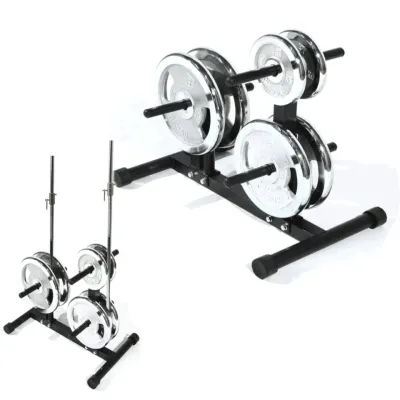
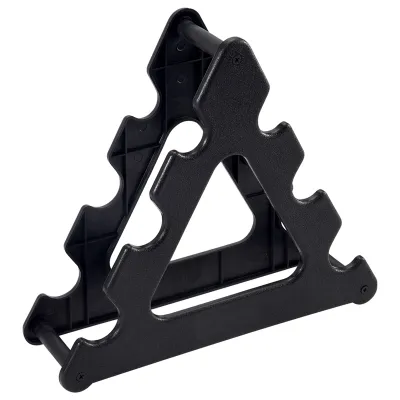
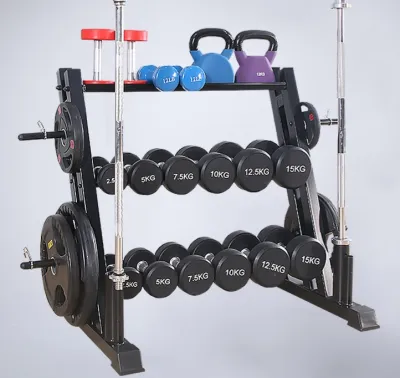
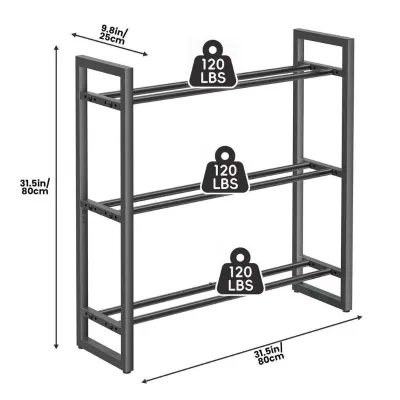
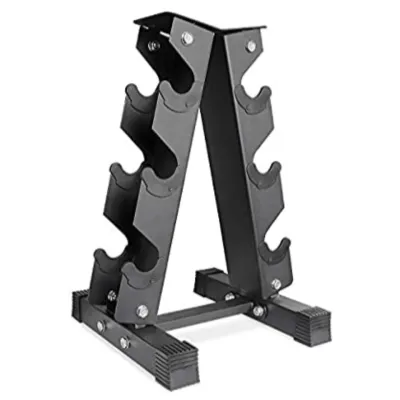
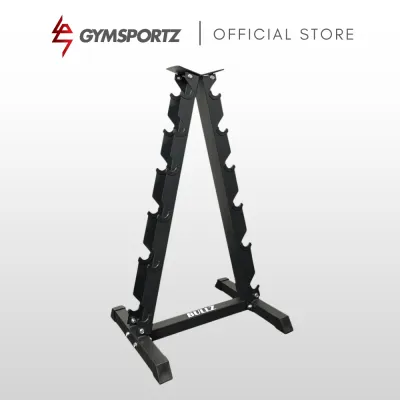
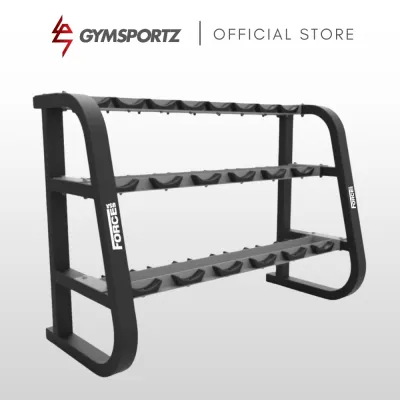
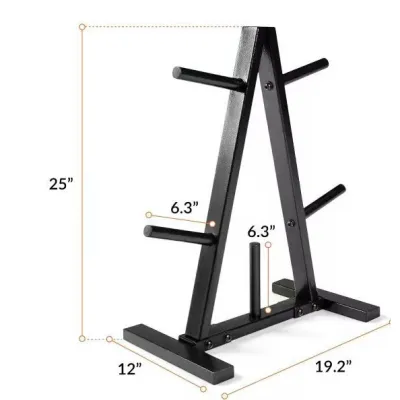
Prices are valid at publication and may change. Please refer to the product page for the latest price.
Start by measuring your available floor area and comparing it to the manufacturer’s specified base dimensions. Beyond the rack itself, map out a safety perimeter of at least one meter around the equipment. This buffer zone prevents you from hitting walls, furniture, or windows during dynamic movements like squats or overhead presses. Additionally, check the swing radius of nearby doors, wardrobe panels, and windows to ensure they can open fully without striking your gear.
Vertical clearance is another critical factor in HDB flats, where ceiling heights typically range from 2.6 to 2.8 meters. If you plan to perform pull-ups or overhead presses, you must account for the height of the rack plus the clearance needed for your head or the barbell at the top of the movement. A rack that stands 2.2 meters tall may leave insufficient space for a comfortable pull-up if your head clears the bar by another 30 centimeters.
Floor load capacity is a vital but often overlooked constraint in high-rise apartments. Standard HDB residential units are designed to support a structural floor load limit of 150 kilograms per square meter. While this is generally sufficient for standard fitness setups, a heavy power rack loaded with hundreds of kilograms of plates concentrated on a tiny footprint can approach these limits. Distributing this weight across a larger surface area is essential for long-term structural safety.
Finally, identify the structural composition of your walls. HDB flats feature a mix of reinforced concrete structural walls, precast internal partition walls, and lightweight concrete blocks. Structural walls and household shelters (commonly known as bomb shelters) are made of solid concrete, but drilling into household shelter walls is strictly prohibited by local housing regulations. Non-structural partition walls are typically made of drywall or lightweight concrete, which cannot support the heavy, dynamic loads of a wall-mounted rack.
Comparing Weight Rack Configurations for Small Spaces
When floor space is limited, weight rack designs generally prioritize either vertical storage or folding mechanisms. Understanding how these configurations utilize space helps you choose a model that aligns with your daily routine and home layout.

Wall-Mounted and Foldable Racks
Wall-mounted foldable racks are highly favored for HDB training because they fold flat against the wall when not in use. This design frees up valuable floor space, allowing a spare bedroom or living room corner to serve multiple purposes throughout the day. When folded, these racks typically protrude only 10 to 15 centimeters from the wall.
However, secure installation requires a solid, load-bearing concrete wall. You must never mount a folding rack onto drywall partitions or hollow bricks, as the dynamic force of racking a heavy barbell can pull the anchors straight out of the wall. Installing these racks requires heavy-duty sleeve anchors or concrete screws, which leave permanent holes that must be patched if you move out.
You must also consider the transition effort. While folding racks save space, you must manually deploy and lock them into place before every workout. If the folding mechanism is cumbersome or requires clearing away other furniture first, the friction of setting up can quickly discourage you from working out. Ensure you have a clear, unobstructed path to fold and unfold the unit smoothly.
Vertical and Compact Freestanding Racks
For renters or those who prefer not to drill into their walls, vertical and compact freestanding racks are the most practical options. These units rely on a stable base and vertical storage pegs to hold dumbbells, kettlebells, or weight plates. Because they do not require wall mounting, you can easily reposition them or move them to another room if your layout changes.
The primary trade-off with compact freestanding racks is the relationship between footprint and stability. A rack with a very narrow base takes up minimal floor space but carries a higher risk of tipping if loaded unevenly. To mitigate this risk, look for designs with a low center of gravity and wide, flared feet.
When using a vertical plate tree or dumbbell tower, always load the heaviest weights onto the bottom pegs first. This practice keeps the center of gravity close to the floor, significantly reducing the likelihood of the rack tipping over if bumped. Additionally, ensure the rack is placed on a completely level surface, as even a minor slope can compromise the stability of a narrow-base tower.
Safety, Installation, and Load Capacity Checks
Safety must be your top priority when introducing heavy strength equipment into an HDB flat. Before committing to a purchase, verify the manufacturer’s maximum load capacity and compare it to your current and projected lifting weights. This capacity must account for the weight of the barbell, the maximum plate load you intend to use, and your own body weight if the rack includes a pull-up bar.
When installing a wall-mounted rack, always use the specific mounting hardware recommended by the manufacturer for concrete applications. Standard plastic wall plugs are entirely inadequate for the high-stress loads of a weight rack. Instead, opt for heavy-duty steel expansion bolts or sleeve anchors. Before drilling, use a reliable stud finder or wall scanner to check for hidden electrical conduits or water pipes running through the concrete. If you are unsure about the structural integrity of your wall or lack the proper rotary hammer drill required for concrete, hire a professional contractor to handle the installation.
Establishing clear loading and unloading zones is also essential for safe operation. You need sufficient lateral clearance on both sides of the rack to slide weight plates onto the barbell sleeves. If the rack is tucked too close to a side wall, you will struggle to load plates safely, which can lead to awkward lifting postures and potential back strain. Aim for at least 60 centimeters of open space on either side of your barbell’s maximum width.
Common Space-Matching Mistakes to Avoid
One of the most frequent mistakes home gym builders make is ignoring the actual length of a standard barbell. While a compact rack might only be 1.2 meters wide, a standard Olympic barbell is 2.2 meters long. If you do not account for this extra width, you may find that your barbell hits adjacent walls or furniture, rendering the entire setup unusable. Always measure your room’s total width against the full length of the bar you plan to use.
Another common oversight is failing to account for the height of overhead exercises. Performing an overhead press requires you to push the barbell fully above your head. If your ceiling is low or you are tall, the plates can easily strike the ceiling plaster, causing cosmetic or structural damage. If vertical space is tight, consider performing seated overhead presses or opting for a shorter rack design.
Finally, avoid assuming that all compact racks are built to the same structural standards. Some budget-friendly, ultra-compact racks achieve their small footprint by using thinner steel gauges or narrower tubing. Always check the product specifications for the steel gauge (11-gauge or 14-gauge steel is standard for robust gym equipment) and base dimensions rather than relying solely on promotional photos, which can make equipment look larger or more stable than it actually is.
Frequently Asked Questions (FAQ)
Can I mount a weight rack on an HDB drywall partition?
No, you should never mount a weight rack or any heavy strength equipment on an HDB drywall partition. Drywall partitions are designed for room separation and cannot support the intense static and dynamic loads of a weight rack. Attempting to mount a rack on these walls can lead to catastrophic structural failure, severe wall damage, and serious personal injury. For partition-heavy layouts, stick to freestanding racks or vertical plate trees that distribute weight directly onto the floor.
How do I protect my HDB flooring from a freestanding rack?
To protect your HDB flooring from scratches, dents, and cracks, place high-density rubber gym mats underneath your freestanding rack. Standard HDB flooring materials like vinyl, laminate, or ceramic tiles can easily chip or indent under the concentrated weight of heavy metal racks. Use interlocking rubber tiles with a thickness of at least 15 to 20 millimeters to absorb impact and distribute the load evenly. Avoid cheap, soft EVA foam mats, as they compress too easily under heavy loads and fail to provide adequate protection for the subfloor.
Community discussion
Share your experience or ask a question. Comments are reviewed before publication.