
Selecting the correct wrist guard requires looking closely at the primary hazards of your chosen activity. Skateboarding and rollerblading present a high risk of sudden, high-velocity impact with hard ground, requiring rigid support structures to absorb shock and prevent hyperextension. Conversely, weightlifting introduces heavy, slow-moving axial loads that require flexible compression to stabilize the joint without locking it in place. By choosing gear tailored to these distinct physical demands, you ensure both safety and optimal athletic performance.
Using the wrong type of wrist support can actually increase your risk of injury rather than reduce it. For instance, wearing a rigid, splinted skateboard guard while attempting to clean and jerk a barbell prevents you from wrapping your fingers securely around the bar, which could cause you to drop the weight. Conversely, wearing a fabric weightlifting wrap while rollerblading down a steep hill provides no protection against the abrasive friction of asphalt or the crushing impact of a fall. Matching the gear to the sport is not a matter of preference; it is a fundamental safety requirement.
Why Sport-Specific Wrist Guards Matter
The human wrist is a complex arrangement of eight small carpal bones, ligaments, and tendons that are highly susceptible to injury when subjected to unnatural forces. In high-impact sports like skateboarding and rollerblading, injuries typically occur from acute falls where the natural instinct is to break the descent with an outstretched hand. This sudden kinetic energy transfer can force the wrist into extreme hyperextension, leading to severe sprains, ligament tears, or fractures of the radius and ulna. To mitigate this, a protective wrist guard must feature rigid splints that physically block the joint from bending past its safe range of motion.
Products mentioned in this guide
![[LOCAL SELLER] Wrist Wrap Universal / Wrist Guard / Wrist Support / Wrist Strap / Sports Wrist Band Polyester Adjustable Washable Universal Thumb Loop Universal - 1 piece only](https://img.lazcdn.com/g/p/955fdf866e4fddeb01949b5e61afcfde.jpg_400x400q80.jpg_.webp)
Prices are valid at publication and may change. Please refer to the product page for the latest price.
Conversely, weightlifting injuries are rarely caused by sudden ground impacts; instead, they stem from repetitive strain and joint deviation under heavy, loaded conditions. When pressing a heavy barbell overhead or performing a bench press, the wrist must support a massive vertical load. If the wrist bends too far backward under this weight, it strains the tendons and compromises the structural alignment of the entire arm. A soft, elastic wrist wrap provides the compression and lateral stability needed to keep the joint aligned, without the rigid plastic plates that would make gripping a barbell impossible.
In tropical environments like Singapore, climate also plays a major role in how you choose and maintain your protective gear. High humidity and year-round heat mean that heavy, non-breathable guards can quickly lead to excessive sweating, skin irritation, and rapid material degradation. Understanding the specific material composition and ventilation features of your wrist guard is essential for ensuring long-term comfort and durability during long outdoor sessions at local skateparks or indoor gym workouts.
Skateboarding Wrist Guards: Impact Protection and Splints
Skateboarding wrist guards are engineered specifically to withstand the brutal forces of falling onto concrete, asphalt, or wooden ramps. When a skateboarder slips out on a trick, they often fall forward or backward onto hard surfaces with minimal time to react. The primary job of a skateboarding wrist guard is to absorb the initial shock of this impact and prevent the wrist from snapping backward. To achieve this, these guards rely on a dual-splint design that sandwiches the wrist between two rigid protective barriers.

The core components of a high-quality skateboarding wrist guard include:
- Palmar Splint: A thick, contoured plastic plate positioned on the palm side of the hand. This splint absorbs the direct force of the ground impact and prevents the wrist from hyperextending.
- Dorsal Splint: A rigid strip running along the back of the wrist and hand. Working in tandem with the palmar splint, it keeps the wrist locked in a straight, neutral position.
- Ballistic Nylon Construction: The body of the guard is typically made from high-denier nylon (such as 1000D or 1680D) to resist tearing when dragged across rough concrete.
- Heavy-Duty Straps: Multiple wide, non-elastic hook-and-loop straps ensure the guard remains firmly anchored to the hand and does not slide off during a high-velocity fall.
When choosing skateboarding guards, look for models that feature removable splints, which make washing the fabric portion much easier. The plastic used in these splints is typically high-impact ABS or polycarbonate, which can withstand significant force before bending or cracking. It is important to check that the palmar splint is molded to match the natural curve of your hand, allowing you to maintain a relaxed grip on your board when carrying it, without sacrificing rigid protection during a fall.
While skateboarding wrist guards are highly effective at reducing the severity of wrist injuries, they are not a substitute for proper safety training and physical conditioning. Equipment cannot replace proper falling techniques, such as tucking your chin, pulling your arms in, and rolling to distribute the kinetic energy across your larger muscle groups. Skateboarding guards are designed to mitigate the initial impact, but relying solely on them without practicing safe falling habits can still lead to injuries further up the arm, such as elbow or shoulder dislocations.
Weightlifting Wrist Wraps: Joint Stability and Compression
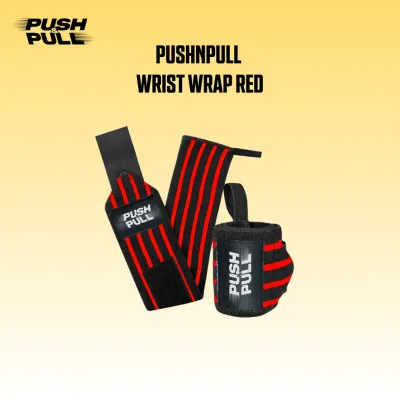
In the gym, the requirements for wrist support shift entirely from impact resistance to structural stabilization. Weightlifting wrist wraps are designed to assist athletes during heavy pressing movements, overhead lifts, and front squats by providing adjustable compression around the wrist joint. Unlike skating guards, weightlifting wraps do not contain any plastic or metal splints. Instead, they consist of a thick, woven blend of cotton, polyester, and elastane that wraps tightly around the wrist to create a supportive, cast-like effect.
The primary features of weightlifting wrist wraps include:
- Elastic Blend Fabric: The combination of materials allows you to customize the level of tension. You can pull the wrap tighter for maximum support during a heavy set, and loosen it between sets to restore full blood circulation.
- Thumb Loop: A small elastic loop attached to one end of the wrap. This loop is hooked over the thumb to anchor the wrap in place as you begin wrapping it around your wrist.
- Velcro Closure System: A wide hook-and-loop strap at the end of the wrap secures it firmly in place once the desired tension is achieved.
- Varying Lengths: Wraps typically range from 12 inches (30 cm) to 24 inches (60 cm) or more. Shorter wraps offer moderate support and are easier to put on, while longer wraps allow for more revolutions around the joint, providing maximum stiffness for heavy powerlifting.
To use a weightlifting wrap correctly, place the thumb loop over your thumb and begin wrapping the fabric around your wrist joint. It is a common mistake to wrap the fabric too low on the forearm; for maximum stability, the wrap must cover the actual joint line where the hand meets the wrist. Once the wrap is secured, many lifters choose to slip the loop off their thumb to prevent it from interfering with their grip on the barbell. The wrap should feel tight enough to limit backward wrist extension during your lift, but not so tight that it causes immediate numbness or tingling in your fingers.
It is crucial to understand that weightlifting wraps are training aids meant for heavy load-bearing exercises and should not be worn continuously throughout an entire workout. Overusing wraps during warm-up sets or lighter lifts can prevent the stabilizing muscles of your wrists and forearms from developing naturally. Reserve your wraps for working sets that approach or exceed 80% of your one-repetition maximum, or during movements where you feel your wrist alignment starting to fail under the load.
Rollerblading Wrist Guards: Abrasion Resistance and Sliding
Rollerblading and inline skating share some safety requirements with skateboarding, but the nature of a rollerblading fall introduces a unique variable: continuous forward sliding. Because inline skaters often travel at high speeds on flat pavement, a fall usually results in the skater sliding forward along the ground. Consequently, a rollerblading wrist guard must prioritize abrasion resistance and smooth sliding surfaces alongside basic impact protection.
Key features to look for in a rollerblading wrist guard include:
- Curved Palm Sliders: These are smooth, hard plastic plates (often made of polyoxymethylene or high-impact nylon) designed to slide easily across concrete or asphalt. When you fall, the slider allows your hands to glide forward, redirecting the downward impact force into forward momentum and reducing the risk of a sudden stop that could fracture your wrist or arm.
- Breathable Mesh Panels: Rollerblading is an intensive aerobic activity. To prevent your hands from overheating in Singapore's humid climate, look for guards constructed with open mesh backings and moisture-wicking liners that facilitate airflow.
- Single-Splint Designs: Many rollerblading guards feature only a palmar splint rather than a dual-splint system. This design provides excellent slide protection and sufficient hyperextension resistance while allowing slightly more wrist flexibility, making it easier to maintain balance and move your arms naturally.
- Reinforced Stitching: Because these guards are subjected to intense friction during a slide, the seams must be reinforced with double or triple stitching to prevent the plastic plates from tearing away from the fabric body.
When comparing rollerblading guards to skateboarding guards, the primary difference lies in the design of the plastic plate. Skateboarding guards often feature a flatter, more rigid splint designed to absorb vertical drops in a skatepark bowl, whereas rollerblading guards feature a highly contoured, curved slider plate that encourages a sliding motion. If you primarily skate on public pathways, park connectors, or open roads, a guard with a robust, smooth palm slider is essential for protecting your skin from severe road rash and absorbing the initial shock of a fall.
To maximize the lifespan of your rollerblading guards, regular inspections are critical. Every time you slide on pavement, a small amount of the plastic slider plate is shaved away. Over time, these plates can become deeply grooved, thin, or cracked. If you notice that the plastic has worn down significantly or that the stitching holding the slider in place has begun to unravel, replace the guards immediately. Continuing to wear worn-out guards exposes you to the risk of the plastic shattering upon the next impact, which can cause severe lacerations and fractures.
Can You Use One Wrist Guard for Multiple Sports?
Many multi-sport athletes wonder if they can save money and storage space by purchasing a single pair of wrist guards for skateboarding, weightlifting, and rollerblading. The answer depends heavily on which sports you are trying to combine. While there is some functional overlap between street sports, there is a hard, uncompromising boundary between gym-based weightlifting and outdoor action sports.
For skateboarding and rollerblading, a high-quality hybrid wrist guard can often serve both purposes successfully. If you purchase a guard that features a robust, curved palmar slider plate, durable ballistic nylon, and secure strapping, it will perform exceptionally well whether you are riding a skateboard or cruising on inline skates. However, if you are a transition skateboarder riding deep bowls and ramps, you will still benefit more from a dedicated dual-splint skate guard that offers maximum vertical impact protection, whereas a long-distance inline skater will prefer the superior ventilation and sliding dynamics of a dedicated rollerblading guard.
The division between weightlifting and skating sports, however, is absolute. You cannot use weightlifting wraps for skating or rollerblading, nor can you use skating guards for weightlifting. Weightlifting wraps are made of soft fabric and offer absolutely no rigid splints or plastic sliders; if you fall on concrete while wearing them, the fabric will tear instantly, and your wrists will receive no protection against hyperextension or road rash. Conversely, trying to wear rigid skateboarding or rollerblading guards in the gym is highly dangerous. The hard plastic plates prevent your hand from closing fully around a barbell, dumbbell, or pull-up bar, severely compromising your grip and increasing the risk of dropping heavy weights onto yourself.
To help you decide on your gear setup, consider the following compatibility guidelines:
- Skateboarding and Rollerblading: High compatibility. A dual-splint guard with a hard palm slider can be used for both casual skateboarding and inline skating.
- Weightlifting and Skateboarding: Zero compatibility. Always use dedicated elastic wraps for lifting and rigid splinted guards for skateboarding.
- Weightlifting and Rollerblading: Zero compatibility. Always use dedicated elastic wraps for lifting and slider-equipped guards for rollerblading.
How to Ensure a Proper Fit and Safe Usage
No matter how high-quality your wrist guard is, it will fail to protect you if it does not fit correctly or if it is worn improperly. A guard that is too loose can shift during a fall, exposing your wrist to injury or causing the plastic splints to dig painfully into your skin. Conversely, a guard that is too tight can restrict blood circulation, leading to numbness, cold fingers, and decreased hand coordination, which can be highly dangerous during active sports.
To find the perfect fit, you must measure your hand accurately before making a purchase. Use a flexible tape measure to measure the circumference of your hand just below the knuckles, excluding the thumb. Compare this measurement directly to the manufacturer’s specific sizing chart, as sizing can vary significantly between different brands. If your measurement falls directly between two sizes, it is generally recommended to opt for the larger size if you have wider wrists, or the smaller size if you prefer a highly locked-in, snug fit.
Once you have purchased your wrist guards, perform a quick fitting check before every session:
- Position the Splint: Ensure the contoured plastic palmar splint sits flat against the heel of your palm, aligning perfectly with the base of your hand.
- Secure the Straps: Fasten the straps starting from the middle, then the bottom (wrist), and finally the top (hand). The straps should be tight enough that you cannot easily wiggle the guard side-to-side, but loose enough that you can still make a gentle fist.
- Check Circulation: Wiggle your fingers and verify that you do not feel any tingling, throbbing, or loss of sensation. If your fingers begin to feel cold or turn pale, loosen the straps slightly.
- Inspect the Condition: Look for signs of wear and tear, such as cracked plastic, frayed stitching, or degraded Velcro that no longer holds securely.
In Singapore’s hot and humid climate, proper maintenance is essential to prevent your wrist guards from developing unpleasant odors, mold, or structural weaknesses. Sweat contains salts and acids that can slowly degrade the stitching and elastic fibers of your guards over time. After every session, do not leave your sweaty guards zipped up in a dark gym bag. Instead, wipe down the plastic plates, open up all the Velcro straps, and hang them in a well-ventilated indoor area to air dry completely. For a deep clean, hand wash the fabric components in cool water with a mild detergent, rinse thoroughly, and allow them to air dry away from direct, intense sunlight, which can make the plastic splints brittle.
Frequently Asked Questions (FAQ)
Should I wear wrist guards on both hands or just my dominant hand?
You should always wear wrist guards on both hands. When you lose your balance or fall unexpectedly, your brain’s natural survival reflex is to instantly throw out whichever hand is closest to the ground to break your fall, regardless of whether it is your dominant or non-dominant hand. Falls are highly chaotic, and you cannot predict or control which side will take the brunt of the impact. Wearing symmetrical protection on both wrists ensures that both joints are equally shielded from sudden kinetic forces, preventing severe unilateral injuries.
Do wrist guards weaken your wrist muscles over time?
No, wearing sport-specific wrist guards during your active training sessions will not weaken your wrist muscles. Unlike medical immobilization braces that are prescribed for continuous, 24-hour wear after an injury, athletic wrist guards and wraps are only worn for a few hours a week during specific physical activities. Your wrist muscles and forearms continue to work actively to maintain balance, grip, and control during your sport. However, to maintain optimal joint health and long-term strength, it is highly recommended to incorporate targeted wrist mobility and forearm strengthening exercises—such as wrist extensions, forearm curls, and grip-strengthening work—into your weekly fitness routine outside of your main sport.

Community discussion
Share your experience or ask a question. Comments are reviewed before publication.