
Selecting the ideal Yesoul cardio machine for your HDB flat comes down to balancing your fitness goals with the physical realities of Singapore’s high-rise living. Because HDB layouts often feature tight corners, structural beams, and multi-purpose rooms, the best model is not simply the smallest one available, but the one that fits your specific room dimensions while allowing safe operation. To make the right choice, you must compare the operational footprint of Yesoul treadmills and ellipticals, verify their folded and unfolded dimensions against your available floor space, and plan for delivery constraints. By systematically measuring your home and checking the manufacturer’s specifications, you can install a highly effective workout station without cluttering your living area or disturbing your neighbors.
Measuring Your HDB Space and Delivery Constraints
Before browsing any Yesoul catalog, you must establish the exact physical boundaries of your intended workout zone. Use a metal measuring tape to record the length, width, and height of the space. In HDB flats, structural elements like low-hanging ceiling beams, built-in wardrobes, and air-conditioning trunking frequently reduce the usable volume of a room. If you plan to place the machine in a spare bedroom or a study, ensure that wardrobe doors can still open fully and that there is sufficient clearance from study desks or bed frames.
Equally important is the path the equipment must take to reach its final destination. Yesoul treadmills and ellipticals arrive in large, heavy boxes that require careful maneuvering. Measure the width of your main entrance door, bedroom doors, and any narrow hallway turns within your flat. Additionally, check the dimensions of your HDB estate’s passenger lift to ensure the delivery team can transport the box to your floor without obstruction. If your flat is located in an older block with smaller lift cabins or requires walking up half-landing stairs, verify these details with the seller beforehand to avoid unexpected delivery surcharges or failed delivery attempts.
Products mentioned in this guide
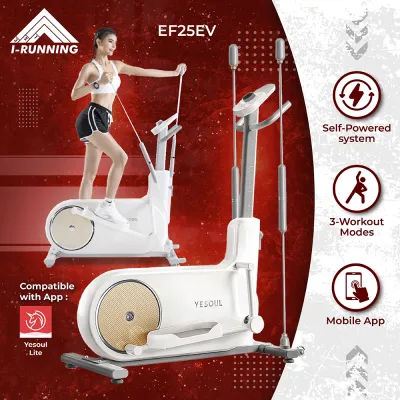
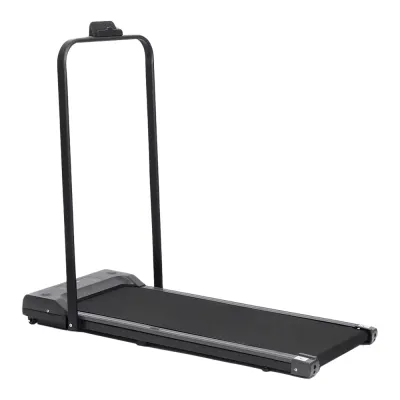
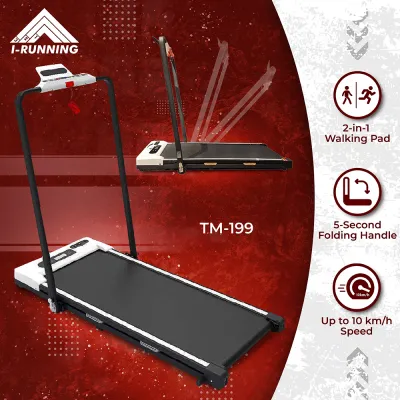
Prices are valid at publication and may change. Please refer to the product page for the latest price.
Power accessibility is another critical factor for motorized fitness equipment. Identify the nearest wall socket and plan a safe cable route that does not cross high-traffic walkways. Avoid using light-duty extension cords or daisy-chaining multiple adapters, as motorized treadmills draw significant current during operation. Keeping the power cable flush against the wall or using a low-profile cable protector will prevent tripping hazards and protect the cord from being pinched under the machine’s frame.
Treadmill vs. Elliptical: Comparing Space and Clearance Needs
Deciding between a Yesoul treadmill and an elliptical requires an understanding of how each machine utilizes space during a workout. A treadmill operates on a fixed horizontal plane, but it requires a substantial safety clearance zone behind the belt in case of slips or emergency stops. While the static footprint of a compact treadmill might seem small, the dynamic space needed during a fast run is significantly larger. You must account for your stride length and ensure there are no hard surfaces or furniture directly behind the machine.

In contrast, an elliptical trainer operates on a vertical and elliptical path, meaning its spatial demands are highly vertical. When you stand on an elliptical, your body is elevated by the height of the pedals at their highest point. You must calculate your own height plus the machine’s pedal stack height to ensure your head does not come dangerously close to the ceiling or ceiling fans. While ellipticals generally have a shorter static footprint than treadmills and do not require as much rear safety clearance, their handles move back and forth, requiring extra lateral and forward clearance so they do not strike walls or windows.
Storage and folding capabilities are where these two machine types diverge significantly. Many Yesoul treadmills feature folding mechanisms that allow the console and handrails to fold flat against the running deck, enabling you to store the unit upright against a wall or flat under a bed. When evaluating these models, verify whether the folding mechanism requires manual locking pins or utilizes a hydraulic soft-drop system. Ellipticals, on the other hand, rarely fold completely flat due to their rigid drive arms and flywheels. If you choose an elliptical, you must be prepared to allocate a permanent, non-folding footprint in your HDB flat, making it crucial to assess how its visual bulk integrates into your living space without blocking natural light or primary walkways.
How to Check Yesoul Specifications for Small Spaces
To ensure a seamless fit, you must look past marketing terms like “ultra-compact” or “space-saving” and scrutinize the exact technical specifications. Always consult the official Yesoul product manual or verified listings for three critical sets of measurements: the fully assembled dimensions, the folded dimensions (if applicable), and the net weight. Compare these figures directly against the measurements you took of your room, leaving a comfortable margin of error for minor structural variations in your flat.
The dimensions of the running belt or stride path are vital for both safety and comfort. For treadmills, check that the belt width and length are sufficient for your height and running style; a belt that is too narrow or short can cause you to step off the side or front during a workout, while an oversized belt unnecessarily inflates the machine’s overall footprint. For ellipticals, verify the stride length to ensure it matches your natural walking or running gait. A stride length that is too short will feel choppy and uncomfortable, while a machine with a longer stride length will occupy more physical space in your room.
Finally, examine the maximum user weight capacity and the overall net weight of the machine. Lighter, highly portable cardio machines are easier to roll away and store, but they often feature narrower bases and lower weight limits, which can compromise stability during high-intensity workouts. Conversely, heavier machines with robust steel frames offer superior stability and higher weight capacities but are much harder to relocate within a small flat. Balance your need for portability with the physical stability required for your household’s heaviest user.
Setup Clearances and Protecting Your HDB Flooring
Safe installation of your Yesoul equipment requires strict adherence to clearance guidelines. As a general rule, maintain at least 0.5 meters of open space on both sides of the machine and at least 1 to 1.5 meters of clear space directly behind a treadmill. This rear clearance is a critical safety buffer that prevents you from being trapped against a wall or furniture if you fall while the belt is moving. Ensure that no curtains, loose clothing, or household items can be sucked into the treadmill’s rear roller or the elliptical’s moving joints.
Protecting your HDB flooring is another essential consideration. The heavy, concentrated weight of fitness equipment, combined with the dynamic impact of your workouts, can easily dent, scratch, or discolor vinyl, laminate, parquet, or tile floors. Placing a high-density, water-resistant equipment mat beneath your Yesoul machine is highly recommended. A proper mat distributes the machine’s weight evenly, prevents it from sliding during intense sessions, and catches sweat before it can seep into floor joints.
Furthermore, consider the structural load and vibration transmission. While standard HDB floors are engineered to support typical residential loads, exceptionally heavy commercial-grade equipment can place localized stress on older flooring. More commonly, the vibration from running or pedaling transfers directly through the floor slabs, creating low-frequency noise that can disturb neighbors living below you. A thick rubber mat acts as an effective dampening barrier, absorbing these vibrations and keeping your home workouts quiet and neighbor-friendly.
Frequently Asked Questions (FAQ)
Can I place a Yesoul treadmill on an HDB balcony?
Placing a Yesoul treadmill on an HDB balcony is generally not recommended due to environmental risks. Singapore’s high humidity, frequent rain splatters, and intense direct sunlight can rapidly degrade the treadmill’s electronic console, rust the steel frame, and dry out the running belt lubrication. Exposure to moisture can also cause electrical short circuits, posing a safety hazard and voiding the manufacturer’s warranty. Additionally, you should check your specific HDB estate guidelines, as some developments have strict rules regarding balcony weight limits and the placement of large appliances or fitness equipment in semi-outdoor areas.
How do I manage noise and vibration for downstairs HDB neighbors?
To minimize noise and vibration transmission to your downstairs neighbors, place your Yesoul machine on a thick, high-density rubber shock-absorption mat. These specialized mats are designed to absorb the impact energy of your strides before it vibrates through the concrete floor slab. You can also manage noise by scheduling your workouts during reasonable daytime or early evening hours, avoiding late-night or early-morning sessions when ambient noise levels are low. Regularly checking and lubricating the treadmill belt or tightening the elliptical’s joints as instructed in the Yesoul manual will also prevent squeaks and mechanical rattles.
Community discussion
Share your experience or ask a question. Comments are reviewed before publication.