
A yoga strap is an essential tool for deepening stretches, improving alignment, and extending your reach during challenging poses. However, its effectiveness depends heavily on its material, buckle mechanism, and construction quality. To find the right strap for your practice, you must evaluate how different fabrics handle sweat and grip, how securely the buckle locks under tension, and whether the stitching can withstand regular pulling. Rather than searching for a single universal option, matching these specifications to your specific practice style, body size, and local climate ensures safety and long-term utility.
Comparing Yoga Strap Materials for Comfort and Grip
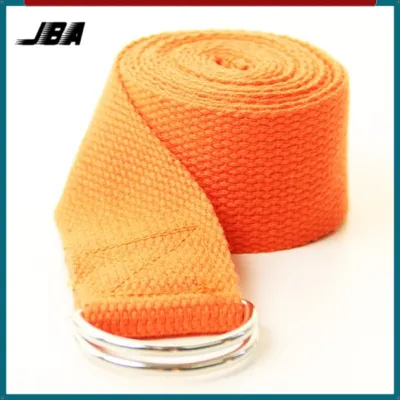
The material of your yoga strap directly affects how it feels in your hands and how well it holds its grip during a session. Cotton is the traditional choice for many practitioners. It offers a soft, textured surface that is gentle on the skin, reducing the risk of friction burns during long holds. In humid climates like Singapore, cotton is highly valued because it absorbs sweat effectively, maintaining a reliable, non-slip grip even when your hands are damp. However, cotton straps can shrink if washed in hot water and may take longer to dry, requiring regular care to prevent mildew.
Synthetic materials, such as nylon and polyester, offer exceptional tensile strength and are highly resistant to wear and tear. These straps are lightweight, dry quickly, and do not absorb moisture, making them easy to wipe down after a sweaty Vinyasa flow. The primary trade-off is their texture; synthetic webbing can feel slick when wet, which may cause your hands to slip during intense pulling. Additionally, the smoother, firmer edges of nylon can cause discomfort or skin irritation if the strap slides quickly through your hands under tension.
Products mentioned in this guide
![[SG Seller]Multi-Loop Stretching Strap Fitness Resistance Band Pilates & Dance Strap Numbered Stretching Strap for Flexibility Training](https://img.lazcdn.com/g/p/2dbe605d8e03af95c59043cdfcc8b46f.jpg_400x400q80.jpg_.webp)
Prices are valid at publication and may change. Please refer to the product page for the latest price.
Hemp and hemp-blend straps provide an eco-friendly alternative with unique performance characteristics. Hemp is incredibly durable and naturally resistant to mold, which is beneficial for humid environments. While a new hemp strap can feel stiff and slightly rough at first, the fibers naturally soften with repeated use and washing without losing their structural integrity. Like cotton, hemp requires proper air-drying after washing to maintain its shape and prevent the fabric from becoming overly rigid.
Before purchasing, always check the manufacturer’s label for the exact fabric composition. Many straps marketed as “natural cotton” may contain synthetic blends that alter their grip, stretch, and washing requirements.
Evaluating Buckle Mechanisms for Security and Ease of Use
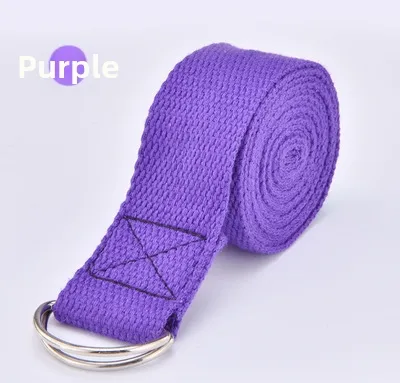
The buckle mechanism determines how easily you can adjust the strap’s loop and how securely it holds under your body weight. Metal D-ring buckles are the industry standard for durability and security. To lock a D-ring, you thread the strap through both rings, fold it over, and pass it back through the first ring. This simple mechanical friction creates a highly secure lock that will not slip, even under heavy tension. While metal D-rings are virtually indestructible, they can be noisy when dropped on hard studio floors and add slight weight to your gear bag.

Quick-release plastic buckles offer a lightweight and convenient alternative. These buckles snap together instantly, allowing you to secure or release the strap with a single click. They are ideal for gentle stretching and restorative practices where convenience is prioritized. However, plastic prongs can degrade over time due to UV exposure or sweat residue, and they are prone to cracking or snapping under high tension. For safety reasons, avoid using plastic buckles for advanced binding or deep therapeutic stretching where the strap must support a significant portion of your body weight.
Cinch and slider buckles, often made of metal or heavy-duty plastic, allow for rapid, one-handed adjustments during a dynamic flow. They hold well under moderate tension and are highly portable. However, their security depends entirely on correct threading. You must verify that the webbing is threaded exactly as instructed by the manufacturer, as incorrect threading can cause the strap to slip gradually under load, potentially disrupting your balance.
Before every practice session, perform a quick safety check by running your fingers along the buckle edges. Inspect the hardware for any sharpness, burrs, or manufacturing defects that could slice into the webbing or irritate your skin during use.
Inspecting Construction and Durability Before You Buy
A yoga strap must withstand significant pulling force, making construction quality a critical safety factor. When reviewing product specifications or inspecting a strap in person, look closely at the stitching patterns. High-quality straps feature reinforced box-X stitching—a square pattern with an internal “X”—at the connection point between the fabric and the buckle. This pattern distributes tension evenly across the webbing. Avoid straps that rely on a single straight line of stitching, as these are highly susceptible to unraveling under pressure.
Webbing density is another key indicator of long-term durability. Examine the tightness of the weave by trying to bend the strap sideways. A dense, tightly woven strap feels firm, resists twisting, and maintains its flat shape under tension. Conversely, a loose weave feels floppy, snags easily on jewelry or fingernails, and is prone to stretching out of shape and fraying at the edges over time.
Pay close attention to how the hardware is attached to the strap. High-quality manufacturers fold the webbing over the buckle and secure it with multiple rows of heavy-duty stitching. Avoid straps where the hardware is merely riveted or glued to the fabric. Rivets can pull through the webbing under high tension, and adhesives can degrade rapidly in warm, humid conditions, leading to sudden failure.
When shopping online, zoom in on product images to inspect the stitching close-ups. Read user feedback specifically searching for terms like “fraying,” “slipping,” or “broken buckle” to gauge how the strap performs over months of regular use.
Decision Framework: Matching the Strap to Your Practice
To choose the right yoga strap, you must align its physical dimensions and materials with your body size and practice style. Strap length is the first major consideration. A standard 6-foot (approx. 1.8m) strap is suitable for most basic stretches and shorter practitioners. If you are taller (over 1.8m) or plan to practice advanced binding poses that require wrapping the strap around your torso and limbs, an 8-foot or 10-foot strap is necessary to provide adequate slack.
Strap width also plays a role in comfort and grip security. A standard 1.5-inch (approx. 3.8cm) width is ideal for most practitioners because it distributes pressure comfortably across the hands, arches of the feet, and shoulders. Narrower 1-inch straps are lighter and easier to pack into a small yoga bag, but they can cut into your skin during high-tension poses, making them less comfortable for extended holds.
Use the following decision framework to guide your choice: select a cotton strap with a metal D-ring if you prioritize a traditional, slip-resistant grip and maximum durability for daily studio practice. Choose a lightweight nylon strap with a cinch buckle if you travel frequently and need quick, one-handed adjustments. Always verify the strap’s condition and load limits before using it for high-tension therapeutic pulling.
| Material & Buckle Combo | Ideal Practice Style | Key Advantage | Main Limitation |
|---|---|---|---|
| Cotton + Metal D-Ring | Hatha, Yin, Restorative | Excellent grip, highly secure | Heavier, slower to adjust |
| Nylon + Cinch Buckle | Vinyasa, Travel Yoga | Lightweight, fast adjustment | Can slip when sweaty |
| Hemp + Metal D-Ring | Eco-conscious, Daily Practice | Durable, softens over time | Stiff initially, requires air-drying |
Frequently Asked Questions (FAQ)
How should I clean and maintain my yoga strap?
Always check the manufacturer’s care label before cleaning your strap. For cotton and hemp straps, hand-washing in cool water with a mild detergent is recommended to prevent shrinkage and preserve the fibers. If you choose to machine-wash a cotton strap, place it inside a mesh laundry bag to prevent the metal buckle from clanging against and potentially damaging the washing machine drum, and select a gentle cycle. Always air-dry your strap flat or hanging in a well-ventilated area away from direct sunlight. Never put your yoga strap in a clothes dryer, as high heat can shrink natural fibers and weaken synthetic webbing or plastic buckles.
Can a yoga strap be used as a substitute for a resistance band?
No, a yoga strap cannot safely substitute for an elastic resistance band. Yoga straps are made of non-elastic materials designed specifically for static stretching, alignment support, and isometric holds where the strap remains at a fixed length. They do not stretch or contract. Attempting to use a yoga strap for dynamic resistance exercises, high-tension pulling, heavy anchoring, or suspending your body weight can lead to sudden hardware failure, torn stitching, or physical injury. If your routine requires dynamic resistance or strength training, stop and use specialized elastic bands designed for those activities.

Community discussion
Share your experience or ask a question. Comments are reviewed before publication.