
Selecting your first paddle racket is a pivotal decision that directly shapes your early experiences on the court. The right racket acts as an extension of your arm, helping you build proper technique, maintain control, and avoid early physical fatigue. Conversely, choosing an unsuitable model—often one designed for advanced players—can lead to frustration, inconsistent shots, and even painful joint strains. By focusing on your physical baseline and understanding how different racket specifications influence playability, you can make an informed choice that supports your growth as a player.
Identify Your Physical Comfort and Play Style
Before browsing through product catalogs or online marketplaces, you must evaluate your physical baseline. Your current arm, wrist, and shoulder strength dictate how heavy a racket you can comfortably swing over a multi-hour session. If you have a history of joint sensitivities, such as tennis elbow or wrist strain, prioritizing physical comfort over raw power is essential. Lighter equipment reduces the torque exerted on your joints, allowing you to focus on learning the mechanics of the swing without risking injury.
Your natural movement tendencies on the court also play a role in determining the right equipment. Even as a beginner, you might notice whether you prefer a patient, defensive style from the back of the court or a more active, aggressive approach near the net. Defensive play benefits from a racket that offers high control and maneuverability, helping you return difficult balls. Aggressive play, on the other hand, is supported by equipment that helps generate pace, though this requires more physical effort to control.
Products mentioned in this guide
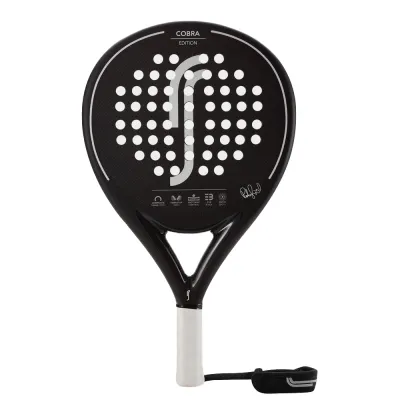
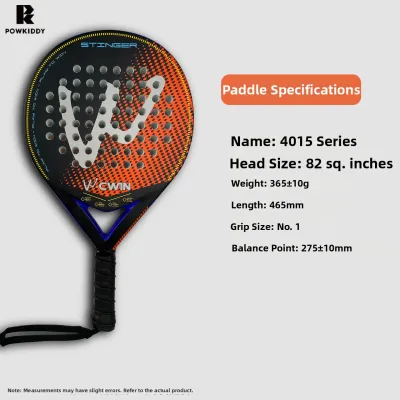
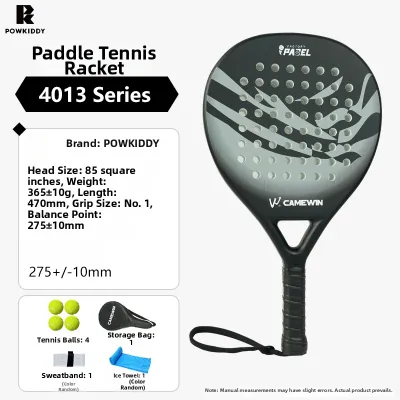
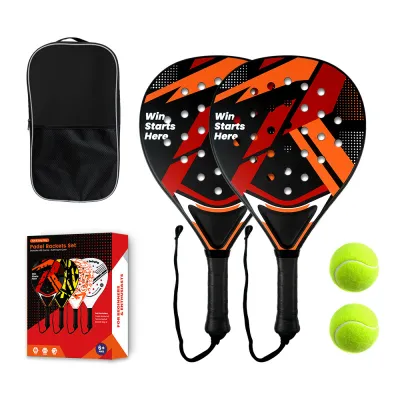
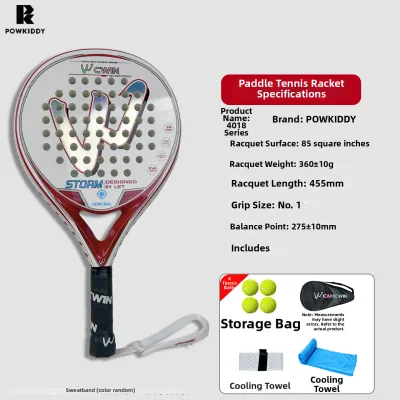
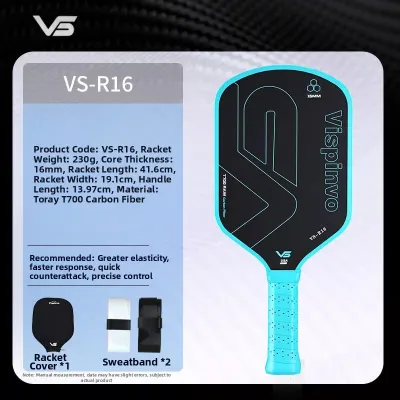
Prices are valid at publication and may change. Please refer to the product page for the latest price.
Finally, consider how often you plan to play each week. If you are stepping onto the court once a month for casual recreation, a basic, budget-friendly model is highly practical. However, if you plan to join a local league or play multiple times a week, investing in a durable, mid-range racket is justified. This approach ensures your equipment can withstand frequent use and support your rapid skill progression without requiring an immediate upgrade.
Match Racket Weight and Balance to Your Strength
Racket weight is one of the most critical specifications to check, as even a difference of ten grams can significantly alter how the equipment feels during a match. Most manufacturers categorize rackets into specific weight ranges, typically spanning from under 350 grams to over 375 grams. Lighter rackets, generally weighing between 350 and 360 grams, offer excellent maneuverability and are highly forgiving for beginners. They allow you to react quickly to fast balls and adjust your racket angle at the last second.

Heavier rackets, usually exceeding 370 grams, provide more inherent power because they have more mass behind the ball. However, they require greater physical strength to swing consistently. If you choose a racket that is too heavy for your current conditioning, your swing speed will decrease, and your muscles will tire quickly. This fatigue often leads to poor form, as players begin to compensate by using their wrists rather than their core and shoulders, increasing the risk of injury.
Balance distribution is closely linked to weight and refers to how the mass is spread along the length of the racket. Head-heavy rackets have their center of gravity closer to the top of the frame, which aids in generating powerful overhead shots but puts more strain on the wrist. Head-light rackets distribute the weight closer to the handle, offering superior maneuverability and reducing joint fatigue. For beginners, a neutral or head-light balance is highly recommended to ensure a comfortable swing speed and stable control over every shot.
Check Grip Size and Handle Dimensions
The connection between your hand and the racket determines how much control you have over your shots. A grip that is too small or too large forces your hand muscles to overcompensate, leading to tension, blisters, and reduced accuracy. To find the right fit, you should measure your hand size from the tip of your ring finger to the base of your palm. When holding the racket, there should be a comfortable gap—roughly the width of your index finger—between your fingertips and your palm.
Most rackets come with a standard factory grip, but you can easily customize the thickness using overgrips. Adding an overgrip is a practical way to incrementally increase the handle circumference until it matches your hand size perfectly. In humid tropical climates, such as Singapore’s, hands can sweat quickly, making a high-quality overgrip essential for maintaining a secure hold on the handle. Keep in mind that adding multiple overgrips will slightly increase the overall weight of the racket and shift the balance point closer to the handle.
Handle length is another dimension to verify, especially if you have a background in other racket sports. Some players prefer a slightly longer handle to accommodate a two-handed backhand, which provides extra stability and power. Standard handles are shorter and designed primarily for one-handed play, which is traditional in paddle sports. Ensuring the handle length matches your preferred grip style prevents awkward hand placement and allows for a more natural, fluid swing.
Evaluate Racket Shape and Sweet Spot for Your Skill Level
Paddle rackets generally come in three primary shapes: round, teardrop, and diamond. Each shape alters the location and size of the sweet spot, which is the optimal area on the racket face for striking the ball. Diamond-shaped rackets feature a sweet spot located high up on the frame, offering maximum power for advanced players but very little forgiveness for off-center hits. Teardrop shapes offer a hybrid balance, positioning the sweet spot slightly higher than the center to blend power and control.
For beginners, round-shaped rackets are almost always the ideal choice. These rackets feature a lower balance point and a large, centrally located sweet spot. This design ensures that even if you do not hit the ball perfectly in the center of the face, the racket still provides a predictable, controlled response. The high level of forgiveness offered by a round racket helps build confidence during your initial training sessions, allowing you to focus on timing and positioning.
The materials used on the racket face and core also influence how the ball behaves upon impact. In warmer, humid conditions, the core material of a racket can feel slightly softer, so starting with a durable fiberglass face and a medium-soft core provides a reliable response regardless of the weather. Rackets with fiberglass faces and soft foam cores are highly recommended for beginners because they offer a high “ball output.” This means the racket absorbs the impact and spring-loads the ball off the face with minimal effort from the player. Harder carbon fiber faces and dense cores require precise technique and fast swing speeds to generate power, making them less suitable for those still mastering the basics.
Common Beginner Mistakes to Avoid Before Purchasing
One of the most common mistakes beginners make is purchasing a racket simply because it is endorsed by a professional player. Professional-grade rackets are engineered for athletes with exceptional physical conditioning, precise timing, and high swing speeds. These rackets are often stiff, heavy, and have small sweet spots, which can make the game incredibly difficult and frustrating for a novice. It is far better to choose a racket tailored to your current skill level rather than your favorite player’s gear.
Another frequent oversight is ignoring the safety features of the racket, specifically the wrist lanyard. In paddle sports, using the safety strap is mandatory on the court to prevent the racket from flying out of your hand and injuring other players or damaging equipment. When selecting a racket, ensure the strap fits comfortably around your wrist without chafing. Some models feature adjustable or padded straps, which provide extra comfort during long matches.
Finally, resist the temptation to buy the most expensive high-carbon model available. While premium rackets offer advanced features, they are rarely beneficial for beginners and can actually hinder your development. Fiberglass or composite entry-level rackets are more affordable, highly forgiving, and perfectly suited for learning the fundamentals. Starting with a user-friendly, cost-effective model allows you to develop your skills before investing in specialized equipment later on.
Frequently Asked Questions (FAQ)
How often should a beginner replace their first paddle racket?
A beginner should typically look to replace their first racket after approximately one year of regular play, or sooner if visible structural damage occurs. Inspect your racket regularly for deep dents, frame cracks, or a soft, compromised core that no longer responds consistently when striking the ball. Additionally, as your technique improves and your swing speed increases, you may find that you have outgrown the racket’s high forgiveness and require a model with a different balance or shape to support more advanced shots.
Does the core thickness of a paddle racket matter for beginners?
Yes, the core thickness plays a significant role in how much power and control the racket provides. Most standard rackets feature a thickness of 38 millimeters, which is highly recommended for beginners because it offers an optimal balance of structural stability, power, and a generous sweet spot. Thinner profiles can offer enhanced control and maneuverability, but they require precise contact and faster swing speeds to generate depth, making them less forgiving for players who are still developing their baseline strokes.
Community discussion
Share your experience or ask a question. Comments are reviewed before publication.