
To be used for actual climbing, a carabiner hook must carry specific, internationally recognized safety certifications that guarantee it can withstand the extreme dynamic forces of a fall. Specifically, any carabiner hook (sometimes written as a caribiner hook) used for life safety must be certified to European Standard EN 12275 and ideally carry the UIAA (International Climbing and Mountaineering Federation) safety label. These certifications, alongside clearly stamped load ratings in kiloNewtons (kN), are what separate genuine climbing protection from cheap hardware store substitutes.
Why Hardware Store Hooks Fail in Climbing
A common mistake among beginners is assuming that any metal link sold at a local hardware store or online marketplace is robust enough to support human weight. In reality, utility hooks, keychain accessories, and industrial snap links are engineered for static loads, such as securing cargo or holding keys. They are not designed, manufactured, or tested to handle the sudden, violent forces generated when a climber falls.
During a climbing fall, the safety system experiences dynamic loading. The force of the arrest is transferred through the rope to the anchor, placing immense stress on the connecting hardware. Under these dynamic forces, non-certified hooks are prone to catastrophic failure modes. One such failure is “gate flutter,” where the rapid vibration of a fall causes the carabiner gate to whip open, reducing the hook’s strength to a fraction of its closed-gate capacity. Another common failure is spine snapping, where the low-grade aluminum or cast steel used in utility hooks shears instantly under tension.
Products mentioned in this guide
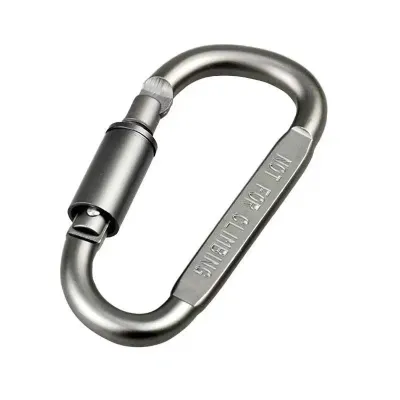
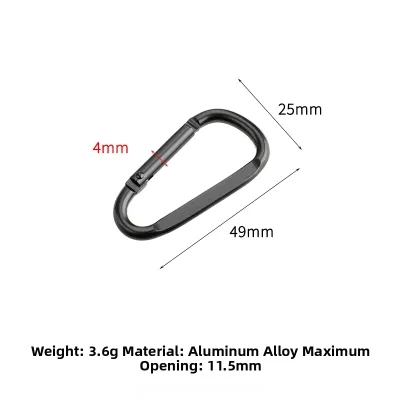
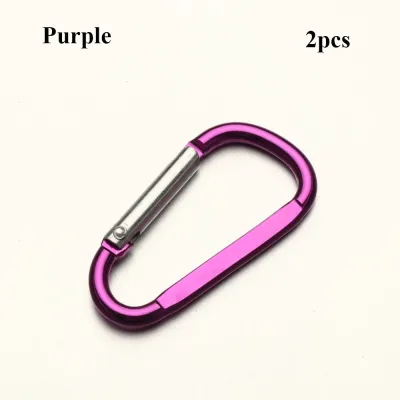
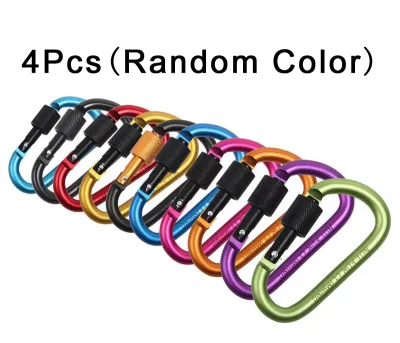
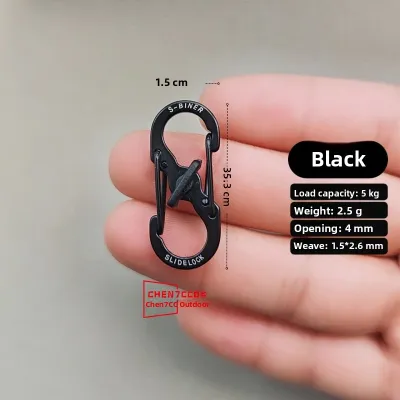
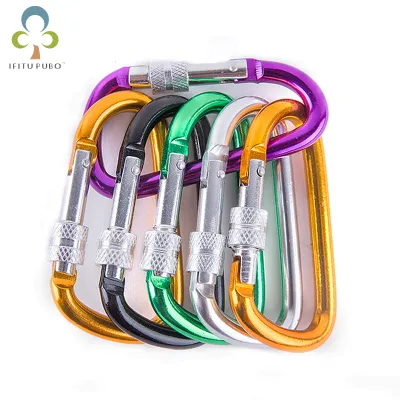
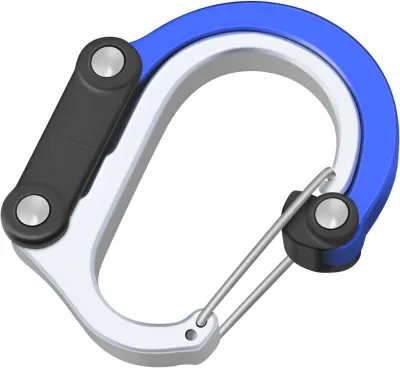
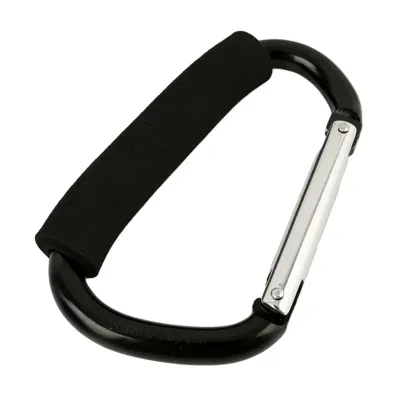
Prices are valid at publication and may change. Please refer to the product page for the latest price.
Visual appearance is highly deceptive. A hardware store hook may look thick, heavy, and rugged, and its packaging might even carry misleading marketing terms like “heavy-duty” or “high-strength.” However, without standardized testing, these claims are meaningless for life-safety applications. True climbing carabiners are manufactured from highly controlled, hot-forged aluminum alloys or high-tensile steel, undergoing rigorous quality assurance to ensure metallurgical consistency.
It is vital to remember that certified climbing gear is only one part of a complex safety system. No piece of equipment, regardless of its certifications, can replace comprehensive hands-on training, sound climbing judgment, and professional instruction. Understanding your gear is a prerequisite for safety, but it must be paired with proper technique and risk management on the rock.
Required Safety Certifications: CE, UIAA, and EN Standards
To ensure a carabiner hook is safe for climbing, you must look for specific markings stamped directly onto its metal spine. These markings are not decorative; they are legal and technical declarations that the hardware has passed standardized, independent testing protocols designed to simulate the harsh realities of mountaineering.

Understanding the CE Mark and EN Standards
The CE (Conformité Européenne) mark is a mandatory conformity marking for products sold within the European Economic Area (EEA), but its influence is global. In the climbing world, the CE mark indicates that the carabiner complies with the European Union’s Personal Protective Equipment (PPE) Regulation. However, a generic CE logo alone is not enough to verify a carabiner’s safety for climbing.
For climbing applications, the CE mark must be accompanied by a specific European Norm (EN) standard number. For mountaineering connectors, this standard is EN 12275. This standard defines the strict safety requirements, testing methods, and minimum strength characteristics that a connector must meet. When inspecting a carabiner hook, look for the CE mark followed by a four-digit identification number (which identifies the independent notified body that certified the product) and the designation “EN 12275.”
If you encounter a carabiner hook that features a CE mark but lacks the EN 12275 designation—or instead references industrial standards like EN 362 (which is for industrial fall protection)—you must verify its suitability. While EN 362 connectors are highly robust, they are often heavier and designed for different operational parameters than those optimized for recreational climbing. A generic CE mark without any associated PPE standard number is a major red flag, indicating the product has not been certified for any form of life safety.
The Role of UIAA Certification
While the CE mark is a legal requirement in Europe, the UIAA (Union Internationale des Associations d’Alpinisme) safety label is the global gold standard for climbing and mountaineering equipment. The UIAA is the international federation governing climbing, and its safety commission develops standards specifically tailored to the unique, high-consequence environments climbers face.
In many cases, UIAA standards are based on the existing EN standards but include additional, more stringent requirements. For example, UIAA testing may demand higher resistance to edge friction, more rigorous dynamic loading cycles, or stricter performance criteria under wet and freezing conditions. Because the UIAA is run by climbers for climbers, its certification provides an extra layer of assurance that the gear will perform reliably in real-world mountain scenarios.
To verify this certification, look for the official UIAA logo—a stylized “UIAA” inside a shield or circle—stamped directly onto the spine of the carabiner hook. When a manufacturer displays both the CE EN 12275 mark and the UIAA label, you can be confident that the carabiner has met the highest global safety benchmarks. You can also cross-reference the manufacturer and model on the official UIAA online database to confirm the certification is active and genuine.
How to Read Carabiner Strength Ratings (kN)
Every certified climbing carabiner hook must have its minimum breaking strength ratings stamped permanently into its spine. These ratings are expressed in kiloNewtons (kN) rather than kilograms (kg) or pounds (lbs). This distinction is critical: kilograms measure static mass, whereas kiloNewtons measure force. One kiloNewton is equivalent to approximately 100 kilograms of static force under gravity, but in a dynamic fall, a climber weighing 70 kg can easily generate forces of 4 to 7 kN on the top piece of protection.
Certified carabiners must display three distinct strength ratings, representing different loading scenarios:
- Major Axis (Gate Closed): This is the carabiner's strongest orientation, where the load runs parallel to the spine with the gate fully shut and locked (if applicable). For a standard climbing carabiner (Type B), EN 12275 requires a minimum major axis strength of 20 kN. Many modern climbing carabiners rate between 22 kN and 25 kN along this axis.
- Minor Axis (Cross-Loaded): This rating applies when the load is pulled sideways, pressing against the gate and the opposite spine. Carabiners are highly vulnerable in this orientation. The minimum certified minor axis strength is typically 7 kN. Because cross-loading can occur accidentally during complex rigging, keeping this rating as high as possible is vital.
- Major Axis (Gate Open): This rating measures the strength of the carabiner if a fall occurs while the gate is open (such as during gate flutter). An open gate drastically reduces the structural integrity of the loop. The minimum certified open-gate strength is typically 7 kN, though some high-performance models reach 9 kN or 10 kN.
Before using any carabiner hook, you must locate these three numbers—usually accompanied by directional arrows indicating the axis of force—and verify them against the manufacturer’s official technical specifications. If these markings are missing, faded, or completely illegible, the carabiner must be retired immediately. Never guess the strength of an unmarked connector, as even a minor fall can easily exceed the limits of an unrated or worn-out gate.
Visual Inspection: Spotting Fakes and Wear
Before purchasing a carabiner hook and before every single climbing session, you must conduct a thorough visual and tactile inspection of your hardware. This routine is your primary defense against counterfeit gear and dangerous physical degradation.
Start by examining the markings on the spine. Counterfeit climbing gear is a real hazard, especially when purchasing from unverified third-party sellers on online marketplaces. Look closely at the stamped certifications: genuine markings are clean, deeply engraved or laser-etched, and free of spelling errors. Misspelled brand names, poorly aligned text, or fuzzy, shallow logos are immediate indicators of a counterfeit product.
Next, inspect the physical structure of the carabiner hook:
- The Gate and Sleeve: Open and close the gate several times. It must snap back shut quickly and completely on its own. For locking carabiners, ensure the sleeve glides smoothly along the threads without sticking or binding. If the gate is sluggish, sticky, or fails to align perfectly with the nose, the internal spring may be damaged or dirty.
- The Body and Nose: Run your fingers along the entire metal surface. Check for deep grooves, gouges, or sharp edges caused by friction from ropes or metal-on-metal contact with bolts. A general rule of thumb is that any groove deeper than 1 mm (or exceeding 10% of the metal's thickness) warrants immediate retirement, as it significantly compromises the structural integrity of the frame.
- Corrosion and Cracks: Inspect the metal for signs of corrosion, particularly if you climb in humid, coastal environments like Singapore. Look for pitting, white powdery oxidation, or hairline fractures around high-stress areas like the hinge pin and the nose basket.
If you do not know the complete history of a carabiner—such as finding a dropped hook at the base of a crag—or if your visual inspection reveals any of these defects, you must not use it for climbing. The risks of using compromised gear far outweigh the cost of a replacement.
When to Retire a Certified Climbing Carabiner
Even the highest-quality, dual-certified carabiner hook has a finite lifespan. Knowing when to permanently retire a carabiner from service is a critical skill for every climber.
You must retire a carabiner immediately if it experiences any of the following events, regardless of how pristine it may look on the surface:
- Severe Drops: A drop from a significant height onto a hard surface (such as concrete or rock) can introduce micro-fractures within the aluminum alloy. These internal structural flaws are invisible to the naked eye but can cause the carabiner to fail catastrophically under normal climbing loads.
- Chemical Exposure: Strong acids, alkalis, solvents, or corrosive cleaning agents can permanently alter the molecular structure of the metal, leading to rapid degradation or stress corrosion cracking.
- Extreme Heat: Exposure to high temperatures, such as being left in a hot car trunk under the tropical sun or near a direct flame, can ruin the heat treatment of the aluminum, severely reducing its tensile strength.
- Deformation: Any visible bending, warping, or stretching of the frame or gate pin means the metal has yielded past its elastic limit and can no longer safely bear loads.
When retiring a carabiner hook, do not simply throw it in the household rubbish bin. To prevent anyone else from finding and accidentally using the compromised gear, you must physically destroy it. Use a hacksaw or bolt cutters to cut the frame in half, rendering it completely unusable before recycling the metal. Always consult the specific manufacturer’s user manual for the exact lifespan guidelines of your model, as some brands specify a maximum service life (often up to 10 years for metal components under ideal storage conditions) even if the gear has never been used.
Frequently Asked Questions (FAQ)
Can I use a heavy-duty keychain carabiner for climbing if it looks strong?
Absolutely not. Keychain carabiners and hardware store utility hooks are not certified to EN 12275 or UIAA standards. They lack the metallurgical purity, heat treatment, and design engineering required to withstand dynamic climbing forces. Using a non-certified hook for climbing poses an immediate risk of catastrophic failure under the weight of a simple fall.
Does a higher kN rating always mean a better climbing carabiner?
No. While a carabiner must meet the minimum certified kN thresholds to be safe, a higher rating does not automatically make it superior. Extremely high kN ratings often require thicker, heavier, and bulkier metal profiles. For most climbing disciplines, you must balance strength with weight, gate clearance, and ergonomics to find the best gear for your specific needs.
Are locking carabiners required to have different certifications than non-locking ones?
No, both locking and non-locking carabiners must meet the same baseline EN 12275 and UIAA strength requirements. The primary difference lies in their application: locking carabiners are used for critical safety connections like belaying and anchoring to prevent accidental gate opening, while non-locking carabiners are used in quickdraws for rapid rope clipping.
Community discussion
Share your experience or ask a question. Comments are reviewed before publication.