
To set up a strength training space in a Singapore HDB flat without sacrificing your entire room, the most practical configuration is a compact barbell weight set featuring a shorter bar (typically 5 to 6 feet in length) paired with slim steel or urethane plates and a vertical storage rack. While a standard 7-foot Olympic barbell is the benchmark for commercial gyms, its 2.2-meter length often leaves too little clearance in a standard HDB bedroom or living room corner, risking damage to walls, windows, and furniture. By selecting compact equipment and planning your layout around structural boundaries, you can maintain a fully functional strength training routine while keeping your home safe, organized, and spacious.
Assessing Your Room Dimensions and Structural Limits
Before purchasing any strength equipment, you must map out the physical boundaries of your designated workout zone. Start by measuring the exact wall-to-wall distance of the room. A safe lifting area requires not just the length of the barbell itself, but also an additional 60 to 90 centimeters of clearance on both sides to allow you to load and unload weight plates safely without hitting walls or furniture. Ceiling height is another critical factor; measure the distance from your floor to the ceiling to ensure you have enough clearance for overhead movements like the military press or snatch without striking light fixtures or ceiling fans.
Structural safety is paramount when introducing heavy iron into a high-density residential building. In Singapore, HDB flats are designed to support specific residential live load limits. You should verify the official structural guidelines for your specific flat type, as overloading a concentrated area can pose risks. To distribute the weight safely, plan to position your barbell rack and weight storage close to load-bearing walls or structural columns rather than in the center of a room’s floor span. This positioning utilizes the strongest parts of the building’s concrete frame and minimizes floor deflection.
Products mentioned in this guide
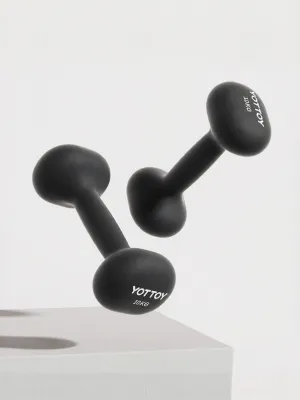
Prices are valid at publication and may change. Please refer to the product page for the latest price.
Finally, map out your movement margins to ensure your workout space does not compromise daily household activities. The barbell path must remain completely clear of essential walkways, doorways, and emergency exit routes. If you share the flat with family members or housemates, ensure that a fully loaded bar does not block access to wardrobes, balconies, or bathrooms. Marking out the footprint of your rack and barbell on the floor using masking tape before buying can help you visualize the setup and prevent costly spatial planning mistakes.
Selecting Space-Efficient Barbell and Plate Configurations
Choosing the right barbell length is the most critical decision for small-space training. A standard 7-foot (218 cm) Olympic barbell is often too long for a typical HDB bedroom, which may only measure 3 meters across. Instead, consider a 6-foot (183 cm) or 5-foot (152 cm) space-saving barbell. When selecting a shorter bar, always verify the shaft length—the distance between the inside collars—to ensure it is wide enough to fit securely on your squat stand or power rack. Some compact bars have shorter sleeves, which limits the total amount of weight you can load, so match the sleeve length to your current lifting capacity and long-term strength goals.

The type of weight plates you choose directly impacts how much physical space your setup occupies. Bumper plates, which are made of dense rubber, are excellent for absorbing impact but are exceptionally thick. A heavy set of bumper plates can quickly fill up the sleeves of a short barbell and require bulky storage trees. For tight spaces, thin cast iron, steel, or urethane-coated plates are highly superior in terms of space efficiency. These plates have a much slimmer profile, allowing you to load more weight onto a shorter sleeve and store them in a significantly smaller footprint.
If a full-sized barbell setup still proves too large for your room’s layout, alternative configurations can deliver comparable training effects. Adjustable loadable dumbbells utilize the same weight plates as a barbell but require a fraction of the space. Alternatively, a compact multi-grip bar or a Swiss bar can offer a neutral grip for pressing movements while often featuring a shorter overall length than standard straight bars. These alternatives allow you to progress your strength training without requiring a dedicated lifting platform or a wide footprint.
Practical Storage Solutions for Compact Living Areas
Keeping your lifting equipment organized is essential for maintaining a functional, multi-purpose room. Vertical storage is the most effective way to reclaim floor space in a small apartment. A vertical plate tree or a combination barbell-and-plate stand keeps your weights stacked upward rather than spread across the floor. If you are considering wall-mounted storage racks to hang your barbell or plates, you must verify your wall construction. Concrete structural walls can support heavy anchored racks when installed with appropriate masonry bolts, whereas hollow partition walls or drywall will fail under the weight and should never be used for heavy equipment storage.
For those who need to completely clear the room after a workout, low-profile storage solutions are highly effective. Under-bed storage bins designed for heavy loads can house smaller weight plates, collars, and resistance bands out of sight. You can also look for collapsible or folding squat racks that mount to a concrete wall and fold flat when not in use, reducing their projection into the room to just a few inches. This allows a bedroom or study to transition seamlessly from a home gym back to a living or working space within minutes.
Establishing a dedicated “parking zone” for your equipment when it is not in use is a vital safety practice. Leaving barbells loaded on a rack or plates scattered on the floor creates immediate tripping hazards, especially in dimly lit rooms or households with children and pets. Designate a specific corner where the barbell is stored vertically in a sleeve holder and all plates are securely stacked. This discipline not only protects your household members from injury but also prevents accidental damage to your walls and baseboards from rolling weights.
Managing Floor Protection and Neighborly Noise
Living in a multi-story HDB flat means your training habits directly affect the residents living below and beside you. Protecting your floor tiles or vinyl planks from scratches and cracks requires high-density rubber flooring. Standard foam puzzle mats are insufficient for heavy barbell training as they compress easily under load, offering little protection to the subfloor. Instead, opt for specialized high-density rubber mats with a thickness of at least 15mm to 20mm. These mats distribute the weight of the rack and plates, preventing concentrated pressure points from damaging your home’s flooring.
Even with thick rubber mats, dropping loaded barbells in an HDB flat is highly discouraged. The structural vibration from a dropped weight travels easily through concrete floors, creating loud, disruptive thuds for your neighbors. To maintain neighborly harmony, focus on controlled lowering techniques for every repetition. If you perform lifts that occasionally require quick releases, invest in specialized drop pads—thick, dense foam blocks designed specifically to muffle sound and absorb the kinetic energy of a falling barbell.
Before finalizing your home gym setup, familiarize yourself with your estate’s guidelines and local housing regulations regarding noise and heavy equipment. While there are no specific bans on owning fitness equipment, general community guidelines restrict loud, disruptive noises during quiet hours, typically between 10:30 PM and 7:00 AM. Planning your workouts during daytime or early evening hours, combined with respectful lifting techniques and proper floor insulation, ensures you can build strength consistently without causing friction in your community.
Frequently Asked Questions (FAQ)
Can I use a standard 7-foot Olympic barbell in a typical HDB bedroom?
While it is physically possible to fit a 7-foot (218 cm) barbell inside a standard HDB bedroom, it is rarely practical. A typical bedroom wall-to-wall distance ranges from 2.8 to 3.2 meters. A 7-foot bar leaves less than 50 centimeters of clearance on either side, making it extremely difficult and unsafe to load plates, perform wide-grip movements, or navigate around the room. For safe operation, you should have at least 3.5 meters of clear wall-to-wall width. If your room is smaller than this, downgrading to a 5-foot or 6-foot space-saving barbell is highly recommended to prevent wall damage and ensure safe lifting.
Do I need special floor mats for lifting weights in an HDB flat?
Yes, standard flooring is not designed to withstand the impact or concentrated weight of barbell training. Standard foam or thin yoga mats do not offer sufficient density to protect HDB floor tiles or vinyl sheets from cracking under heavy loads. You should use high-density, commercial-grade rubber mats that are at least 15mm thick. These mats protect your subfloor, reduce structural vibrations that travel to your neighbors’ units, and provide a stable, non-slip surface for your feet. For heavy deadlifts, adding specialized sound-dampening drop pads on top of your rubber mats is the best way to ensure complete floor protection and noise control.
Community discussion
Share your experience or ask a question. Comments are reviewed before publication.