
Setting up home gym equipment in a typical Singapore HDB flat requires balancing fitness goals with space constraints. With average flat sizes ranging from 60 to 110 square meters, dedicating an entire room to a gym is rarely feasible. The solution lies in choosing highly versatile, compact, and storable equipment that serves multiple purposes without cluttering your living room. By focusing on footprint, structural safety, noise reduction, and smart storage, you can build a highly effective workout space that integrates seamlessly into your daily life.
Assessing Your HDB Space and Equipment Footprint
Before buying any home gym equipment, you must map out both its storage footprint and its active usage footprint. The storage footprint is simply the space the item occupies when tucked away. In contrast, the active usage footprint includes the clearance you need to perform exercises safely. For instance, while a rowing machine might stand vertically in a 60 cm by 60 cm corner, using it requires a clear, flat run of at least 2.2 meters. Similarly, performing dumbbell chest flyes on a bench requires at least one meter of clear space on either side to prevent your weights from hitting furniture.
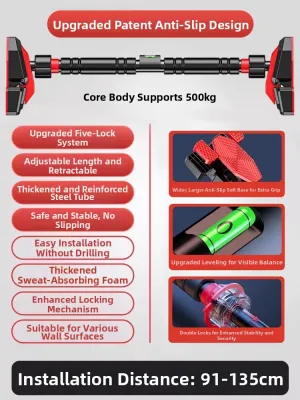
Ceiling height is another critical factor. Standard HDB flat ceilings typically measure around 2.6 meters, but this can be lower if you have installed false ceilings or ceiling fans. Overhead movements like shoulder presses, pull-ups, or jump rope sessions require careful clearance checks to avoid structural damage or personal injury.
Products mentioned in this guide
![[Ready Stock] UltimateSup Wall Mounted Pull Up Bars Portable Home Chin Up Fitness Equipment Pull Up Bar No Drilling Load Bearing](https://img.lazcdn.com/g/p/9e3a5040799705b35dace88921b6ab7b.png_400x400q80.png_.webp)

Prices are valid at publication and may change. Please refer to the product page for the latest price.
Additionally, consider how the equipment will enter your home. You must measure the HDB corridor width (which requires a minimum clear path of 1.2 meters under local fire safety guidelines), lift car dimensions, and your main door clearance. Large, pre-assembled items or heavy treadmills might not fit through tight corners or standard door frames.
Finally, evaluate your flooring. HDB flats typically feature ceramic tiles, vinyl, or parquet flooring over a concrete screed. These surfaces cannot withstand direct impacts from heavy weights. You must plan for floor protection and verify the structural load limits of your flat, which is generally rated for a standard residential load of 150 kg/m² (1.5 kN/m²).
Space-Saving Home Gym Equipment Categories
Foldable and Compact Cardio Machines
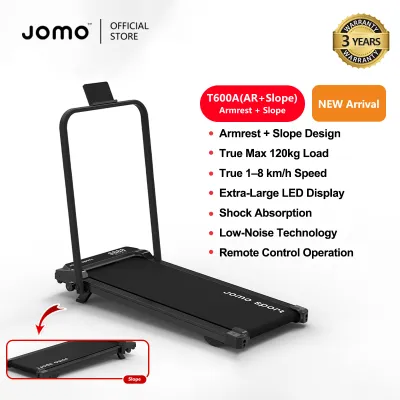
Cardio machines are notoriously bulky, but modern designs offer excellent space-saving alternatives. If you want a treadmill, compare a traditional folding treadmill with an under-desk walking pad. Folding treadmills are sturdier, offer higher speed limits, and have handrails for safety, but they still occupy significant space even when folded. Walking pads are highly compact, often sliding directly under a sofa or bed, but they usually cap out at speeds of 6 km/h to 8 km/h and have lower weight capacities.

For high-intensity cardio, consider rowing machines or exercise bikes equipped with vertical storage capabilities or front transport wheels. Magnetic resistance rowers can often be stood upright against a wall when not in use, taking up minimal floor space. Spin bikes with built-in front wheels are easy to tilt and roll into a corner or onto a balcony after your session.
Keep in mind the trade-offs of compact designs. Compact ellipticals, for example, often have a much shorter stride length (around 30 cm to 35 cm) compared to commercial gym models. This can result in a choppy, less natural running motion, especially for taller users. Always verify the stride length and weight capacity specifications before purchasing.
Multi-Functional Strength Training Gear
To build strength without cluttering your living room, prioritize multi-functional gear. Adjustable dumbbells and kettlebells are the gold standard for small spaces. A single pair of adjustable dumbbells can replace up to 15 individual pairs of fixed-weight dumbbells by using a dial, pin, or twist mechanism to select weights ranging from 2 kg to over 32 kg. This reduces your storage footprint from an entire wall rack to a small corner of your room.
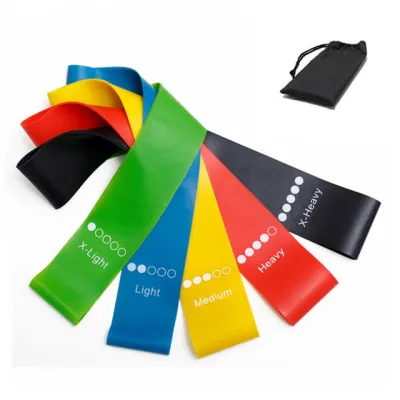
For a zero-footprint alternative, high-quality resistance bands with door anchors and suspension trainers are incredibly effective. These tools leverage your body weight or elastic tension to mimic cable machines. When your workout is finished, they pack away into a small drawer or bag. Always inspect the door frame and hinges to ensure they can support your weight before anchoring suspension trainers.
If you are looking for a comprehensive setup, foldable all-in-one trainers or compact Smith machines are available. However, these require careful planning. They often have high vertical clearances and may require floor anchoring. In an HDB flat, you must never anchor equipment into structural columns or the household shelter walls, as this violates building regulations. Instead, look for self-supporting, free-standing frames with wide, stable bases.
Space-Efficient Free Weights and Benches
If you prefer traditional free weight training, you do not need a massive power rack. Start with a foldable or ultra-compact adjustable weight bench. Look for models that fold flat to a height of under 20 cm, allowing them to slide easily under a bed or stand upright in a wardrobe. Ensure the bench has a high load capacity (combining your body weight and the weight you lift) and features secure locking pins.
To store any additional free weights, use vertical dumbbell racks or tiered stands. Vertical A-frame racks stack weights upward rather than outward, saving precious square footage.
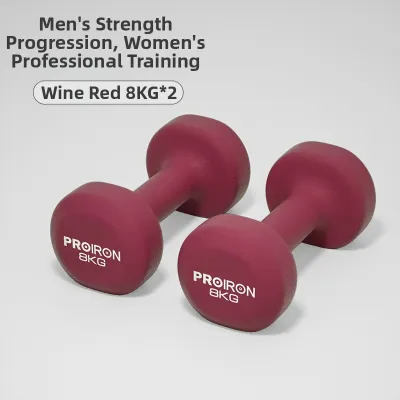
When selecting dumbbells or plates, opt for hexagonal or anti-roll designs. Round plates can easily roll away on slightly uneven HDB tiles, creating safety hazards in tight walkways. Hexagonal rubber-coated dumbbells stay exactly where you place them and offer a layer of floor protection.
Smart Storage and Space-Saving Setups for HDB Flats
Maximizing your HDB gym setup relies heavily on smart storage. Utilizing vertical space is a great way to keep gear off the floor, but you must be extremely cautious about wall types. HDB walls are generally categorized into structural reinforced concrete walls, precast lightweight concrete partition walls, and hollow brick walls. You must never drill into structural walls or your household shelter (bomb shelter) walls without professional advice and proper adherence to HDB renovation guidelines. If you are mounting light accessory hooks for resistance bands or yoga mats, verify that you are using the correct wall plugs (such as toggle bolts for hollow walls or masonry plugs for solid brick) and consult a qualified contractor if you are unsure.
For heavier items, look for hidden storage solutions. Under-bed storage bins are perfect for hiding away resistance bands, yoga blocks, jump ropes, and yoga mats. This keeps your living room looking tidy and uncluttered when you are not exercising.
Another excellent option is a mobile storage cart or a rolling utility rack. You can organize your chalk, recovery rollers, bands, and smaller weights on a multi-tiered cart with lockable wheels. During your workout, roll the cart next to your exercise mat for easy access. Once finished, simply wheel it back into a utility closet, a spare room, or a designated corner of your balcony.
Managing Noise, Vibration, and Neighbourly Etiquette
Living in a high-density HDB block means your workouts can easily impact your neighbors. Sound and structural vibrations travel quickly through concrete floors, making noise management essential.
First, invest in high-density rubber mats. Standard yoga mats or cheap, soft EVA foam mats do not offer enough protection. You need specialized gym flooring, such as 15 mm to 20 mm thick high-density SBR rubber tiles. These mats absorb the impact of placing weights down, protect your underlying tiles from cracking, and significantly dampen the sound transmission to the home below you.
Second, adjust your exercise selection to be neighbor-friendly. Avoid high-impact movements like heavy deadlift drops, kettlebell drops, or plyometric box jumps directly onto the floor. Instead, focus on controlled eccentrics (lowering weights slowly and quietly), which actually increases muscle time-under-tension and improves strength. If you must do explosive movements, use soft plyo boxes or perform them at a local outdoor fitness corner.
Finally, choose quiet equipment. When shopping for cardio gear, prioritize magnetic resistance over friction resistance or loud motorized drives. Magnetic exercise bikes and rowers operate almost silently, allowing you to work out early in the morning or late at night without disturbing your family or neighbors.
Common Space Planning Mistakes to Avoid
One of the most common mistakes is purchasing home gym equipment based solely on its folded or stored dimensions. If a treadmill folds down to a slim profile, but requires two meters of clearance in front and one meter on either side to operate safely, it may still be completely impractical for your living room. Always measure your active workout zone first.
Another frequent error is ignoring ventilation and airflow. Placing a cardio machine inside a small, enclosed HDB bedroom or a household shelter (bomb shelter) can quickly lead to an uncomfortable, stuffy environment. These spaces lack natural cross-ventilation, meaning you will need to set up mechanical fans or work out near an open window to prevent overheating.
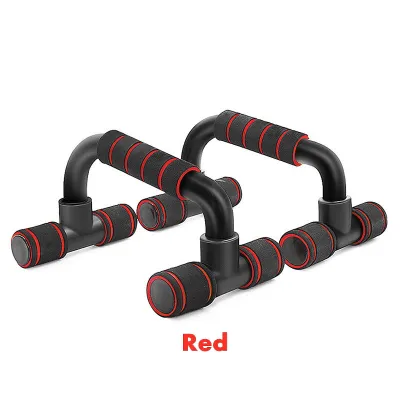
Lastly, avoid the temptation to buy too many single-use fitness gadgets. It is easy to accumulate abdominal rollers, push-up bars, and thigh trainers that eventually end up as clutter. Instead, invest your budget in highly versatile, multi-purpose gear like an adjustable bench and a quality set of adjustable dumbbells.
Frequently Asked Questions (FAQ)
Do I need HDB approval to install wall-mounted gym racks?
You do not typically need formal HDB approval for minor wall drillings, but strict regulations apply to structural integrity. Drilling into structural reinforced concrete walls, columns, or the household shelter (bomb shelter) is highly restricted or prohibited. Always consult HDB guidelines, check your flat’s floor plan to identify non-structural partition walls, and hire a qualified contractor to ensure heavy load-bearing racks are installed safely and legally.
What flooring works best to protect HDB tiles and reduce noise?
High-density SBR rubber tiles with a thickness of at least 15 mm to 20 mm work best for HDB flats. Unlike soft EVA foam mats, high-density rubber does not compress permanently under heavy weights, offering superior shock absorption, tile protection, and sound dampening. Look for interlocking tiles for easy, adhesive-free installation and removal.
Community discussion
Share your experience or ask a question. Comments are reviewed before publication.