
Quick Answer: Which Andar Mat Thickness Fits Your Practice?
Choosing the ideal thickness for your Andar yoga mat is a highly personal decision that depends entirely on your primary yoga style, the specific poses you perform most frequently, and your unique joint sensitivity. There is no single thickness that excels in every scenario; instead, the right choice requires balancing your need for firm, ground-connected stability with your desire for comfortable, joint-protecting cushioning.
As a general rule, thinner mats are designed to favor stability and a direct floor connection, making them highly suitable for active, balance-heavy practices. Thicker mats, on the other hand, prioritize impact absorption and comfort, which is ideal for restorative, floor-bound, or joint-sensitive routines. To find the perfect fit, you should evaluate how these characteristics align with your physical needs and daily practice environment.
Because Andar periodically updates its product lines and collections, specific thickness measurements and material densities may vary over time. To ensure you are making an accurate decision based on the most current specifications, always check the exact millimeter (mm) details on the official Andar website or product labels before completing your purchase.
Products mentioned in this guide
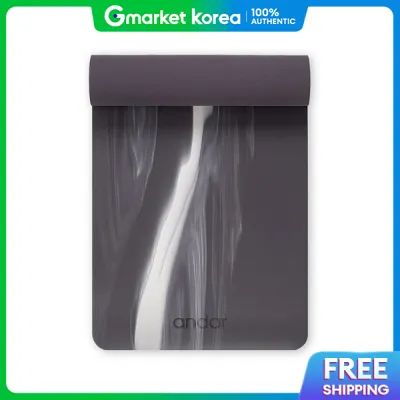

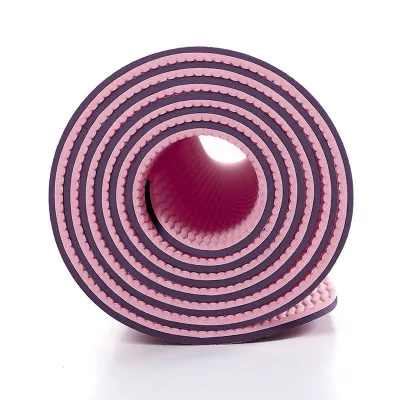
Prices are valid at publication and may change. Please refer to the product page for the latest price.
The Trade-Off: How Thickness Affects Stability and Cushioning
To select the right yoga mat, you must first understand the fundamental physical and biomechanical trade-offs between stability and cushioning. In the context of yoga, stability is your ability to maintain balance, control, and alignment during standing or dynamic poses. A thinner mat profile keeps your feet and hands close to the solid subfloor, which minimizes the lateral shifting or squishing of the material beneath your weight.

This close proximity to the floor enhances proprioception, which is your body’s subconscious awareness of its position and movement in space. When your feet are firmly grounded on a thin, stable surface, the mechanoreceptors in your soles can instantly detect minor shifts in weight. This sensory feedback allows your ankles, knees, and core to make rapid, micro-adjustments, reducing ankle roll and helping you maintain balance during challenging single-leg postures.
Cushioning, conversely, refers to the mat’s ability to absorb kinetic energy and distribute concentrated pressure away from your joints. When you perform floor work, kneeling postures, or restorative poses, your body weight is often concentrated on small, bony areas such as the knees, wrists, elbows, and spine. Without adequate cushioning, these pressure points press directly against the hard floor, which can cause acute discomfort, distract you from your practice, or even lead to chronic joint strain over time.
However, physics dictates an inverse relationship between these two essential performance characteristics. As a yoga mat’s thickness increases to provide more cushioning, the compressible material introduces a degree of instability. When you stand on a highly cushioned, soft surface, your feet sink into the material, creating a subtle “wobble” effect. This shifting foundation forces your stabilizing muscles to work significantly harder to maintain equilibrium, which can lead to premature muscle fatigue and make balancing poses much more difficult.
It is also important to recognize that material density plays a critical role in this dynamic, and is a key specification you should verify on Andar’s product pages. A high-density mat, even if it is relatively thick, offers a firm, supportive surface that resists excessive compression under concentrated weight. Conversely, a low-density, overly soft mat will compress completely to the floor under pressure, failing to provide either real joint protection or reliable stability. Therefore, understanding the interplay between thickness and density is essential for choosing a mat that truly supports your practice.
Breaking Down Andar Yoga Mat Thickness Categories
Andar’s diverse lineup of yoga mats can be broadly categorized into three distinct thickness tiers, each engineered to serve different practical needs, skill levels, and environments. By analyzing these categories, you can better understand how each option performs in real-world scenarios and determine which tier aligns with your personal goals.
Thin and Travel-Friendly Options
Thin and travel-friendly mats are designed for practitioners who prioritize portability, direct floor feedback, or a highly stable base for active sequences. These ultra-low-profile mats are exceptionally lightweight and can easily be folded or rolled into compact dimensions, making them highly convenient to carry.
During an active, dynamic practice, a thin mat excels by providing an unyielding surface that does not compress or shift underfoot. When executing advanced balancing postures such as Tree Pose (Vrksasana), Warrior III (Virabhadrasana III), or intricate arm balances like Crow Pose (Bakasana), a solid, non-shifting foundation is paramount. The lack of bulk ensures that your hands and feet remain firmly anchored, allowing for maximum control, precise alignment, and confidence.
However, the primary limitation of this category is its minimal joint protection. Because there is very little material between your body and the floor, pressure points can quickly become uncomfortable during prolonged floor work or kneeling poses. Practitioners with sensitive joints, a history of knee injuries, or those who practice primarily on hard surfaces may find this tier too unforgiving unless they use additional padding.
Standard All-Rounders
Standard all-rounders represent the versatile core of the yoga mat market, engineered to strike a harmonious balance between floor feedback and joint protection. This middle tier is the most popular choice for everyday practitioners because it adapts seamlessly to a wide variety of yoga styles and physical demands.
For a typical practice that transitions frequently between dynamic standing flows, sun salutations, and seated stretches, a standard thickness provides a highly balanced experience. It offers enough underfoot firmness to keep you stable during balancing sequences while providing a noticeable layer of shock absorption for your wrists during high-pressure poses like Downward-Facing Dog (Adho Mukha Svanasana) or Plank Pose. This versatility makes it an excellent single-mat solution for general use.
When evaluating Andar’s standard options, it is wise to verify if they utilize high-density materials to prevent the phenomenon known as “bottoming out.” Bottoming out occurs when a mat compresses completely under concentrated weight, leaving your joints resting directly against the hard floor. A high-quality standard mat should retain its structural integrity and springiness even under high-pressure poses, ensuring consistent comfort throughout your practice.
Thick and Extra-Cushioned Options
Thick and extra-cushioned options are dedicated to maximum comfort, deep relaxation, and comprehensive joint protection. These heavily cushioned mats are favored by those who view their practice as a therapeutic sanctuary for recovery, gentle stretching, or slow-paced movement.
In practices such as Yin Yoga, Restorative Yoga, or floor-based Pilates, you spend prolonged periods holding seated, prone, or supine postures. A thick mat provides an exceptionally comfortable barrier that insulates your spine, hips, and knees from the cold, hard ground. This generous cushioning allows your muscles to fully relax and release tension, enhancing the meditative quality of your practice and reducing physical distraction.
However, this luxurious comfort comes with a clear stability trade-off. The increased thickness and compressibility of the material can make standing balance poses significantly more challenging. To maintain your balance on a thick mat, you may need to widen your stance, engage your core more actively, or step off the mat onto the bare floor during complex standing sequences to find a stable base. Additionally, these mats are heavier and bulkier to transport.
Decision Framework: Matching Thickness to Your Yoga Style
Selecting the perfect thickness for your Andar yoga mat requires an honest assessment of your physical needs, your preferred style of yoga, and the environment in which you practice. By matching these variables to the correct category, you can ensure a comfortable and productive practice.
- Choose a thin/travel option if:
- Your practice consists primarily of standing balances, hot yoga, or fast-paced Ashtanga sequences where stability is your absolute priority.
- You are a frequent commuter who relies on Singapore's public transport network, such as the MRT or buses, to travel to and from your favorite yoga studio, and you require a lightweight mat that will not weigh you down.
- You already own a thicker mat for home use but need a highly portable, secondary option specifically for travel or outdoor sessions.
- Choose a standard option if:
- You practice a dynamic mix of Vinyasa flow, Hatha, and general fitness routines, requiring a versatile surface that can transition effortlessly from standing postures to floor stretches.
- You want a single, dependable mat that performs well across multiple disciplines without committing to the extremes of ultra-thin portability or heavy-duty cushioning.
- You practice both at home and in a studio setting and need a balanced weight that is manageable to carry while still offering respectable joint protection.
- Choose a thick/extra-cushioned option if:
- Your routine is centered around Yin Yoga, Restorative Yoga, Pilates, or long meditation sessions where comfort and pressure relief are paramount.
- You suffer from joint sensitivities, chronic knee or wrist pain, or are recovering from an injury that makes practicing on standard mats uncomfortable.
- Your primary practice space is at home on hard, unforgiving flooring such as ceramic tiles, polished concrete, or parquet, where extra insulation from the hard subfloor is necessary.
- Verify first if:
- You find yourself torn between two categories or have specific physical considerations. In these scenarios, always verify the exact material composition and density on the official Andar product page. For instance, a mat made of high-density natural rubber will feel vastly firmer and more stable at a thinner profile than a lightweight thermoplastic elastomer (TPE) mat of the same thickness, which may offer more initial softness but compress more easily under concentrated pressure.
What to Verify Before You Buy
Before finalizing your purchase of an Andar yoga mat, taking the time to verify a few practical specifications will ensure that your chosen model fits seamlessly into your lifestyle and home environment.
First, always check the exact millimeter thickness listed on the official product page or authorized retail descriptions. Marketing terms like “cushioned,” “travel,” or “standard” can vary significantly between brands and product lines. Knowing the precise measurement allows you to make an objective comparison against any mats you have previously used or tested.
Second, carefully evaluate the mat’s overall weight and rolled dimensions. While a thicker, high-density mat offers incredible comfort, it is also substantially heavier and bulkier. If you plan to carry your mat on public transport during peak commuting hours in Singapore, a heavy natural rubber mat can quickly become a physical burden. Ensure that you are comfortable with the weight and that the rolled mat will fit into your preferred carrying bag or strap.
Third, review the specific care and cleaning instructions provided by the manufacturer. Singapore’s hot and highly humid climate presents a unique challenge for yoga gear, as sweat and atmospheric moisture can easily become trapped in porous mat materials. Thicker mats, particularly those with open-cell structures, can absorb moisture like a sponge, leading to unpleasant odors, bacterial growth, or accelerated material degradation if not dried properly. Verify whether the mat requires specialized cleaning solutions and ensure you have a well-ventilated space at home to hang-dry it out of direct sunlight.
Finally, if you are still uncertain about which thickness is right for your body, attempt to test the different options in person. Visiting a local retail partner or a yoga studio that utilizes Andar mats allows you to physically feel the material density and test your balance on different thicknesses. This hands-on experience is invaluable for understanding how your unique body weight and joint structure interact with the mat’s cushioning and stability.
Frequently Asked Questions (FAQ)
Does a thicker yoga mat make balancing poses harder?
Yes, a thicker yoga mat can make balancing poses more challenging if the material is highly compressible or has a low density. When you stand on a soft, squishy surface, your feet sink into the mat, which reduces your sensory connection to the solid floor and creates lateral instability. This instability forces the muscles in your ankles and feet to work harder to maintain balance. However, if the thick mat is made from a high-density material, it will resist deep compression, offering a much more stable foundation that minimizes this wobbling effect.
Can I use a thin Andar mat if I have bad knees?
Using a thin yoga mat directly on a hard floor is generally not recommended if you suffer from joint sensitivity or knee pain, as it provides very little impact absorption. However, you do not have to abandon a thin mat entirely if you value its stability for standing poses. You can easily supplement a thin mat by placing a folded microfiber yoga towel, a small foam knee pad, or even a folded blanket directly under your knees during floor postures. This approach provides targeted, adjustable cushioning exactly when and where you need it, while preserving the firm, stable foundation of the thin mat for the rest of your practice.
Community discussion
Share your experience or ask a question. Comments are reviewed before publication.