
Foldable yoga mats typically range from 1 mm to 3 mm in thickness, meaning no single brand offers a universal best option. The ideal thickness depends entirely on your joint sensitivity, the type of yoga you practice, and how you plan to carry the mat. Rather than relying on brand claims alone, this guide provides a practical framework to compare thickness specifications, evaluate the trade-offs between cushioning and packability, and choose the right balance for your specific needs.
Understanding Common Thickness Categories
When browsing different brands, you will find that foldable yoga mats generally fall into three distinct thickness tiers. Each tier serves a specific purpose, balancing the physical constraints of folding with the comfort required for various poses. Understanding these categories allows you to filter out options that do not align with your primary practice environment.
The ultra-thin travel tier typically ranges from approximately 1 mm to 1.5 mm. Mats in this category are designed for maximum packability, often folding down to the size of an A4 notebook or a tablet. This extreme thinness allows the mat to fit easily into a commuter backpack or a carry-on suitcase, making it highly suitable for yogis who travel frequently or practice on the go. However, because there is very little material between your body and the floor, this tier offers minimal cushioning and focuses instead on providing a clean, slip-resistant barrier and a strong connection to the ground.
Products mentioned in this guide
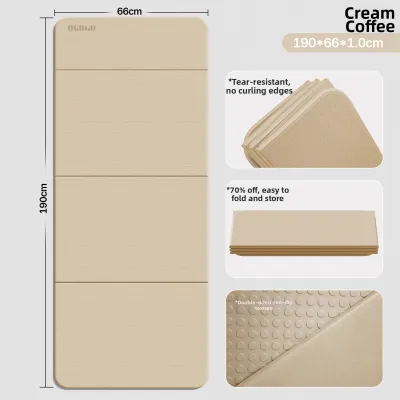
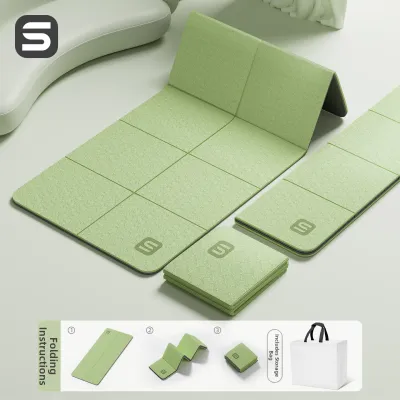
Prices are valid at publication and may change. Please refer to the product page for the latest price.
The standard foldable tier sits at approximately 2 mm. This thickness is widely considered the middle ground for general use, offering a compromise between basic joint protection and folding convenience. A 2 mm mat can still be folded into a compact square, though it will take up slightly more volume in your bag than a 1 mm alternative. It provides just enough compression to take the edge off hard surfaces without adding excessive weight, making it a popular choice for studio commuters who want to layer their own mat over a communal studio mat.
The cushioned foldable tier includes mats that are 3 mm and above. While standard roll-up mats easily go up to 6 mm or more, foldable designs rarely exceed 3 mm or 4 mm because thicker materials resist creasing and become highly bulky when folded. Mats in this tier prioritize joint support and comfort during floor-based practices, such as Yin or Restorative yoga. The trade-off is a significant increase in folded volume and weight, which may require a larger tote bag or dedicated backpack space, making them less convenient for long commutes.
The Trade-Off: Cushioning vs. Portability
Choosing a foldable yoga mat requires balancing two opposing physical properties: the comfort of cushioning and the ease of transport. As thickness increases, the physical volume of the folded mat expands exponentially. A 1 mm mat might fold flat into a sleek rectangle, whereas a 3 mm mat folded along the same crease lines can become a thick, springy block that resists staying compressed in your bag.

Weight is another critical factor directly tied to thickness and material density. Common materials like natural rubber, thermoplastic elastomer (TPE), and polyurethane (PU) have vastly different weights at the same thickness. For instance, a 2 mm natural rubber mat is significantly heavier than a 2 mm TPE mat because natural rubber is a much denser material. While natural rubber offers excellent grip and durability, its weight can make a thicker foldable mat cumbersome to carry during a daily commute on public transport. Conversely, TPE is lightweight and highly packable, but it may offer less structural stability and wear out faster along the fold lines.
Stability during standing and balancing poses is also heavily influenced by the interaction between thickness and material density. On a very soft, thick mat, your feet and ankles must constantly micro-adjust to maintain balance, which can lead to fatigue during active practices like Vinyasa or Ashtanga. A thinner, denser mat provides immediate ground feedback, allowing for more precise alignment and stability. When evaluating different brands, it is essential to consider whether you prefer the firm, grounded feel of a thin mat or the soft, protective barrier of a thicker, less dense material.
How to Evaluate Brand Specifications
To make an informed decision when shopping across different online stores or brand websites, you must look past marketing buzzwords and focus on verifiable specifications. Brands often use terms like “ultra-cushioned” or “feather-light” without providing the physical measurements to back up these claims. Your first step should always be to check the official product labels and specification sheets for the exact millimeter thickness.
Additionally, pay close attention to the folding mechanism and design of the mat. Some brands design their mats with pre-molded crease lines or specific geometric patterns that facilitate easy folding without damaging the material. Other mats are simply thin versions of standard mats that you fold yourself. For thicker mats, especially those around 3 mm, a lack of dedicated crease lines can cause the material to stretch, crack, or permanently crease over time, particularly in humid climates where materials can degrade faster if stored improperly. Verify whether the manufacturer provides specific folding instructions to ensure the longevity of the mat.
Finally, evaluate the price-to-thickness ratio in S$ when comparing similar materials across different brands. In Singapore, prices can vary widely based on brand positioning and material quality. When comparing two mats of the same thickness, check the material composition to ensure you are getting fair value. A premium price tag should reflect high-quality, durable materials like sustainably sourced natural rubber or reinforced PU, rather than just brand prestige. Keep in mind that a cheaper, low-density foam mat may compress completely under your weight, rendering its extra thickness useless for cushioning.
Decision Framework: Matching Thickness to Your Needs
To select the right foldable yoga mat, you must match the thickness to your personal practice habits, physical requirements, and travel routines. There is no single option that excels in every scenario, so identifying your primary use case is key to making a satisfactory purchase.
You should choose the ultra-thin tier (1 mm to 1.5 mm) if your primary goal is to minimize luggage space and weight. This tier is ideal for travelers who want a mat that fits into a standard backpack or carry-on without taking up valuable space. It is also highly suitable for yogis who practice mostly standing, balancing, or active styles of yoga where ground feedback is crucial, and who do not suffer from joint sensitivities. If you plan to use this mat primarily as a hygienic cover over a studio-provided mat, the ultra-thin tier is the most practical choice.
Select the standard tier (2 mm) if you need a versatile, all-rounder mat for mixed practices and moderate travel. This thickness offers a reasonable compromise, providing a small amount of cushioning for your knees and wrists while remaining relatively easy to fold and pack. It is well-suited for local commuters who attend classes after work and need a mat that fits comfortably into a standard tote bag without being overly heavy or bulky.
Opt for the cushioned tier (3 mm and above) if your practice involves significant floor work, such as Yin, Restorative, or Pilates, where joint protection is a priority. This tier is also the best choice if you primarily practice at home but still want the convenience of a foldable mat for easy storage, or if you travel mostly by car where bag space and weight are not major constraints.
Before finalizing your choice, it is crucial to assess your physical health. If you have pre-existing joint conditions, chronic knee pain, or wrist sensitivities, an ultra-thin mat may not provide sufficient protection on hard floors. In such cases, consult a healthcare professional or a qualified yoga instructor to determine the minimum level of cushioning required for your safety. Do not sacrifice joint health for the sake of portability; if necessary, opt for a thicker mat and adjust your carrying method accordingly.
Frequently Asked Questions (FAQ)
Can I use a thin foldable mat on hard floors?
Yes, you can use a thin foldable mat on hard floors, but your comfort will depend heavily on your personal joint tolerance and the type of poses you perform. On hard surfaces like hardwood, tile, or polished concrete, a 1 mm to 1.5 mm mat offers virtually no impact absorption, which can cause discomfort during kneeling poses like Cat-Cow or Low Lunge. If you have sensitive joints, you may need to fold the mat over itself to double the thickness under your knees, or place a yoga towel or blanket underneath for extra padding. Alternatively, many yogis use these thin mats as a hygienic layer on top of a thicker studio mat, combining the portability of their own mat with the cushioning of the studio’s equipment.
Does a thicker foldable mat compromise balance in standing poses?
A thicker foldable mat can compromise balance if the material is too soft or low in density. When you stand on a thick, squishy surface, your feet sink into the material, reducing your connection to the solid floor and making it harder for your ankles to stabilize. This can make balancing poses like Tree Pose or Warrior III more challenging. However, this effect can be mitigated by choosing a mat made from a high-density material, such as natural rubber. High-density materials provide a firm, supportive surface that offers excellent ground feedback even at a 3 mm thickness, allowing you to maintain stability while still enjoying the benefits of extra joint cushioning.

Community discussion
Share your experience or ask a question. Comments are reviewed before publication.