
Quick Answer: What to Expect from Large Insulated Bottles
When searching for a large sports water bottle to keep drinks cold during long workouts, there is no single brand that universally outperforms all others under every condition. Instead, temperature retention is governed by physical design elements: the thickness of the vacuum-insulated walls, the construction of the lid, and the overall capacity of the bottle.
In a hot and humid climate like Singapore’s, where outdoor temperatures regularly exceed 30°C, real-world performance will always differ from controlled laboratory tests. Frequent opening, exposure to direct sunlight, and warm ambient air rapidly degrade cold retention. To secure the most reliable performance, prioritize bottles with verified double-wall vacuum insulation and insulated, tightly sealing lids rather than relying solely on brand marketing.
Key Factors That Determine Cold Retention in Large Bottles
To understand how a large water bottle maintains its temperature, it helps to look at the underlying technology. Double-wall vacuum insulation is the industry standard. This design features an inner and outer wall, usually made of stainless steel, with the air evacuated from the space between them. Because a vacuum contains no air molecules, it prevents heat transfer by conduction or convection. Some premium models also incorporate an internal copper lining on the outer surface of the inner wall, which reflects thermal radiation and further slows down temperature changes.
Products mentioned in this guide
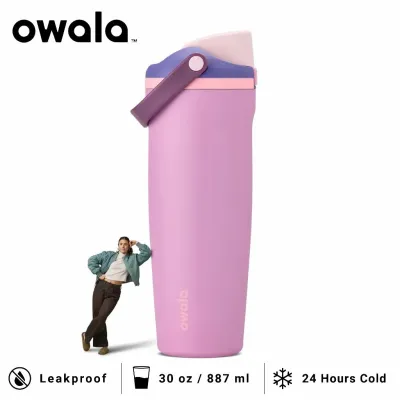
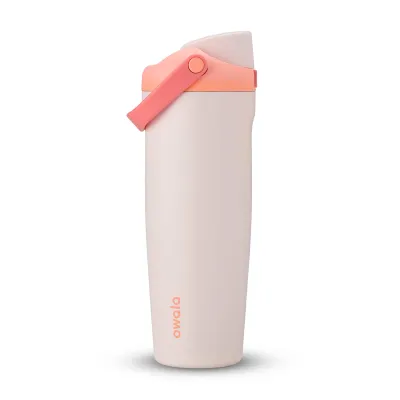
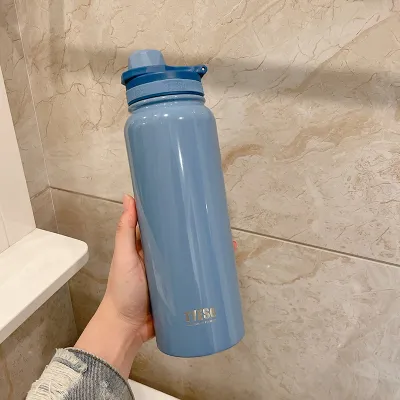
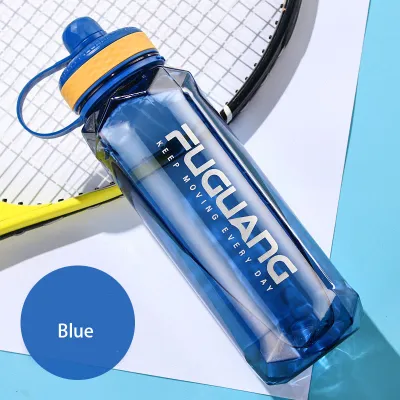
![[✅SG Ready Stock] 1.7L 2.7L 4L 5L Super Big Capacity Sport BPA Free Water Bottle Super Fast Delivery](https://img.lazcdn.com/g/p/6a5e865e2a9b126b714b1db9112b51d0.jpg_400x400q80.jpg_.webp)
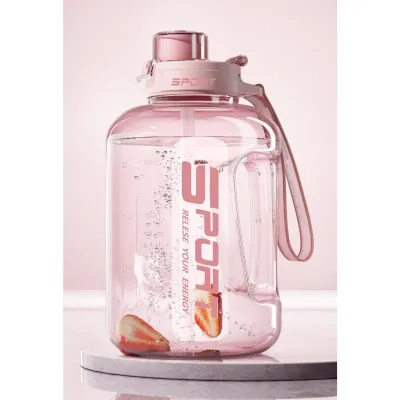
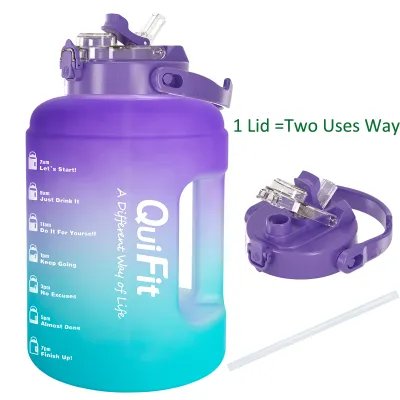
Prices are valid at publication and may change. Please refer to the product page for the latest price.

The lid is often the weakest link in any insulated bottle’s thermal defense. While the stainless steel body prevents heat from entering through the sides, an uninsulated plastic lid allows heat to transfer through the top. Fully sealed screw caps offer high thermal efficiency because they minimize air exposure and often contain insulating foam. Conversely, straw lids, flip-top spouts, and wide-mouth openings introduce more pathways for heat exchange, especially when left open or designed with thin plastic components.
Capacity plays a surprising role in temperature retention due to the surface-area-to-volume ratio. A larger volume of cold water contains more thermal mass, meaning it requires more heat energy to raise its temperature by one degree compared to a smaller volume. Consequently, a large-capacity bottle (such as 1 litre or more) will naturally keep its contents cold longer than a smaller bottle of identical construction, provided both start at the same temperature and remain sealed.
Finally, user habits dictate real-world performance. Pre-chilling your bottle by filling it with ice water for a few minutes before packing it, using a high ratio of ice to water, and minimizing the frequency and duration of opening the lid during a workout will significantly extend how long your drink stays cold.
How to Evaluate Insulation Claims Across Popular Brands
When shopping for a large sports water bottle, you will encounter various bold claims regarding cold retention, sometimes promising up to 24 or 36 hours of cold water. To make an informed decision, you must learn to evaluate these claims critically. Start by looking at the manufacturer’s technical specifications. Reputable brands often specify the exact testing conditions used to achieve their ratings, such as the starting water temperature (often around 4°C) and the ambient room temperature (usually a controlled 20°C to 22°C). Keep in mind that these tests do not account for the tropical heat of Singapore, where outdoor temperatures and humidity are much higher.
Be cautious of vague marketing phrases like “keeps cold all day” or “extreme insulation” without supporting specifications. Instead, look for precise, condition-based statements. A brand that provides a detailed breakdown of temperature curves over 6, 12, and 24 hours is generally more transparent and reliable than one relying on catchphrases.
User reviews are invaluable for understanding how a bottle performs in real-world sports environments. Search online marketplaces and sports forums for feedback from users who exercise outdoors or in non-air-conditioned spaces. Look specifically for mentions of how quickly ice melts during a typical two-hour workout or whether the exterior of the bottle feels cold to the touch, which can indicate poor insulation.
Another strong indicator of build quality is the manufacturer’s warranty. Brands that offer multi-year or lifetime warranties against insulation failure demonstrate high confidence in their vacuum seals. A robust warranty ensures that if the vacuum seal fails prematurely due to a manufacturing defect, you can obtain a replacement without additional cost.
Comparing Large Bottle Designs for Extended Workouts
A large sports water bottle must be practical to carry and use during physical activity. Ergonomics and grip are critical when dealing with capacities of 1 litre or more, as a full bottle can weigh well over a kilogram. Look for bottles featuring textured powder coatings, which provide a non-slip grip even when your hands are sweaty. Some models include silicone sleeves or boots that improve grip while protecting the base from impacts. Integrated handles on the lid or collar also make carrying a heavy bottle much easier during long walks or transitions between gym equipment.
The hydration mechanism you choose should align with your specific sport. Straw lids allow for quick, one-handed sipping without tilting the bottle, making them ideal for cycling, treadmill running, or driving. However, they are more complex to clean and may offer slightly less insulation than solid caps. Wide-mouth designs allow you to load large ice cubes easily and facilitate thorough cleaning, but they require you to unscrew the entire lid to drink, which can be inconvenient during high-intensity workouts.
Weight is another important factor. Heavily insulated stainless steel bottles are inherently heavier than their single-walled plastic counterparts. Before purchasing, consider the empty weight of the bottle and how it will affect your overall load, especially if you plan to carry it in a backpack during a hike or a long commute on public transport.
Durability features protect your investment and maintain the bottle’s insulation. A high-quality powder-coated finish resists scratches and maintains its appearance over time. More importantly, the bottle should be robust enough to withstand minor drops. Severe dents can cause the inner and outer metal walls to touch, which instantly destroys the vacuum barrier and ruins the bottle’s insulation capabilities.
Decision Framework: Choosing the Right Bottle for Your Routine
To select the ideal large sports water bottle, you should match its design features to your specific workout routine and hydration preferences. Use the following framework to guide your choice:
- For Maximum Cold Retention: If your absolute priority is keeping water ice-cold for the longest possible duration—such as during all-day outdoor tournaments or long hikes in the sun—choose a bottle equipped with a fully sealed, insulated screw cap. This design minimizes thermal transfer at the opening, offering the most reliable temperature retention.
- For High-Intensity Workouts: If you require quick, one-handed hydration during high-intensity interval training (HIIT), spin classes, or team sports, prioritize a bottle with an insulated straw lid or a quick-flip spout. While you may sacrifice a small degree of long-term cold retention compared to a solid screw cap, the convenience of rapid drinking without spilling is often a worthwhile trade-off.
- For Rugged Environments: If you frequently train in rugged environments, outdoor parks, or busy gym floors where drops are common, look for a bottle that features a built-in heavy-duty handle and a protective silicone boot. The boot cushions impacts, preventing the dents that compromise vacuum insulation.
- For Compatibility and Transit: Before making a final purchase, always verify the physical dimensions of the bottle. Large-capacity bottles often have wide diameters that do not fit standard car cup holders, treadmill console slots, or the side pockets of smaller backpacks. Measure your equipment beforehand to ensure the bottle fits your daily transit and workout setups.
Maintenance and Care to Preserve Insulation Performance
Proper maintenance is essential to ensure your large insulated bottle continues to perform effectively over its lifespan. Always follow the manufacturer’s cleaning instructions. While some stainless steel bottles are labeled as dishwasher safe, hand-washing is generally recommended. The intense heat and harsh detergents of a dishwasher cycle can degrade the outer powder coating, damage the silicone gaskets that prevent leaks, and potentially compromise the vacuum seal itself.
To prevent odors and mold growth, especially in complex straw or flip lids, disassemble all removable parts and wash them with warm, soapy water after every use. Use specialized straw brushes to clean narrow passages. Allow all components to dry completely in a well-ventilated area before reassembling or storing the bottle.
Regularly inspect your bottle for physical damage. If you notice condensation forming on the outside of the bottle (sweating) or if the exterior feels unusually cold or warm when filled with ice water, the vacuum seal has likely been compromised. Once the vacuum is lost, the bottle can no longer insulate effectively and will need to be replaced if cold retention is still required.
Frequently Asked Questions (FAQ)
Does a bigger water bottle keep water colder than a smaller one?
Yes, a larger volume of water generally retains its temperature longer than a smaller volume, assuming both bottles share the same insulation technology and starting conditions. This is due to the surface-area-to-volume ratio: larger bottles have less surface area relative to the volume of liquid inside, slowing down the rate of heat transfer. However, to maximize this effect, you must fill the bottle completely and use an appropriate amount of ice, as a large bottle that is only half-full will warm up much faster.
Can I put boiling water in a large cold-retention sports bottle?
While double-wall vacuum insulation is highly effective at retaining both hot and cold temperatures, you must exercise caution. Many sports bottles designed for cold drinks feature plastic lids, straws, or flip-top spouts that are not rated for high temperatures. Boiling water can warp these plastic components, damage silicone seals, or cause pressure to build up inside the bottle, leading to hot liquid spraying out when opened. Always check the manufacturer’s guidelines to verify the maximum safe temperature for your specific lid design.
Why is the outside of my insulated bottle sweating?
Condensation, or sweating, on the exterior of an insulated bottle is a clear sign of insulation failure. In a properly functioning double-wall vacuum bottle, the vacuum layer prevents heat from transferring to the outer wall, keeping the exterior at ambient room temperature. If the bottle sweats, it means the vacuum seal has been broken—often due to a drop or a structural defect—allowing the cold temperature of the inner wall to reach the outer surface. Once this occurs, the bottle’s thermal performance is permanently degraded.
Community discussion
Share your experience or ask a question. Comments are reviewed before publication.