
Selecting the right elbow support is a critical decision that directly impacts your athletic performance, comfort, and joint safety. The choice between a lightweight compression sleeve and a rigid hinged elbow brace depends on your specific sport, the intensity of your movements, and whether you are managing a minor strain or recovering from a significant joint injury. While a compression sleeve offers flexible, low-profile warmth and mild pressure for repetitive motions, a hinged brace provides structural, mechanical limits to protect the joint from dangerous lateral movements or hyperextension.
Understanding how these two distinct designs function allows you to match the support level to the physical demands of your activity. Choosing the wrong type can either restrict your natural athletic movement unnecessarily or leave your joint vulnerable to acute injury during high-impact play. By evaluating your sport’s biomechanics and your personal physical needs, you can select an option that keeps you active while safeguarding your long-term joint health.
Understanding the Core Differences in Design and Function
To make an informed decision, you must first understand how these two types of protective gear differ in construction and mechanical purpose. A compression sleeve is typically a pull-on garment made from elastic, knit, or neoprene fabrics. It fits snugly around the entire arm, applying uniform pressure across the elbow joint, surrounding muscles, and tendons. This elastic compression enhances proprioception—your brain’s awareness of the joint’s position and movement—while retaining therapeutic heat to keep muscles pliable and improve local blood flow.
Products mentioned in this guide
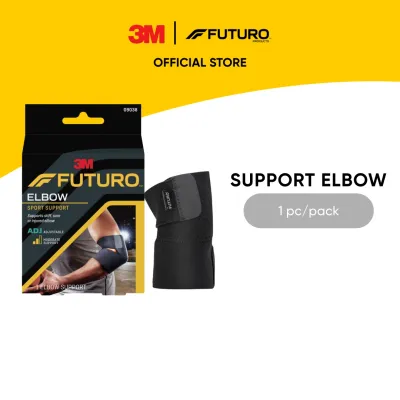
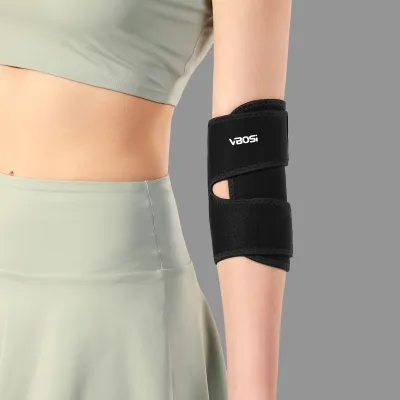
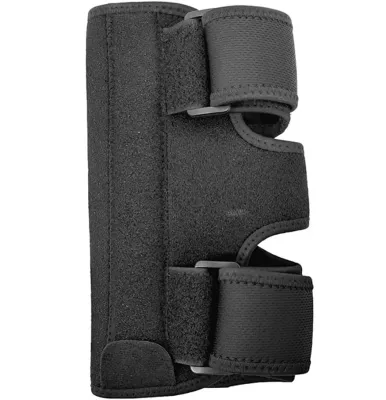
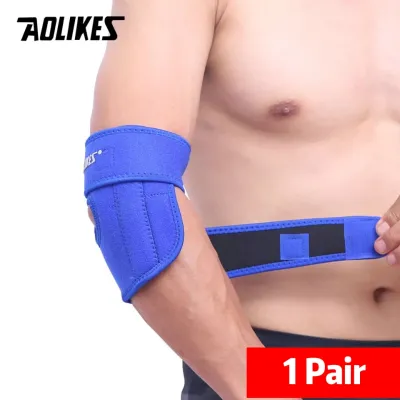
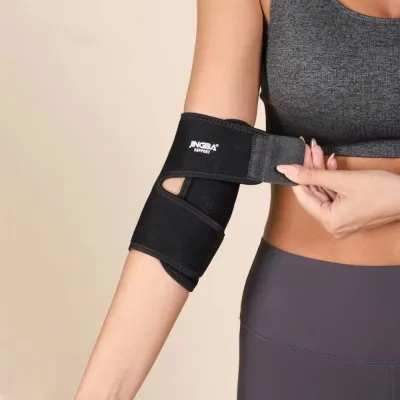
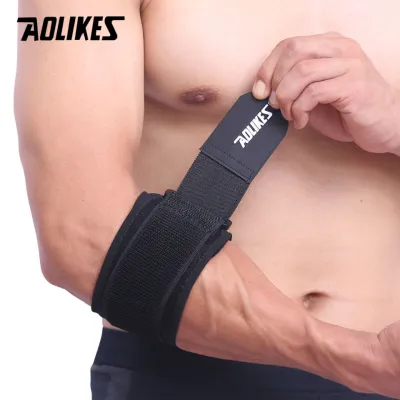
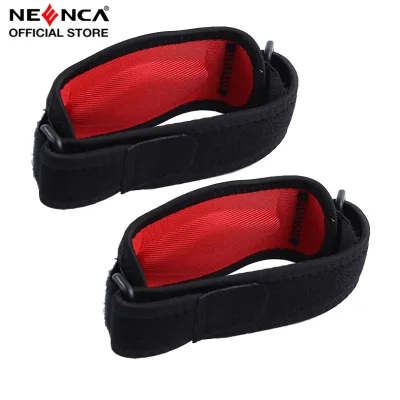

Prices are valid at publication and may change. Please refer to the product page for the latest price.
In contrast, a hinged elbow brace is a highly structured orthopedic device featuring rigid side hinges, often constructed from lightweight metals or composite plastics. These hinges are aligned with the natural pivot point of your elbow and are secured to the arm using adjustable hook-and-loop straps. Instead of relying solely on fabric tension, a hinged brace uses these physical barriers to mechanically restrict specific ranges of motion, such as preventing the elbow from bending backward or twisting sideways under heavy loads.
These design differences dictate how each support interacts with your body’s natural biomechanics. A compression sleeve moves dynamically with your arm, offering zero mechanical resistance and allowing a complete, natural range of motion. A hinged brace, however, acts as an external skeletal support, absorbing external forces and physically blocking movements that could compromise a healing ligament or unstable joint.
When to Choose a Compression Sleeve
A compression sleeve is a suitable choice for athletes who participate in sports requiring continuous, fluid, and unrestricted arm movements. In racket sports like tennis, squash, or badminton, as well as in golf and lightweight resistance training, the elbow must bend and extend rapidly without any mechanical interference. A sleeve provides the subtle support needed to manage repetitive vibrations and minor muscle oscillations during these high-frequency movements, helping to reduce the onset of localized fatigue.

This type of support is highly effective for managing mild, chronic conditions such as lateral epicondylitis (tennis elbow), medial epicondylitis (golfer’s elbow), or general tendon irritation. The continuous compression helps distribute forces more evenly across the forearm tendons, while the retained warmth keeps the joint lubricated and ready for action. It is also an excellent preventive tool for athletes returning to full training after a minor strain, offering a psychological boost in confidence through enhanced sensory feedback.
However, you must recognize the clear physical limitations of an elastic sleeve. It possesses no structural components, meaning it cannot prevent joint subluxation, protect compromised ligaments, or stop the elbow from hyperextending during a fall or heavy lift. If your joint feels unstable, loose, or structurally weak, relying solely on a compression sleeve during high-risk activities can expose you to further injury.
When to Choose a Hinged Elbow Brace
A hinged elbow brace is designed for scenarios where joint stability and physical protection must take precedence over complete freedom of movement. This level of rigid support is essential in high-impact contact sports like rugby, American football, or martial arts, where unpredictable external forces can easily force the joint into unnatural positions. It is also highly beneficial for heavy load-bearing activities, such as powerlifting or strongman training, where the elbow joint is subjected to extreme axial loads that demand external mechanical reinforcement.
In clinical and post-injury contexts, a hinged brace is often a mandatory tool during rehabilitation. If you are recovering from a severe ligament tear, such as an ulnar collateral ligament (UCL) injury, or managing joint laxity, the rigid hinges shield the vulnerable tissues from lateral stress. Many hinged braces feature adjustable dials or stops that allow you or your physical therapist to lock the joint at specific angles, gradually increasing the allowed range of motion as your tissues heal.
Despite these protective benefits, choosing a hinged brace involves clear trade-offs that you must consider. The rigid frame, metal hinges, and thick straps make these braces significantly bulkier and heavier than simple sleeves, which can cause skin chafing or irritation during prolonged use. Furthermore, the mechanical restriction will alter your technical movement patterns, making it difficult to perform highly precise, rapid arm actions required in sports like basketball or throwing events.
Essential Fit and Sizing Checks Before Purchasing
To ensure your chosen elbow support performs its intended function safely, you must obtain an accurate fit before making a purchase. An improperly sized support can either fail to provide adequate stabilization or, conversely, restrict blood flow and cause nerve issues. To measure your arm correctly, extend your elbow slightly and use a flexible measuring tape to find the circumference of your arm at the specific points designated by the manufacturer—typically a few centimeters above and below the center of the elbow joint.
When trying on a compression sleeve, check for integrated non-slip features, such as silicone grip strips along the upper hem. These grips are essential for preventing the sleeve from migrating or sliding down your arm during sweaty, high-intensity workouts. For a hinged brace, ensure that the mechanical hinges align perfectly with the lateral and medial epicondyles (the bony bumps on the sides of your elbow) so that the brace bends in harmony with your natural joint movement.
Finally, you must verify that the support does not compromise your neurological or vascular health. After putting on the sleeve or brace, wear it for several minutes while performing light movements, and monitor your forearm, wrist, and hand for any warning signs. If you experience numbness, tingling, a cold sensation in your fingers, or visible skin discoloration, the support is too tight and must be adjusted or exchanged for a larger size immediately to prevent nerve compression.
Quick Comparison Matrix: Sleeve vs Hinged Brace
To help you quickly evaluate which option aligns with your current physical needs and athletic goals, the following matrix summarizes the key functional differences between compression sleeves and hinged elbow braces.
| Feature | Compression Sleeve | Hinged Elbow Brace |
|---|---|---|
| Support Level | Mild to moderate (proprioceptive) | High (structural and mechanical) |
| Mobility Restriction | None; allows full range of motion | High; restricts lateral movement and hyperextension |
| Primary Materials | Nylon, spandex, neoprene, or knit fabric | Metal or composite hinges, rigid plastic, heavy straps |
| Recommended Sports | Tennis, golf, running, gymnastics, light lifting | Rugby, powerlifting, martial arts, motorsports |
| Primary Use Cases | Tendonitis, muscle warmth, minor fatigue prevention | Ligament tears, joint instability, post-surgery recovery |
| Comfort & Bulk | Low profile, lightweight, fits under clothing | Bulky, heavier, worn over skin or thin base layers |
Frequently Asked Questions (FAQ)
Can I wear an elbow sleeve or brace all day?
You should not wear an elbow sleeve or a hinged brace continuously throughout the day unless specifically instructed to do so by a medical professional. Prolonged wear can restrict local blood circulation, trap moisture against the skin leading to irritation, and prevent the joint tissues from experiencing natural movement. It is advisable to remove the support during rest periods, sedentary office work, and sleep to allow your skin to breathe and your circulatory system to function without external pressure. If you notice persistent skin indentations, swelling in your hand, or a dull ache after removing the support, reduce your daily wear time and verify the sizing.
Do elbow supports weaken the joint muscles over time?
Using an elbow support as a temporary aid during high-stress athletic activities or specific rehabilitation phases will not cause muscle weakness. However, relying on a highly supportive device—especially a rigid hinged brace—as a permanent crutch during everyday, low-impact tasks can lead to a gradual reduction in natural muscle activation and joint stability. To prevent muscle atrophy and physical dependency, you should always combine the use of elbow supports with a targeted, progressive strengthening and flexibility program. This approach ensures that your surrounding muscles, tendons, and ligaments remain strong enough to support the joint naturally when the protective gear is removed.
Community discussion
Share your experience or ask a question. Comments are reviewed before publication.