
Choosing the right shoulder support can mean the difference between a smooth return to your favorite activities and prolonged discomfort. If you are trying to decide between a compression sleeve and a stabilizing brace, the choice comes down to one fundamental question: do you need flexible muscle support or rigid joint restriction? A compression sleeve is designed to offer flexible, low-profile support that keeps the muscle warm and improves your awareness of joint positioning. In contrast, a stabilizing brace provides rigid, structural restriction to prevent harmful movements and protect a healing joint.
Selecting the wrong type of support can lead to unnecessary stiffness or, conversely, inadequate protection that risks further injury. By understanding your specific physical signals, the demands of your daily activities, and the mechanical differences between these two options, you can make an informed purchase that supports your recovery and performance goals.
Quick Decision Matrix: Sleeve or Brace?
| Feature / Need | Compression Sleeve | Stabilizing Brace |
|---|---|---|
| Primary Goal | Muscle warmth, mild compression, and movement awareness | Joint restriction, structural support, and immobilization |
| Symptom Match | Mild muscle soreness, stiffness, and fatigue | Joint instability, clicking, sprains, or post-injury recovery |
| Activity Level | High mobility sports (running, swimming, badminton) | Controlled rehabilitation, heavy lifting, or contact sports |
| Material Profile | Lightweight, highly elastic, and breathable fabrics | Rigid straps, plastic or metal stays, and thick neoprene |
Please note that this guide is designed to assist with product selection and daily activity management. It does not replace professional medical diagnosis, treatment, or personalized rehabilitation plans.
Products mentioned in this guide
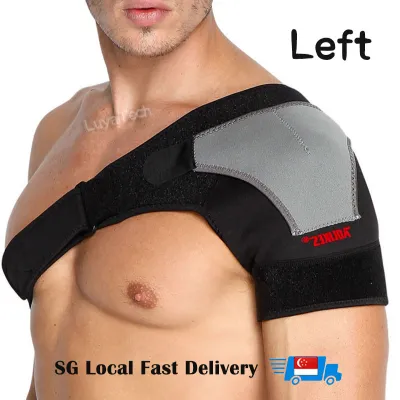
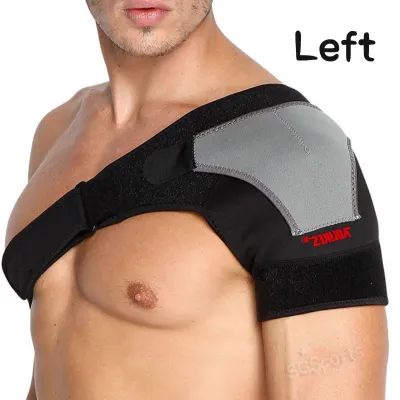
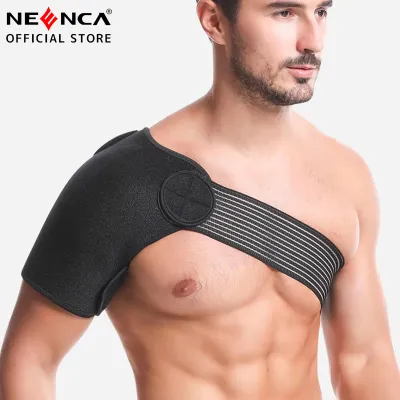
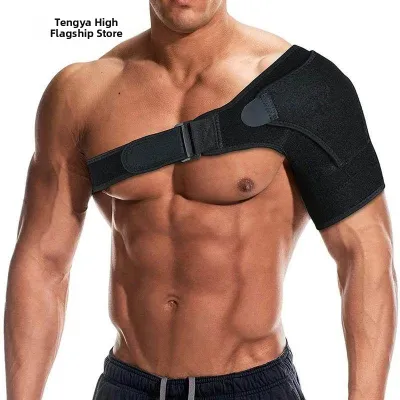
Prices are valid at publication and may change. Please refer to the product page for the latest price.
Assessing Your Shoulder Signals and Activity Demands
Before browsing online sports retailers, you must carefully evaluate what your shoulder is telling you during daily movements. Muscle stiffness and generalized fatigue usually present as a dull, aching sensation that improves once the joint warms up. If you feel a constant, low-grade tightness after a long session at the gym or a day of overhead work, your shoulder is likely signaling a need for enhanced blood flow and mild muscular support.

On the other hand, joint instability presents very differently. If you experience a sensation of the joint slipping out of its socket, frequent clicking or popping accompanied by sharp pain, or a sudden catch during specific movements, the issue is likely structural. These signals suggest that the ligaments or tendons responsible for keeping the ball-and-socket joint in place require external stabilization rather than simple compression.
Your daily and athletic demands also dictate the level of support required. Repetitive, low-impact activities like swimming, running, or cycling benefit from the unrestricted range of motion that a sleeve provides. Conversely, high-impact sports, heavy overhead lifting, or contact sports place extreme stress on the joint, making the structural reinforcement of a stabilizing brace highly beneficial.
However, self-assessment has strict limits. If you experience sudden, excruciating pain, visible shoulder deformity, complete loss of joint function, or numbness and tingling radiating down your arm, stop using any support immediately. These are critical red flags that require urgent evaluation by a healthcare professional or physiotherapist.
Compression Sleeves: When to Choose Muscle Support
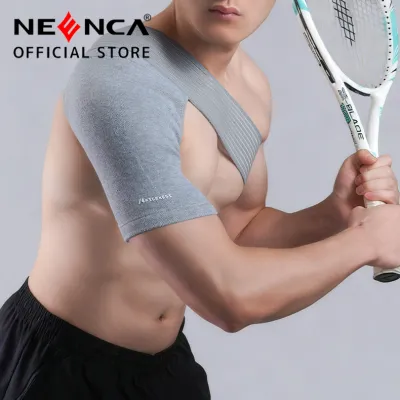
A shoulder compression sleeve is a lightweight, elastic garment designed to fit snugly over the shoulder joint and upper arm. Its primary function is to provide gentle, uniform pressure across the muscle groups. This compression aids in thermal retention, keeping the joint warm and pliable during movement, which is highly beneficial for managing mild stiffness or chronic arthritis discomfort.
Another key benefit of a sleeve is proprioception, which is your brain’s awareness of the joint’s position in space. The constant tactile feedback from the elastic fabric helps you maintain better posture and movement mechanics during repetitive sports. Additionally, modern sleeves are often constructed from advanced moisture-wicking fabrics, making them comfortable for extended wear in warm, humid climates.
These sleeves are ideal for individuals dealing with mild muscle soreness, minor stiffness, or those looking to prevent fatigue during long workouts. They are also excellent tools for post-workout recovery, helping to ease muscle tension.
However, compression sleeves have clear limitations. They do not contain rigid structural elements, meaning they cannot restrict your range of motion or prevent a joint from dislocating. If you have a torn ligament, a severe rotator cuff tear, or chronic joint laxity, a sleeve will not provide the mechanical block needed to keep the joint secure.
Stabilizing Braces: When to Choose Joint Protection
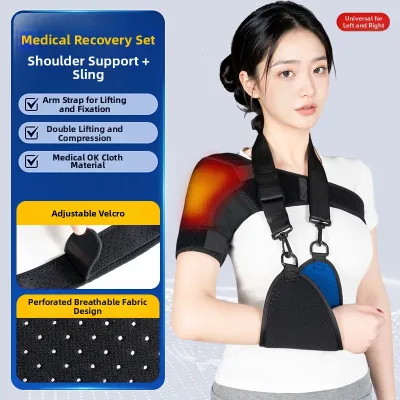
A stabilizing shoulder brace is a mechanical support system featuring adjustable straps, chest bands, and sometimes rigid inserts or stays. Unlike a sleeve, its primary purpose is to physically limit your shoulder’s range of motion. By restricting extreme overhead movements or outward rotations, the brace protects healing ligaments, tendons, and joint capsules from reinjury.
These braces are highly suitable for individuals recovering from moderate sprains, minor dislocations, or rotator cuff strains. They are also valuable when participating in high-risk activities where sudden, unpredictable forces might force the shoulder into vulnerable positions. The structural design absorbs a portion of the load, reducing the stress placed directly on your musculoskeletal system.
However, using a stabilizing brace involves several trade-offs. They are significantly bulkier than sleeves, making them difficult to wear discreetly under everyday clothing. The rigid design naturally restricts your natural movement, which can temporarily affect your performance in sports requiring full mobility.
Furthermore, stabilizing braces require precise strap adjustment. If the straps are pulled too tight, they can pinch nerves or restrict blood circulation, leading to discomfort or numbness. You must carefully balance the tension to ensure adequate support without compromising blood flow.
Sizing, Fit, and Material Checks Before Purchasing
To ensure your shoulder support functions correctly, you must select the right size and verify the material composition before purchasing. An ill-fitting support can either fail to provide adequate compression or restrict your circulation dangerously. Start by using a flexible measuring tape to measure your chest circumference, bicep circumference, and the distance across your shoulder arch, as sizing charts vary significantly between manufacturers.
When reviewing product specifications on online marketplaces, pay close attention to the material labels. If you plan to wear the support during intense workouts in warm weather, prioritize breathable, moisture-wicking fabrics like nylon-spandex blends. If you have sensitive skin, check for potential allergens; many stabilizing braces utilize neoprene for its durability and heat retention, which can cause skin irritation or allergic reactions in some individuals. Look for latex-free or hypoallergenic alternatives if you have known sensitivities.
Finally, always verify the return policies and fit guarantees of the online sports retailer. Because shoulder anatomy varies widely, a support that fits well on paper may feel uncomfortable or restrictive in practice. Choosing a retailer that allows hassle-free exchanges ensures you can swap the item for a different size or style if the initial fit is not perfect. Check the pricing on local sports retail sites to find an option that fits your budget.
Safe Usage Limits and When to See a Professional
While a shoulder support is an excellent tool for managing discomfort and protecting a healing joint, it should never be worn continuously. Relying on a brace or sleeve 24/7 can lead to muscle atrophy, as your shoulder muscles stop working to support the joint on their own. Over time, this weakens the natural stabilizing structures, creating a dependency on the gear. Limit wear to active periods, workouts, or specific rehabilitation sessions.
You must also remain vigilant for signs of an improper fit during use. If you experience tingling, numbness, cold fingers, skin chafing, or an increase in pain while wearing the support, remove it immediately. These symptoms indicate that the support is either too tight, misaligned, or structurally unsuitable for your body shape.
Lastly, remember that a shoulder support is a temporary aid, not a cure. If your shoulder pain persists, if you notice ongoing muscle weakness, or if your condition fails to improve after a few weeks of rest and support, consult a physiotherapist or doctor. They can provide a targeted diagnosis and design a strengthening program to restore your shoulder’s natural stability.
Frequently Asked Questions (FAQ)
Can I wear a shoulder support while sleeping?
Generally, you should avoid wearing a shoulder support while sleeping unless specifically instructed to do so by a medical professional. During sleep, your body needs unrestricted circulation and skin breathability to facilitate natural tissue repair. Wearing a tight sleeve or a restrictive brace overnight can lead to nerve compression, restricted blood flow, or severe skin irritation. If a doctor prescribes a specific nighttime brace for post-surgical recovery, follow their precise instructions regarding fit and positioning.
How do I wash and maintain my shoulder support?
To preserve the elasticity and structural integrity of your shoulder support, always check the manufacturer’s care label. Most supports should be hand-washed in cold water using a mild detergent to avoid breaking down the elastic fibers or neoprene. If you must use a washing machine, place the support in a mesh laundry bag and select a gentle cycle. Always air-dry the support flat in a shaded area; avoid high-heat dryers and direct sunlight, as extreme heat can degrade velcro fasteners, warp rigid inserts, and ruin elastic materials.
Should I wear the support on both shoulders for balance?
No, you should only wear a shoulder support on the affected side unless a physical therapist has explicitly advised bilateral use for postural correction. Wearing a restrictive brace or a tight sleeve on a healthy, uninjured shoulder is unnecessary and can actually hinder your natural movement patterns. Over-supporting a healthy joint can lead to muscle laziness and altered biomechanics, potentially increasing the risk of injury on that side. Focus the support entirely on the shoulder that requires assistance.
Community discussion
Share your experience or ask a question. Comments are reviewed before publication.