
Choosing the right cardio machine for a Singapore Housing & Development Board (HDB) flat requires balancing limited square footage, acoustic harmony with downstairs neighbors, and personal fitness targets. If your primary constraint is floor space and you want a high-intensity, full-body workout, a Concept2 rower is highly practical because it can be separated into two parts and stored vertically. For those who prioritize natural walking or running mechanics and do not mind a permanent or semi-permanent floor footprint, a folding treadmill is the traditional choice. If joint protection and near-silent operation are your absolute priorities to avoid disturbing your household or neighbors, a magnetic elliptical trainer is often the most suitable option.
Space and Storage: Footprint in an HDB Flat
HDB flats require careful spatial planning, where every square meter of floor space must be utilized efficiently. When in use, a Concept2 rower requires a relatively long but narrow footprint. You will need to clear a straight path of approximately 2.4 meters in length, plus additional clearance at the rear and sides for safe elbow movement. However, its primary advantage for apartment dwellers is its storage flexibility. The machine features a quick-release mechanism that allows it to be separated into two lightweight sections without tools, allowing you to stand them upright in a corner, utility closet, or household shelter when your workout is complete.
In contrast, treadmills present a different spatial challenge. While many home treadmills feature folding decks that pivot upward, they still retain a significant, bulky footprint even when folded. The heavy motor housing remains on the floor, and the upright console frame does not collapse, meaning it cannot be easily hidden away. Non-folding commercial-grade treadmills require a permanent footprint that can dominate a standard HDB bedroom or living room.
Products mentioned in this guide
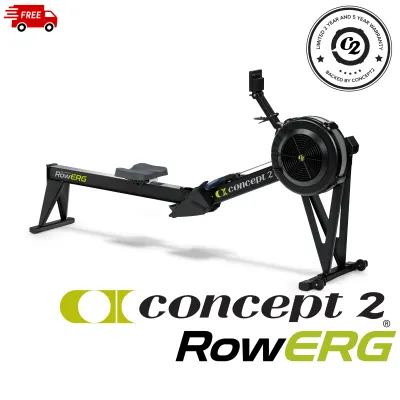
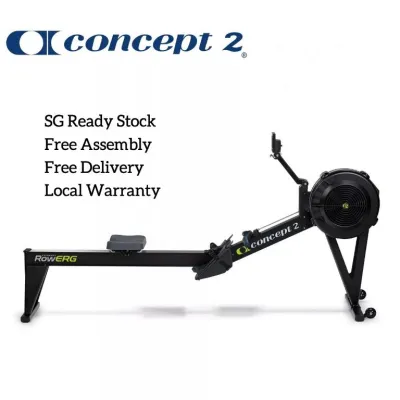
Prices are valid at publication and may change. Please refer to the product page for the latest price.
Ellipticals generally have a fixed footprint. Because of their complex linkage arms and dual handlebars, very few ellipticals fold effectively. They require a dedicated, permanent space and often have a high step-up height. This vertical dimension is a crucial check: you must verify that your ceiling height—typically around 2.6 meters in standard HDB flats—provides enough clearance so that your head does not clear the ceiling at the peak of your elliptical stride. Before purchasing any machine, measure your intended workout area, verify the manufacturer’s exact operational and folded dimensions, and ensure you have at least half a meter of clearance around the equipment for safe mounting and dismounting.
Noise and Vibration: Keeping Neighbors Happy
Living in close proximity to neighbors in an HDB block means that acoustic management is essential for maintaining community harmony. The noise generated by cardio equipment falls into two categories: airborne noise and structural vibration. A Concept2 rower utilizes air resistance, meaning its noise profile is primarily the steady, rushing sound of air moving through the flywheel. While this fan noise is audible within the room, it is generally high-frequency and does not easily penetrate concrete walls or floors.

Treadmills, however, present the greatest challenge for HDB apartments due to structural vibration. Every footstrike on a treadmill deck sends a low-frequency shockwave directly into the concrete floor slab. This structural vibration can travel easily through the building’s framework, manifesting as a loud, rhythmic thudding in the flat directly below you. Even if the treadmill motor itself is relatively quiet, the impact of running can cause significant disturbance, especially during early morning or late-night workouts.
Ellipticals offer a highly compelling middle ground for noise-sensitive environments. Most home ellipticals utilize magnetic resistance, which operates almost silently. Because your feet never leave the pedals during an elliptical workout, there is no impact noise or footstrike vibration. The motion is smooth and continuous, making it the quietest option of the three. To minimize the risk of neighbor complaints, always check the manufacturer’s operational guidelines, and plan to place your machine on a high-density, anti-vibration rubber mat to absorb both motor hum and physical impacts.
Workout Efficiency: Matching Your Fitness Goals
Your choice of machine should also align with your physical capabilities and fitness objectives. Rowing is a highly efficient exercise modality because it engages a vast majority of your muscle mass in every stroke. It is a true full-body workout that simultaneously targets your legs, core, back, and arms, offering both cardiovascular conditioning and muscular endurance. Because you are seated, rowing is a low-impact activity that spares your knees and ankles from the stress of weight-bearing impacts, making it excellent for long-term joint health.
Treadmills focus primarily on the lower body, simulating natural human locomotion. Running or walking on a treadmill is a weight-bearing exercise, which is highly beneficial for maintaining bone density and functional lower-body strength. However, this weight-bearing nature also means higher impact forces on your joints. If you have a history of knee, hip, or lower back issues, the repetitive impact of running on a treadmill may limit your workout duration or frequency.
Ellipticals provide a low-impact alternative to running that still mimics a walking or jogging motion. By utilizing the moving handlebars, you can achieve moderate upper-body engagement, though it is less intense than the active pulling required by a rower. Ellipticals are highly suited for steady-state cardiovascular training and active recovery, allowing you to maintain an elevated heart rate for extended periods without joint strain. Consider your personal injury history, whether you prefer high-intensity interval training (which rowers and treadmills facilitate well) or steady-state cardio, and whether you want a workout that actively engages your upper body.
How to Choose the Right Machine for Your Home
To finalize your decision, evaluate your home environment and fitness preferences against this structured framework:
- Choose the Concept2 rower if you have limited permanent floor space but want an intense, full-body workout. Its ability to separate and store vertically makes it highly compatible with compact HDB layouts, provided you have the necessary length clearance during active use.
- Choose a treadmill if your primary fitness goal is running or walking, you prefer weight-bearing exercise to support bone health, and you have a dedicated space where the structural vibration of footstrikes will not disturb neighbors or family members.
- Choose an elliptical if you require a near-silent workout solution that protects sensitive joints. It is ideal for steady-state cardio in households where workouts occur during quiet hours, provided you have a permanent spot for its fixed footprint.
- Verify first if your chosen location has access to a dedicated power outlet, as treadmills and ellipticals typically require mains power, whereas the Concept2 monitor runs on batteries. Additionally, check your HDB floor load guidelines for exceptionally heavy commercial-grade treadmills, and ensure your doorways and corridors allow safe passage during delivery.
Frequently Asked Questions (FAQ)
Do I need a special mat for cardio equipment in an HDB flat?
Yes, using a high-density equipment mat is highly recommended for any cardio machine placed on HDB flooring, whether you have ceramic tiles, vinyl, or parquet. A proper mat serves two critical functions: it protects your flooring from scratches, indentations, and sweat, and it helps dampen the structural vibrations transmitted into the concrete slab. For treadmills, a thicker, specialized anti-vibration mat is essential to mitigate footstrike noise. Always check your machine manufacturer’s recommendations, as using an improper or overly soft mat can sometimes destabilize the equipment or affect the stability of the frame, potentially impacting your warranty.
Can I assemble these cardio machines myself in a small room?
While self-assembly is possible, the difficulty varies significantly by machine type. A Concept2 rower is relatively straightforward to assemble, typically requiring only a few screws to attach the front legs before the two main pieces click together. Treadmills and ellipticals, however, are much heavier and consist of complex mechanical linkages, cabling, and heavy motor housings. They often arrive in large, heavy boxes that require at least two people to lift safely. Before ordering, measure your HDB main door, lift entrance, and hallway corridors to ensure these bulky boxes can physically fit into your home. If space is tight, opting for professional delivery and assembly services is highly advisable to prevent damage to your walls and ensure the machine is calibrated correctly.
Community discussion
Share your experience or ask a question. Comments are reviewed before publication.