
Quick Answer: Is the CYCPLUS T7 Ready for the PCN?
Evaluating a bike computer like the CYCPLUS T7 for Singapore’s Park Connector Network (PCN) requires looking past basic marketing claims. You must understand how its physical hardware interacts with a demanding local climate. The tropical sun, high ambient humidity, and dense urban canopy present unique challenges that standard spec sheets rarely address directly.
Whether this device suits your cycling routine depends on matching its official hardware limits to your typical PCN route length, preferred riding hours, and tracking needs. By examining its display technology, battery thermal limits, and satellite configuration, you can determine if it will perform reliably on your weekend loops.
Screen Visibility: Managing Tropical Glare and Tree Shade
To evaluate how the CYCPLUS T7 performs under intense tropical glare, your first step is to verify its official screen technology and peak brightness rating, measured in nits, in the manufacturer’s manual. Many cycling computers utilize transflective displays, which leverage ambient sunlight to increase readability without draining the battery. If the T7 uses a standard backlit LCD, you will rely heavily on a high nit rating to overpower direct overhead sunlight.
Products mentioned in this guide
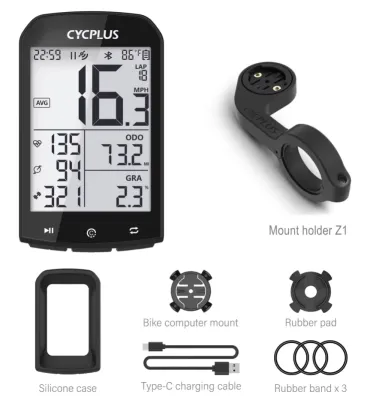
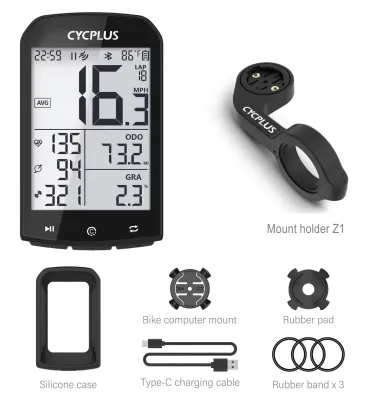
Prices are valid at publication and may change. Please refer to the product page for the latest price.

Your riding environment along the PCN changes rapidly, demanding a highly adaptable screen. On sun-exposed coastal stretches, such as the East Coast Park PCN, the screen must combat intense, direct light and reflections off the water. Conversely, when you transition into heavily shaded inland paths like the Rail Corridor or the Changi Jurassic Mile, the screen must quickly adjust to lower light levels so you do not lose sight of your metrics.
Managing this transition safely requires looking for features like anti-glare coatings and adjustable contrast settings. While leaving the backlight on its maximum setting ensures visibility in all conditions, it significantly accelerates battery consumption. If you primarily ride during peak midday hours, prioritize a screen that remains legible under direct sunlight with the backlight off; if you prefer early morning or late evening rides, a responsive manual or automatic backlight is far more critical.
Battery Life: Enduring Heat and Long Weekend Rides
When planning long weekend rides across the island, you should check the CYCPLUS T7’s official battery capacity (expressed in mAh) and the manufacturer’s claimed runtime. However, keep in mind that official battery estimates are typically recorded under optimal laboratory conditions. In Singapore, high ambient temperatures—often exceeding 32°C—combined with high humidity can accelerate internal battery resistance and reduce overall efficiency.
To maintain stable power over extended journeys, you must actively manage the device’s power settings. Features such as auto-backlight timeouts, screen sleep modes, and optimized GPS polling intervals are essential tools for conservation. If you connect multiple wireless sensors or keep the screen at maximum brightness, the actual runtime will fall short of the maximum laboratory specification.
A practical framework for PCN riders is to calculate a 30% safety buffer over your planned riding time. For a typical half-day loop spanning 3 to 5 hours, your device should ideally feature a certified runtime of at least 8 to 10 hours under standard tracking modes. Additionally, consult the safety section of the CYCPLUS user manual to confirm its rated operating temperature range, ensuring the lithium-ion battery is designed to operate safely in tropical heat without swelling or degrading prematurely.
GPS Accuracy: Tracking Under Dense Canopies and Bridges
Navigating Singapore’s diverse landscape requires a robust satellite connection, making it essential to check if the CYCPLUS T7 supports single-band or multi-band (dual-frequency) GPS. Multi-band GPS receives signals on two different frequencies from the same satellite, which helps the device correct for atmospheric interference. This technology is highly beneficial when riding through the dense, multi-tiered tree canopies of the Southern Ridges or alongside towering HDB estates in Punggol.
Before setting off, verify the supported satellite constellations in the official technical specifications. A high-quality bike computer should support multiple global systems, such as GPS (USA), GLONASS (Russia), Galileo (Europe), and BeiDou (China). Access to multiple constellations ensures that if one system’s signal is blocked, another can maintain your tracking session.
Signal multipath errors—where satellite signals bounce off hard surfaces before reaching the device—frequently occur under massive concrete flyovers, such as those along the Kallang River PCN, or near high-rise financial districts. Look for specifications indicating fast signal reacquisition times, which help the computer quickly recalculate your position once you clear an obstacle. For casual PCN leisure riders, minor tracking deviations of a few meters are negligible, but if you rely on precise speed and distance data for structured training, multi-band accuracy is indispensable.
Frequently Asked Questions (FAQ)
Does the CYCPLUS T7 support turn-by-turn navigation on the PCN?
To determine the navigation capabilities of the CYCPLUS T7, check the official product manual to see if it supports full offline base maps or simplified breadcrumb navigation. Breadcrumb routing displays a simple line on a blank screen, which requires you to pre-load a GPX route file via a companion mobile app. While breadcrumb tracking is sufficient for following well-marked PCN paths, full map support is highly preferable if you frequently explore unfamiliar connecting roads.
How water-resistant is the CYCPLUS T7 during sudden tropical rain?
Before riding in unpredictable weather, verify the official IPX water resistance rating in the CYCPLUS T7 specifications. A rating of IPX6 or IPX7 is generally required to withstand the sudden, heavy downpours characteristic of Singapore’s tropical climate. Note that these ratings apply to falling rain and splashes; you should never submerge the device or expose it to high-pressure water jets during bicycle cleaning, as this can breach the rubber seals.
Can I connect external sensors like heart rate monitors to the T7?
Refer to the device’s specification sheet to confirm support for standard wireless protocols, specifically ANT+ and Bluetooth Smart (BLE). These protocols allow you to pair external sensors such as heart rate monitors, speed sensors, and cadence sensors. Keep in mind that maintaining multiple active wireless connections simultaneously increases the processing load on the computer, which will gradually increase battery consumption during your ride.
Community discussion
Share your experience or ask a question. Comments are reviewed before publication.