
NatureHike has earned a reputation for producing lightweight, budget-friendly backpacking gear. If you are looking at their popular two-person (2P) tent lineup—such as the Cloud Up 2, Mongar 2, or Star River 2—the technical specifications can quickly become confusing. In general, NatureHike 2P tents feature rainfly waterproof ratings ranging from 2,000mm to 4,000mm Hydrostatic Head (HH), while the tent floor ratings typically range from 3,000mm to 4,000mm. The exact rating depends on whether you select the lighter, silicone-coated nylon version or the slightly heavier, polyurethane-coated polyester version. Understanding these specifications is crucial for matching your tent to your camping environment, particularly if you plan to camp in regions prone to sudden, heavy downpours.
How to Read Waterproof Ratings on NatureHike 2P Tents
To evaluate a NatureHike 2P tent, you must understand Hydrostatic Head (HH), measured in millimeters (mm). This metric indicates how much water pressure a fabric can withstand before moisture seeps through. For example, a fabric rated at 2,000mm can theoretically resist a 2,000-millimeter-tall column of water pressing down on its surface. In practical terms, any rating over 1,500mm is generally considered rainproof, but higher ratings provide a safer buffer against wind-driven rain.
The coating applied to the tent fabric plays a massive role in its weight, performance, and longevity. NatureHike typically offers its 2P tents in two primary configurations: Polyurethane (PU) coated polyester and Silicone-coated nylon (silnylon). PU coatings are cost-effective and highly waterproof out of the box, making them popular for casual campers. However, silicone coatings chemically bond with nylon fibers, increasing the fabric’s tear strength and overall durability while keeping the pack weight remarkably low.
Products mentioned in this guide
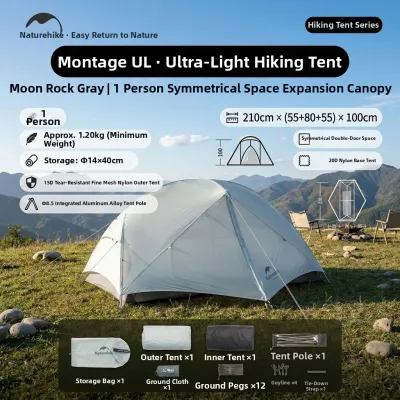
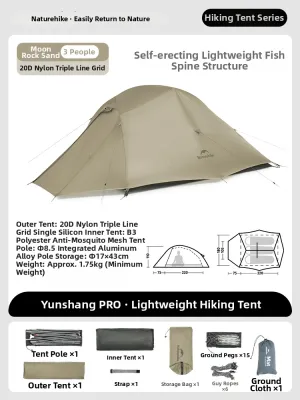
Prices are valid at publication and may change. Please refer to the product page for the latest price.
You will notice that the waterproof rating of the tent floor is often higher than that of the rainfly. While a rainfly only needs to shed falling water, the tent floor must withstand the physical pressure of your body weight, sleeping pads, and gear pressing down onto damp ground. A floor rating of 3,000mm to 4,000mm is standard to prevent moisture from seeping upward under pressure.
Because NatureHike frequently updates its models, verify these specifications directly on the official product tags or manufacturer spec sheets. Online marketplace listings can sometimes conflate the specifications of the 20D nylon and 210T polyester versions. Always cross-reference the exact model number and material type before finalizing your choice.
Evaluating Fabric and Construction Specs for Weather Protection
Waterproof coatings are only one part of the weather-protection equation; structural design and fabric denier are equally critical. Denier (denoted by “D”) measures the thread weight and thickness of the fabric fibers. NatureHike 2P tents commonly use 20D nylon or 210T polyester for their rainflies. A 20D nylon is incredibly thin and lightweight, making it ideal for backpacking where every gram counts. Conversely, a 210T polyester fabric is thicker and heavier, offering excellent abrasion resistance and stretching less when wet, which helps maintain a taut pitch during prolonged rain.

Even the most advanced waterproof fabric will fail if water can penetrate the stitching. This is why factory-taped seams are a vital feature to check. During manufacturing, a waterproof tape is heat-sealed over the stitched seams of PU-coated tents to block water from leaking through the needle holes. For silicone-coated nylon models, standard seam tape often cannot adhere to the slippery silicone surface; in these cases, the seams are either sewn with specialized expanding thread or require manual application of a liquid silicone seam sealer to ensure complete water tightness.
Another key structural defense is the “bathtub floor” design, where the waterproof floor fabric wraps several inches up the sides of the tent before joining the mesh walls. This elevated seam barrier prevents ground water, mud, and splashing rain from leaking into your sleeping area. When camping on uneven ground where water might pool temporarily, a deep bathtub floor provides an essential safety margin that keeps your sleeping bag and electronics dry.
Finally, a tent’s ability to shed water relies heavily on structural tension. A saggy rainfly allows water to pool, which increases pressure on the fabric. Utilizing all available guyline attachment points and achieving a taut, even pitch ensures that rain slides off the fly immediately. This structural integrity also keeps the outer rainfly from sagging and touching the inner tent mesh, preventing capillary action from transferring condensation or rain inside.
Matching Tent Specifications to Tropical and Regional Climates
Camping in tropical regions, such as Singapore and neighboring Southeast Asian countries, presents unique environmental challenges. The weather features sudden, torrential downpours, high ambient temperatures, and near-saturated humidity. Under these conditions, a tent cannot simply be a waterproof bubble; it must actively manage moisture from both the outside and the inside to keep you comfortable.
In high humidity, condensation is often a bigger enemy than actual rain. As you sleep, your breath releases moisture that condenses on the inner surface of the rainfly. Without adequate ventilation, this moisture will drip back down, creating a damp environment even if the exterior fabric is completely waterproof. For tropical camping, a double-wall tent design—featuring a highly breathable mesh inner tent paired with a separate waterproof rainfly—is highly recommended over single-wall models, as it allows air to circulate freely and carry away humid air.
Vestibule space is another practical feature that becomes invaluable during a tropical storm. A 2P tent offers limited interior space, and bringing wet backpacks, muddy hiking boots, or dripping raincoats inside the sleeping compartment will quickly ruin your comfort. A tent with a generous vestibule allows you to store your wet gear securely outside the inner tent while still keeping it protected from the rain, preserving the dry sanctuary of your sleeping quarters.
When selecting a NatureHike 2P tent for regional use, you can often make smart compromises. For instance, you rarely need a heavy, four-season alpine tent with extreme wind resistance and minimal mesh. Instead, choosing a lightweight 20D nylon double-wall tent with a moderate 2,000mm rainfly rating and extensive mesh paneling will provide the perfect balance of rain protection, packability, and crucial airflow to keep you cool during warm tropical nights.
Inspecting and Maintaining Your Tent’s Waterproof Coatings
To ensure your NatureHike 2P tent continues to protect you, regular inspection and proper maintenance are essential. Before any camping trip, perform a pre-trip check. Pitch the tent in a dry, spacious area—such as a backyard or a clean HDB void deck—and inspect the inner seams. Look closely for signs of peeling seam tape, flaky white residue, or a sticky texture on the inside of the rainfly, which indicate that the polyurethane coating is beginning to degrade.
Cleaning your tent correctly preserves its Durable Water Repellent (DWR) finish and waterproof coatings. Never wash your tent in a washing machine or dry it in a tumble dryer, as mechanical agitation will strip the coatings and tear the delicate mesh. Instead, gently spot-clean dirty areas using a soft sponge, lukewarm water, and a mild, non-detergent soap designed specifically for technical outdoor gear. Avoid harsh household detergents, fabric softeners, or bleach, which chemically damage the waterproof barriers.
The single most important step in tent maintenance is ensuring the fabric is completely dry before storage. Packing away a damp tent, especially in hot and humid climates, triggers hydrolysis, which permanently breaks down polyurethane coatings, leaving them sticky and cracked. Always hang your tent to air-dry in a shaded, well-ventilated area out of direct sunlight, as prolonged UV exposure degrades the nylon and polyester fibers over time.
If water no longer beads on your rainfly but instead soaks into the fabric, it is time to restore the DWR finish. After cleaning and drying the tent, apply a specialized aftermarket water-repelling spray evenly across the rainfly exterior. If you detect minor leaks along the seams, clean the area and apply a compatible seam sealer—ensuring you use a urethane-based sealer for PU-coated fabrics and a silicone-based sealer for silicone-coated nylon—while always adhering to the manufacturer’s care guidelines.
Frequently Asked Questions (FAQ)
Is a higher waterproof rating always better for a 2P tent?
Not necessarily. While a very high waterproof rating sounds reassuring, it often comes with significant trade-offs. To achieve extreme ratings, manufacturers must use thicker fabrics or apply heavier layers of polyurethane, which increases the tent’s overall pack weight and reduces its compressibility. Furthermore, highly coated fabrics are less breathable, which can exacerbate condensation issues in warm, humid conditions. For most recreational and backpacking scenarios, a balanced rating of 2,000mm to 3,000mm, combined with smart ventilation design and a proper pitch, offers superior comfort and practicality.
How can I test my tent's waterproofing before a camping trip?
The safest way to test your tent is to set it up completely in a controlled environment, such as a backyard, patio, or a spacious outdoor corridor. Use a garden hose equipped with a spray nozzle set to a gentle shower or mist setting, directing the water upward so it falls naturally onto the rainfly like rain. Step inside the tent to check for any slow drips, damp spots along the seams, or moisture pooling on the floor. Avoid using high-pressure jet streams or scrubbing the fabric directly, as this can easily compromise the delicate waterproof coatings and seam tape.
Community discussion
Share your experience or ask a question. Comments are reviewed before publication.