
Choosing the right table tennis ball can significantly impact your performance, whether you are practicing your serve in a community center or competing in a local tournament. The star rating system on table tennis balls serves as a guide to their manufacturing quality, roundness, and bounce consistency. While a 3-star rating represents the highest standard of uniformity, 1-star and 2-star options offer practical, budget-friendly alternatives for specific training scenarios and recreational play. Understanding these ratings allows you to balance cost and performance effectively, ensuring you get the best value for your playing style.
What the 1-Star, 2-Star, and 3-Star Ratings Actually Mean
The star rating on a table tennis ball is primarily an indicator of manufacturing tolerances and quality control rather than a difference in raw materials or thickness. During production, balls are tested for roundness, weight consistency, and bounce height. Those that meet the strictest tolerances are awarded three stars, while those with slight deviations are categorized as 1-star or 2-star balls.
A 3-star ball undergoes rigorous testing to ensure that it is highly spherical. This high level of quality control helps ensure that the ball bounces predictably and flies straight, which is essential for players who rely on precise spin and placement. Because of the intensive sorting process, these balls are the most expensive to produce and purchase.
Products mentioned in this guide
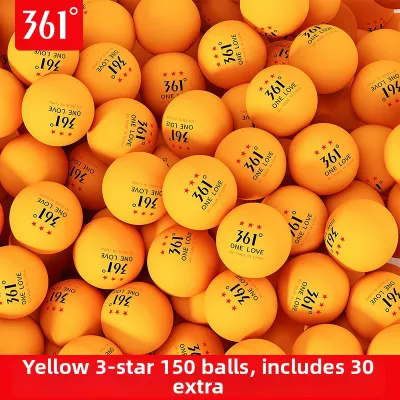
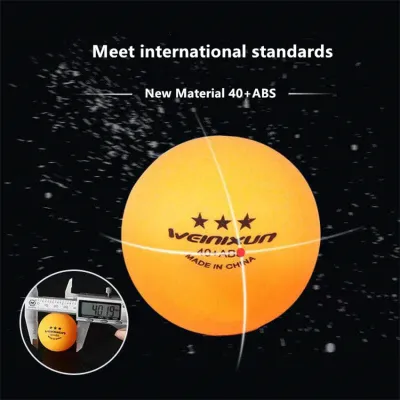
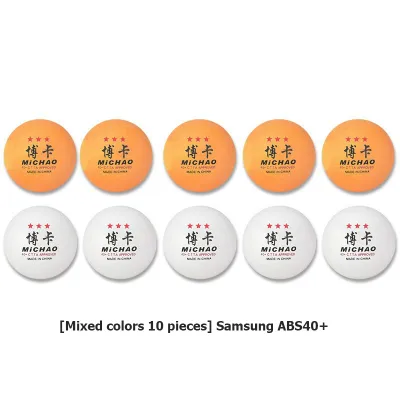
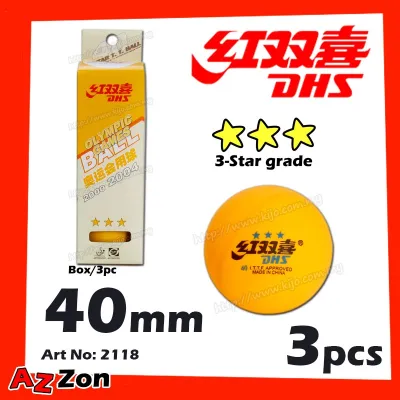
![[SG FREE 🚚] 50Pcs Premium Ping Pong Balls Advanced Training Table Ball Seamless Balls Orange](https://img.lazcdn.com/g/p/e77840d2b25ede21462c9d066ffa489b.jpg_400x400q80.jpg_.webp)
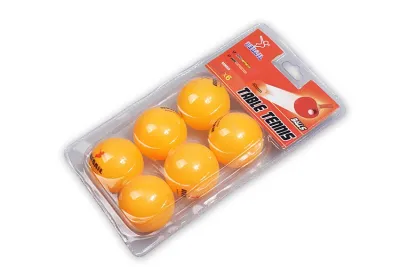
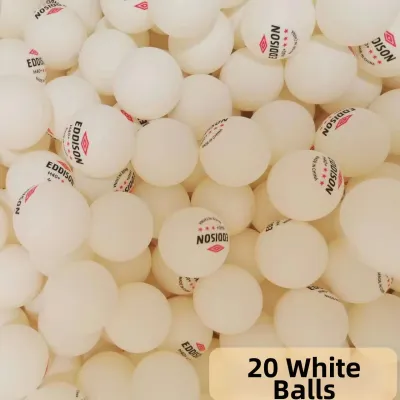
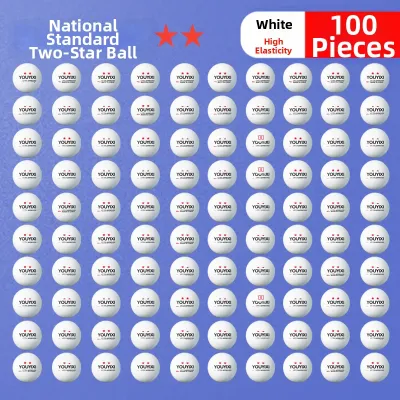
Prices are valid at publication and may change. Please refer to the product page for the latest price.
In contrast, 1-star and 2-star balls are allowed wider manufacturing tolerances. They may possess very minor variations in wall thickness or roundness, which can lead to slight inconsistencies in how they bounce or travel through the air. For casual players or beginners, these minor deviations are generally imperceptible and do not detract from the enjoyment of the game.
It is important to note that the star rating is largely a manufacturer’s internal grading system. While reputable brands align their 3-star ratings with international standards, a star rating alone does not guarantee official tournament approval. Players requiring guaranteed specifications for sanctioned league play should always look for official sanctioning logos on the packaging rather than relying solely on the stars.
How to Match the Right Star Rating to Your Playing Needs
Selecting the appropriate ball depends heavily on your playing environment, training volume, and budget. For high-volume multi-ball training, where coaches or players feed dozens of balls in rapid succession, 1-star balls are the most practical choice. In these settings, balls are frequently stepped on, lost, or damaged, making the low cost per unit of 1-star options highly advantageous. Beginners practicing basic strokes also benefit from these balls, as they can focus on contact without worrying about the cost of replacing damaged equipment.

When you transition to intermediate play, 2-star balls serve as an excellent middle ground. As you begin to develop consistent spin, speed, and stroke mechanics, you require a more reliable flight path than what a basic recreational ball might offer. A 2-star ball provides a stable bounce that allows you to practice rallies and tactical drills effectively, without the premium price tag associated with top-tier match balls. This makes them ideal for regular practice sessions at local community clubs or school sports halls.
For competitive matches and advanced tactical training, 3-star balls are highly recommended. At this level, even a minor wobble in the air or an unexpected low bounce can disrupt a player’s timing and strategy. Using a 3-star ball helps ensure that every shot behaves consistently, allowing players to execute advanced spins and high-speed drives with confidence. While a pack of these premium balls may cost more—often priced around S$10 to S$15 for a small set—the investment is necessary to replicate true tournament conditions.
In humid climates, such as in Singapore, moisture can settle on the table and the ball, affecting grip and bounce. Under these conditions, the consistent surface texture of a high-quality 3-star ball helps maintain predictable contact with the racket rubber. However, for casual games on outdoor concrete tables or in void decks, the premium qualities of a 3-star ball are quickly lost to environmental factors, making cheaper 1-star or 2-star balls the smarter financial choice.
Key Specifications to Verify Beyond the Star Rating
Beyond the star rating, the material composition of the ball is a critical factor to check before purchasing. Modern table tennis balls are made from plastic or polyester composites, often labeled as “poly balls” or marked with a “40+” designation, which indicates they meet the modern 40mm size standard introduced to replace older celluloid models. Checking the packaging for these labels ensures you are practicing with the current standard equipment used in modern play.
You should also consider whether the balls are seamed or seamless, as this construction detail influences their performance. Seamed balls are made of two halves joined together, creating a slight seam that can affect the ball’s weight distribution and sound upon impact. Seamless balls are molded as a single piece, offering a highly uniform bounce and excellent durability, though they tend to feel slightly different off the racket. Trying both types can help you determine which feel you prefer for your style of play.
Before heading to a sanctioned tournament, verify that the balls carry the official approval logo of the relevant governing body, such as the ITTF (International Table Tennis Federation). Even if a box is labeled as 3-star, it cannot be used in official competitions unless it has undergone formal certification and bears the official stamp. This distinction is crucial for competitive players who want to ensure their training matches tournament rules.
Finally, it is wise to perform a quick physical inspection of new balls, regardless of their star rating. Gently roll the ball on a flat surface or spin it on the table to check for any wobble, which indicates an uneven shape. Inspecting the surface for visible molding lines, uneven seams, or soft spots upon opening helps you identify any rare manufacturing defects early, allowing you to return or exchange the product before use.
Frequently Asked Questions (FAQ)
Do higher-star table tennis balls last longer?
A higher star rating does not automatically guarantee a longer lifespan for a table tennis ball. While 3-star balls are made with better quality control and more consistent material thickness, their durability depends heavily on how hard they are hit and the type of racket rubber used. High-impact shots, accidental edge hits against the racket frame, or stepping on the ball will damage a 3-star ball just as easily as a 1-star ball. Players should regularly inspect their balls for hairline cracks, seam splits, or a sudden loss of bounce height to determine when it is time for a replacement.
Can I use 3-star balls for casual outdoor play?
Using premium 3-star balls for casual outdoor play is generally not recommended due to environmental interference. Outdoor elements like wind, uneven stone or concrete tables, and temperature fluctuations will disrupt the ball’s flight and bounce, making the precise aerodynamic qualities of a 3-star ball unnoticeable. Additionally, rough outdoor surfaces can quickly scratch and degrade the smooth finish of a premium ball. For playing in parks, patios, or void decks, it is much more practical to use durable 1-star balls or specialized outdoor table tennis balls designed to withstand wind and rougher handling.
Community discussion
Share your experience or ask a question. Comments are reviewed before publication.