
Selecting the right adjustable kettlebell is a balancing act between workout efficiency, equipment longevity, and financial investment. For home fitness enthusiasts in Singapore, where space is at a premium, a single adjustable kettlebell replaces an entire rack of traditional cast-iron weights. However, the mechanism you choose—dial, pin-lock, or spin-lock—fundamentally shapes how you train. If your workouts rely on rapid transitions between exercises, a dial system offers unmatched speed. If you prioritize a traditional, solid feel with high drop resistance, a pin-lock or spin-lock mechanism is far more suitable. Understanding how these mechanical designs impact your daily training flow, safety, and budget is the key to making a lasting investment in your home gym.
Understanding the Three Adjustment Mechanisms
To choose the right adjustable kettlebell, you must first understand how each mechanism functions mechanically to hold and release weight plates. These designs dictate how quickly you can change weights and how the kettlebell behaves when swung dynamically.
The dial mechanism is the most complex. It utilizes an internal gear system connected to a rotating dial on the top or side of the bell. When placed in its custom docking tray, turning the dial rotates an internal shaft, engaging specific hooks or tabs on the weight plates while leaving the rest in the tray. The plates are typically nested discs or interlocking segments. This design provides immediate visual and tactile feedback, as the dial clicks firmly into place at marked weight increments, allowing you to verify the selected weight at a glance.
Products mentioned in this guide
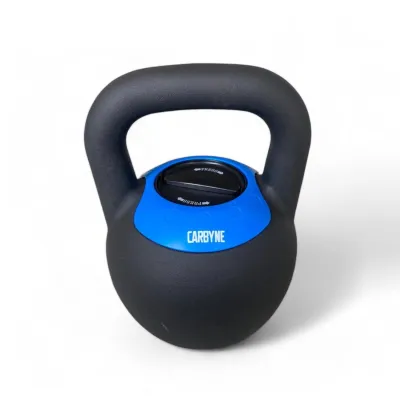

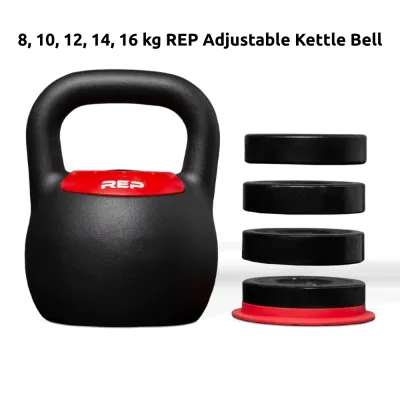
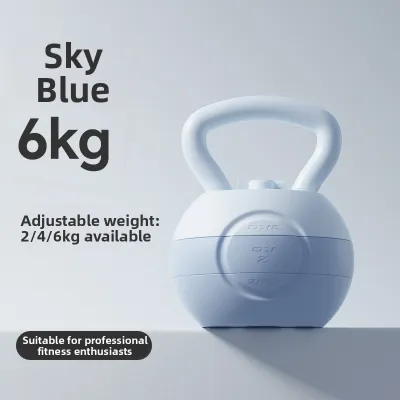
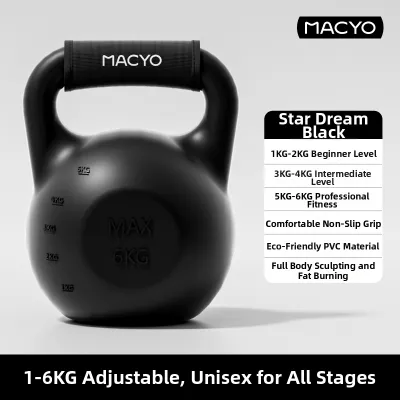
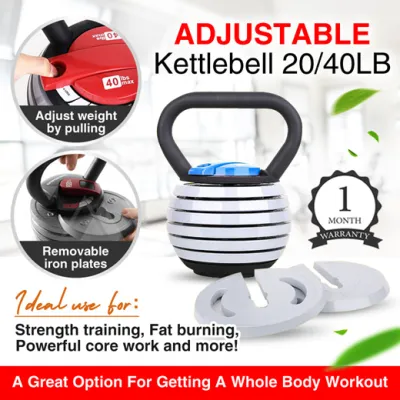
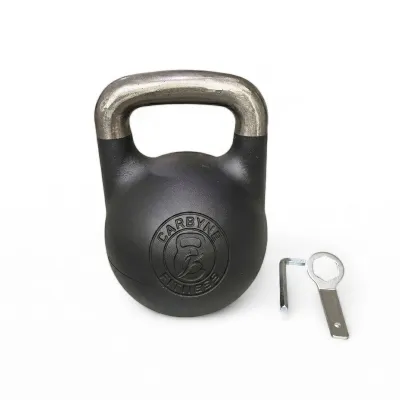
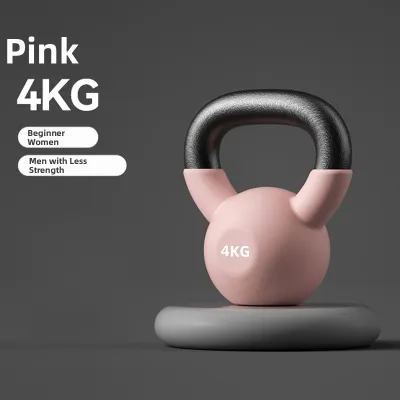
Prices are valid at publication and may change. Please refer to the product page for the latest price.
The pin-lock mechanism operates similarly to selectorized gym machines. It features a central hollow core inside a stack of individual weight plates. To adjust the weight, you insert a heavy-duty metal pin or selector key through the side of the kettlebell body into the central column, physically blocking the plates above it from sliding off. Some models use a magnetic pin or a twisting lock-pin to prevent slippage. The weight increments are determined by the thickness of the individual plates, and the feedback is highly tactile—you physically push the pin into place and visually confirm its engagement.
The spin-lock mechanism is the most traditional and mechanically simple design. It consists of a threaded central shaft extending downward from the handle. To adjust the weight, you manually slide individual weight plates onto this shaft and spin a heavy-duty threaded collar down until it tightly compresses the plates against the handle base. This mechanism does not use a docking tray; instead, you manually add or remove loose plates. The feedback is entirely physical: you tighten the collar until it cannot spin further, ensuring a compressed, solid block of metal.
Comparing Speed, Durability, and Budget
Each of these three mechanisms represents a distinct trade-off between adjustment speed, long-term durability, and upfront cost. Evaluating these factors against your specific workout habits will help you avoid frustration during high-intensity training.

Adjustment speed directly impacts your workout pacing, particularly during high-intensity interval training (HIIT) or circuit workouts where rest periods are strictly timed. The dial mechanism is the undisputed leader in speed. You can change the weight in under five seconds with a simple twist of the wrist, allowing you to transition seamlessly from heavy swings to lighter presses without interrupting your heart rate. The pin-lock mechanism is moderately fast, taking roughly ten to fifteen seconds to pull the pin, select the new weight, and reinsert it. The spin-lock mechanism is by far the slowest. Because you must manually spin the collar off, add or remove plates, and spin the collar back on, a weight change can easily take thirty to forty-five seconds, which can disrupt the flow of fast-paced conditioning circuits.
Durability and maintenance requirements tell a very different story. The simplicity of the spin-lock mechanism makes it nearly indestructible. With no internal springs, gears, or plastic parts, there is very little that can fail over years of heavy use. The only routine maintenance required is keeping the threads clean and occasionally lubricating them to prevent binding. Pin-lock systems are also highly durable, as the primary load-bearing component is a solid steel pin. However, dial mechanisms are highly complex and contain numerous small moving parts, internal springs, and plastic alignment guides. If a dial kettlebell is dropped or subjected to severe lateral impacts, these internal components can misalign or crack, rendering the entire adjustment system useless. Consequently, dial models require careful handling and a clean, debris-free docking tray to function smoothly over time.
From a budget perspective, these mechanisms generally fall into distinct price tiers. Spin-lock adjustable kettlebells are the most budget-friendly option, often available at a fraction of the cost of dial systems due to their low manufacturing complexity. They offer exceptional long-term value because they rarely need replacement. Pin-lock models occupy the mid-to-high price tier, offering a balance of convenience and robust metal construction. Dial mechanisms sit firmly at the premium end of the market. In Singapore, a high-quality dial adjustable kettlebell can range from S$200 to over S$400. While the initial investment is high, the value lies in the sheer convenience and the space saved by replacing up to ten individual kettlebells with a single, highly efficient unit.
Matching the Mechanism to Your Training Style
Your preferred style of training should be the primary driver of your decision. A mechanism that excels in a slow, methodical strength routine may prove frustrating in a fast-paced conditioning class.
For fast-paced conditioning, such as Every Minute on the Minute (EMOM) workouts, Tabata, or rapid HIIT circuits, a dial-adjustable kettlebell is highly advantageous. These workouts require you to change weights rapidly to match different movements—for example, transitioning from a heavy two-handed swing to a lighter overhead press within a ten-second rest window. The speed of the dial ensures you do not waste precious recovery time fumbling with plates or pins, keeping your workout intensity exactly where it needs to be.
If your training focuses on heavy, low-repetition strength work, such as strict presses, heavy goblet squats, or Turkish get-ups, absolute rigidity and minimal plate rattle are your top priorities. In this scenario, spin-lock or high-quality pin-lock kettlebells are superior. Because the spin-lock collar tightly compresses the plates together, it eliminates the micro-movements and clicking noises that often plague dial systems. This solid, single-piece feel builds confidence when holding a heavy weight directly overhead, where any shifting of mass can destabilize your shoulder joint.
For space-constrained home gyms, such as those in Singapore HDB apartments, footprint and storage are critical considerations. Dial kettlebells must always be stored in their docking trays to facilitate weight changes. This tray keeps the unused plates organized and prevents them from rolling around your living room. Spin-lock kettlebells do not require a tray, but you will need a small, dedicated spot to stack the loose plates when they are not in use. Pin-lock models often feature a highly compact, self-contained design where the plates remain nested within the bell shell, making them exceptionally space-efficient and easy to tuck away in a closet or under a bed.
Key Specifications to Verify Before Buying
Because you cannot test every adjustable kettlebell in person, verifying specific physical dimensions and construction details before purchasing is essential to ensure safety and usability.
First, examine the handle diameter, texture, and clearance. A standard kettlebell handle is typically between 33mm and 38mm in diameter. Ensure the adjustable model you choose falls within this range; handles that are too thick can prematurely fatigue your grip, while handles that are too thin can dig painfully into your palms. The texture is equally important. Look for powder-coated steel or slightly textured cast iron, which holds chalk well and provides a secure grip even when your hands are sweaty. Avoid smooth, glossy plastic handles, as they can become dangerously slippery during high-rep swings. Additionally, verify that there is sufficient clearance between the handle and the bell body to comfortably fit both hands for two-handed swings.
Second, check the weight plate locking tightness. Shifting plates are not just noisy; they alter the center of gravity of the kettlebell mid-movement, which can strain your wrists, elbows, or shoulders during dynamic exercises like cleans and snatches. Read user reviews or product specifications to confirm that the locking mechanism—whether it is a dial, pin, or collar—holds the plates completely rigid. If a manufacturer mentions a “zero-rattle” design or utilizes rubber dampeners between the plates, it is a strong indicator of a secure fit.
Finally, evaluate the base dimensions and floor protection. A wide, flat base is crucial for stability during floor-based exercises such as renegade rows, push-ups, or plank transfers. If the base is too narrow or rounded, the kettlebell can tip over, risking wrist injury. Additionally, look for models that feature rubberized bases or plastic-coated bottom plates. In Singapore homes with tiled, vinyl, or polished wood flooring, a bare metal base can easily cause scratches or dents. A protective rubber base or a dedicated rubber training mat is highly recommended to safeguard your floors.
Decision Framework: Choosing Your Adjustable Kettlebell
To finalize your decision, apply this straightforward, condition-based framework to your training priorities:
- Choose a Dial Mechanism if your workouts are dominated by fast-paced conditioning, supersets, or HIIT, and you are willing to pay a premium for the ultimate convenience of five-second weight changes.
- Choose a Pin-Lock Mechanism if you want a highly durable, mid-priced option that offers relatively quick weight adjustments without the mechanical complexity and fragility of a dial system.
- Choose a Spin-Lock Mechanism if you are on a budget, prioritize absolute plate security and a rattle-free feel for heavy strength lifts, and do not mind spending extra time manually changing plates between sets.
Before making your purchase, honestly assess whether your training style involves high-impact movements. If you frequently perform exercises where the kettlebell might be dropped or placed down heavily, avoid dial mechanisms entirely and opt for the rugged simplicity of a spin-lock or pin-lock model.
Frequently Asked Questions (FAQ)
Can I drop an adjustable kettlebell during exercises?
No, you should avoid dropping adjustable kettlebells under any circumstances. Unlike solid cast-iron kettlebells, which can withstand being dropped onto lifting platforms, adjustable models contain precise locking mechanisms, internal gears, pins, or threaded shafts. Dropping them—even from a low height—can bend the central shaft, crack plastic dial components, or misalign the internal locking tabs. This damage can make it impossible to change weights or, worse, cause plates to slip out during a swing. Always practice controlled placement, lowering the kettlebell gently to the floor or onto a protective rubber mat at the end of every set.
Do adjustable kettlebells feel the same as cast-iron ones?
Not exactly. While high-quality adjustable kettlebells are designed to mimic the feel of traditional cast-iron bells, there are noticeable differences in weight distribution and shape. Because adjustable kettlebells must accommodate a hollow core or a plate-loading cavity, they are often slightly bulkier than a standard cast-iron kettlebell of the same weight. This increased volume can alter the center of gravity, making the bell feel slightly different as it rotates around your wrist during cleans, snatches, or Turkish get-ups. Additionally, some adjustable models have flat sides or unique shapes that may press differently against your forearm compared to the smooth, spherical body of a traditional kettlebell.
Community discussion
Share your experience or ask a question. Comments are reviewed before publication.