
Quick Answer: Matching Dignics Models to Your Playstyle
Choosing the right table tennis rubber depends heavily on your stroke mechanics, physical fitness, and tactical goals. The Butterfly Dignics family, powered by Spring Sponge X technology, offers distinct playing characteristics across its four flagship models. To help you make an immediate decision, you can map your playing style to the specific strengths of each model using the following framework.
- Choose Dignics 05 if you are an advanced player who relies on heavy spin, mid-distance looping rallies, and precise, active strokes. This model serves as the benchmark for high-spin performance and requires excellent physical acceleration to unlock its full potential.
- Choose Dignics 09C if you prioritize short-game control, tight serves, and aggressive over-the-table flicks, and you possess the physical strength to compress a hard, tacky hybrid rubber during heavy power loops.
- Choose Dignics 64 if your game is built on raw speed, flat hits, and close-to-the-table active blocking. Its direct, low-throw trajectory is optimized for players who prefer hitting through the ball rather than brushing it.
- Choose Dignics 80 if you want a balanced, forgiving rubber that bridges the gap between the spin of the 05 and the speed of the 64. It is highly suitable for fast counter-looping and is a popular choice for the backhand wing.
While these archetypes provide a solid starting point, your final selection must also account for how these rubbers pair with your blade and whether your current skill level can support their demanding physical requirements. High-tension rubbers do not play the game for you; instead, they amplify the quality of your existing stroke mechanics.
The Technical Baseline: Pimple Geometry and Sponge Density
To understand why each Dignics model behaves differently on the table, you must look at the physical engineering of the topsheet and the underlying sponge. Butterfly uses different pimple structures and sponge formulations to alter the dwell time, throw angle, and speed potential of each rubber. These specifications are highly objective and dictate the mechanical response of the rubber during impact.
Products mentioned in this guide

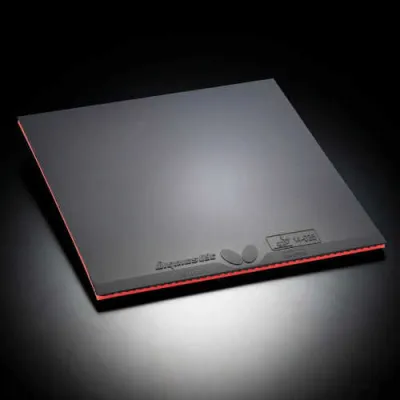
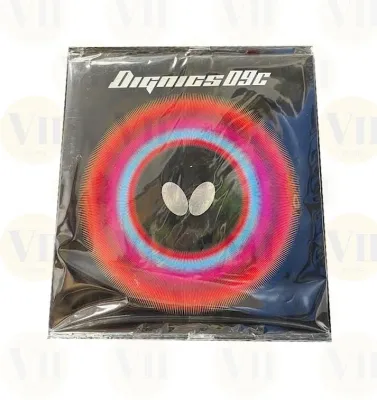
Prices are valid at publication and may change. Please refer to the product page for the latest price.

Pimple Geometry and Its Impact on Ball Contact
The geometry of the pimples on the underside of the topsheet determines how the rubber deforms when the ball strikes it. The spacing, diameter, and height of these pimples dictate the balance between speed and spin:
- Densely Packed Pimples (Code No. 05): This structure features pimples placed close together, creating a stiffer topsheet surface. When you brush the ball, this density maximizes the contact area, allowing for immense spin generation and a higher, safer throw angle over the net.
- Widely Spaced Pimples (Code No. 64): This design features thinner, more widely spaced pimples. This allows the topsheet to flex more easily upon direct impact, letting the ball sink deeper into the sponge. This results in a faster, more direct rebound with a lower throw angle, making it ideal for flat hitting.
- Balanced Spacing (Code No. 80): This structure sits directly between the 05 and 64 designs. It provides a compromise that offers a larger sweet spot and more balanced performance during varied stroke play.
Sponge Formulations and Hardness Scales
The entire Dignics lineup utilizes Spring Sponge X, which is an evolution of the classic Spring Sponge technology. Spring Sponge X is engineered to be more elastic and responsive, offering a higher rebound resilience while remaining relatively light. However, the density of these sponges is high, which significantly alters how much physical force you must apply to “bottom out” the rubber and activate its catapult effect.
On the official Butterfly hardness scale, Dignics 05, 64, and 80 feature a sponge hardness of 40 degrees. Dignics 09C features a significantly harder sponge rated at 44 degrees. To put this in perspective, these ratings are harder than the older Tenergy series (which typically sits around 36 degrees). A harder sponge means that passive shots will feel relatively dead; you must swing with high racket speed to compress the sponge and unlock the high-speed catapult performance.
Dignics 05: The Standard for Spin and Versatility
As the flagship model of the lineup, Dignics 05 is designed to maximize spin and vertical trajectory. It uses the legendary Code No. 05 pimple structure, which has long been favored by professional players who dominate rallies with heavy topspin. The primary objective of this rubber is to provide a reliable, high-arc trajectory that clears the net with a wide margin of safety.
This rubber excels during active, aggressive strokes. When you perform an opening loop against heavy backspin, the grippy topsheet grabs the ball instantly, converting your upward momentum into heavy topspin. In mid-distance counter-looping rallies, the Spring Sponge X provides the necessary kinetic energy to propel the ball deep into the opponent’s court, even when you are forced back from the table.
The ideal player for Dignics 05 is an advanced competitor with well-developed, proactive stroke mechanics. Because the rubber does not possess a high level of passive rebound, you cannot rely on it to carry the ball over the net on lazy or out-of-position shots. You must have the footwork to get behind the ball and the forearm acceleration to strike it cleanly.
Before purchasing the 05, perform a self-assessment of your typical matches. If you find yourself playing a highly defensive game, relying on passive blocks, or struggling to generate your own swing speed, the 05 may feel stiff and unresponsive. It is a high-performance tool that demands a high-performance physical input.
Dignics 09C: Tacky Surface for Short Game and Power Loops
Dignics 09C represents Butterfly’s entry into the hybrid rubber category, combining a sticky, tacky topsheet with a high-tension sponge. This design is highly distinct from the other three models, which rely purely on mechanical grip. The sticky surface of the 09C introduces a different set of physical dynamics, particularly in the short game and during high-impact loops.
Domination in the Short Game
The tacky topsheet of the 09C acts as a dampening mechanism on low-impact shots. When you are pushing, dropping short, or receiving serves, the stickiness absorbs excess speed, preventing the ball from popping up high. This allows you to place the ball with extreme precision and keep it low over the net. Additionally, the high friction of the tacky surface makes over-the-table banana flicks (Chiquita) highly effective, as you can easily lift heavy backspin with a short, snappy wrist movement.
Heavy Dipping Power Loops
When you transition from the short game to full-power looping, the mechanical behavior of the 09C changes dramatically. Once you swing hard enough to penetrate the tacky topsheet and engage the hard 44-degree Spring Sponge X, the rubber releases a massive amount of speed. The combination of high tack and a hard sponge creates a unique trajectory: the ball leaves the racket at a high angle, clears the net safely, and then dips sharply downward onto the opponent’s table due to the extreme topspin. This sharp dip makes the ball incredibly difficult for opponents to block cleanly.
Physical and Equipment Demands
The primary trade-off of the 09C is its physical demand. Because of the hard 44-degree sponge and the natural braking effect of the tacky topsheet, you must use an active, forward-driving stroke to keep the ball deep. If your swing is too slow or too vertical, your shots will likely land short or find the net.
Furthermore, blade pairing is critical for this model. Pairing the 09C with an extremely stiff, outer-carbon blade can result in a setup that feels like a solid brick with zero dwell time. It is highly recommended to pair the 09C with softer, inner-carbon composite blades or high-quality all-wood blades. This combination allows the blade to flex slightly, providing the necessary dwell time to fully control and activate the heavy hybrid sponge.
Dignics 64: Maximizing Speed and Blocking Stability
If your tactical style is built around raw velocity, flat hitting, and defensive counter-punching, Dignics 64 is engineered to meet those needs. By utilizing the widely spaced Code No. 64 pimple structure, this rubber minimizes the contact area and allows the ball to sink rapidly into the sponge. This mechanical process results in a highly direct transfer of energy and a significantly faster rebound.
On the table, this translates to a crisp, direct feel upon impact. When you block an opponent’s heavy loop, the 64 absorbs the spin more passively than the 05 or 09C, allowing you to direct the ball back with high speed and precision. It is highly effective for close-to-the-table counter-attacks, active blocking, and flat smashes where you want to pierce the opponent’s defense through sheer speed rather than heavy rotation.
The target audience for the 64 consists of direct attackers and players who prefer a traditional, flatter driving style. It is also an excellent option for defensive players who want to transition quickly into aggressive, high-speed counter-attacks without needing a massive physical swing.
However, the speed of the 64 comes with specific trade-offs. The lower throw angle means you have a much smaller margin of error when lifting heavy backspin from below the table. If your stroke mechanics rely on a steep, upward brushing motion, you may find that the ball slips or fails to clear the net. You must adjust your racket angle to be more open and drive through the ball to maintain control.
Dignics 80: The Bridge Between Spin and Control
Dignics 80 is designed as the ultimate compromise, positioned precisely between the spin-heavy 05 and the speed-oriented 64. It utilizes the Code No. 80 pimple structure to offer a balanced profile that adapts to almost any tactical situation. For many players, this middle ground represents the sweet spot for competitive play.
One of the standout characteristics of the 80 is its forgiving nature. It features a larger sweet spot than the 05, meaning that off-center hits or slightly mistimed strokes still result in a quality shot. During fast, chaotic rallies where you do not have the time to execute a perfect physical swing, the 80 provides a level of tolerance that keeps the ball on the table.
When compared directly to the 05, the 80 has a slightly softer feel on impact, making it easier to compress the sponge on passive blocks and quick counter-loops. While its absolute maximum spin ceiling on full-power, professional-level swings is marginally lower than that of the 05, its average performance in real-match scenarios is often higher for intermediate and advanced amateur players who cannot always execute perfect strokes.
This balance makes Dignics 80 an exceptional choice for the backhand side. Because backhand strokes are naturally shorter and rely more on wrist snap than full body rotation, activating a hard, demanding rubber like the 05 or 09C can be highly difficult. The 80 activates with less physical effort, providing excellent speed and spin on quick backhand flicks, blocks, and mid-distance counter-drives.
Final Selection Rules: Blade Pairing and Skill Verification
Selecting the correct Dignics model is only half the battle; you must also ensure that the rubber integrates seamlessly with your blade and matches your physical capabilities. Table tennis equipment operates as a complete system, and a mismatched setup can severely hinder your development and performance.
Blade Pairing Matrix
To help you visualize how to pair your selected Dignics rubber with different blade constructions, refer to the following guide:
- Outer Carbon Blades (e.g., Outer ALC / ZLC): These blades place the composite carbon layers directly beneath the outer wood veneer, resulting in a stiff, fast, and direct feel. Pairing them with Dignics 05 or 80 creates an extremely fast, high-performance weapon for advanced players who possess elite-level control. Avoid pairing these stiff blades with the ultra-hard Dignics 09C unless you are a professional-level player, as the setup will offer almost zero dwell time.
- Inner Carbon Blades (e.g., Inner ALC): These blades place the carbon layers closer to the core, surrounding the center wood ply. This design offers a softer, wood-like feel on low-impact shots, with carbon power activating only on hard hits. This is the absolute ideal pairing for Dignics 09C, as it provides the dwell time needed to control the tacky topsheet. It also makes Dignics 05 much more controllable and forgiving for advanced amateurs.
- All-Wood Blades (5-ply or 7-ply): Pure wood blades offer maximum feedback, flexibility, and control. Pairing an all-wood blade with Dignics 80 or 64 is an excellent choice for developing players who are transitioning to high-tension rubbers. The natural flexibility of the wood helps compensate for the hardness of the Spring Sponge X, allowing you to learn how to compress the sponge safely.
Player Self-Assessment Checklist
Before finalizing your purchase, walk through this quick self-assessment to verify if you are ready for a Dignics rubber:
- Stroke Path: Do you naturally brush the ball at a tangent (favoring 05 or 09C), or do you hit through the ball with a flatter, forward-driving motion (favoring 64 or 80)?
- Physical Conditioning: Can you consistently execute rapid forearm acceleration and core rotation across a multi-game match? If your physical fitness is limited, the hard sponges of the Dignics series—especially the 09C—will quickly feel heavy and dead, leading to frequent unforced errors.
- Playing Distance: Do you prefer to stand close to the table to block and counter-hit (64 or 09C), or do you prefer to step back and engage in mid-distance looping rallies (05 or 80)?
Asymmetrical Setups
It is highly common, even among professional players, to use different Dignics models on each side of the racket. Because your forehand and backhand wings have different physical mechanics and tactical duties, an asymmetrical setup often yields the best results. For example, many players opt for a high-spin, heavy-power rubber like Dignics 09C or 05 on the forehand to dominate opening loops, while choosing a faster, more forgiving rubber like Dignics 80 or 64 on the backhand to ensure stable blocking and quick, short-stroke counter-attacks.
Local Market Considerations in Singapore
When purchasing premium table tennis equipment in Singapore, there are specific local factors to keep in mind. The high humidity levels in Singapore can significantly affect tacky rubbers like the Dignics 09C. Moisture in the air can condense on the sticky topsheet during play, causing the ball to slip unexpectedly. If you choose the 09C, you must be prepared to wipe the rubber frequently during matches and use specialized protective film immediately after cleaning and storage.
Additionally, due to the premium nature of the Dignics series, prices in Singapore typically range from S$110 to S$130 per sheet. To avoid counterfeit products, always verify authorized stock and check current pricing at reputable, specialized local table tennis retailers or official brand distributors in Singapore. Purchasing from unauthorized online marketplaces carries a high risk of acquiring degraded or fake sheets that do not feature the genuine Spring Sponge X technology.
Frequently Asked Questions (FAQ)
Is Dignics 09C suitable for the backhand side?
While Dignics 09C can be used on the backhand, it is generally recommended only for highly advanced players with exceptional physical conditioning. The backhand stroke is naturally shorter than the forehand, making it much harder to generate the raw forearm acceleration and wrist snap required to compress the hard 44-degree sponge.
If your backhand technique is highly active and you rely on aggressive over-the-table banana flicks, the tacky surface of the 09C can provide excellent control and spin. However, for the vast majority of intermediate and advanced players, using a more responsive, easier-to-activate rubber like the Dignics 80 or 64 on the backhand will result in far greater consistency and fewer unforced errors during fast rallies.
How long do Dignics rubbers typically last compared to older models?
The lifespan of any table tennis rubber depends heavily on your playing frequency, stroke intensity, and maintenance habits. However, the Spring Sponge X and advanced topsheet formulation used in the Dignics series are engineered to offer superior durability compared to older generations of high-tension rubbers.
While older models often showed rapid degradation of the topsheet grip within a few weeks of heavy play, Dignics rubbers tend to retain their tension and surface friction for a significantly longer period. To maximize this lifespan, you should clean the rubber with a specialized foam cleaner and distilled water after every session, let it dry completely away from direct sunlight, and apply a non-adhesive protective sheet before storing it in a padded racket case.
Should I use the same Dignics model on both forehand and backhand?
Using a symmetrical setup with the same Dignics model on both sides is perfectly acceptable and simplifies your adaptation process, as both wings will feel identical. However, most modern players benefit significantly from an asymmetrical setup that caters to the distinct mechanical differences of each side.
Your forehand wing typically utilizes a longer swing path, greater body rotation, and more physical power, making it ideal for maximizing the spin of a harder rubber like the Dignics 05 or 09C. Conversely, your backhand wing relies on shorter, faster, and more reactive strokes, which are better supported by the speed, forgiveness, and easier activation of the Dignics 80 or 64.
Community discussion
Share your experience or ask a question. Comments are reviewed before publication.