
Choosing between the Butterfly Dignics 09C and the Dignics 05 comes down to how you generate spin and control the ball. If your game relies on precise brushing motions, heavy spin variations, and a controlled short game, the Dignics 09C is designed for your style. Conversely, if you prefer direct power, explosive speed, and a crisp sensation when driving the ball from mid-distance, the Dignics 05 is the more suitable option. Both rubbers represent premium tiers of table tennis technology, but they demand different physical inputs and stroke mechanics to perform optimally.
In Singapore’s humid climate, table tennis players often face unique challenges regarding rubber grip and ball slippage. High humidity in local community clubs or sports halls can alter how a ball behaves on contact with the racket. Understanding the physical properties of these two high-performance rubbers will help you select a setup that remains reliable under local playing conditions.
Core Differences in Rubber Surface and Sponge
The primary distinction between these two high-end rubbers lies in the composition of their top sheets. The Dignics 09C features a sticky, tacky top sheet designed to grip the ball tightly upon contact. This tackiness allows for extreme friction, making it easier to lift backspin and execute delicate short-court pushes. On the other hand, the Dignics 05 utilizes a highly grippy but non-tacky top sheet. It relies on the mechanical sink-in of the ball into the rubber and sponge to generate spin, offering a more immediate release and higher initial speed off the racket. You can verify these surface classifications by checking the official product labels and descriptions provided by the manufacturer.
Products mentioned in this guide

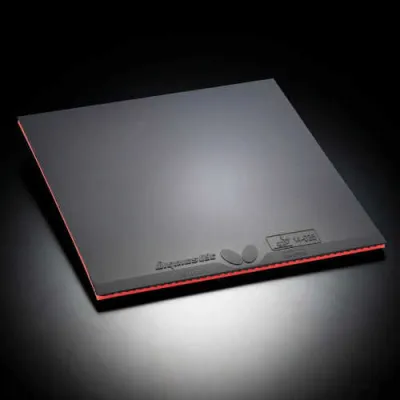
Prices are valid at publication and may change. Please refer to the product page for the latest price.
Beneath the surface, both rubbers utilize Butterfly’s proprietary Spring Sponge X technology, but they are tuned differently. This sponge design is engineered to store and release energy efficiently, theoretically increasing ball dwell time and maximizing energy transfer during high-impact shots. The sponge of the Dignics 09C is denser and harder, which helps absorb the impact of incoming heavy loops and provides a stable platform for counter-looping. The Dignics 05 features a slightly more flexible sponge formulation that promotes a springier, more dynamic rebound, allowing players to generate high speed even with shorter stroke paths.
When selecting your rubber, you must pay close attention to the hardness and thickness variants. The exact sponge hardness degrees and sheet thicknesses can vary depending on the specific production batch and regional packaging. Rather than relying on generic online forums, always check the specific batch packaging or the official manufacturer catalog to verify the exact specifications of the sheet you are purchasing. Choosing the right thickness is crucial, as thicker sponges offer more speed but require greater control, while thinner sponges provide better feel and precision.
Matching Your Playing Style and Skill Level
The Dignics 09C is highly optimized for a modern, spin-offensive playing style. If your tactical approach involves heavy service variations, tight over-the-table pushes, and aggressive banana flicks, the tacky surface of the 09C provides the necessary control and friction. When looping, this rubber excels when you use a pronounced brushing motion, where the racket face is closed and the contact is thin. It allows you to create extremely curved ball trajectories with high safety margins over the net, making it an excellent tool for players who dominate through spin variation and tactical placement rather than raw speed.

In contrast, the Dignics 05 is tailored for direct, aggressive attackers who want to dictate the pace of the rally. If your game is built on flat hitting, fast counter-attacks, and mid-to-long distance driving, the non-tacky surface and springy sponge of the 05 will complement your strokes. The rubber provides a crisp, satisfying sensation on impact and requires less physical effort to produce deep, penetrating shots. It is particularly effective for players who prefer active block-and-counter strategies, as the immediate rebound helps redirect the opponent’s power with minimal delay.
However, both rubbers carry a high skill threshold that players must consider before purchasing. Because of their advanced sponge formulations, neither rubber is self-playing; they require precise stroke mechanics, rapid acceleration, and correct body positioning to activate. To fully compress the hard sponge of the Dignics 09C, you must possess a fast, decisive swing and strong physical commitment on every shot. If your swing speed is too slow, the ball may drop short or fail to clear the net. The Dignics 05 is slightly more forgiving in terms of sponge activation, but its high speed means that poor angle control will quickly result in unforced errors.
Forehand vs Backhand Placement Considerations
Deciding where to place each rubber on your blade requires a careful analysis of your physical biomechanics and racket weight preferences. The physical weight of table tennis rubber sheets can vary significantly, and this directly impacts the overall balance of your racket. The Dignics 09C, with its dense sponge and tacky top sheet, is generally heavier than the Dignics 05. Placing a heavier rubber on your forehand side and a lighter one on your backhand can help maintain a comfortable center of gravity, preventing wrist fatigue and ensuring your swing speed remains high throughout long training sessions in local sports halls.
Biomechanical differences between forehand and backhand strokes also dictate rubber selection. Forehand strokes typically involve a larger, full-body swing with significant hip rotation and shoulder movement, providing the physical power needed to compress and activate the hard sponge of the Dignics 09C. This makes the 09C a highly popular choice for the forehand side, where players can maximize its spin potential. Backhand strokes, conversely, are usually more compact and wrist-driven, offering less space and time to generate massive power. The springier, more responsive nature of the Dignics 05 makes it highly suitable for the backhand, where it can generate quick depth and speed with shorter strokes.
While a split setup—such as Dignics 09C on the forehand and Dignics 05 on the backhand—is a common configuration for balanced attackers, some players may benefit from a uniform setup. Using the same rubber on both sides provides a consistent feel and predictable ball trajectory, which can simplify your decision-making during fast rallies. If you are a player who relies almost exclusively on heavy spin and control from both wings, a dual 09C setup may be appropriate. If you prefer a high-speed, direct game from both sides, a dual 05 setup will serve you better. Evaluate your personal stroke mechanics and physical comfort before committing to a specific combination.
Pre-Purchase Verification and Setup Checklist
Before finalizing your purchase, it is essential to run through a verification checklist to ensure your new rubbers match your equipment and playing style. First, check the exact hardness and thickness codes printed on the packaging. Table tennis rubbers are highly sensitive to these parameters, and selecting the wrong sponge thickness can drastically alter the playing characteristics of your racket. Ensure that the specifications you order align precisely with your training goals and physical capabilities.
Next, consider how the rubber will interact with your table tennis blade. The composition of your blade—whether it features inner carbon layers, outer carbon layers, or is made entirely of wood—plays a massive role in the overall feel of your setup. For instance, pairing the hard-sponged Dignics 09C with an extremely stiff outer-carbon blade can result in a very hard, unforgiving feel that is difficult to control. Conversely, pairing it with an inner-carbon or all-wood blade can enhance dwell time and control. Consult manufacturer guidelines, seek advice from qualified local coaches, or conduct personal testing with different blades to find a harmonious combination.
Finally, protect your investment by purchasing only from authorized table tennis retailers. Because the Dignics series represents a premium price point, counterfeit products are common on various online marketplaces. Genuine Butterfly rubbers feature specific security labels, holographic elements, and high-quality packaging print. Avoid buying from unverified third-party sellers on general ecommerce platforms. Purchasing from an authorized local distributor ensures you receive authentic, fresh stock that has been stored under temperature-controlled conditions, preserving the integrity of the sponge and top sheet.
Frequently Asked Questions (FAQ)
Do these rubbers require boosting or tuning?
No, the manufacturer strongly advises against using chemical boosters or tuners on the Dignics series. These rubbers are pre-tensioned at the factory using advanced technology to deliver optimal performance straight out of the packaging. Applying liquid boosters can permanently damage the delicate Spring Sponge X structure, cause the top sheet to bubble or detach, and void any manufacturer warranties. Furthermore, using chemical tuners to artificially alter the rubber’s physical properties violates international tournament regulations, making your racket illegal for official competitive play.
How should I clean and maintain the tacky surface of the 09C?
To preserve the unique tacky properties of the Dignics 09C, you must clean it regularly after every playing session. Use a specialized table tennis cleaning sponge and a small amount of distilled water or an official, manufacturer-approved rubber cleaner designed specifically for tacky surfaces. Gently wipe away dust, sweat, and dirt, then allow the surface to air-dry completely away from direct sunlight. Once dry, immediately apply a non-adhesive protective film over the tacky top sheet to seal it from air and dust, preventing the surface from oxidizing and losing its stickiness over time.
What is the expected lifespan of the Dignics series under regular play?
The usable lifespan of these rubbers depends heavily on your playing frequency, striking intensity, and maintenance habits. Under regular play (such as training two to three times a week), you can expect the rubber to maintain its peak performance for several months. Signs of degradation include a visible loss of grip in the sweet spot, a hardening or deadening sensation in the sponge, and physical chipping along the edges of the sheet. Regularly cleaning your rubber and storing it in a protective case away from extreme heat and humidity will significantly extend its lifespan.
Community discussion
Share your experience or ask a question. Comments are reviewed before publication.