
Choosing the right training cones for football is a decision that directly impacts the quality, safety, and flow of your practice sessions. Whether you are a school coach organizing drills on an ActiveSG pitch, a parent running weekend training in a local park, or an individual player working on personal agility, the equipment you select must match your specific goals. There is no single “best” cone for every scenario; instead, the ideal choice depends entirely on the nature of your drills, the age and skill level of your players, and the environmental conditions of your training ground.
Most comprehensive football training setups benefit from a thoughtful mix of at least two different cone types. Disc cones, with their ultra-low profile, are the industry standard for high-volume agility work and close ball control. Tall cones, resembling miniature traffic barriers, offer the high-visibility boundaries and physical presence required for tactical layouts and wide-area positioning. Saucer cones, also known as dome cones, bridge this gap by combining a low-profile height with a rigid, stable structure that holds up well against wind and multiple surface types. By understanding the unique strengths and limitations of each design, you can construct a highly functional training kit that maximizes player development and withstands the rigors of regular use.
Disc, Tall, and Saucer Cones: Core Differences Explained
To select the most effective training tools, it is essential first to understand the physical and structural characteristics that define each cone type. These design differences dictate how the cones behave when stepped on, how visible they are from a distance, and how easy they are to transport and store between sessions.
Products mentioned in this guide
![[SG] Set Plastic Cone Sports Exercise Workout Football Soccer Drills Agility Speed General Purpose](https://img.lazcdn.com/g/p/0b7619dda357d1938ca39666095ef523.png_400x400q80.png_.webp)
![[SPORTS CONE] MARKING CONES TRAINING MARKER PLASTIC MARKER](https://img.lazcdn.com/g/p/56ef18dfacff7cdbdbbb6228d80de111.png_400x400q80.png_.webp)
![[MARKING CONE][SET OF 6 PCS] SPORTS MARKING CONES TRAINING MARKER PLASTIC MARKER](https://img.lazcdn.com/g/p/5320820bf2de642e1d6f156627e7cd4d.png_400x400q80.png_.webp)
![[SPORTS CONE WITH HOLES] SKITTLES MARKING CONES TRAINING MARKER PLASTIC MARKER](https://img.lazcdn.com/g/p/dffe1837899729a8c8daac331ee42448.png_400x400q80.png_.webp)
Prices are valid at publication and may change. Please refer to the product page for the latest price.
Disc Cones (Flat Markers)
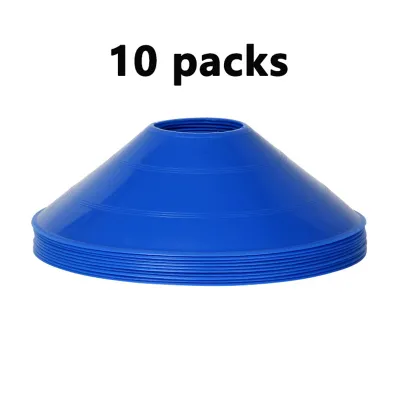
Disc cones, often referred to simply as flat markers, are characterized by their low-profile, flexible, and lightweight construction. Typically measuring just 5 to 7 centimeters in height with a wide, open center, these cones are designed to sit flat against the playing surface. They are most commonly manufactured from soft, pliable polyethylene (PE) plastic, which allows them to bend, compress, and instantly pop back into shape when stepped on or run over by players.
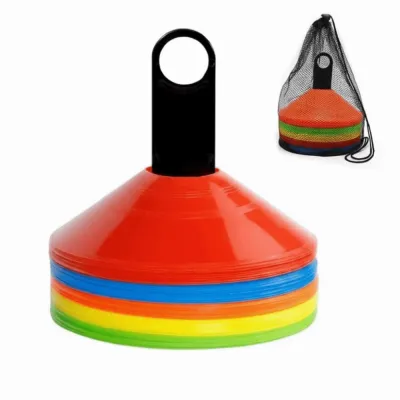
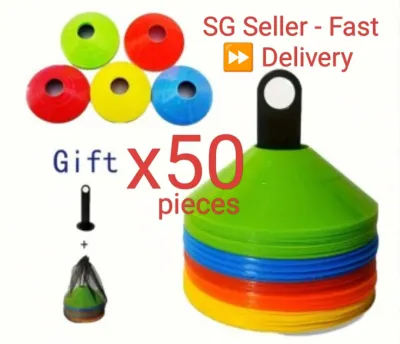
Because of their lightweight nature, disc cones are highly portable and are usually sold in large bulk sets of 40, 50, or even 100 pieces. These sets typically come with a dedicated plastic or metal carrying spindle, allowing coaches to stack and transport dozens of cones in a single sports bag without taking up excessive space. This portability makes them an absolute staple for individual players training on public pitches and coaches who must carry their own gear to various venues across Singapore.
Tall Cones (Standard Traffic Cones)
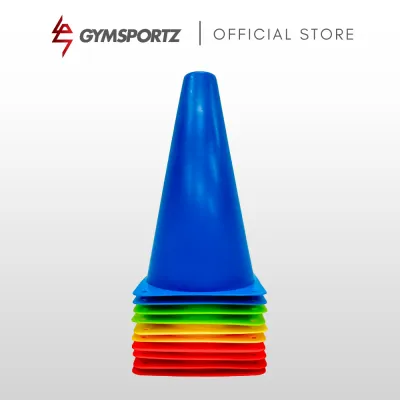
Tall cones, which mimic the traditional shape of roadside traffic cones, feature a rigid structure, a square or hexagonal base, and a significantly elevated height profile. These cones typically range from 15 to 30 centimeters (6 to 12 inches) or more in height, making them a highly prominent physical obstacle on the training pitch. They are usually constructed from thicker, more rigid plastics such as polyvinyl chloride (PVC) or heavy-duty high-density polyethylene (HDPE).
Unlike flat markers, tall cones do not compress easily underfoot. Instead, they provide a distinct physical barrier that players must actively run or dribble around. While their height offers exceptional visibility, it also makes them significantly bulkier to store and transport. Stacking tall cones requires substantial vertical space, and carrying a dozen of them can quickly fill the trunk of a car or a large equipment bin, making them more suitable for clubs or schools with dedicated on-site storage facilities.
Saucer Cones (Dome Cones)
Saucer cones, frequently called dome cones, serve as a hybrid design that bridges the gap between lightweight disc cones and rigid tall cones. They feature a distinct dome-like shape with a semi-rigid structure that stands slightly higher than a standard disc cone, typically around 8 to 10 centimeters. The dome design provides a structural arch that naturally resists collapsing under minor forces while maintaining a relatively low profile on the ground.
These cones are stackable and often feature a wider, heavier base relative to their height compared to flat disc cones. This added weight and structural rigidity help them maintain their position on the pitch, even when subjected to moderate winds or light impacts. While they are slightly bulkier than flat disc cones, they remain highly portable and can still be stacked compactly on carrying straps, offering a balanced solution for coaches who require both stability and ease of transport.
Comparing Visibility, Stability, and Durability on the Pitch
When evaluating training cones, three key performance dimensions dictate their utility during a live session: visibility, stability, and durability. A failure in any of these areas can disrupt the flow of a drill, force constant pauses for adjustments, or even present safety hazards to the players.

Visibility and Peripheral Awareness
Visibility is crucial for maintaining the speed and fluidity of football drills, particularly during high-tempo exercises where players must make split-second decisions.
- Tall Cones: These offer the highest level of long-distance visibility. Because they stand well above the grass line, players can easily spot them from 30 to 50 meters away, making them ideal for marking out wide boundaries, far-side goals, or distant sprint targets. Their height ensures they remain visible even when players are looking up to scan the pitch.
- Disc Cones: While highly effective up close, disc cones can easily blend into natural grass if the field is not freshly mowed or if the cones are not in high-contrast colors like neon orange, yellow, or pink. Because they sit flat, they rely heavily on the player's downward peripheral vision. If a player is focused on scanning the field for teammates, flat discs can occasionally slip out of their immediate line of sight.
- Saucer Cones: The 3D dome shape of saucer cones provides a distinct visual advantage over flat discs. They catch the light from multiple angles and present a larger vertical surface area, making them significantly easier to spot in a player's peripheral vision without standing so high that they block the view of the ball or a teammate's feet.
Stability and Wind Resistance
The tropical climate in Singapore frequently brings sudden monsoon winds and heavy downpours, making the wind resistance and surface grip of your training cones a major practical consideration.
- Disc Cones: Due to their lightweight construction and low surface area, standard disc cones are highly susceptible to being blown away by strong gusts of wind. On windy days, a light breeze can easily scatter a carefully laid-out slalom grid across the pitch. To combat this, coaches must often look for heavier, rubberized flat markers or use ground pegs if training on natural grass, though pegs are not an option on artificial turf.
- Saucer Cones: The dome shape of saucer cones is aerodynamically superior, allowing wind to flow over the curved surface rather than pushing against a flat vertical wall. Combined with their slightly heavier, wider bases, saucer cones offer excellent stability on both natural grass and artificial turf, rarely shifting out of place even during stormy weather.
- Tall Cones: While their heavy bases provide good resistance to wind, tall cones have a high center of gravity. This makes them highly vulnerable to being knocked over if struck directly by a fast-moving football or if brushed by a passing player. Once tipped onto their side, they lose much of their visual utility and can roll across the pitch, creating a temporary hazard.
Durability and Impact Resistance
The lifespan of your training equipment is directly tied to the materials used and how they respond to physical impacts and environmental exposure.
- Disc Cones: Flexible PE disc cones are exceptionally durable when it comes to physical impact. Because they are designed to deform under pressure, they can withstand being stepped on by players wearing molded studs or metal-tipped cleats without cracking or shattering. They simply flatten and pop back up, making them virtually indestructible during normal training activities.
- Tall and Saucer Cones: Rigid tall cones and semi-rigid saucer cones are much more susceptible to structural damage. If a player lands heavily on a rigid PVC tall cone, the plastic can crack, split, or shatter, creating sharp edges that pose a safety risk.
- Material Selection: It is vital to check product specifications rather than relying solely on the cone's shape to judge its lifespan. Look for terms like "impact-resistant," "flexible PVC," or "UV-stabilized PE." In Singapore's intense tropical sun, non-UV-stabilized plastics will quickly become brittle and fade, leading to premature cracking under normal use.
Matching Cone Types to Specific Football Drills
To get the most out of your training sessions, you should align the physical properties of each cone type with the specific objectives of your coaching curriculum.
Dribbling and Close Ball Control
Developing quick feet, soft touches, and precise ball control requires a training environment that encourages tight, rapid movements without unnecessary distractions.
- Low-Profile Advantage: Disc and saucer cones are the undisputed champions for close-control dribbling drills. Because they stand close to the ground, they force players to keep the ball tight to their feet as they weave through slalom patterns or tight grids.
- Tripping Hazards: If a player makes a mistake and clips a low-profile disc or saucer cone, the ball simply rolls over it, and the player can continue the drill without tripping or losing their balance. This allows for continuous, uninterrupted practice, which is essential for building muscle memory and confidence in young or developing players.
- Drill Variety: Use different colored disc cones to set up complex decision-making grids, where players must change direction or perform a specific skill when approaching a specific color.
Agility, Speed, and Change of Direction
Agility drills require players to perform explosive cuts, rapid decelerations, and sudden changes of direction at maximum speed.
- Safety First: During high-speed shuttle runs, T-drills, or Illinois agility tests, players are moving at their physical limits. If a player steps on a rigid, tall cone during a sharp cut, their ankle can easily roll, leading to severe sprains or ligament damage.
- Flexible Options: For any drill where a player's foot is likely to land directly on or near the marker, flexible disc cones should always be used. If stepped on, the disc flattens instantly, minimizing the risk of ankle instability or slipping.
- Visual Targets: You can still utilize tall cones in agility training, but only as distant turnaround markers or finish-line gates where players do not need to make tight, high-speed cuts directly over the base of the cone.
Tactical Positioning and Boundary Marking
Tactical sessions, positional play, and small-sided games require clear spatial boundaries so players can understand their roles and responsibilities on the pitch.
- Defining Spaces: When setting up a half-pitch practice game, defining offside lines, or marking out specific passing corridors, players need to be able to see the boundaries instantly from across the field. Tall cones provide the necessary visual authority and physical presence to make these boundaries unmistakable.
- Goalkeeper Zones: In goalkeeper training, tall cones are highly effective for marking out distribution zones, setting up shooting angles, or simulating defenders in the box. Their height helps goalkeepers visualize the physical space they need to defend or exploit.
- Coaching Visuals: For tactical walkthroughs where the coach is explaining positioning to the entire squad, tall cones can represent opponent positions or defensive lines, providing a clear 3D visual aid that flat discs simply cannot match.
Decision Framework: How to Build Your Training Cone Kit
Building the perfect training cone kit requires balancing your specific training environment, budget, and the age group of your players. Use this structured decision framework to guide your next purchase.
- Choose Disc Cones if: Your primary focus is on individual technical skills, high-frequency agility drills, and close ball control. They are also the ideal choice if you are a traveling coach or player who needs a highly portable, lightweight, and cost-effective solution that can easily fit into a standard backpack.
- Choose Tall Cones if: You are a club or school coach running tactical sessions, setting up small-sided game boundaries, or organizing large-scale fitness and speed drills. They are best suited for environments where you have access to dedicated storage space and need maximum visibility across large distances.
- Choose Saucer Cones if: You regularly train on multiple surfaces (such as natural grass, artificial turf, or indoor sports halls), frequently encounter windy outdoor conditions, and want a durable, low-profile marker that offers better visibility than flat discs without creating tripping hazards.
- Verify first if: You are training on long, un-mowed natural grass, where flat disc cones can easily disappear from view. In such cases, opt for saucer cones or brightly colored tall cones. If training on smooth indoor courts or artificial turf, verify whether the cones feature non-slip rubberized bases, as standard lightweight plastic cones can easily slide out of place when brushed by a ball or foot.
- Value Assessment: For high-volume drills and large squad sessions, buying bulk sets of 50 disc cones offers the best value per unit, typically ranging from S$10 to S$25. However, if your training involves specialized tactical work or multi-sport use on windy days, investing in a smaller, premium set of weighted saucer cones (around S$30 to S$50) or durable, flexible tall cones will yield better long-term performance and safety.
Frequently Asked Questions (FAQ)
Can I use the same cones for both natural grass and artificial turf?
Yes, most football training cones can be used on both natural grass and artificial turf, but their performance and stability will vary depending on the design and material. On natural grass, lightweight disc cones can sometimes be pinned down with ground pegs if needed, while tall and saucer cones rely on their weight and shape to stay upright on uneven ground.
On artificial turf, standard lightweight plastic disc cones have a tendency to slide easily when struck by a ball or stepped on, as there are no grass blades to help hold them in place. For artificial turf, saucer cones with slightly heavier bases or disc cones made from rubberized materials are highly recommended, as they provide much better grip on the synthetic fibers and are less likely to shift during high-speed drills.
How many training cones do I need for a full football team session?
The number of cones you need depends on the size of your squad and the complexity of your training session, but a general planning framework can help you prepare. For a standard squad session of 12 to 18 players, a baseline of 30 to 50 disc cones is highly recommended. This quantity allows you to set up multiple agility stations, dribbling lanes, and small-sided grids simultaneously, keeping player wait times to a minimum.
In addition to your disc cones, adding 10 to 15 tall cones to your kit is ideal for marking out pitch boundaries, goalposts for small-sided games, and tactical zones. This combination ensures you have the flexibility to run technical, physical, and tactical drills in a single session without having to constantly tear down and rebuild your setups.
Community discussion
Share your experience or ask a question. Comments are reviewed before publication.