
Identify Your Stability Goals: What Are You Actually Training For?
To determine if you need a balance board, you must first define what stability means for your physical goals. In fitness, stability is not a single, universal attribute. The physical demands of balancing on a shifting wooden board are vastly different from the demands of stabilizing your spine under a heavy barbell squat. If your primary objective is to build a body that resists injury during daily movements, your training path will look very different from someone preparing for competitive board sports.
Stability is highly context-specific and depends on the neurological and muscular demands of the activity. When you stand on an unstable surface, your nervous system coordinates rapid, micro-adjustments to keep you upright. This is primarily a neurological skill. Conversely, when you lift a heavy weight, your body requires structural stiffness and coordinated muscular tension to transfer force efficiently. Training for one does not automatically translate to the other.
Consider your current workout routine and identify the specific physical weaknesses you want to address. Are you trying to recover from a rolled ankle, or are you hoping to stop your knees from caving in during squats? If you are looking to improve your running stride, enhance your agility on the football pitch, or simply move without joint pain, your needs are different from a surfer looking to mimic wave transitions. By isolating your primary training goal, you can determine whether a specialized accessory is necessary or if your existing gym equipment already provides the perfect solution.
Products mentioned in this guide
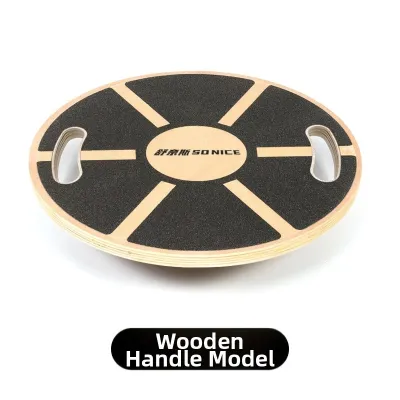
![🇸🇬 [READY STOCK] Wooden Wobble Balance BoardCore Strength Exercise Fitness Accessory Workout Stability Equipment Standing Desk Use](https://img.lazcdn.com/g/p/67819e1d16b1b0f8849b0c1cbd5480ca.jpg_400x400q80.jpg_.webp)
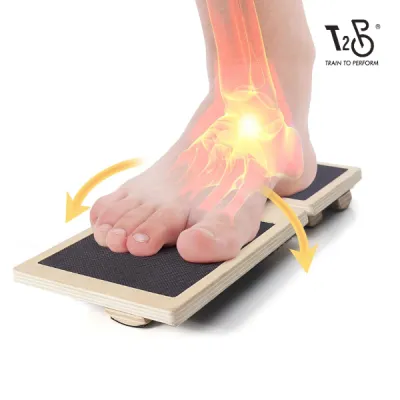
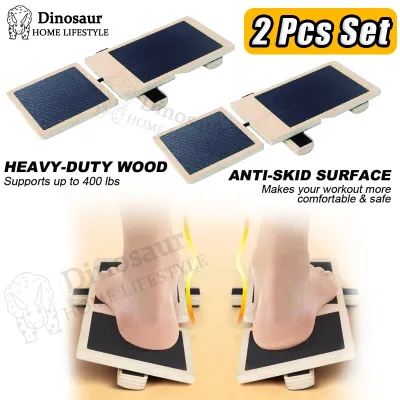
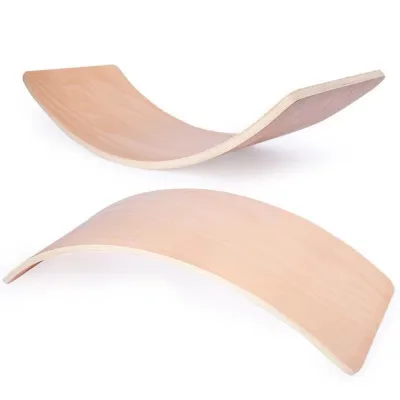
![[SG] Wooden Balance Board for Kids Wobble Balance Board Kids Yoga Board Body Training natural Wood Curvy Board Kids](https://img.lazcdn.com/g/p/214791cf0f8d878392f0ca315502429a.jpg_400x400q80.jpg_.webp)
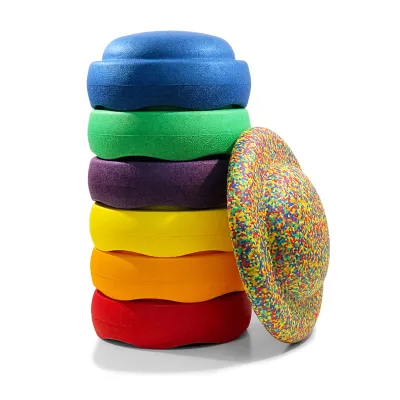
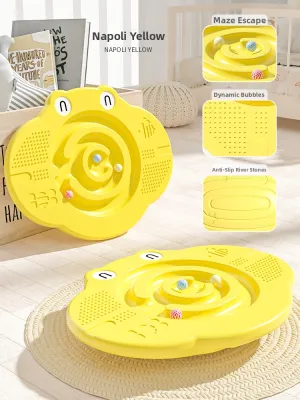
Prices are valid at publication and may change. Please refer to the product page for the latest price.
Many fitness enthusiasts buy a balance board under the impression that general “balance training” is the missing link in their strength routine. However, if your program lacks unilateral movements or core-specific resistance, adding an unstable board is simply a detour. Evaluate whether your current setup leaves a genuine training gap, or if you merely need to restructure how you use the tools already at your disposal.
The Mechanics and Limits of Balance Boards
A balance board functions by introducing an unstable base of support, forcing your body to constantly adjust its center of gravity. This process heavily recruits the stabilizer muscles of your lower kinetic chain, particularly around the ankles, knees, and hips. By challenging your proprioception—your body’s subconscious awareness of its position in space—these boards train the sensory receptors in your joints to react quickly to sudden shifts in position.

While this neurological engagement is highly beneficial for joint rehabilitation and balance-focused sports, the tool has distinct physiological limitations. The primary drawback of a balance board is the lack of progressive overload. Once your nervous system adapts to the unstable surface and you master the balance, the exercise ceases to provide a meaningful stimulus for muscle growth or strength. You cannot easily add heavier weights to a balance board without dramatically increasing your risk of injury.
Because of these limitations, balance training on a board becomes a specialized skill rather than a foundation for overall fitness. Once your body learns the specific motor patterns required to stay balanced on the board, further practice yields diminishing returns for general strength. It does not stimulate muscle hypertrophy in the same way that progressive resistance training does, as the primary stress is neurological rather than mechanical.
Safety is another critical consideration that limits the utility of balance boards in a general strength routine. You should never use a balance board for heavy, loaded exercises such as weighted squats, overhead presses, or deadlifts. Introducing external weights to an unstable board compromises your force production, disrupts proper lifting mechanics, and increases the risk of joint shear. Furthermore, if you lose your balance under a heavy load, bailing safely becomes incredibly difficult, posing a severe risk to your joints and surrounding equipment. Always consult the manufacturer’s safety instructions and weight limits before attempting any exercises on a balance board.
Evaluating Gym Alternatives for Stability Training
If you already have access to a commercial gym or a well-equipped home setup, you may find that a dedicated balance board is entirely redundant. Many standard training tools and exercise variations build exceptional stability while simultaneously developing strength and muscle mass. By understanding how to leverage these alternatives, you can achieve superior functional stability without spending extra money or cluttering your living space.
Free Weights and Unilateral Exercises
Unilateral exercises—movements performed on one leg or one arm at a time—are among the most effective ways to build functional, load-bearing stability. When you perform a single-leg Romanian deadlift (RDL) or a Bulgarian split squat, your body must actively work to prevent rotation and lateral swaying. This forces the deep stabilizer muscles of your hips, knees, and ankles to engage intensely to keep your joints aligned under load.
Unlike a balance board, unilateral free-weight exercises build what is known as “strength-stability.” This is the ability to maintain joint integrity and posture while producing or resisting high levels of force. This type of stability has a direct transfer to real-world activities like running, climbing stairs, and playing recreational sports. It teaches your body to remain stable in dynamic, high-impact situations where static balance is insufficient.
Additionally, free weights allow for continuous progressive overload. As your stabilizers grow stronger, you can gradually increase the weight of your dumbbells or kettlebells. This constant progression ensures that your muscles and joints continue to adapt and strengthen over time, a benefit that a bodyweight-only balance board cannot match.
Unstable Surface Alternatives (BOSU and Stability Balls)
If your goal is specifically to train on an unstable surface, you do not necessarily need to purchase a balance board. Most commercial gyms in Singapore are already equipped with BOSU balls and Swiss (stability) balls. These tools offer similar proprioceptive challenges while providing a much wider range of motion and application.
For instance, a BOSU ball can be used dome-side down to mimic the tilting action of a balance board, or dome-side up for core work and upper-body stability exercises like push-ups. Swiss balls are excellent for dynamic core movements, such as stability ball pikes or rollouts, which challenge your rotational stability through a deep range of motion.
Like balance boards, these tools are best utilized for bodyweight or light-load exercises rather than heavy strength training. If your local gym already provides these items, buying a separate balance board for home use is often a waste of resources, especially if you only plan to use it occasionally.
Cable Machines and Functional Trainers
Cable machines offer a unique advantage for stability training by providing continuous, multi-planar resistance. Unlike free weights, which rely solely on gravity, cables allow you to apply resistance horizontally, diagonally, or rotationally. This forces your core and lower body to establish a rock-solid, grounded base to resist the pulling force of the machine.
Exercises like the Pallof press, standing cable woodchops, and single-arm cable rows require your stabilizer muscles to work in unison to prevent your torso from rotating. This builds exceptional anti-rotational strength, which is highly protective for the lower back and essential for athletic performance.
Because cable machines allow you to adjust the resistance in small, precise increments, you can easily apply progressive overload to your stability training. This makes functional trainers an incredibly versatile tool that solves the primary limitation of balance boards while building highly functional, real-world core strength.
The Decision Matrix: Should You Buy a Balance Board?
To decide whether to purchase a balance board, you should weigh your specific training goals against your budget, available space, and existing equipment. For many fitness enthusiasts, skipping the balance board is the most practical decision. If your primary goals are building muscle, increasing your lifting strength, or improving general fitness, your time and money are better spent on free weights, unilateral movements, and cable exercises. These methods build load-bearing stability that directly supports your primary lifts and daily activities without requiring specialized gear.
However, there are specific scenarios where buying a balance board is highly justified. If you are recovering from an ankle or knee injury and your physiotherapist has prescribed proprioceptive training, a balance board is an excellent rehabilitation tool. It is also highly valuable if you participate in board sports like surfing, skateboarding, or snowboarding, where the specific neurological patterns of balancing on a shifting plane are directly applicable to your sport.
For those training at home in Singapore, space is often a major consideration. In a typical HDB flat or compact apartment, large gym equipment like cable machines or power racks may not be feasible. A balance board is highly compact, lightweight, and easy to slide under a bed or sofa when not in use. If you want a low-impact tool to break up long periods of sitting or to add a quick coordination challenge to your home workout, a basic board can be a sensible addition.
If you decide to buy, expect to find basic plastic or wooden models in broad price bands ranging from S$20 to S$80 on online marketplaces. Before committing to a purchase, evaluate your dedicated floor space to ensure you have a clear, non-slip area to use the board safely. If you realize you are unlikely to use it consistently, or if your gym already has BOSU balls and cables, you can confidently skip the purchase and focus on the highly effective alternatives already available to you.
Frequently Asked Questions (FAQ)
Are balance boards effective for weight loss or burning calories?
While standing on a balance board requires constant muscular engagement and mental focus, the actual energy expenditure is relatively low. It does not elevate your heart rate sufficiently to serve as an effective cardiovascular workout, nor does it provide the mechanical tension required to build significant calorie-burning muscle mass. To achieve weight loss, you should rely on a structured nutrition plan, consistent cardiovascular exercise, and progressive strength training, treating the balance board strictly as a supplementary tool for joint health, coordination, and rehabilitation.
Can I use a balance board while working at a standing desk?
Using a balance board at a standing desk is a popular way to introduce movement into a sedentary workday, but it has practical limitations. Standing on an unstable surface can encourage micro-movements that reduce lower-back stiffness and keep your core active. However, the constant need to balance can distract from deep cognitive work and may cause early fatigue in your feet and calves. If you choose to try this, start with short intervals of 10 to 15 minutes, ensure you are wearing supportive footwear or using an anti-fatigue mat, and always prioritize safety by keeping a stable desk surface nearby to grab if you lose your balance.
Community discussion
Share your experience or ask a question. Comments are reviewed before publication.