
The Quick Verdict: Who Actually Needs a Bicycle Radar?
Deciding whether to invest in a bicycle radar depends almost entirely on where and how you ride. If you are a road cyclist who frequently rides on open roads in Singapore, sharing lanes with fast-moving motorized traffic on routes like Changi Coast Road, West Coast Highway, or Mandai Road, a bicycle radar is an invaluable safety asset. It provides early, active warnings of vehicles approaching from behind, giving you critical reaction time to adjust your position.
Conversely, if your cycling is strictly confined to the Park Connector Network (PCN), dedicated cycling paths, or casual weekend family rides in closed parks, a radar is highly unnecessary. In these low-speed, highly congested pedestrian environments, a rearward-facing radar will either fail to register relevant hazards or inundate you with constant, distracting alerts from other path users.
It is vital to establish a core safety premise before evaluating this technology: a bicycle radar is strictly a situational awareness tool, not an automated collision avoidance system. It does not apply your brakes, steer you out of danger, or guarantee that a driver has seen you. The device acts as an electronic aid to assist your decision-making, but it can never replace active riding skills, defensive habits, and physical shoulder checks.
Products mentioned in this guide
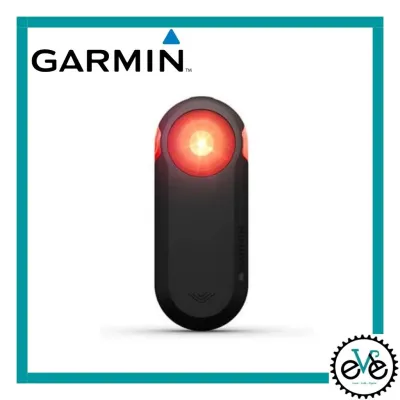
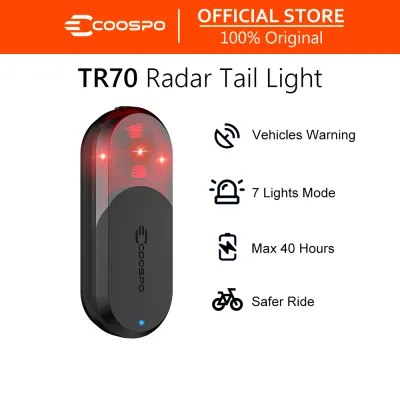
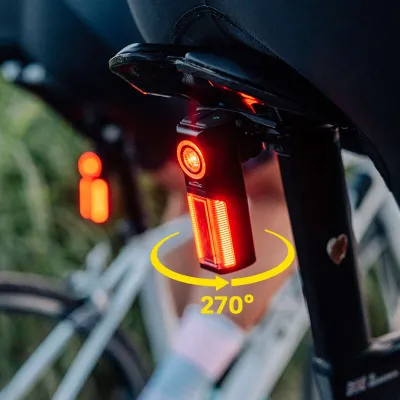
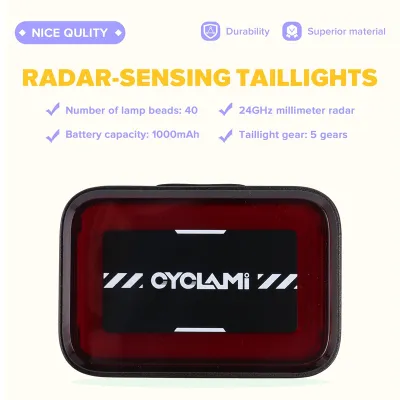
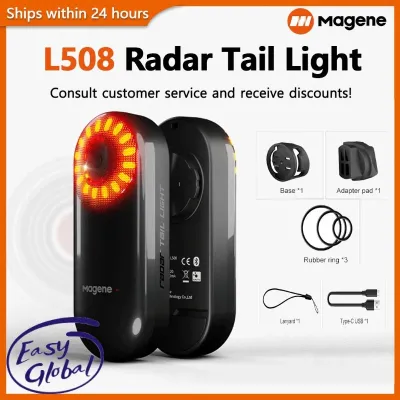
Prices are valid at publication and may change. Please refer to the product page for the latest price.
Understanding the Tool: What a Bicycle Radar Actually Does
To determine if a bicycle radar fits your riding style, you must understand how the technology operates. A bicycle radar uses millimeter-wave radio frequency technology to scan the area directly behind your bike. When it detects a moving object with a relative speed difference approaching from behind, it transmits real-time data to a paired receiver on your handlebars. This receiver is typically a compatible cycling computer, a GPS smartwatch, or a smartphone running a dedicated application.

The interface on your handlebar unit displays the threat level through visual, auditory, or haptic alerts. Most systems use a color-coded sidebar: green indicates the road behind is clear, orange signals one or more vehicles are approaching, and red warns of a high-speed vehicle closing in rapidly. Small icons or dots move up the screen to represent the relative distance and speed of each approaching vehicle.
Despite its technical sophistication, a radar has inherent physical limitations that you must factor into your safety planning. Because it relies on relative speed differentials, it cannot detect vehicles traveling at the exact same speed as you, nor can it identify stationary hazards, oncoming traffic, or vehicles crossing perpendicularly at intersections. The radar beam can also lose tracking on highly winding roads, sharp corners, or in bumper-to-bumper, slow-moving traffic where speed differentials disappear.
Before purchasing any unit, always verify the manufacturer’s official specifications. Pay close attention to the rated detection range (which typically spans up to 140 meters), the radar’s horizontal field of view (usually around 40 degrees), and the expected battery runtime under various light-flashing modes. Do not assume universal performance across all brands; check how these specifications align with your typical ride durations.
Diagnostic 1: Assessing Your Typical Riding Environment
The physical infrastructure of your routes is the most significant factor in determining the utility of a bicycle radar. Singapore’s cycling landscape is highly diverse, requiring different levels of rearward awareness depending on the path type.
Park Connectors (PCNs) and Shared Paths
On the Park Connector Network, the traffic dynamic is low-speed, multi-directional, and highly mixed. You share these paths with pedestrians, runners, children, and personal mobility devices (PMDs). Under Land Transport Authority (LTA) guidelines, speed limits are strictly enforced to maintain safety on shared paths. In this environment, hazards can emerge from any direction, and the speed differential between path users is minimal.
A rearward-facing radar is functionally ineffective here. Because the radar is tuned to detect fast-approaching vehicles, it will not reliably register a slow-moving pedestrian walking behind you. Furthermore, if you ride on a crowded weekend afternoon, a radar will trigger continuous, non-stop alerts for every cyclist or PMD rider behind you. This constant chiming quickly becomes a major source of cognitive fatigue, distracting you from navigating the immediate path ahead.
Open Roads and High-Speed Lanes
Once you transition to public roads, the risk profile changes dramatically. Here, you share lanes with heavy goods vehicles, rapid transit buses, and commuter traffic moving at speeds of 50 km/h or higher. On roads without dedicated cycling lanes or with narrow, debris-strewn shoulders, staying aware of rearward traffic is a constant challenge.
In this high-risk environment, a bicycle radar acts as an extra set of eyes. It detects vehicles long before they enter your auditory range, which is particularly useful on windy days, near noisy construction sites, or when wearing helmet straps that create wind noise. The early warning gives you precious seconds to claim your lane safely, tighten your line before a heavy truck passes, or prepare for the sudden wind shear of a passing double-decker bus.
Mixed Routes
Many local riders plan mixed routes, using PCNs to exit residential estates before transitioning onto major roads for high-intensity training loops. If you frequently navigate these mixed environments, your gear choice should be dictated by your highest-risk exposure. Even if only a small portion of your weekly mileage is spent on open roads, the elevated risk of those road segments makes a radar a highly justifiable safety addition for that specific part of your ride.
Diagnostic 2: Evaluating Your Riding Posture and Habits
Your physical biomechanics, training intensity, and group dynamics play a major role in whether a radar will genuinely improve your safety or simply add weight to your seatpost.
Riding Posture and Head Checks
Your physical position on the bike directly affects your ability to scan the road behind you. If you ride an aggressive road bike with a low, aerodynamic drop-bar setup, or a time-trial (TT) bike on aero extensions, looking over your shoulder requires a significant physical rotation. This movement can disrupt your balance, causing your front wheel to veer slightly into the lane—a highly dangerous outcome when riding close to traffic.
Additionally, riders with limited neck mobility, spinal stiffness, or older cyclists may find frequent physical shoulder checks physically exhausting or unstable. For these riders, a radar serves as an electronic mirror. It allows you to maintain your aerodynamic posture and forward focus, requiring only a split-second glance down at your handlebar computer to assess the traffic situation behind you.
Group Riding and Pacelines
If you regularly participate in group rides or structured pacelines, radar technology offers unique collaborative benefits. When riding in a tight formation, the riders in the middle and front must focus entirely on maintaining pace and avoiding the wheels ahead. They cannot safely perform shoulder checks.
Mounting a radar on the seatpost of the rear-most rider (the “sweeper”) allows that device to broadcast alerts to multiple paired head units within the group. Alternatively, the rear rider can verbally call out approaching vehicles (“Car back!”) to the peloton. This early warning allows the group to smoothly transition into a single-file line well before the vehicle arrives, reducing friction with motorists and keeping the paceline organized.
Commute vs. Fitness Rides
If your rides consist of casual, upright commuting on a folding bike or utility hybrid, your head is naturally elevated. This upright posture makes physical scanning and shoulder checks highly intuitive and easy to execute. The speed differential between you and other traffic is also lower if you stick to side streets, reducing the necessity of a radar.
Conversely, during high-intensity fitness training, interval sessions, or solo endurance rides, physical fatigue sets in, and your field of vision naturally narrows to the road immediately ahead. Under high physical exertion, your cognitive processing speed slows down. The clear, simple visual and auditory alerts of a radar help you maintain a high level of safety without requiring you to break your training rhythm or repeatedly strain your neck.
When to Skip the Radar and Rely on Traditional Awareness
A bicycle radar is a premium electronic accessory that is not a mandatory safety requirement for every cyclist. There are several scenarios where skipping the radar is the most logical and budget-friendly decision.
If you are strictly an off-road mountain biker tackling singletrack trails in Chestnut Nature Park or Kent Ridge Mountain Bike Trail, a radar is useless. The technology cannot track trail obstacles, and the tight, twisting terrain with close-following riders will render the radar alerts meaningless. Similarly, casual weekend riders who rent bicycles along East Coast Park or stick entirely to segregated cycling paths do not face the high-speed rear-end risks that radar is designed to mitigate.
For road riders on a budget, traditional mechanical solutions can be highly effective. A high-quality, vibration-resistant bar-end mirror or a helmet-mounted mirror provides a continuous, real-time visual feed of what is behind you without relying on batteries, wireless pairing, or software updates. These mechanical alternatives cost a fraction of a radar unit and require zero electronic maintenance.
If you have a limited budget, you will likely achieve a higher safety return on investment by prioritizing other essential gear first. Ensure you own a highly rated, certified helmet (ideally with rotational impact protection like MIPS), high-visibility active daytime running lights (both front and rear) to make yourself visible to drivers, and reflective apparel. A radar tells you when a car is coming, but active lights make sure the driver sees you—making lights the primary line of defense.
Finalizing Your Decision: Next Steps and Alternatives
To finalize your decision, ask yourself three simple questions:
- Do I regularly ride on open roads with speed limits of 50 km/h or higher?
- Is my riding posture or physical mobility making shoulder checks difficult or unstable?
- Do I have the budget for a premium electronic accessory (typically ranging from S$150 to S$300+)?
If you answered yes to at least two of these questions, a bicycle radar is a highly recommended addition to your cockpit. If you answered no, your safety budget is better spent elsewhere.
If you decide to purchase a bicycle radar, your next step is to verify system compatibility. Most modern radars utilize standard ANT+ and Bluetooth protocols, but you must ensure your existing cycling computer or smartwatch supports radar integration to display the visual alerts. Additionally, inspect your bicycle’s seatpost. Standard round seatposts accommodate almost all stock radar mounts, but aerodynamic, proprietary, or D-shaped seatposts often require specialized adapters or third-party mounts to sit securely and point directly backward without slipping.
If you choose to skip the radar, focus on refining your active riding skills. Practice performing stable, straight-line shoulder checks in an empty parking lot to ensure you do not veer when looking back. Consider adding a wide-angle bar-end mirror to your handlebars as a highly reliable, battery-free alternative for continuous rearward monitoring.
Frequently Asked Questions (FAQ)
Can I use my smartphone instead of a dedicated cycling computer for radar alerts?
Yes, many modern bicycle radars connect directly to smartphones via Bluetooth using official manufacturer apps. While this saves you the cost of a dedicated cycling computer, there are notable trade-offs. Smartphone screens are often difficult to read under the intense, direct sunlight of Singapore’s tropical climate, and keeping the screen on with GPS and Bluetooth active will rapidly drain your phone’s battery. Additionally, you will need a highly secure, vibration-dampening, and weather-resistant handlebar mount to protect your phone from road vibrations and sudden downpours.
Do bicycle radars work reliably in heavy rain or at night?
Bicycle radars rely on radio frequency (RF) technology rather than optical cameras, meaning their detection capabilities are unaffected by darkness, headlight glare, or heavy fog. They perform transitionally well during night rides, which is when many road cyclists in Singapore prefer to train. However, while the radar signals penetrate rain easily, you must verify the physical device’s water-resistance rating. Look for an IPX7 rating or higher to ensure the unit’s casing and charging ports can withstand heavy tropical downpours without water ingress.
Community discussion
Share your experience or ask a question. Comments are reviewed before publication.