
Setting up a home gym in a Singapore HDB flat requires balancing your fitness goals with strict housing regulations. If you want to build upper body strength without drilling holes into your walls or ceilings, finding the right pull-up and push-up bars is essential. The short answer is that doorway tension bars and freestanding power towers are the only viable drill-free options. However, their suitability depends heavily on your flat’s layout, door frame materials, and floor space. Choosing the wrong type can lead to damaged door frames, cracked tiles, or serious physical injury.
Understanding HDB Renovation Rules and Structural Limits
HDB flats are built with prefabricated concrete components, structural columns, and load-bearing walls designed to maintain the building’s structural integrity. Under HDB renovation guidelines, drilling into structural walls, reinforced concrete beams, and columns is strictly regulated. While minor drilling for lightweight decorative fixtures is generally permitted on non-structural walls, installing heavy-duty gym equipment is a completely different matter.
Gym equipment like wall-mounted pull-up bars requires heavy-duty expansion bolts. These bolts must penetrate deep into the masonry to withstand dynamic loads—the sudden, multiplied force of your body weight shifting during exercise. Drilling into a structural beam to install these bolts can compromise the concrete and steel reinforcement, potentially violating HDB rules and leading to costly reinstatement orders or fines.
Products mentioned in this guide
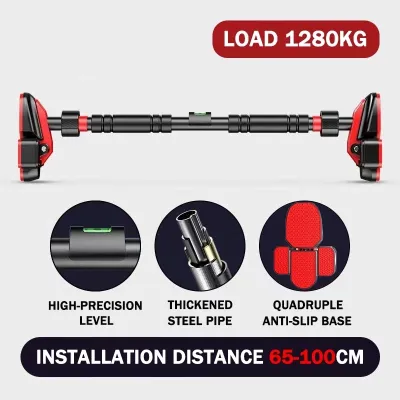
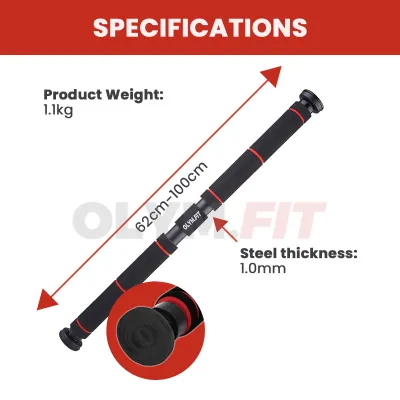
![[SG Ready Stock]Chin Up Fitness Equipment Pull Up/Portable Home Pull Up Bars/No Drilling /Load Bearing 400KG](https://img.lazcdn.com/g/p/795e054120ffb0d1ecbd7f39e6b32dd2.png_400x400q80.png_.webp)
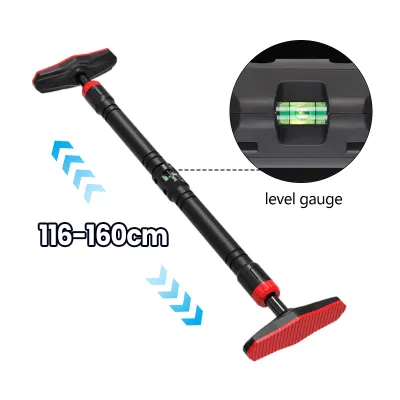
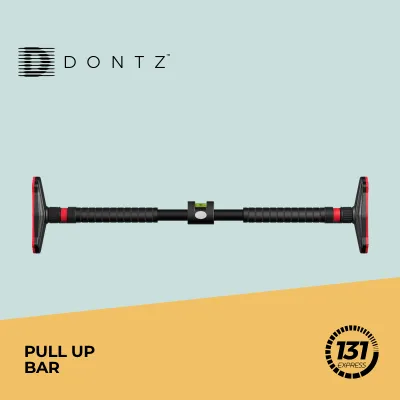
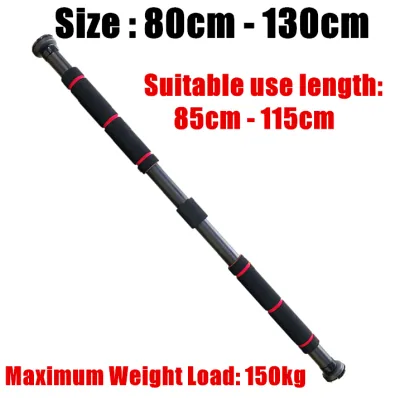

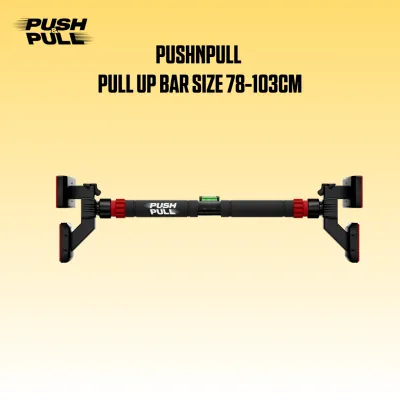
Prices are valid at publication and may change. Please refer to the product page for the latest price.
To avoid regulatory violations and structural damage, your home workout setup must rely entirely on tension, friction, or freestanding weight. By eliminating permanent wall or ceiling modifications, you ensure your home gym remains safe, compliant, and easy to dismantle if you ever move out of your flat.
Doorway Pull-Up Bars: Sizing, Door Frame Risks, and Safety Checks
Tension-mounted doorway bars are a popular choice for HDB flats due to their compact size and affordability. These bars extend outward to press against the inner sides of a door frame, relying entirely on friction and lateral pressure to hold your weight. While they are highly convenient, they are designed strictly for pulling exercises; attempting to use them as low-level push-up bars can cause them to slip unexpectedly.

The primary risk of tension bars lies in the immense lateral force they exert. To support a user weighing 70 to 90 kilograms, the bar must be tightened to apply hundreds of pounds of outward pressure against the door frame. This force can easily crack, bend, or warp delicate frames.
For your safety, you must establish clear operational limits. Stop using a doorway bar immediately if you hear any creaking, notice the frame bowing outward, or see the rubber pads sliding. Regularly check the tightness of the bar before every workout session to prevent sudden falls.
Checking Your HDB Door Frame Material
Before purchasing a doorway tension bar, you must identify the material of your HDB door frame. Older HDB flats often feature solid timber frames, which are relatively sturdy and can handle moderate lateral compression. Modern BTO flats, however, frequently utilize hollow metal (steel or aluminum) frames or lightweight composite materials.
Hollow metal and composite frames are highly susceptible to buckling under the concentrated pressure of a tension bar. If you apply enough tension to keep the bar secure, the frame itself may cave inward, causing permanent, expensive damage.
To assess your door frame, perform a simple knock test. Tap along the frame; a hollow, echoing sound indicates a hollow metal or composite structure that is unsuitable for tension bars. If the frame flexes even slightly when you press hard with your thumb, do not install a doorway pull-up bar.
Measuring Width and Clearance
Accurate measurements are vital to ensure a doorway bar fits securely. Measure the inner width of the door frame at the exact height where you plan to install the bar. You must also measure the depth of the frame and the width of the outer trim to ensure the bar’s end caps have a flat, flush surface to press against.
Avoid buying a bar that operates at the absolute maximum or minimum of its adjustable range. A bar extended to its limit has less thread engagement inside the telescoping mechanism, which significantly reduces its structural stiffness and grip security. Aim for a bar where your doorway width falls comfortably in the middle of the manufacturer’s specified range.
Additionally, check the surrounding area for physical obstructions. Ensure there are no nearby walls, electrical switches, or open doors that could restrict your elbow movement or cause you to strike your knees during a workout.
Freestanding Pull-Up and Push-Up Bars: Space Footprint and Stability
If your door frames are unsuitable for tension bars, freestanding pull-up and push-up bars offer a safer, highly versatile alternative. Because these units stand on their own base, they do not transfer any force to your walls or door frames, completely eliminating the risk of structural damage.
The trade-off for this safety is physical size. Freestanding units require a dedicated floor footprint and cannot be easily folded or tucked away after use. You must carefully evaluate your available floor space, especially in compact BTO bedrooms or living rooms where space is at a premium.
When selecting a freestanding bar, prioritize stability features over portability. Look for models with wide, H-shaped or U-shaped bases, heavy-gauge steel construction, and robust crossbar reinforcements. High-quality, non-slip rubber feet are essential to prevent the unit from shifting or sliding on your floor during dynamic movements.
Power Towers and Dip Stations
Power towers are multi-functional freestanding units that allow you to perform pull-ups, chin-ups, dips, and vertical knee raises. This versatility makes them an excellent centerpiece for a drill-free HDB home gym, providing a comprehensive upper-body workout in a single station.
The critical constraint for a power tower in an HDB flat is ceiling height. Standard HDB ceilings typically range from 2.6 to 2.8 meters. You must measure your floor-to-ceiling height accurately and compare it to the maximum height of the power tower.
Remember to account for overhead clearance. You need at least 30 to 40 centimeters of space between the top of the bar and your ceiling so your head does not strike the concrete during a pull-up. Additionally, ensure the tower is positioned far away from ceiling fans and low-hanging light fixtures to prevent accidental contact.
Floor-Mounted Pull-Up and Push-Up Combos
For those with limited vertical space or who prefer a more compact setup, floor-mounted pull-up and push-up combos are an excellent alternative. These lower-profile frames are designed for low-clearance exercises, such as push-ups, dips, and Australian (inverted) rows.
While they do not allow for full-height hanging pull-ups, they provide a highly stable platform for a wide range of upper-body exercises. Their low center of gravity makes them exceptionally stable, and many models are compact enough to slide under a bed or sofa when not in use.
When choosing a floor-based combo bar, pay close attention to the manufacturer’s weight capacity limits. Because these frames rely on leverage and shorter steel tubes, they often have lower maximum load ratings than tall, heavy-duty power towers. Always verify that the equipment’s rated weight limit exceeds your body weight with a safe margin.
Why Wall-Mounted and Ceiling-Mounted Bars Fail the No-Drill Test
It is common to find online tutorials or product listings promoting “drill-free” wall-mounted pull-up bars that use heavy-duty adhesive tapes, glue, or specialized suction brackets. You must absolutely avoid these products, as they fail basic mechanical safety principles under dynamic loads.
A wall-mounted pull-up bar must support not just your static body weight, but the dynamic forces of your movement, which can easily double the load on the brackets. Adhesives and double-sided tapes are designed for static, shear loads like hanging pictures; they cannot withstand the peeling forces and sudden impacts of a human body exercising. Using them for a pull-up bar will inevitably lead to sudden failure, resulting in severe head, neck, or back injuries and ripped wall plaster.
If you are determined to have a wall-mounted bar, it must be installed using heavy-duty expansion bolts drilled into a solid, non-structural masonry wall by a qualified contractor. Since this requires permanent drilling and professional verification, it completely violates the no-drill premise and is generally impractical for HDB tenants or those wishing to avoid wall damage.
How to Measure Your HDB Space for a Safe Home Gym Setup
To ensure your drill-free setup is safe and functional, you must conduct a thorough spatial assessment of your HDB flat before making a purchase. Use this step-by-step checklist to guide your measurements:
- Floor Footprint: Measure the length and width of the floor area where the equipment will stand. Add a safety buffer of at least 30 to 50 centimeters on all sides to allow your body to swing naturally and to ensure you can step on and off the equipment without hitting nearby furniture.
- Ceiling Clearance: Measure the exact height from your floor to the ceiling. Subtract your height and your maximum arm reach when standing to ensure you have enough room to hang fully without your feet dragging on the floor, while still leaving ample head clearance at the top.
- Swing and Pathway: Verify that the equipment does not block the swing of bedroom doors, wardrobe doors, or main walkways. Your workout space must never obstruct emergency exit routes or access to your household shelter (bomb shelter) door.
- Flooring Protection: HDB flooring materials like vinyl, laminate, or homogeneous tiles can easily scratch, dent, or crack under the heavy steel legs of a power tower. Always place high-density interlocking foam mats or thick rubber pads beneath the base of your freestanding equipment to distribute the weight, protect your floor, and dampen noise for your downstairs neighbors.
Frequently Asked Questions (FAQ)
Can I use a tension pull-up bar on an HDB bedroom door?
You should exercise extreme caution when considering a tension bar for an HDB bedroom door. Most modern HDB bedroom doors use lightweight, hollow-core timber doors set within relatively thin timber or composite frames. These frames lack the structural density of solid wood and are highly likely to crack or warp under the intense lateral pressure required to keep a tension bar secure. If you must use a tension bar, it is generally safer to install it on a solid concrete entryway arch or a verified solid wood frame, provided you test the frame’s solidity first.
Are there drill-free wall-mounted pull-up bars that actually work?
No, there are no drill-free wall-mounted pull-up bars that can safely support a human body. Any product claiming to mount to a flat wall using adhesives, suction, or friction alone is extremely dangerous. Dynamic exercise forces will break the adhesive bond or slip on the paint, leading to catastrophic failure. Wall-mounted bars must always be anchored with mechanical expansion bolts into solid masonry or concrete walls to ensure user safety.
Will a freestanding pull-up bar scratch my HDB vinyl or tile flooring?
Yes, a freestanding pull-up bar can easily damage your HDB flooring. The steel feet of the frame can scratch vinyl sheets, dent luxury vinyl tiles (LVT), or chip homogeneous ceramic tiles when the unit shifts during workouts. To prevent this, always place a high-density rubber gym mat or interlocking EVA foam tiles under the entire base of the equipment. This not only protects your floor from scratches and impact damage but also helps absorb vibrations and reduce noise transmission to your neighbors below.
Community discussion
Share your experience or ask a question. Comments are reviewed before publication.