
For beginners entering the sport of golf, choosing between an electric and a manual golf cart (often referred to as a golf trolley) does not come down to a single, universally superior option. Instead, the right choice depends on your physical stamina, the specific terrain of the courses you plan to play, your storage space, and your budget. While manual carts offer simplicity and a lower entry cost, electric carts reduce physical fatigue, allowing you to focus more energy on your swing.
Understanding how these two categories operate is the first step toward making an informed investment. As a beginner, you want equipment that supports your learning curve rather than adding unnecessary frustration before you even reach the first tee. By evaluating how each cart type fits into your routine, you can avoid common purchasing mistakes and select a model that keeps you comfortable on the fairways.
Core Differences Between Electric and Manual Carts
Manual golf carts rely entirely on your physical effort to move across the course. These carts typically come in two-wheel or three-wheel configurations, designed to be pulled behind you or pushed in front of you. Pushing a three-wheel manual cart is generally more ergonomic than pulling a two-wheel version, as it keeps your shoulders aligned and reduces strain on your lower back. However, you remain the sole engine driving the cart up hills and across damp grass.
Products mentioned in this guide
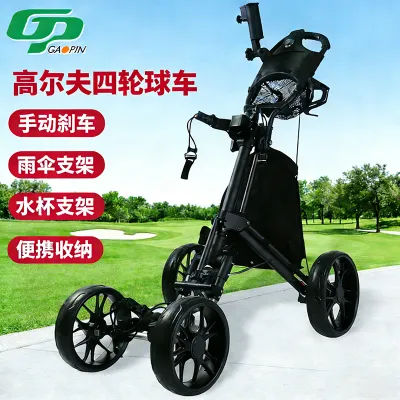
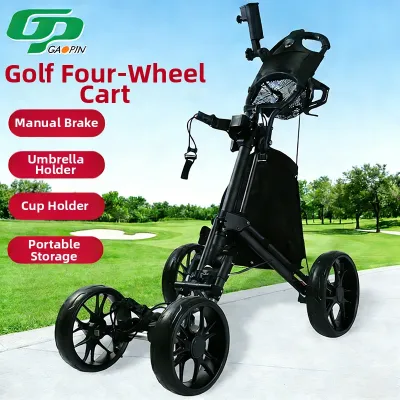
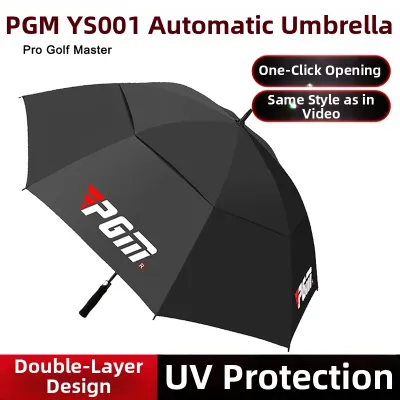
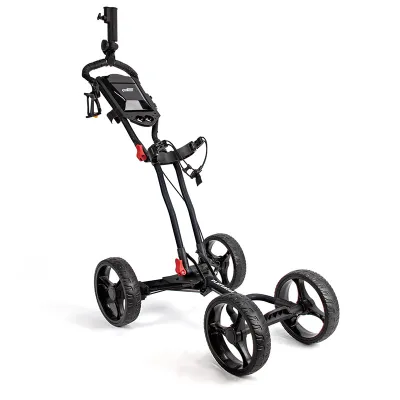
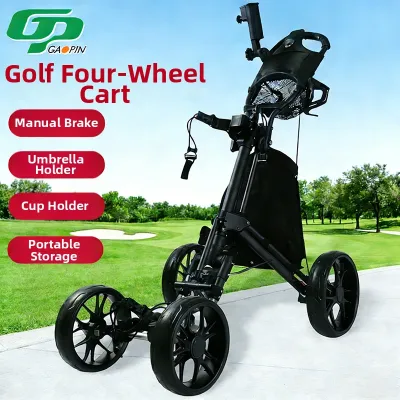
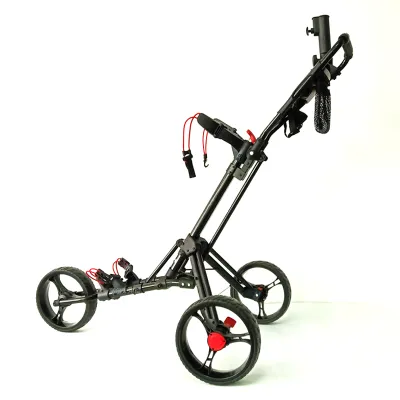
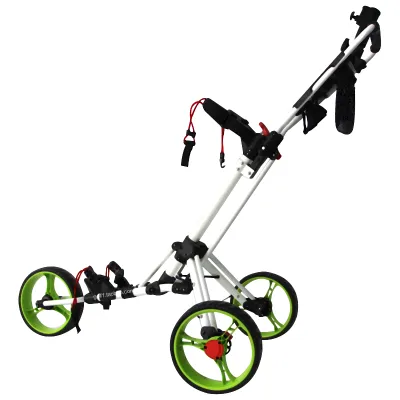
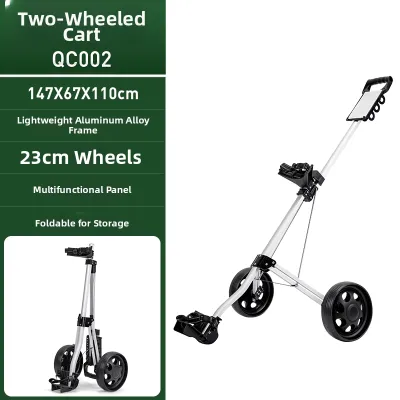
Prices are valid at publication and may change. Please refer to the product page for the latest price.
Electric golf carts feature an integrated motor powered by a rechargeable battery. Instead of pushing, you guide the cart using a handle control panel or, on some advanced models, a remote control. This motorized assistance eliminates the physical strain of moving your heavy golf bag, allowing the cart to travel alongside or ahead of you at a controlled pace. The learning curve for an electric cart involves mastering these speed controls and ensuring the battery is charged before every round.
The physical setup and teardown routines also differ significantly between the two types. Manual carts are prized for their straightforward folding mechanisms and lightweight frames. You can typically collapse a manual cart in one or two quick steps, making it easy to lift and slide into a car trunk. Because there are no electrical components or heavy batteries, these carts are highly reliable and ready to use at a moment’s notice.
Electric carts require a more involved preparation process before you can head to the tee. You must secure the battery onto the chassis, connect the power cables, and verify that the electronic console is functioning. The frame of an electric cart is also inherently heavier due to the motor housing and reinforced joints. This added weight means lifting the folded cart into a vehicle requires more physical effort, which is an important consideration if you have back sensitivity.
Before purchasing, verify the cart’s folded dimensions against your storage spaces. Measure your vehicle’s trunk space to ensure it fits alongside your golf bag. If you plan to store your equipment in a locker at a local golf club, check their specific storage dimensions and weight limits beforehand.
Matching the Cart to Your Fitness and Course Conditions
The topography of the golf courses you frequent plays a major role in determining which cart type is suitable. Flat, well-manicured fairways are highly manageable with a manual cart, requiring minimal effort to keep the wheels rolling. However, many golf courses in Singapore feature rolling hills, elevated tees, and undulating terrain. Pushing a manual cart loaded with a full set of clubs up these steep slopes can quickly exhaust a beginner, leading to physical fatigue that negatively impacts your swing mechanics.

Local weather conditions also heavily influence your physical stamina on the course. In a tropical climate characterized by high humidity and intense heat, walking an 18-hole round is physically demanding. Pushing a manual cart under the midday sun increases your sweat rate and elevates your heart rate, which can lead to dehydration or early exhaustion. An electric cart acts as a significant energy saver in these conditions, allowing you to walk the course at a leisurely pace without the burden of pushing heavy gear.
When evaluating electric carts for hilly or wet conditions, you must look closely at specific stability and traction features. Look for models equipped with an automatic electronic braking system, which prevents the cart from runaway rolling when traveling down steep slopes. The wheels should have deep, rubberized treads to maintain traction on wet grass or muddy paths, preventing slippage. A wider wheel track and an active anti-tip rear wheel are also crucial for maintaining stability on uneven side slopes.
Ultimately, you must honestly assess your personal fitness goals and physical comfort. If you view golf primarily as an active cardiovascular workout and enjoy the physical challenge of pushing your gear, a manual cart is an excellent way to burn extra calories. If you prefer to conserve your physical energy so you can focus entirely on your stance, swing tempo, and shot selection, reducing physical strain with an electric cart is the more logical path.
Evaluating Budget and Long-Term Value
Budget is often the deciding factor for beginners, and the initial price gap between manual and electric carts is substantial. Manual carts are highly accessible, with entry-level models starting at relatively low price points. To find accurate pricing, you should check the current retail tags in S$ at authorized local sports retailers or pro shops rather than relying on general online estimates. This initial affordability makes manual carts an attractive, low-risk option for beginners who are still deciding if they will stick with the sport.
Electric carts represent a much larger upfront financial investment. Beyond the initial purchase price of the motorized frame, you must also account for the cost of the battery pack, which is often sold separately or comes in different capacity tiers. Lithium-ion batteries are the standard choice due to their lighter weight and longer lifespan, but they carry a higher price tag than older lead-acid alternatives. You must weigh this higher initial cost against the physical comfort and convenience the cart provides over years of play.
Long-term maintenance is another area where the two cart types diverge. Electric carts require a disciplined battery care routine to ensure longevity. You must charge the battery after every round, avoid leaving it completely depleted for extended periods, and store it away from extreme heat. Over time, all rechargeable batteries degrade and lose capacity, meaning you must budget for a replacement battery every few years, which is a significant recurring expense.
Manual carts are incredibly durable and require very little ongoing maintenance. Your primary upkeep tasks involve checking the wheel bearings for smooth rotation, tightening any loose frame joints, and cleaning dirt or grass out of the mechanical brake pads. Because there are no wires, motors, or electronic consoles to fail, a well-maintained manual cart can easily last for a decade or more with only minor, inexpensive part replacements.
Factor the cost of essential accessories into your total investment. Add-ons like umbrella holders, scorecard consoles, drink holders, or specialized wheels can quickly increase the final checkout price if they are not included as standard features with your chosen model.
Decision Framework: Which Cart Fits Your Beginner Needs?
To simplify your decision, you can use a structured framework based on your specific playing habits, physical needs, and budget.
Choose a manual cart if:
- You have a strict budget and want to minimize your initial investment.
- You enjoy the physical exercise of pushing your gear to burn extra calories.
- You play mostly on flat, well-paved courses with minimal elevation changes.
- You want a lightweight cart that folds quickly and requires zero battery maintenance.
Choose an electric cart if:
- You want to conserve physical energy to focus entirely on your swing and game.
- You play on hilly, sprawling courses where pushing a cart causes excessive fatigue.
- You manage physical limitations, such as joint pain, that make pushing heavy loads uncomfortable.
- You are willing to invest more upfront for a motorized walking experience and battery care.
Verify first if:
- You can rent or borrow both types for a round to experience the difference firsthand.
- Your preferred golf bag fits securely on the frame without twisting or blocking pockets.
- The folded dimensions allow the cart to fit easily into your car trunk alongside your gear.
Before finalizing your purchase, check the manufacturer’s product label or official website to verify key specifications. Pay close attention to the maximum weight capacity to ensure it supports your fully loaded bag. For electric models, verify that the estimated battery range comfortably covers at least 18 holes under real-world course conditions.
Frequently Asked Questions (FAQ)
Do I need a special golf bag for an electric cart?
You do not need a highly specialized bag, but a dedicated cart bag offers much better stability than a lightweight stand bag. Cart bags feature a flat, square base that sits flush against the trolley’s lower bracket, preventing shifting. They also have forward-facing pockets, ensuring easy access to your gear while strapped to the cart.
If you use a stand bag, the leg mechanism can interfere with the cart’s brackets, causing the bag to twist. To prevent this, look for electric carts with anti-twist bases or adjustable silicone straps. Securing the bag tightly is essential, as motorized acceleration and sudden stops can cause a loose bag to rotate, potentially damaging your clubs.
How do I maintain an electric cart battery in a humid climate?
Maintaining an electric cart battery in a warm, humid climate requires careful attention to storage and charging. High humidity and ambient heat can accelerate battery cell degradation, reducing its lifespan. Always store your battery in a cool, dry, indoor environment rather than leaving it in a hot car trunk or a damp outdoor locker.
When charging, place the battery on a hard, flat surface in a well-ventilated room to allow heat to dissipate. Avoid charging the battery immediately after a round when it is still warm; let it cool to room temperature first. Never leave the battery connected to the charger indefinitely after reaching full capacity, and use only the manufacturer-approved charger to prevent overcharging.
Community discussion
Share your experience or ask a question. Comments are reviewed before publication.