
Quick Answer: Core Features for Rain and Humidity
To protect your bicycle from Singapore’s sudden tropical downpours and persistent high humidity, a high-quality bicycle cover must balance absolute water exclusion with continuous airflow. Storing a bike outdoors in a wet climate requires more than just a simple plastic sheet; without the right design features, a cover can actually accelerate damage by trapping moisture against metal components.
When shopping for a cover, prioritize heavy-duty waterproof materials with heat-sealed or taped seams to block heavy rain. Equally important is a built-in ventilation system, which allows trapped condensation to escape and prevents rust. Finally, ensure the cover features a secure fastening system, such as adjustable buckle straps and elastic hems, to withstand sudden gusty winds during monsoon storms.
Evaluating Material and Waterproofing Specifications
Understanding fabric specifications is the first step in choosing a cover that will survive the elements. Manufacturers often use terms like “water-resistant” and “waterproof” interchangeably, but their actual performance under heavy rain varies significantly. To verify real-world protection, you must look closely at the fabric density and coating specifications on the product label.
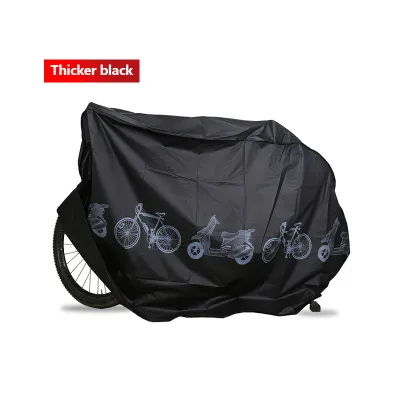
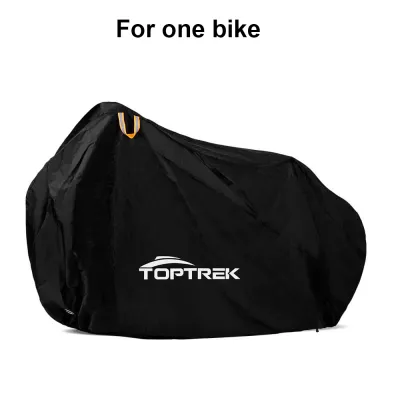
Products mentioned in this guide
![[SG SELLER] High Quality Waterproof and Sun-proof Bicycle Cover With Anti-Theft Lock Holes for Mountain Road Electric Bikes [#1] [#3}](https://img.lazcdn.com/g/p/45f77b91ca518233cc145eb211233472.jpg_400x400q80.jpg_.webp)
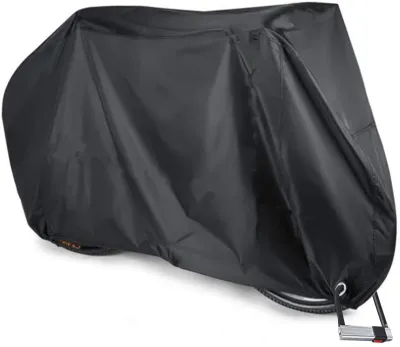
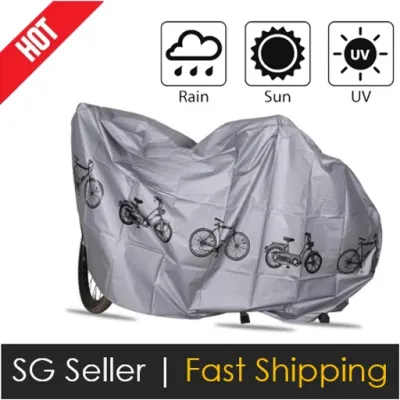
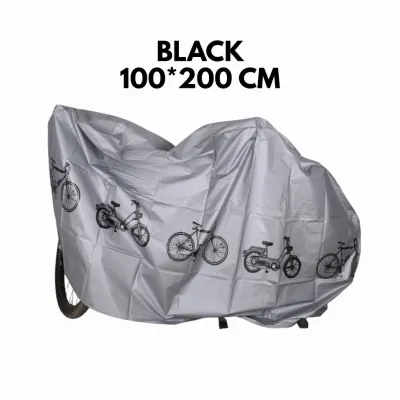
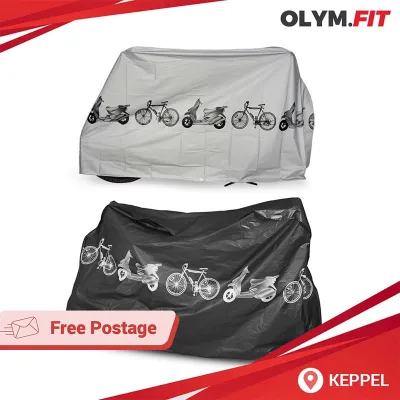
![🇸🇬 [New Product Sale] Bicycle Motorcycle Cover Waterproof Dust-proof UV-Coated Outdoor/Indoor](https://img.lazcdn.com/g/p/932ca76b99150eec512ff323e8168a1b.jpg_400x400q80.jpg_.webp)
Prices are valid at publication and may change. Please refer to the product page for the latest price.

Fabric density is typically measured in Denier (D) or Thread Count (T). A higher Denier rating, such as 210D, 300D, or even 600D, indicates thicker, stronger threads that resist tearing and punctures. For outdoor storage in exposed areas, fabrics with a higher denier rating offer the durability needed to withstand daily wear. Look for materials treated with a Polyurethane (PU) or Polyvinyl Chloride (PVC) backing, which provides the primary barrier against water penetration.
Seam construction is a common failure point where water can seep through. Standard stitching leaves thousands of tiny needle holes that allow water to slowly drip onto your bike during prolonged downpours. To prevent this, look for covers with heat-sealed or taped seams. This manufacturing process applies a waterproof tape over the stitched seams, ensuring a completely watertight seal along every joint.
In Singapore, intense tropical sunshine often alternates rapidly with heavy rain. This constant exposure to ultraviolet (UV) radiation degrades untreated fabrics, causing them to fade, become brittle, and eventually crack. To ensure your cover lasts, verify that the material has a UV-resistant coating or a high Ultraviolet Protection Factor (UPF) rating. A silver-coated inner lining is also a common feature that helps reflect heat and protect both the cover and your bike’s plastic and rubber parts from sun damage.
Avoid relying on generic marketing claims that lack technical specifications. If a product does not specify its material density, coating type, or seam construction, it may only be suitable for light indoor dust protection rather than heavy outdoor rain.
Ventilation and Moisture Management Design
While keeping rain out is crucial, letting moisture escape is equally important. Singapore’s relative humidity regularly exceeds 80%, meaning the air is naturally saturated with water vapor. When the temperature drops slightly after a rainstorm, this airborne moisture condenses on the cold metal surfaces of your bicycle, leading to rapid rust on chains, gears, and brake cables if it cannot escape.
Effective moisture management relies on strategically placed air vents. These vents are typically located near the top or sides of the cover, protected by downward-sloping fabric flaps. This design allows warm, humid air to rise and escape naturally while preventing wind-driven rain from entering. Look for vents lined with fine mesh, which keeps out insects and debris while maintaining airflow.
Ground-level moisture is another major contributor to condensation. Wet concrete, tiles, or soil release water vapor upward as they dry. If a bicycle cover wraps completely around the bottom of the bike and touches the ground, it traps this rising vapor inside, creating a humid greenhouse effect.
To combat this, look for a cover design that provides adequate bottom clearance. The lower hem should hang approximately 5 to 10 centimeters above the ground. This gap allows fresh air to enter from underneath, creating a natural chimney effect that draws damp air up and out through the top vents.
When evaluating ventilation designs, consider the following inspection checklist:
- Vent Placement: Ensure there are at least two vents positioned on opposite sides of the cover to facilitate cross-ventilation.
- Flap Rigidity: Check that the protective flaps over the vents are stiff enough to stay open rather than collapsing flat against the fabric.
- Bottom Hem Style: Avoid fully enclosed, zippered bottom bags for outdoor storage, as they trap moisture. Opt instead for an open-bottom design with secure fastening straps.
Fit, Security, and Wind Resistance
A cover that does not fit properly or secure tightly can easily blow away during a sudden squall, leaving your bicycle completely exposed to the elements. Before purchasing, take accurate measurements of your bicycle’s length, height, and handlebar width. If your bike has accessories such as front baskets, rear racks, child seats, or wide mountain bike handlebars, be sure to factor these into your measurements, as they will require a larger cover size.
To prevent the cover from acting like a sail in strong winds, it must feature robust fastening mechanisms. Elasticized front and rear hems help the cover snuggly hug the contours of your tires. Additionally, adjustable buckle straps that clip underneath the frame are essential for anchoring the cover in place, preventing it from being lifted off by strong updrafts.
Security features are also vital when storing your bike in shared outdoor spaces, such as HDB void decks, condominium bicycle racks, or public transport hubs. Look for covers equipped with reinforced lock holes near the front and rear wheels. These holes, often reinforced with rust-proof metal grommets or heavy-duty fabric loops, allow you to thread a U-lock or cable lock through both the cover and the bike frame. This setup secures your bike and cover simultaneously while keeping your lock off the wet ground.
Visibility is another safety factor to consider. If your bicycle is parked near walkways, driveways, or poorly lit parking areas, choose a cover with reflective strips or bright accent panels. This makes the covered bike easily visible to pedestrians and motorists at night, reducing the risk of accidental collisions.
Maintaining Your Bicycle Cover in Humid Conditions
Regular maintenance is necessary to extend the lifespan of your bicycle cover and ensure it continues to provide reliable protection. Because Singapore’s warm, humid climate is highly conducive to mold and mildew growth, you should perform a quick visual inspection of your cover every few weeks. Look for early signs of dark mold spots, peeling seam tape, or areas where the fabric appears thin or worn.
When cleaning is required, follow the manufacturer’s instructions carefully. Avoid using harsh chemical detergents, bleach, or washing machines, as the vigorous agitation and strong chemicals can strip away the waterproof PU coating and damage the UV-protective layer. Instead, gently scrub the cover using a soft brush or sponge, mild soap, and lukewarm water, then rinse it thoroughly with clean water.
Never fold or store a wet cover in a bag or tight space. If you remove the cover to ride your bike, hang it up to dry completely in a well-ventilated, shaded area first. Similarly, avoid putting a wet cover back onto a damp bicycle; wipe your bike down with a dry cloth before covering it to prevent trapping moisture against the frame.
Over time, even the highest-quality covers will degrade due to constant exposure to sun and rain. If you notice that water is no longer beading on the surface, or if the inner coating begins to flake off, the cover’s protective capabilities are compromised. At this stage, it is best to replace the cover to ensure your bicycle remains fully protected from moisture damage.
Frequently Asked Questions (FAQ)
Can I use a standard tarp or plastic sheet instead of a dedicated bicycle cover?
While a standard plastic tarp is waterproof and inexpensive, it is highly unsuitable for outdoor bicycle storage in a humid climate. Tarps lack built-in air vents, which means they trap rising ground moisture and condensation directly against your bike’s metal components, rapidly accelerating rust. Additionally, tarps are difficult to secure properly, often flapping violently in the wind, which can scratch your bike’s paint or cause the bicycle to tip over.
How often should I remove the cover to check my bike?
You should uncover your bicycle at least once a week to inspect its condition, especially during periods of daily rain. Use this opportunity to check critical areas such as the chain, gear shifters, and brake cables for any signs of moisture buildup or early rust. Wipe down any condensation that may have accumulated, reapply chain lubricant if necessary, and ensure your tires remain properly inflated to keep your bike in optimal riding condition.
Community discussion
Share your experience or ask a question. Comments are reviewed before publication.