
Performing stiff arm exercises at home in a Singapore Housing & Development Board (HDB) flat requires balancing effective resistance with the realities of compact living. Stiff arm movements—such as straight-arm pulldowns, lateral raises, and front raises—rely on long lever arms that demand more physical clearance than traditional bent-arm exercises. To build a functional home setup without cluttering your living area, you need highly adjustable, space-efficient equipment that can be safely anchored or stored away when not in use. Selecting the right gear involves evaluating your current fitness level, understanding the structural limits of your flat, and choosing tools that protect your floors and maintain peace with your neighbors.
Assessing Your HDB Space and Movement Clearance
Before purchasing any fitness gear, you must measure both your available floor area and your vertical clearance. Stiff arm exercises require you to extend your arms fully, which significantly increases your physical footprint during a workout. Stand in your designated exercise zone and extend your arms completely to the sides and overhead to identify your maximum reach. Ensure this active swing zone is entirely clear of walls, furniture, low-hanging light fixtures, and especially ceiling fans, which pose a severe safety hazard during overhead movements.
Vertical clearance is particularly critical in HDB flats, where standard ceiling heights typically range from 2.6 to 2.8 meters. If you plan to perform overhead straight-arm pulldowns, you must ensure that your hands do not strike the ceiling at the peak of the movement. Additionally, you must evaluate the structural integrity of your walls and door frames. Non-permanent equipment, such as door-anchored resistance bands, requires a solid, well-fitted door frame that closes securely in the direction of the resistance pull to prevent accidental opening and injury.
Products mentioned in this guide
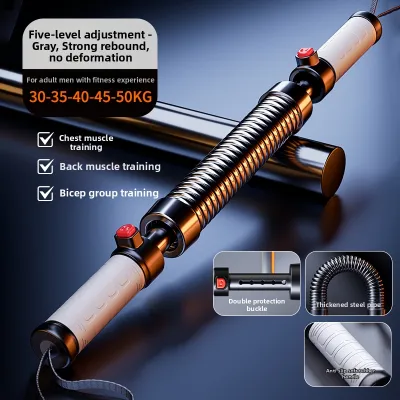
![[SG InStock]Adjustable Arm Trainer Detachable Chest Training Twister Home Workout Equipment Upper Body Strength Training](https://img.lazcdn.com/g/p/27c364f1b12b9c4520778d4f0385ed32.png_400x400q80.png_.webp)
Prices are valid at publication and may change. Please refer to the product page for the latest price.
Core Equipment Options for Stiff Arm Movements
Selecting the right equipment for straight-arm resistance training involves balancing space efficiency, versatility, and how easily you can adjust the resistance. Because stiff arm movements place a high amount of torque on your shoulder joints, you generally require lighter, more precise weight increments than you would for compound movements like squats or chest presses. The three primary options for home use are elastic resistance bands, adjustable dumbbells, and compact cable pulley systems, each offering distinct advantages and trade-offs for a compact flat.

Resistance Bands and Anchor Systems
Elastic resistance bands are highly suited for HDB training because they take up virtually no floor space and can be easily stored in a drawer. For stiff arm pulldowns or chest flies, loop bands or tube bands with handles offer a smooth, progressive resistance curve that matches the natural strength profile of your shoulders. To use them effectively, you will need a reliable door anchor system that distributes the tension evenly across the door frame.
Before every workout, it is essential to inspect your bands for any signs of wear, such as small tears, discoloration, or micro-cracks in the latex. Ensure the door you use is fully latched and, if possible, locked to prevent anyone from opening it from the outside while you are training. If you are using non-permanent wall mounts, verify that they are rated for the dynamic pulling forces of your exercises and are mounted into solid concrete rather than hollow partition walls.
Adjustable Dumbbells and Compact Free Weights
Adjustable dumbbells provide a classic free-weight feel and allow you to perform movements like lateral raises, front raises, and lying pullover extensions. Instead of buying a full rack of fixed dumbbells, a single pair of adjustable dumbbells saves an immense amount of floor space in a small room. When choosing between dial-adjustable and spin-lock mechanisms, consider how quickly you need to change weights and how secure the plates feel when fully extended.
Because stiff arm exercises amplify the weight’s leverage on your joints, plate security is paramount. Always verify that the locking collars or dial mechanisms are fully engaged before lifting the dumbbells over your face or body. Look for handles with textured, non-slip grips that allow you to maintain a firm hold even when your hands are sweaty, reducing the risk of dropping the weights onto your floor.
Compact Cable and Pulley Attachments
Portable cable and pulley kits allow you to simulate commercial gym cable machines by hanging a pulley from a pull-up bar or a secure door frame. These systems provide constant tension throughout the entire range of motion, which is highly beneficial for isolating the latissimus dorsi and shoulder muscles during stiff arm pulldowns. However, you must carefully check the weight capacity limits of both the pulley kit and the support structure you hang it from.
Ensure the cable length is fully adjustable to accommodate your flat’s ceiling height and your own height. A cable that is too long will prevent you from achieving full tension at the start of the movement, while a cable that is too short will limit your range of motion. Always test the setup with a very light load first to ensure the cable glides smoothly through the pulley wheel without binding or slipping off track.
Space Optimization and Storage Solutions
Maintaining a tidy, functional living space in an HDB flat requires smart storage strategies for your fitness gear. Utilize vertical storage solutions, such as wall-mounted pegboards or hanging organizers inside closets, to keep resistance bands, handles, and pulley cables off the floor. Under-bed storage bins are excellent for hiding away adjustable dumbbells and weight plates when they are not in use, keeping your main living areas free of clutter.
Designating a specific, dedicated zone for your workouts helps prevent tripping hazards and keeps your equipment organized. If you use multi-functional furniture, such as an ottoman with built-in storage, you can keep your smaller accessories close at hand without disrupting your home’s decor. By establishing a clear routine of packing away your gear immediately after your session, you ensure that your home gym remains a temporary, unobtrusive addition to your living space.
Safety, Installation, and Floor Protection
Protecting your HDB flat’s flooring and maintaining structural safety are critical components of setting up a home gym. Dropping dumbbells or heavy metal plates can easily crack ceramic tiles or dent vinyl and laminate flooring. To prevent this damage, invest in high-density rubber tiles or interlocking foam mats that are at least 15mm thick to absorb the impact and dampen vibrations.
When it comes to installing permanent equipment, you must strictly adhere to Singapore’s housing guidelines regarding structural modifications. Drilling into structural reinforced concrete walls or pillars is generally restricted or requires specific professional assessment, whereas drilling into non-structural partition walls is permitted but may not support heavy dynamic loads. If you are unsure, opt for non-permanent, tension-based, or free-standing equipment that does not require drilling.
Minimizing noise is also essential for maintaining good relations with your downstairs and adjacent neighbors, especially if you prefer training early in the morning or late at night. Always control the lowering phase of your exercises rather than letting weights drop or snap back under tension. Placing your equipment on top of sound-dampening mats and scheduling your loudest workouts during standard daytime hours will help prevent noise complaints and ensure a peaceful living environment.
Frequently Asked Questions (FAQ)
Can I install a permanent wall-mounted pulley system in my HDB flat?
Installing a permanent wall-mounted system requires careful consideration of your flat’s wall types. Structural walls in HDB flats are made of reinforced concrete and drilling into them is highly restricted to preserve the building’s structural integrity. Partition walls, while easier to drill into, are often made of lightweight concrete panels or drywall, which may not safely support the heavy, dynamic pulling forces of a cable system. It is highly recommended to consult the official housing board guidelines or hire a qualified, licensed contractor to assess your wall type before attempting any permanent installations.
How do I prevent noise complaints from downstairs neighbors during weight training?
To minimize noise transmission through the concrete floor slabs of your HDB flat, always use high-density rubber gym mats to absorb impact and vibration. Focus on controlled, slow eccentric movements during your stiff arm exercises, which prevents weights from clanking together or hitting the floor hard. Avoid dropping dumbbells or letting cable stacks slam shut at the end of a set. Additionally, try to schedule your strength training sessions during considerate hours, typically between 9:00 AM and 9:00 PM, to respect your neighbors’ quiet hours.
Community discussion
Share your experience or ask a question. Comments are reviewed before publication.