
Storing a bicycle outdoors in Singapore presents a unique set of preservation challenges. The combination of intense tropical sunlight, sudden torrential downpours, and relentless year-round humidity can rapidly degrade even high-quality bicycle components. To safeguard your investment, a standard, generic plastic sheet is insufficient; you need a specialized bicycle cover designed specifically to withstand these harsh environmental factors.
A truly effective tropical bicycle cover must balance two opposing functions: keeping external water out while allowing internal moisture to escape. Achieving this requires a precise combination of heavy-duty waterproof fabrics, heat-sealed seams, UV-blocking coatings, and active ventilation features. Understanding these technical specifications allows you to select a cover that preserves your bike’s drivetrain, paint, and electronics over years of outdoor exposure.
Understanding Singapore's Climate Challenges for Outdoor Bike Storage
Singapore’s equatorial climate exposes outdoor-stored bicycles to three primary destructive elements: high-volume rainfall, extreme ultraviolet (UV) radiation, and high relative humidity. During the Northeast and Southwest monsoon seasons, rain falls with intense volume and velocity. Without a robust physical barrier, water easily penetrates basic fabrics, settling into sensitive areas like the bottom bracket, headset, and chain links, initiating rapid chemical oxidation.
Products mentioned in this guide
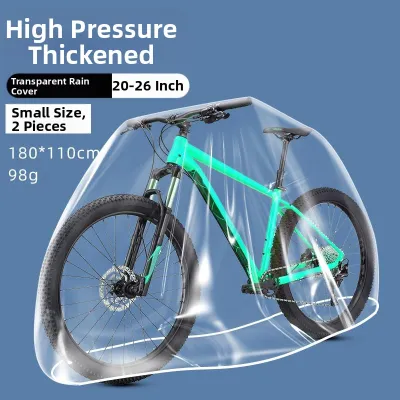
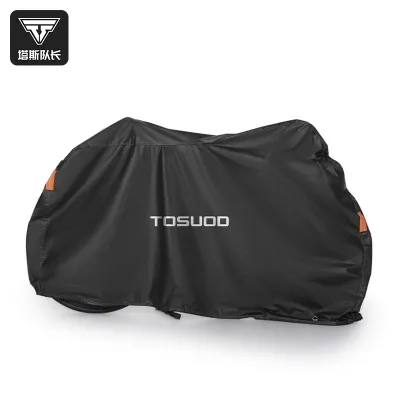
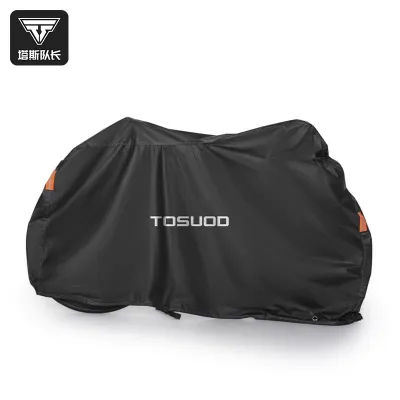
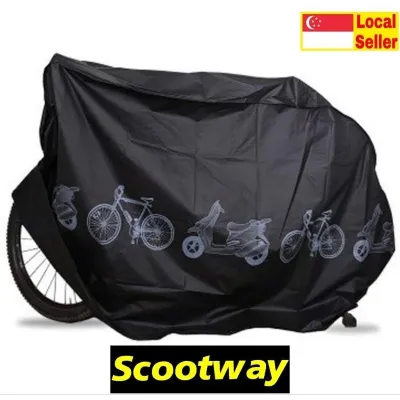
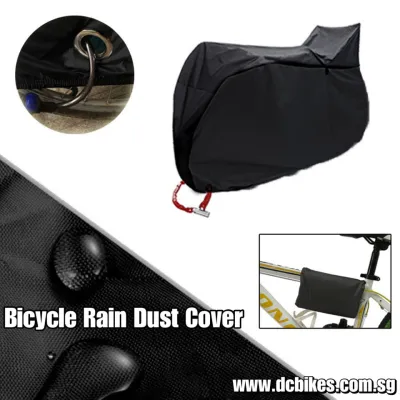
![[✅SG Ready Stock] Waterproof Cover Bike bicycle Motorbike Motorcycle Protective Cover E-scooter Rain Weather Resistant](https://img.lazcdn.com/g/p/1658cdb6891923aca9f5789bdf368231.jpg_400x400q80.jpg_.webp)
Prices are valid at publication and may change. Please refer to the product page for the latest price.
In addition to heavy rain, the year-round UV index in Singapore frequently reaches extreme levels. Unfiltered solar radiation acts as a catalyst for material degradation, breaking down the chemical bonds in plastics, paint finishes, and rubber components. Over time, this exposure causes paint to fade, plastic levers to become brittle, and tire sidewalls to crack, compromising both the aesthetics and structural integrity of the bicycle.
The third, and often most overlooked, challenge is the consistently high humidity, which regularly hovers between 80% and 100%. When ambient temperatures drop slightly during the night, the moisture-laden air undergoes condensation. If a bicycle is sealed under a non-breathable cover, this moisture becomes trapped inside, creating a humid greenhouse effect that accelerates rust on steel bolts, brake cables, and chains, while encouraging mold growth on saddles and handlebar grips.
Key Material Features for Rain and UV Protection
Selecting the right material is the foundation of long-term bicycle protection. The base fabric and its chemical treatments dictate how well the cover defends against water ingress and solar degradation.

Waterproofing and Seam Construction
When evaluating a bicycle cover, the base fabric density is typically measured in Denier (D), which indicates the thickness of the individual threads. For outdoor storage along Singapore’s Park Connector Network (PCN) access points or open void decks, look for heavy-duty polyester or Oxford cloth with a minimum rating of 150D, though 210D to 300D offers significantly better resistance against tearing from sharp brake levers or pedals.
The waterproof capability of these fabrics relies heavily on an internal coating, typically made of polyurethane (PU). This coating forms an impermeable barrier that prevents water droplets from passing through the weave of the fabric. When browsing product listings on online marketplaces, verify that the manufacturer specifies a PU coating rather than a simple water-resistant finish, which will quickly saturate and leak during a heavy monsoon downpour.
However, even the most waterproof fabric will fail if the seams are poorly constructed. Standard sewing processes pierce the fabric with needles, leaving thousands of microscopic holes that act as pathways for water under pressure. To prevent this, high-quality covers feature taped or heat-sealed seams, where a specialized waterproof tape is thermally applied over the stitched seams on the inside of the cover, effectively sealing the needle holes against water penetration.
To ensure absolute protection, look for an explicit hydrostatic head rating on the product label. This rating, measured in millimeters (such as 1500mm or 2000mm), indicates the depth of a water column the fabric can support before water begins to seep through. For Singapore’s intense downpours, a rating of at least 2000mm is highly recommended to withstand the physical impact of wind-driven rain.
UV-Resistant Coatings and Fabric Types
Prolonged exposure to Singapore’s intense sunlight will quickly degrade standard, untreated fabrics, causing them to become brittle, fade, and tear under minor stress. To counter this, look for covers constructed from UV-treated polyester or those featuring specialized reflective coatings.
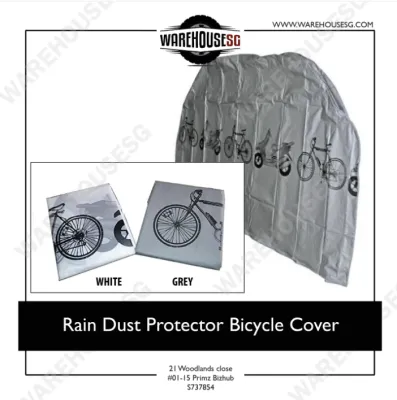
A highly effective design choice is a cover with a reflective silver inner or outer lining, often achieved through a specialized aluminum or silver polyurethane coating. This reflective surface serves a dual purpose: it bounces harmful UV rays away from the fabric, preventing solar degradation of the cover itself, and it reflects infrared radiation, reducing heat buildup underneath the cover to protect sensitive rubber tires and plastic components from warping.
When verifying UV protection, check the manufacturer’s specifications for an Ultraviolet Protection Factor (UPF) rating. A rating of UPF 50+ is ideal, as it blocks approximately 98% of harmful UV radiation from reaching the bicycle. Without this level of protection, the cover itself will degrade rapidly, often lasting only a few months before tearing under its own weight.
It is also wise to consider the color of the cover. While dark-colored covers are popular for their ability to hide dirt, they absorb a significant amount of solar heat when placed in direct sunlight. This elevated internal temperature can accelerate the degradation of synthetic lubricants, rubber tubes, and electronic components on modern e-bikes, making reflective silver or lighter-colored materials a much safer choice for unshaded outdoor storage.
Design Elements for High Humidity and Strong Winds
While material quality prevents direct rain and sun damage, the physical design of the cover determines how well it manages internal moisture and remains anchored during sudden tropical storms.
Ventilation to Prevent Mold and Rust
The primary failure point of cheap, completely sealed bicycle covers in tropical climates is the accumulation of trapped condensation. As the temperature drops overnight, the moisture in the air condenses onto the cold metal surfaces of the bicycle. If there is no path for this moisture to escape, the bicycle remains constantly damp, leading to rapid rust formation on the chain, cassette, and cables.
To prevent this, look for covers equipped with built-in ventilation vents. These vents are typically designed as mesh-lined openings positioned high up on the cover, where warm, moist air naturally rises. They must be shielded by protective fabric hoods or flaps that allow air to circulate freely via convection while physically blocking rain from entering, even during angled, wind-driven downpours.
For optimal performance, these vents should be located on opposing sides of the cover to facilitate a cross-breeze, which actively pulls humid air out of the enclosure. When deploying the cover, ensure that these vents are not pressed flat against a wall, fence, or the bicycle’s frame, as obstructing the airflow will negate the benefits of the ventilation system.
Secure Fit and Windproof Fastenings
Sudden tropical squalls can easily lift and blow away unsecured covers, leaving your bicycle fully exposed to the elements. A loose, flapping cover also acts like a sail, catching the wind and potentially tipping the bicycle over, which can damage the derailleur, handlebars, or frame.
To combat high winds, a cover must feature elasticized hems at both the front and rear bottom edges. These elastic bands pull the fabric tight around the lower curve of the front and rear wheels, creating a snug fit that prevents wind from getting underneath the cover and lifting it off the bike.
In addition to elastic hems, adjustable windproof straps are essential for securing the cover. These straps, typically equipped with heavy-duty plastic click-release buckles, should pass underneath the bicycle frame or through the spokes of the wheels. By tightening these straps, you anchor the cover firmly to the bicycle, ensuring it remains in place even during severe thunderstorms.
Finally, look for reinforced lock grommets or lock holes, usually located near the front wheel area. These holes, reinforced with metal brass eyelets or heavy-duty double-stitched fabric, allow you to pass a standard U-lock, chain lock, or cable lock through both the cover and the bicycle wheel. This design serves a dual purpose: it secures your bicycle against theft while simultaneously providing an unbreakable anchor point that keeps the cover firmly attached to the bike during high-wind events.
How to Verify Claims and Choose the Right Size
Navigating online listings on ecommerce platforms requires a critical eye, as many generic covers use misleading marketing terms like “100% waterproof” without providing the technical specifications to back up those claims.
To verify these claims, always cross-reference the product description with the technical specifications. Look for explicit mentions of “taped seams,” “PU coating,” “denier count,” and “UV protection rating.” Additionally, read customer reviews specifically from buyers in tropical regions, searching for feedback regarding how the cover performs during heavy monsoons or whether it degrades after a few months of intense sun exposure.
Selecting the correct size is equally critical for ensuring long-term protection. A cover that is too tight will put excessive tension on the seams, leading to premature tearing at high-stress points like the handlebars and rear rack. Conversely, a cover that is too loose will sag, allowing rainwater to pool in the excess fabric, which stretches the material and eventually forces water through the waterproof barrier.
To find the perfect fit, measure your bicycle carefully before purchasing, using the following steps:
- Length: Measure from the outermost edge of the front tire to the outermost edge of the rear tire.
- Width: Measure the widest part of your bicycle, which is typically the handlebars. If you have wide mountain bike bars, end-bar mirrors, or side panniers, include these in your measurement.
- Height: Measure from the ground to the highest point of the bicycle, which is usually the top of the handlebars, brake levers, or a rear-mounted child seat.
When comparing your measurements to the manufacturer’s sizing chart, select a cover that offers a margin of 5 to 10 centimeters of extra clearance in both length and height. This extra space allows for easy installation and removal without dragging the fabric against greasy chains or sharp pedals, while still maintaining a snug, wind-resistant profile when the straps are tightened.
As a final step before completing your purchase, review the seller’s return policy. Since bicycle geometries vary wildly between road bikes, mountain bikes, commuter bikes with front baskets, and bulky e-bikes, having the option to exchange the cover for a different size ensures you do not get stuck with an ill-fitting product that cannot provide adequate protection.
Maintenance and Care for Prolonged Cover Lifespan
Even the highest-quality bicycle cover will suffer premature failure if it is neglected. Proper maintenance is essential to preserve the integrity of the waterproof coatings and UV-resistant treatments in Singapore’s harsh climate.
To clean your bicycle cover, never place it in a washing machine or tumble dryer, as the mechanical agitation and heat will strip away the internal PU coating and damage the taped seams. Instead, spread the cover flat on a clean surface and gently wipe away dirt, dust, and bird droppings using a soft sponge, lukewarm water, and a mild, non-detergent soap. Avoid using harsh chemical cleaners, bleach, or stiff abrasive brushes, which can degrade the protective coatings.
The most critical step in maintaining your cover is ensuring it dries completely before storage. If you fold and pack away a damp cover, trapped moisture will encourage the growth of mildew and mold, which rot the fabric and create unpleasant odors. Furthermore, prolonged exposure to trapped moisture can cause polyurethane hydrolysis, a chemical reaction that makes the waterproof coating sticky, cracked, and ineffective. Always hang the cover to dry completely in a shaded, well-ventilated outdoor area away from direct sunlight.
Finally, conduct periodic visual inspections of your cover every few months. Check the interior for signs of peeling, flaking, or a powdery white residue, which indicate that the PU coating is breaking down. Inspect the seams to ensure the waterproof tape is still firmly adhered, and check high-stress areas around the handlebars and wheels for signs of fabric thinning or tearing. Catching these issues early allows you to patch minor tears or plan for a replacement before water leaks through and damages your bicycle.
Community discussion
Share your experience or ask a question. Comments are reviewed before publication.