
To get the most out of your water dumbbells while protecting your joints and maximizing grip security, the right combination of gym accessories is essential. While water-filled weights offer a highly portable and adjustable training option, their unique shifting mass and often smooth plastic handles present distinct challenges for your wrists, hands, and core. Pairing them with targeted accessories like wrist wraps, weightlifting belts, or specialized lifting grips can significantly improve your control and safety, provided you select and use this gear based on your specific workout intensity and physical needs.
Assessing Your Workout Needs Before Choosing Accessories
Before purchasing or wearing any supportive gym gear, it is crucial to evaluate your specific training style, the load you are lifting, and your physical condition. Water dumbbells are highly versatile, but a high-repetition endurance circuit requires a completely different approach to accessories than a heavy-load strength routine. Over-equipping for light cardiovascular training can restrict natural movement and limit the development of stabilizing muscles, while under-equipping during heavy compound movements may expose your joints to unnecessary strain.
Start by assessing your personal joint history, particularly in your wrists and lower back. If you have a history of discomfort or instability in these areas, targeted support can help you maintain proper form as you fatigue. Next, inspect your water dumbbells. Check the manufacturer’s specified maximum weight capacity, the handle diameter, and the grip texture. Water-filled weights often feature thicker handles than standard iron dumbbells to accommodate the water chamber, and their smooth plastic or vinyl surfaces can become slippery when wet or sweaty. Understanding these physical characteristics helps you determine whether you need grip assistance, joint stabilization, or core support.
Products mentioned in this guide
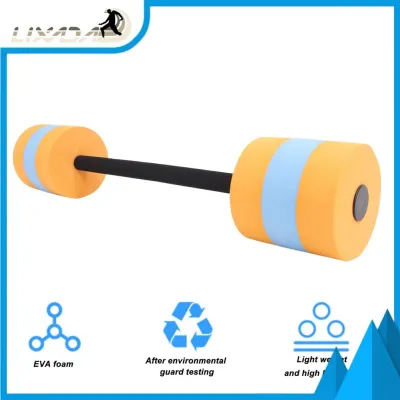
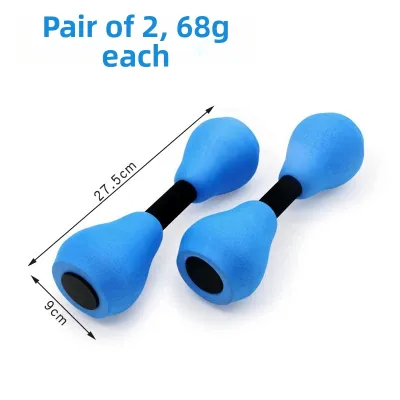
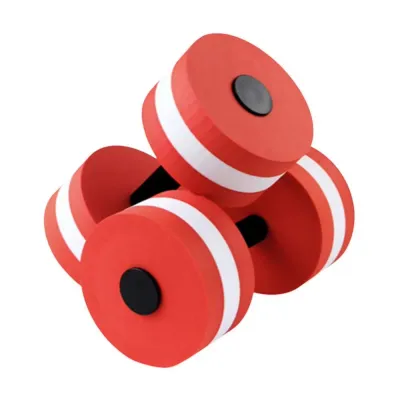
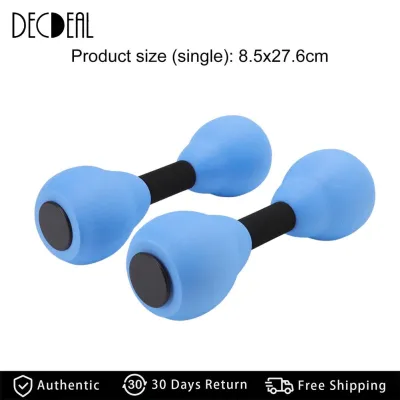
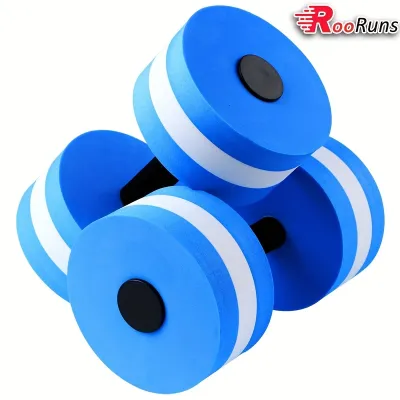
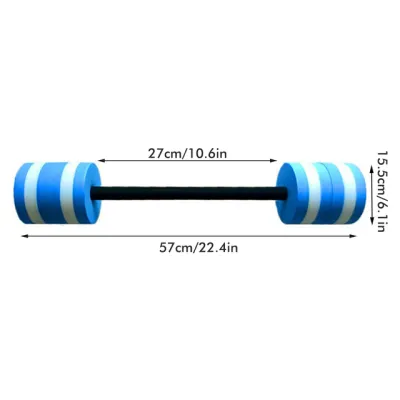
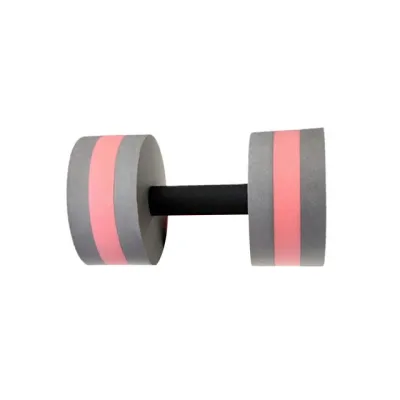
Prices are valid at publication and may change. Please refer to the product page for the latest price.
Wrist Wraps: Stabilizing Joints During Pressing Movements
Wrist wraps are designed to provide structural support to the wrist joint, helping you maintain a neutral alignment and preventing the joint from hyperextending backward under load. When training with water dumbbells, the water inside the chambers can shift during movement, creating dynamic instability. This shifting mass requires your wrist stabilizers to work harder, making wraps highly beneficial during pressing exercises.

This accessory is particularly useful for overhead presses, chest presses, and any movement where the weight is positioned directly above the hand. To apply wrist wraps correctly, position the wrap so that it covers the wrist joint itself, rather than sitting entirely below it on the forearm. Wrap with overlapping tension that feels secure but comfortable, ensuring you do not restrict blood circulation or cause your fingers to tingle. The wrap should act as a rigid physical boundary that prevents the wrist from bending too far backward, keeping the forearm and hand aligned.
However, it is important to avoid using wrist wraps for every exercise. For light isolation movements, such as lateral raises or bicep curls, or during your initial warm-up sets, training without wraps is generally preferred. This allows your forearm muscles and wrist stabilizers to engage fully, promoting natural grip strength development and joint mobility over time.
Weightlifting Belts: Managing Core Pressure for Heavy Compound Lifts
A weightlifting belt is a specialized tool used to increase intra-abdominal pressure, which stabilizes the spine and supports the lower back during heavy, compound movements. While water dumbbells are often associated with lighter home workouts, fully filled large-capacity models can provide substantial resistance. When performing spine-loading exercises like heavy goblet squats, Romanian deadlifts, or bent-over rows, a belt can be a valuable addition to your setup.
To use a weightlifting belt effectively, you must understand that it does not act as a passive brace to hold your back in place. Instead, it serves as a rigid wall for your core muscles to push against. Before starting a lift, take a deep breath into your abdomen, expanding your stomach outward against the belt, and brace your core as if you are about to take a blow. This action creates the internal pressure necessary to support your lumbar spine under load.
Keep in mind that a belt is not a substitute for proper lifting mechanics. If your form breaks down under the weight of the water dumbbells, a belt will not prevent injury. Furthermore, for high-repetition home cardio circuits or lighter upper-body movements, a belt is generally unnecessary and can restrict your breathing. Reserve the belt for your heaviest working sets where spine stabilization is a primary concern.
Gloves and Lifting Grips: Balancing Handle Security and Skin Protection
The material and texture of water dumbbell handles play a major role in how secure they feel in your hands. Many water-filled models are constructed from smooth plastic, PVC, or neoprene, which can quickly become slick as your hands sweat during a workout. Gym gloves or lifting grips can help manage this moisture and prevent the weights from slipping out of your hands.
When deciding between gloves and lifting grips, consider the trade-offs of each. Thick, heavily padded gym gloves protect your skin from friction and calluses, but they also increase the effective diameter of the handle. Because water dumbbells already tend to have thicker handles than traditional metal weights, adding a thick glove can make it difficult to wrap your fingers completely around the grip, potentially increasing hand fatigue. Minimalist lifting grips or thin, textured gloves offer a practical alternative, providing slip resistance without adding excessive bulk to the handle.
If your water dumbbells feature textured rubber handles that already offer excellent traction, you may prefer bare-hand training. This approach maximizes sensory feedback from your hands, allowing you to adjust your grip dynamically as the water shifts inside the dumbbell. If you choose to train bare-handed, keeping a small gym towel nearby to wipe down the handles between sets is an easy way to maintain a secure hold.
Incompatible Combinations and Accessories to Avoid
While combining accessories can enhance your workout, certain pairings can compromise your safety and control. For example, you should avoid using lifting straps—which loop around the wrist and bind your hand to the handle—during pressing movements. If you experience muscle failure or lose balance during an overhead press, lifting straps can prevent you from safely dropping or releasing the water dumbbells, increasing the risk of injury to your shoulders or face.
Additionally, avoid combining highly restrictive, stiff wrist wraps with tight, thick gloves. This combination can severely limit hand mobility, restrict blood flow, and make it difficult to maintain a natural grip on the dumbbell handle. Your hands and fingers need to remain responsive to the shifting weight of the water inside the dumbbells.
Always prioritize your physical feedback over any accessory. If you experience numbness, tingling, sharp pain, or a loss of sensation in your hands or fingers while using any gear, stop your workout immediately. Remove the accessory and check for proper fit, tension, or compatibility before resuming your routine.
Structuring Your Workout: When to Apply and Remove Gear
Integrating gym accessories into your water dumbbell routine should follow a structured progression to ensure you build natural strength while utilizing support when it matters most. During your warm-up phase, perform your exercises bare-handed and without any wraps or belts. Use lighter water volumes or fewer repetitions to assess your joint mobility, check your grip readiness, and warm up your muscles naturally.
As you transition to your primary working sets—where the water dumbbells are filled to their maximum capacity or the movements become more technically demanding—apply your wrist wraps or weightlifting belt. This targeted application ensures you have maximum support when the physical demands on your joints and core are at their highest, without becoming overly dependent on the gear for simpler movements.
Once your heavy working sets are complete, remove all restrictive accessories immediately. This allows your circulation to return to normal and gives you an opportunity to perform basic mobility checks. Transitioning back to bare hands for your cool-down or core-focused exercises helps restore natural movement patterns and ensures your body recovers effectively from the session.
Frequently Asked Questions (FAQ)
Do I need a weightlifting belt for all water dumbbell exercises?
No, you do not need a weightlifting belt for all water dumbbell exercises. Belts are specifically designed to assist with intra-abdominal pressure during heavy, spine-loading compound movements like squats or deadlifts. For lighter, high-repetition home circuits, upper-body isolation movements, or cardiovascular conditioning, a belt is unnecessary and can restrict your natural breathing patterns.
Can I use standard gym gloves with adjustable water-filled dumbbells?
Yes, you can use standard gym gloves, but you must check the thickness of both the glove and the dumbbell handle. Because water-filled dumbbells often have thicker handles to accommodate their design, wearing thick, heavily padded gloves can make the handle difficult to grip securely. Opt for thin, textured gloves or minimalist lifting grips to improve traction without excessively increasing the grip diameter.
How tight should wrist wraps be when doing overhead presses?
Wrist wraps should be tight enough to prevent your wrist from hyperextending backward under the weight, but not so tight that they restrict blood circulation or cause numbness in your fingers. You should feel a firm, supportive binding around the wrist joint itself. If you experience tingling, coldness, or a loss of grip strength, loosen the wraps immediately to restore proper blood flow.
Community discussion
Share your experience or ask a question. Comments are reviewed before publication.