
Sitting on a hard wooden or fiberglass bench for hours while executing high-intensity rotational strokes is one of the most physically demanding aspects of dragon boating. The constant friction, impact, and pressure on your sit bones can quickly lead to soreness, bruising, and skin chafing, which ultimately degrades your paddling form and reduces your power output. A high-quality dragon boat seat pad is not a luxury; it is a vital piece of performance gear that protects your body and helps you maintain an efficient, powerful stroke.
Choosing the right seat pad requires balancing comfort against stability and water resistance. The three primary materials used in these pads—Ethylene-Vinyl Acetate (EVA) foam, gel, and inflatable bladders—each offer distinct advantages and trade-offs. Finding the perfect match depends on your body type, your paddling style, and the specific conditions of your training sessions and races.
Quick Answer: Match the Material to Your Paddling Conditions
Selecting the ideal seat pad material comes down to identifying your primary challenge on the water, whether that is tailbone pain, loss of stability during high-cadence starts, or the logistics of traveling to international regattas.
Products mentioned in this guide
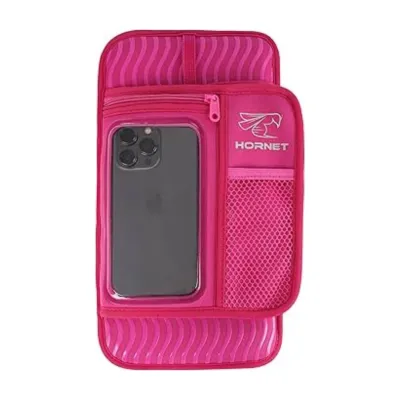
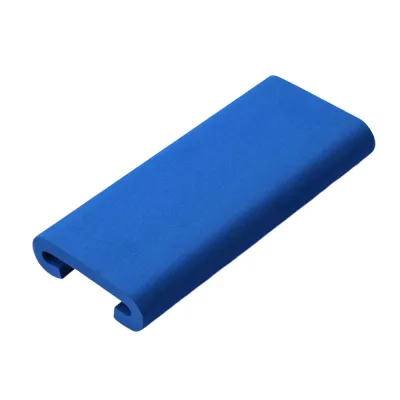
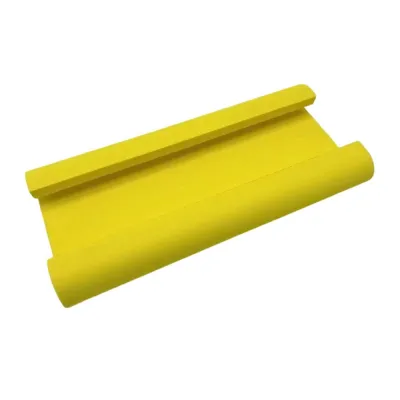
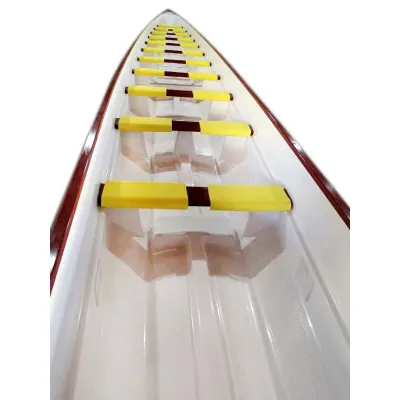
![[SG 🚚] Dragon Boat Seat Lightweight Thick Cushion Dragon Boat Premium Shockproof Durable Non-slip Rowing Seat Pad Competition](https://img.lazcdn.com/g/p/682af89435ed5b75e7bba965c8aee3da.jpg_400x400q80.jpg_.webp)
Prices are valid at publication and may change. Please refer to the product page for the latest price.
Choose EVA Foam if:
- You prioritize lightweight gear that is easy to carry to the boathouse.
- You want maximum stability and a firm, non-slip base for powerful rotational strokes.
- You need a pad that dries almost instantly and will not absorb water during wet, splash-heavy sessions.
Choose Gel if:
- You participate in long-distance endurance paddling or multi-day festivals.
- You require deep pressure relief for sensitive sit bones, hips, or your tailbone.
- You do not mind carrying a heavier pad in exchange for premium shock absorption.
Choose Inflatable if:
- You want the ability to micro-adjust the firmness of your seat to match different bench designs.
- You travel frequently for overseas races and need a pad that packs down to a highly compact size.
- You prefer a customizable air cushion that can be inflated or deflated on the fly.
No single material is universally superior for every paddler. A competitive racer sprinting in a high-cadence 200-meter race has vastly different requirements than an endurance paddler completing a 20-kilometer charity cruise. Understanding the physical trade-offs of each material will help you make an informed decision that keeps you paddling comfortably and efficiently.
Key Comparison Dimensions for Dragon Boat Seat Pads
To evaluate which seat pad material suits your needs, you must analyze how they perform across three critical dimensions: cushioning, stability, and environmental durability. Each of these factors directly influences your comfort, safety, and athletic performance on the water.

Cushioning and Comfort Over Long Distances
During a repetitive paddling motion, your ischial tuberosities (sit bones) bear the brunt of your body weight against an unyielding bench. Over a multi-hour training session along the Kallang River or Marina Reservoir, this concentrated pressure can restrict blood flow, causing numbness and deep muscle fatigue.
EVA foam provides a firm, reliable barrier that prevents your bones from bottoming out against the hard bench. Because it is a solid, semi-rigid material, it offers consistent, predictable support. However, thinner EVA pads may not offer enough deep compression relief for paddlers who are highly sensitive to hard surfaces or those with minimal natural cushioning.
Gel pads excel at deep pressure distribution. The semi-liquid nature of gel allows it to contour precisely to your anatomy, distributing your weight across a much larger surface area. This eliminates localized pressure hot spots and cushions your tailbone against the jarring vertical impacts of the boat riding over choppy water or wake.
Inflatable pads use pressurized air to suspend your body above the bench. By adjusting the volume of air inside the bladder, you can customize the firmness to your exact preference. While this offers excellent versatility, inflatable pads can sometimes lack consistent pressure distribution; if under-inflated, you may bottom out during aggressive movements, and if over-inflated, the pad can balloon, creating a rounded, uncomfortable seating surface.
Stability and Power Transfer on the Water
An effective dragon boat stroke relies on a powerful leg drive and deep torso rotation. To transfer this energy from your core to the paddle blade and into the water, you need a highly stable connection to the boat. Any shifting, sliding, or excessive squishiness beneath your hips will absorb kinetic energy, reducing your overall stroke efficiency.
EVA foam is the gold standard for stability. Because it has a low compression rate and does not shear or shift laterally, it provides a solid, predictable platform. When you rotate your hips to reach for the catch, the foam supports your movement without compressing sideways, ensuring that 100% of your rotational force is directed into your stroke.
Gel pads, while highly comfortable, introduce a minor trade-off in stability. The gel material is designed to move and shift to absorb impact, which can create a slight “shearing” sensation during high-intensity racing. This subtle lateral movement can make some competitive paddlers feel slightly disconnected from the boat, particularly during the explosive start phase of a race.
Inflatable pads present the greatest challenge for stability. Because air shifts dynamically within the bladder as you move, an inflatable pad can create a rolling or bouncy sensation. This instability forces your deep stabilizing core muscles to work much harder to keep your balance on the narrow bench, which can lead to premature core fatigue and disrupt your paddling rhythm during high-cadence stroke phases.
Durability, Water Resistance, and Heat Management
Dragon boat gear must withstand a harsh marine environment characterized by constant water splashes, high humidity, intense tropical UV exposure, and abrasive salt or river silt.
EVA foam features a closed-cell structure, meaning the individual microscopic air pockets are completely sealed. This makes the material naturally waterproof and buoyant; it will not absorb water, it dries instantly with a quick towel wipe, and it will float if it accidentally falls overboard. While highly durable, low-grade EVA foam can degrade and become brittle if left exposed to direct, intense sunlight for extended periods.
Gel pads are typically housed inside a protective cover, often made of neoprene, polyester, or nylon, to prevent the sticky gel from contacting your skin. This fabric cover can trap water, meaning the pad remains wet long after your session has ended. In Singapore’s humid climate, a damp fabric cover can quickly develop mold, mildew, and unpleasant odors if not thoroughly washed and dried after every use. Additionally, gel can retain ambient heat; a dark gel pad left in the midday sun can become uncomfortably hot to sit on.
Inflatable pads are constructed from durable plastics like TPU (Thermoplastic Polyurethane) or PVC. While entirely waterproof and easy to wipe dry, they are inherently vulnerable to punctures. Older wooden dragon boats can have splinters, exposed screw heads, or rough fiberglass patches that can easily puncture a pressurized air bladder. Furthermore, the air inside an inflatable pad expands when exposed to high heat; leaving a fully inflated pad under the direct tropical sun can stress the seams, potentially leading to slow leaks or structural failure.
Deep Dive: EVA Foam, Gel, and Inflatable Pads
To help you choose the right gear, let us look closely at the specific material characteristics, ideal user profiles, and practical limitations of each seat pad type.
EVA Foam: The Lightweight and Stable Standard
Ethylene-Vinyl Acetate (EVA) is a highly durable copolymer foam known for its excellent shock-absorbing properties and structural resilience. It is the most common material used by competitive dragon boaters worldwide due to its balance of performance and practicality.
Because EVA is incredibly lightweight—often weighing less than 150 grams—it adds virtually no weight to your gear bag. This is a significant advantage for paddlers who commute to practice via public transport or have to carry multiple paddles and personal flotation devices (PFDs) to the dock. Its closed-cell nature ensures that it remains completely impervious to water, maintaining its lightweight properties even during torrential downpours or splash-heavy sessions in the engine room of the boat.
However, EVA foam is not without its drawbacks. Over months of rigorous training, the foam cells can gradually collapse under constant pressure, a process known as “packing out.” Once the foam loses its rebound, the pad becomes noticeably thinner and offers significantly less cushioning. Additionally, because EVA is a firmer material, paddlers who suffer from severe tailbone sensitivity or sciatica may find that it does not provide enough targeted relief during long, steady-state endurance pieces.
- Best For: Competitive racers, sprinters, and paddlers who prioritize maximum stroke efficiency, stability, and low-maintenance gear.
- Price Range: Typically budget-friendly to mid-range, costing between S$15 and S$35.
Gel Pads: Maximum Shock Absorption for Joint Relief
Gel seat pads utilize specialized polyurethane or silicone elastomers that mimic the physical properties of human fat tissue. This allows the pad to deform dynamically under load, absorbing both vertical impacts and horizontal shear forces.
For paddlers who experience chronic lower back pain, hip discomfort, or tailbone bruising, a gel pad can be a game-changer. By distributing your body weight evenly across the seat, it reduces the pressure spikes on your sit bones, allowing you to maintain proper spinal alignment and posture throughout your session. This targeted joint relief can prevent the onset of numbness, allowing you to focus entirely on your technique rather than your physical discomfort.
On the downside, gel is a dense, heavy material. A standard gel pad can easily weigh between 500 grams and over a kilogram, making it the heaviest option by far. If you are traveling light or trying to minimize the weight of your race-day gear, this extra bulk can be a nuisance. Furthermore, if the protective outer cover is punctured or torn, the internal gel can leak, rendering the pad unusable and potentially staining your clothing or the boat’s interior.
- Best For: Paddlers with pre-existing back or hip injuries, masters-category athletes, and endurance paddlers participating in long-distance events.
- Price Range: Mid-range to premium, typically retailing between S$30 and S$60.
Inflatable Pads: Adjustable Firmness and Portability
Inflatable seat pads feature an airtight internal bladder, usually made of TPU, encased in a protective fabric sleeve. They rely on a manual valve that allows you to inflate the pad using your breath or a small hand pump.
The primary benefit of an inflatable pad is its unmatched portability. When deflated, these pads can be rolled or folded flat, taking up no more space than a folded t-shirt. This makes them the ultimate choice for international sports tourists and competitive paddlers who regularly fly to overseas regattas and need to pack their gear into compact travel bags.
Additionally, the ability to adjust the air pressure means you can adapt the pad to any boat you step into. If you find yourself in a boat with unusually low benches, you can inflate the pad slightly more to achieve your desired seating height. Conversely, if the bench is already high, you can let air out to lower your center of gravity.
However, the air cushion creates a distinct “floating” sensation that can feel highly unstable to novice paddlers. Because the air moves freely inside the bladder, your hips can tilt unexpectedly during the recovery phase of the stroke, making it difficult to maintain a consistent, balanced posture. They also require constant vigilance; a single microscopic puncture from a splinter or a sharp zipper in your gear bag can render the pad completely flat mid-session.
- Best For: Traveling paddlers, international competitors, and those who want highly customizable seating height and firmness.
- Price Range: Mid-range to premium, usually priced between S$25 and S$50.
Verifying Fit and Bench Compatibility
Before purchasing a dragon boat seat pad, you must verify that it complies with both the physical dimensions of your boat and the official regulations of your paddling association.
First, measure the width of the benches in the specific boats your team uses. Standard dragon boats (such as Champion or Peisheng models) have narrow benches designed to seat two paddlers side-by-side. If your seat pad is too wide, it will overlap onto your bench partner’s side, causing physical interference, throwing off their seating alignment, and potentially leading to friction or arguments during intense pieces. A standard dragon boat seat pad should measure approximately 28 to 32 centimeters in length and 15 to 18 centimeters in width.
Second, pay close attention to the pad’s non-slip mechanism. A wet fiberglass or varnished wooden bench is incredibly slick. If your pad does not have a reliable grip system, it will slide backward during the aggressive catch phase of your stroke, forcing you to constantly readjust your position. Look for pads that feature heavy-duty silicone grip patterns on the underside, high-friction neoprene backings, or integrated straps that wrap securely around the bench. Avoid using loose towel pieces or basic foam sheets that have no built-in grip, as these pose a safety hazard and can cause you to lose your balance and slip off the bench.
Finally, if you plan to compete in sanctioned races, check the official rules of the governing body, such as the International Dragon Boat Federation (IDBF) or the Singapore Dragon Boat Association (SDBA). Many competitive federations enforce strict rules regarding seat pad thickness to ensure fair play. Typically, pads are restricted to a maximum thickness of 15 millimeters (1.5 centimeters). Using a pad that is thicker than the allowed limit can raise your center of gravity too high, giving you an unfair leverage advantage over other paddlers and potentially making the boat feel more unstable or “tippy.” Always check the race prospectus before showing up to the starting line with a thick gel or fully inflated air pad.
Frequently Asked Questions (FAQ)
Can I use a standard kayak or SUP seat pad for dragon boating?
While kayak or stand-up paddleboard (SUP) pads provide basic cushioning, they are generally not suitable for dragon boating. Kayak seats are often heavily contoured, feature high backrests, or are designed to fit into a molded plastic cockpit, which restricts the rapid, aggressive rotational torso movement required in a dragon boat. SUP pads are typically designed for standing grip rather than seated comfort. For proper dragon boating ergonomics and safety, you should use a flat, low-profile pad specifically designed for narrow bench seating.
How do I clean and maintain my seat pad after water exposure?
To prolong the life of your seat pad, rinse it thoroughly with clean, fresh water after every training session, especially if you have been paddling in salty or brackish water. Fresh water removes salt crystals, river silt, and chlorine, which can degrade foam and fabric over time.
After rinsing, allow the pad to air-dry completely in a shaded, well-ventilated area before storing it in your gear bag. Avoid leaving your seat pad in direct, prolonged sunlight, as intense UV rays can break down EVA foam, melt the adhesives holding gel covers together, and cause the air inside inflatable bladders to expand and pop the seams. Never use harsh chemical detergents or bleach; a mild soap is all that is needed to keep your pad clean and odor-free.
Community discussion
Share your experience or ask a question. Comments are reviewed before publication.