
Selecting the right taekwondo protective gear for your knees, ankles, and head requires looking beyond brand names to evaluate specific safety certifications, material densities, and structural designs. The most reliable protection comes from brands that secure official World Taekwondo (WT) approval, utilize multi-layered shock-absorbing foams, and offer ergonomic fits that do not restrict your movement during high kicks. By focusing on these verifiable quality indicators, you can find gear that minimizes impact forces and keeps you safe on the mats.
Whether you are a beginner learning basic forms or an advanced competitor preparing for full-contact sparring, your protective gear serves as the primary barrier between your body and high-velocity impacts. Investing in high-quality gear not only reduces the risk of acute injuries like contusions and sprains but also protects your joints from the cumulative wear and tear of repetitive training. By understanding what makes a brand’s protective gear effective, you can make an informed purchase that supports your athletic longevity.
Decoding Taekwondo Protection Standards and Certifications
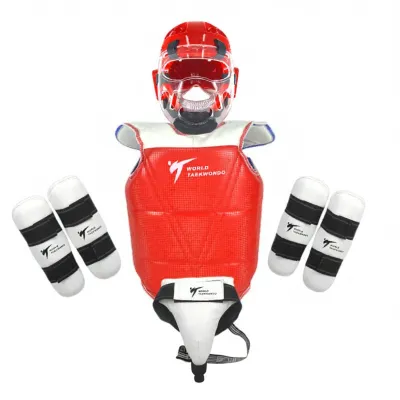
World Taekwondo (WT) approval is the primary safety benchmark for any practitioner looking to invest in protective gear. When a brand carries the WT-approved mark, it signifies that the equipment has undergone rigorous laboratory testing to measure its shock absorption, durability, and coverage area. These tests utilize advanced drop-test machinery and impact sensors to ensure that the padding can sufficiently dampen high-velocity forces, protecting both the attacker and the defender from severe injury during active sparring.
Products mentioned in this guide
Prices are valid at publication and may change. Please refer to the product page for the latest price.
Understanding the difference between competition-grade and general training gear is essential for making an informed purchase. Competition-grade gear is designed to meet strict weight, thickness, and color limitations set by governing bodies to ensure fair play and standardized protection. In contrast, general training gear often features thicker padding, additional reinforcement zones, or alternative fastening systems that, while excellent for daily dojang practice, are not permitted in official tournaments.
National federations, such as the Singapore Taekwondo Federation, strictly enforce these standards at local events and grading examinations. If you plan to compete or participate in sanctioned sparring sessions, wearing non-approved gear can result in disqualification before you even step onto the mat. Therefore, verifying the presence of the official WT logo on the exterior of the gear is a critical step for any aspiring competitor.
To protect yourself from counterfeit products, always verify the certification labels and holograms on the packaging. Genuine WT-approved gear typically features a high-quality, tamper-evident hologram sticker with a unique serial number. Inspect the stitching around the label and check the manufacturer’s official registry if you suspect the gear is a low-quality imitation, as counterfeit gear often uses cheap, non-impact-resistant foam that offers little to no protection.
Evaluating Knee and Ankle Guards for Joint Stability and Impact Absorption
Lower-limb protection in taekwondo relies heavily on the density and thickness of the internal padding. High-density ethylene-vinyl acetate (EVA) foam is the industry standard for absorbing the sharp, localized impacts of checking kicks. When evaluating guards, look for a padding thickness that cushions the joint without creating a bulky profile that hinders your footwork or slows down your kicking speed.

The biomechanics of a taekwondo kick place immense stress on your lower joints, making proper support essential. During a roundhouse kick, your supporting leg undergoes rapid rotation, putting your knee and ankle at risk of twisting injuries if they are not properly stabilized. High-quality guards help distribute these rotational forces across the surrounding musculature, reducing the strain on your ligaments.
The structural design of ankle guards significantly influences both stability and compression. Sleeve-style guards, often made from a blend of spandex, nylon, and neoprene, offer continuous, uniform compression that helps keep the joint warm and supported, which is highly beneficial for minor joint alignment. Strap-on designs, on the other hand, allow you to customize the tightness around the ankle and arch, providing targeted lateral support during rapid pivots.
Coverage is another critical factor when assessing lower-limb guards. A high-quality knee guard must cover the entire patella and extend slightly downward to protect the upper shin from accidental knee-to-shin collisions. For ankle guards, the padding should shield the instep and the sides of the ankle joint while leaving the heel free to maintain traction on the training mat.
Excellent breathability and moisture-wicking liners are essential for maintaining grip and hygiene during long training sessions. Sweat can cause guards to slip out of place, compromising your safety mid-kick and increasing the risk of slipping on the mat. Look for brands that incorporate perforated neoprene or moisture-wicking mesh fabrics, along with non-slip silicone grips inside the sleeves, to keep your skin dry and ensure the guards remain securely positioned.
Selecting Headgear for Optimal Shock Dispersion and Peripheral Vision
Taekwondo headgear must balance robust impact protection with a clear field of view. Open-face helmets are the standard for WT-style sparring, as they protect the temples, forehead, and back of the head while maximizing peripheral vision. Full-face configurations, which include a transparent shield or integrated chin guard, are typically reserved for junior divisions or high-intensity tactical training where facial protection is the primary concern.
The materials used in headgear shells play a major role in how impacts are managed. Dipped foam helmets, which feature a polyurethane-coated foam core, are highly popular for their lightweight feel and water-resistant properties. Hard plastic shells with internal foam liners offer superior puncture resistance and durability but can feel heavier and more restrictive during fast-paced sparring matches.
The internal construction of a high-quality helmet utilizes multi-layer foam technology to disperse impact forces. A dense outer layer of foam absorbs the initial strike, while a softer inner layer cushions the skull and conforms to the shape of your head. This dual-density approach prevents the helmet from bottoming out during heavy impacts, reducing the acceleration forces transmitted to the brain.
A secure, non-slip fit is vital to prevent the helmet from shifting and blocking your vision mid-match. Look for adjustable chin straps with high-grip hook-and-loop fasteners or integrated dial-fit mechanisms at the back of the head. The helmet should sit snugly against your brow line without pinching your temples or putting excessive pressure on your jaw, and the strap should remain secure even when wet with sweat.
Before finalizing your choice, check for potential blind spots caused by overly thick cheek pads or poor ergonomic design. You must be able to see incoming kicks from the side without constantly turning your head. Put the helmet on and test your peripheral vision by looking straight ahead while checking if you can still detect movement at a ninety-degree angle, ensuring your reaction times are not compromised.
Comparing Brand Approaches to Material Durability and Ergonomics
Manufacturers face a constant trade-off between high-density and low-density foams when designing protective gear. High-density foam offers superior impact resistance and durability but adds weight and stiffness to the guard. Low-density foam is exceptionally lightweight and flexible, making it highly comfortable for quick movements, but it degrades faster and may bottom out under heavy impacts, leaving you vulnerable to injury.
Durability is heavily dependent on the quality of construction, particularly in high-stress zones. Look for reinforced double-stitching and heavy-duty binding along the edges of the guards to prevent premature tearing. Areas where straps attach to the main body of the guard are especially prone to ripping and should feature cross-stitched reinforcement to withstand the constant tension of being tightened and loosened.
Ergonomic pre-curving is a hallmark of premium protective gear. Guards that are pre-shaped to match the natural curve of your shins, knees, and head require less break-in time and reduce muscle fatigue. This anatomical shaping ensures the padding wraps closely around your limbs, preventing the gear from shifting or twisting when you execute complex kicks or block incoming strikes.
Environmental factors, such as the high humidity and heat typical of Singapore’s tropical climate, can accelerate the breakdown of protective gear. Sweat and moisture trapped in the foam can lead to mold growth and material degradation. To prevent this, choose gear with smooth, non-porous outer shells (such as high-quality PU synthetic leather) that are easy to wipe down, and always air-dry your gear in a well-ventilated area away from direct sunlight after training.
Avoid using washing machines or harsh chemical detergents to clean your protective gear, as these can break down the internal foam structure and ruin the elastic straps. Instead, hand-wash your guards using a mild soap and warm water, then wipe them dry with a clean cloth. Consistent maintenance not only extends the lifespan of your investment but also prevents the buildup of unpleasant odors.
Building Your Protective Gear Shortlist and Purchase Checklist
When building your gear shortlist, match the padding thickness and specifications directly to your sparring intensity and skill level. Beginners practicing light technical sparring can opt for lighter, more flexible guards that prioritize mobility and comfort. Advanced practitioners engaging in full-contact sparring require maximum-density padding and WT-approved gear to handle the increased impact forces of competitive matches.
To ensure you select the correct size, use a soft measuring tape to measure the circumference of your head, knees, and ankles, then compare these measurements to the manufacturer’s official size charts. Do not rely on your clothing size, as protective gear sizing varies significantly between brands. If your measurements fall between two sizes, it is generally safer to opt for the larger size to ensure adequate coverage, provided the straps can be tightened securely.
If you are purchasing from an online marketplace, always verify that the seller is an authorized distributor for the brand. This step is crucial for ensuring you receive genuine products backed by the manufacturer’s warranty. Additionally, review the seller’s return policy to ensure you can exchange the gear if you encounter sizing or fit issues upon delivery, as poorly fitting gear can compromise your safety.
It is highly recommended to try on your new protective gear while wearing your full uniform (dobok). The fabric of your uniform can affect how guards sit on your shins and arms, and trying them on together ensures there is proper clearance and no restriction of movement. Walk around, perform a few light kicks, and check that the gear does not pinch, slide down, or create uncomfortable pressure points.
Finally, establish a realistic budget that prioritizes safety-critical items like headgear over basic compression sleeves. While a simple elastic ankle sleeve is relatively inexpensive, a high-quality, certified helmet is a critical investment in your long-term safety. Allocate a larger portion of your budget to head and torso protection, as these areas bear the highest risk of severe impact during active sparring.
Frequently Asked Questions (FAQ)
Do I need WT-approved gear for local sparring sessions?
Whether you need WT-approved gear depends entirely on your club’s rules and the level of competition. For casual club sparring, standard high-quality protective gear is usually sufficient, provided it offers adequate padding. However, if you plan to enter official tournaments in Singapore, WT-approved gear is mandatory, and you will not be allowed on the mats without it.
How often should taekwondo protective gear be replaced?
You should replace your protective gear whenever you observe signs of material degradation, such as compressed foam that no longer springs back, cracked outer shells, or stretched-out elastic straps. Even if there is no visible damage, the shock-absorbing properties of the internal foam degrade over time with regular use, making replacement advisable every one to two years for active martial artists.
Can I mix and match different brands for my protective set?
Yes, you can mix and match different brands for your protective set, as long as each piece fits correctly and provides adequate protection. Ensure that the overlapping zones, such as where your shin guards meet your instep or ankle guards, do not create uncomfortable pressure points or gaps in coverage. Maintaining a consistent weight distribution across your limbs will also help preserve your natural kicking balance.
Community discussion
Share your experience or ask a question. Comments are reviewed before publication.