
Integrating physical activity into a busy work-from-home schedule can be exceptionally challenging, especially when living in a compact Housing & Development Board (HDB) flat in Singapore. An under desk treadmill offers a practical solution to this sedentary lifestyle, allowing you to accumulate steps while answering emails, attending virtual meetings, or reviewing documents. However, because HDB layouts prioritize space efficiency and feature close-proximity living, selecting the right brand requires careful consideration of spatial footprints, noise levels, floor protection, and local maintenance support.
To make an informed purchase, you must look beyond flashy online advertisements and focus on verifiable technical specifications. A successful setup depends on matching a treadmill’s physical dimensions and motor capabilities to your specific home office layout and daily routine. By evaluating these factors systematically, you can find a reliable machine that fits seamlessly into your living space without disrupting your household or your downstairs neighbors.
Understanding Spatial and Structural Constraints in HDB Flats
Before browsing online marketplaces or visiting local showrooms, you must take precise measurements of your designated workspace. Start by measuring the exact clearance under your standing desk. Many under desk treadmills feature a raised motor hood at the front of the unit that is significantly taller than the walking deck itself. Measure the height from the floor to the lowest point of your desk’s frame or crossbar to ensure the motor hood can slide underneath without scraping. Additionally, calculate the total height of the walking deck combined with your own height when standing; you must maintain at least 10 to 15 centimeters of headroom below your ceiling to walk comfortably and safely.
Products mentioned in this guide
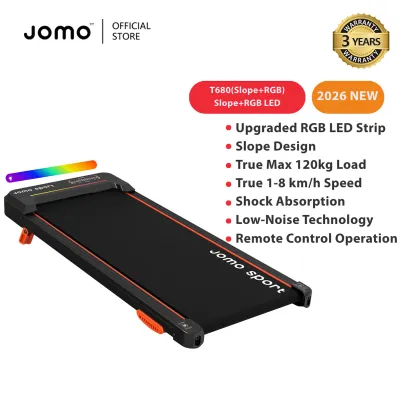
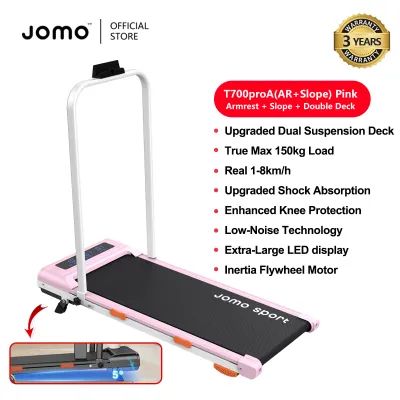
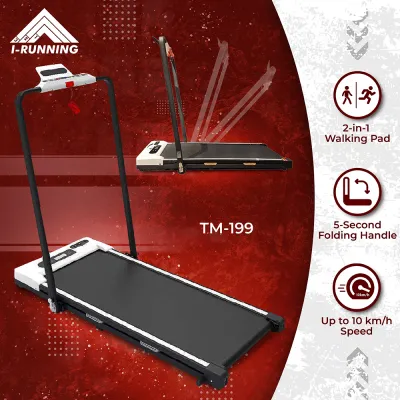
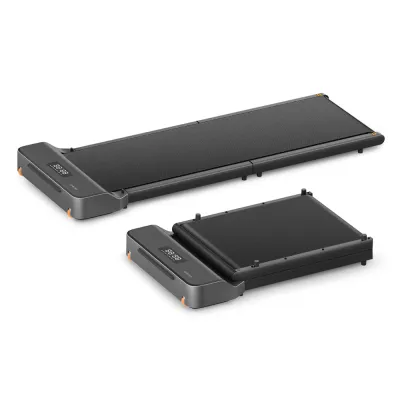
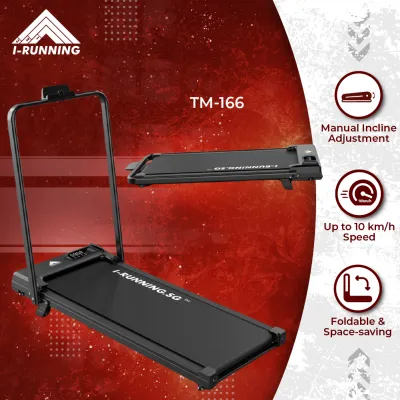
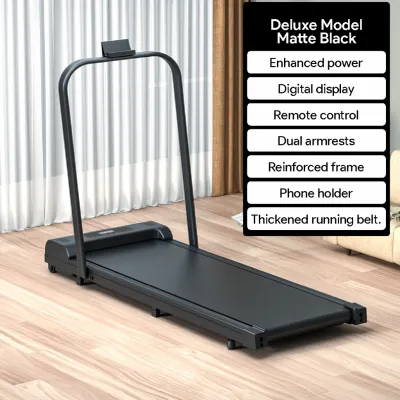
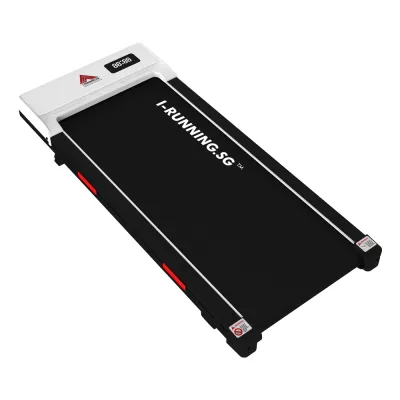
Prices are valid at publication and may change. Please refer to the product page for the latest price.
Next, map out the active footprint and the surrounding clearance zones. For safety reasons, a treadmill requires open space behind the belt to prevent injury in the event of a slip or fall. Ensure there is at least 1 meter of unobstructed space behind the rear roller, keeping it clear of walls, cabinets, or glass doors. Walkways in HDB flats are often narrow, so you must also verify that the treadmill does not block primary paths or door swings when in use. If your home office doubles as a bedroom or living room, this clearance planning is vital to maintaining a functional household flow.
Storage configuration is another critical factor for small apartments. If you plan to store the treadmill vertically, check if the brand includes built-in self-standing support brackets or if it relies on leaning against a wall. Leaning units must be secured properly to prevent them from tipping over, especially in households with children or pets. If you prefer horizontal storage, measure the clearance beneath your sofa, bed, or television console. Many under desk models have a profile height of 11 to 15 centimeters, which may require you to raise your furniture slightly using risers if you want to slide the unit completely out of sight.
Finally, consider the structural and cosmetic impact on your flooring. HDB flats commonly feature vinyl wrap, laminate, parquet, or polished porcelain tiles. Treadmills generate localized heat, friction, and heavy point loads through their rollers and leveling feet. Over time, this pressure can cause permanent indentations, scratches, or discoloration on softer flooring materials like vinyl and wood. To prevent this damage, you must plan to place a high-density, non-slip equipment mat beneath the treadmill to distribute the weight evenly and absorb operational vibrations.
Key Evaluation Criteria for Under Desk Treadmill Brands
When comparing different under desk treadmill brands, you must learn to read the technical specification sheets critically. Brands often highlight peak horsepower (PHP) in their marketing materials, which represents the maximum power the motor can produce for a brief moment under extreme load. For a walking treadmill, this figure is misleading. Instead, look for the continuous duty motor rating, expressed as Continuous Horsepower (CHP). A motor with a low continuous rating (under 1.25 CHP) running at slow walking speeds under a heavy load will overheat quickly because its internal cooling fan spins too slowly to dissipate heat. For long-term durability, prioritize brands that specify a continuous rating of 1.5 CHP to 2.0 CHP.

Belt dimensions directly affect your safety and walking comfort. A belt that is too short or narrow forces you to constantly look down to check your positioning, which defeats the purpose of multitasking. If you are under 170 centimeters tall, a belt length of 100 centimeters may be sufficient, but taller users with longer strides should look for a belt length of 110 to 120 centimeters. The belt width should be at least 40 to 45 centimeters to accommodate your natural stride width and shoe size without your feet catching on the stationary side rails.
Frame construction and weight capacity are key indicators of overall stability. Lightweight aluminum frames are highly portable and easy to roll into storage, but they may flex under heavier users, which increases belt friction and strains the motor. Heavy-duty steel frames offer superior rigidity and a more stable walking experience, but they are much harder to maneuver. Cross-reference the manufacturer’s stated weight capacity with the unit’s net weight. If a treadmill weighs less than 20 kilograms but claims a weight capacity of 120 kilograms, the deck may flex excessively during use, leading to increased noise and accelerated wear.
Noise control is paramount in high-density HDB blocks where structural vibrations travel easily through concrete walls and floors. Look for brands that provide independent decibel (dB) ratings, aiming for units that operate under 50 dB at walking speeds. Keep in mind that motor hum is only one part of the acoustic profile; the sound of your shoes striking the deck and the friction of the belt sliding over the platform often generate more noise than the motor itself. To minimize this, look for brands that feature multi-layered running belts and integrated shock-absorbing rubber cushions beneath the deck to dampen impact sounds.
Matching Brand Specifications to Your Daily Routine
Your walking habits and work requirements should dictate the specific features you prioritize. If you intend to walk exclusively while typing, reading, or participating in video calls, you will require very low, consistent speeds. Most professionals find that speeds between 1.0 km/h and 2.5 km/h are ideal for maintaining focus and typing accuracy without causing excessive head movement. However, if you also want to use the treadmill for active power walking or light jogging during your lunch breaks, ensure the brand’s speed range extends up to 6.0 km/h or 8.0 km/h.
The control interface is a crucial safety and ergonomic consideration. When you are focused on a computer screen, you need an intuitive way to adjust speed or stop the machine instantly. A physical remote control with a wrist strap or a desk-mounted console is highly recommended. Avoid brands that rely solely on smartphone applications for basic operations; touchscreens can be unresponsive when your hands are sweaty or occupied, creating a safety hazard if you need to perform an emergency stop. Physical buttons allow you to adjust settings by feel without looking away from your work.
Additionally, evaluate your tracking and connectivity needs. Some brands offer built-in LED displays on the motor cover that cycle through speed, distance, time, and step count. Others feature Bluetooth connectivity to sync your workout data with proprietary fitness apps or third-party ecosystems like Apple Health, Garmin, or Fitbit. If you already wear a smartwatch or fitness tracker, built-in treadmill connectivity may be redundant. Opting for a simpler model with a basic, easy-to-read console can save you money while reducing the number of electronic components that could potentially fail over time.
Navigating Warranties, After-Sales Support, and Delivery in Singapore
Because under desk treadmills are heavy mechanical devices subject to continuous wear, post-purchase support is a critical factor in your decision. Purchasing a cheap, unbranded treadmill from an overseas seller on an online marketplace may seem cost-effective initially, but it carries significant risks. If a motor or control board fails, shipping a 25-kilogram machine back to an overseas warehouse for repairs is financially impractical. Prioritize brands that have authorized local distributors in Singapore with physical service centers and a steady supply of replacement parts.
When reviewing warranty terms, read the fine print carefully. A “lifetime warranty” often only applies to the metal frame, while the motor, electronics, and wear-and-tear parts (such as the belt and deck) may only be covered for 6 to 12 months. Ensure the warranty includes on-site servicing, meaning a technician will visit your HDB flat to diagnose and repair the machine. Carrying a heavy treadmill to a service center yourself is highly inconvenient and can result in accidental damage during transport.
Delivery logistics also require careful planning. HDB estates can present unique delivery challenges, such as split-level lift landings, narrow corridors, or multi-step entrances. Confirm whether the retailer’s delivery fee includes door-to-door service, lift access, unboxing, and basic assembly. Some sellers charge additional fees for “staircase carry” if your unit is located on a floor not directly served by a lift. Furthermore, if you are replacing an old piece of fitness equipment, ask if the retailer offers disposal services to save you the hassle of arranging a bulky item removal with your town council.
Building Your Conditional Shortlist
To find the best under desk treadmill for your home, you should establish a systematic filtering process based on your unique constraints. Avoid making a decision based solely on aesthetic appeal or promotional pricing. Instead, follow these structured steps to build a reliable shortlist:
- Step 1: Define Your Hard Limits. Write down your maximum allowable treadmill length, width, and height based on your desk clearance and storage space. Note your exact body weight and the maximum noise level your household can tolerate.
- Step 2: Filter by Technical Specifications. Browse local retailers and authorized brand websites, immediately eliminating any models that do not publish clear, verifiable specifications for continuous motor power (CHP), belt dimensions, net weight, and weight capacity.
- Step 3: Assess the Local Support Infrastructure. Remove any brands from your list that do not offer a local warranty of at least 12 months covering both parts and on-site labor in Singapore.
- Step 4: Compare Total Cost of Ownership. Calculate the complete cost of your purchase, including the upfront price of the treadmill, delivery and assembly fees, the cost of a high-density floor mat, and ongoing maintenance supplies like silicone lubricant. Compare the final candidates based on this total value rather than the base price alone.
Frequently Asked Questions (FAQ)
Can I use an under desk treadmill on vinyl or laminate flooring common in HDBs?
Yes, you can use an under desk treadmill on vinyl or laminate flooring, but you must take active precautions to prevent damage. These flooring materials are susceptible to warping, scratching, and indentation under heavy, vibrating loads. Always place a high-density PVC or rubber equipment mat beneath the treadmill to distribute its weight and absorb operational vibrations. This mat also prevents the treadmill’s rubber feet from chemically reacting with and staining your floor. Additionally, ensure the floor is completely clean before placing the mat, as trapped grit can act like sandpaper under the vibrating machine.
Do under desk treadmills require regular maintenance like lubrication?
Yes, regular lubrication is essential to keep your treadmill functioning smoothly and to extend the lifespan of the motor and control board. Without proper lubrication, friction increases between the walking belt and the deck, causing the motor to draw more electrical current and overheat. Refer to the manufacturer’s manual for the exact maintenance schedule, which typically recommends lubrication every 3 to 6 months or after every 100 kilometers of use. Only use 100% pure silicone lubricant approved for treadmills; never use household lubricants like WD-40, which can degrade the belt material and damage the deck coating.
How do I manage the power cord safely in a compact home office?
Safe cable management is vital to prevent tripping hazards and electrical overloads in tight HDB workspaces. Route the power cord flat along the floor using heavy-duty rubber cable protector ramps or secure it under your desk using cable trays. Ensure the cord has enough slack so you can slide the treadmill in and out of storage without straining the plug or the machine’s power inlet. Always plug the treadmill directly into a dedicated wall outlet. If you must use an extension board, ensure it is rated for high-draw appliances and avoid plugging other high-wattage devices, such as portable air conditioners or space heaters, into the same board to prevent overloading the circuit.
Community discussion
Share your experience or ask a question. Comments are reviewed before publication.