
Choosing between a feather and a nylon badminton shuttle depends primarily on your skill level, budget, and playing environment. Nylon shuttles offer exceptional durability and cost-effectiveness, making them the standard choice for beginners, recreational players, and outdoor sessions. Feather shuttles, crafted from natural goose or duck feathers, provide the authentic flight trajectory, rapid deceleration, and crisp tactile feedback required for competitive and advanced indoor play.
The physical construction of each shuttle dictates how it behaves in the air. A feather shuttle features overlapping natural feathers secured to a cork base. This design creates high aerodynamic drag, causing the shuttle to fly fast initially and then decelerate sharply at the end of its arc. In contrast, a nylon shuttle utilizes a synthetic plastic skirt. The skirt is more flexible and does not collapse or expand in the same manner as natural feathers, resulting in a more gradual deceleration and a flatter, more predictable trajectory over longer distances.
The impact feel and sound also differ significantly. Striking a natural feather shuttle produces a distinct, sharp “crack” that provides immediate auditory feedback to the player, helping them gauge the quality of their contact. The solid cork base combined with the rigid feather shafts transfers energy cleanly to the racket stringbed. A nylon shuttle, even when paired with a natural cork base, tends to feel slightly heavier or “mushier” upon impact, producing a duller thud. This difference in tactile response directly influences a player’s ability to execute delicate net play and precise slices.
Products mentioned in this guide
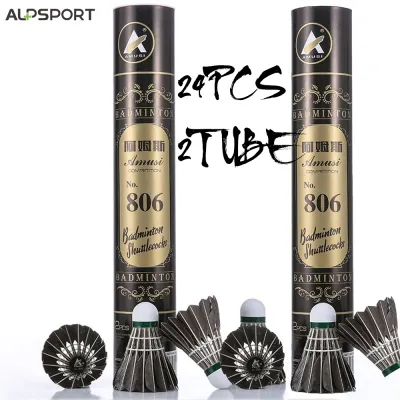
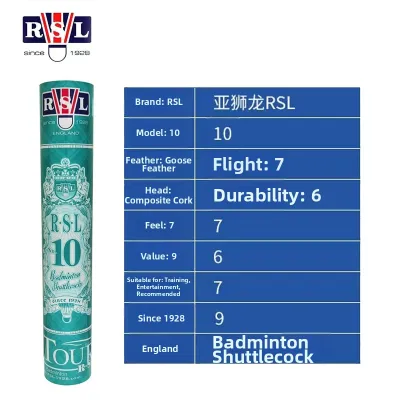


![[IN SG STOCK]Supreme RSL Fresh Stocks Badminton Shuttlecock](https://img.lazcdn.com/g/p/d3c92ca4d78f06e401b36003104cb337.jpg_400x400q80.jpg_.webp)

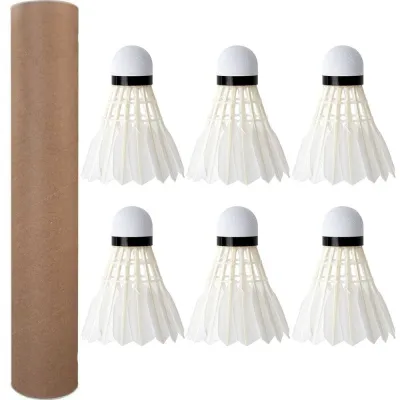
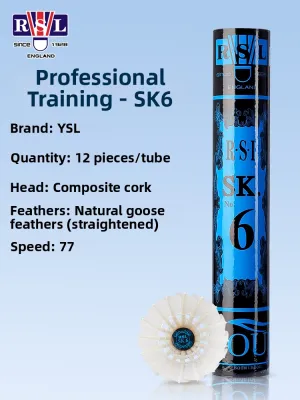
Prices are valid at publication and may change. Please refer to the product page for the latest price.
Matching the Shuttle to Your Skill Level
When starting out in badminton, developing consistent hand-eye coordination and clean racket contact is the primary goal. Beginners frequently hit the shuttle with the frame of the racket rather than the sweet spot of the stringbed. These mishits are highly destructive to natural feathers, often snapping the shafts instantly and rendering the shuttle unusable. Nylon shuttles are highly forgiving in this stage; their synthetic skirts can bend and deform during a mishit without tearing or breaking, allowing novice players to continue rallies without constantly stopping to replace damaged equipment.
As players transition to the intermediate level, their focus shifts toward developing control, consistent flight paths, and a wider variety of shots. At this stage, players begin to notice the limitations of synthetic skirts, particularly during clears and drops. Intermediate players benefit from experimenting with hybrid shuttles or entry-level feather options to bridge the gap. This transition helps them learn how to control the shuttle’s speed and adjust their swing power, as natural feathers require a slightly different touch to achieve the desired depth on the court.
For advanced and competitive players, natural feather shuttles are indispensable. High-level badminton relies heavily on subtle techniques such as sliced drop shots, net tumbles, and deceptive cross-court clears. The overlapping structure of natural feathers allows the shuttle to spin rapidly when sliced, a physical behavior that synthetic skirts cannot replicate accurately. The rapid deceleration of a feather shuttle also ensures that hard smashes remain within the court boundaries, whereas a nylon shuttle hit with the same force might fly out of bounds due to its flatter trajectory.
Evaluating Durability, Cost, and Playing Frequency
The lifespan of a badminton shuttle directly impacts the ongoing cost of the sport. A single nylon shuttle can often withstand multiple sessions of intense play, showing only minor wear such as slight scuffing or minor warping of the plastic skirt. Under the same conditions, a single feather shuttle may only last for a few games—or even just a few rallies if subjected to hard smashes and frequent mishits by powerful players. Once a single feather on a natural shuttle breaks or bends, its flight path becomes unstable, requiring immediate replacement.

While a tube of nylon shuttles and a tube of feather shuttles may have different upfront prices in S$, the true cost is best measured on a cost-per-hour basis. Because nylon shuttles last significantly longer, a player might only use one or two shuttles over several weeks of casual play. Conversely, a group of advanced players using feather shuttles might go through an entire tube or more during a single two-hour session. Players must calculate their budget based on how quickly they destroy shuttles rather than simply comparing the retail price of the tubes.
Playing frequency and physical strength are critical variables in this financial equation. Players who step onto the court multiple times a week and possess powerful smash techniques will find that their feather shuttle consumption escalates rapidly. If you are playing recreationally with family or friends, the durability of nylon ensures that your equipment expenses remain low and predictable. For those training seriously, the cost of natural feathers is a necessary investment to ensure that training conditions match tournament environments.
Adjusting for Venue and Environmental Conditions
The choice of venue heavily influences which shuttle you should bring to the court. Outdoor environments, such as parks, void decks, or open-air community courts, are subject to wind currents and uneven airflow. Natural feather shuttles are highly sensitive to wind; even a gentle breeze can catch the feathers and ruin the flight path. Furthermore, outdoor surfaces can quickly damage natural feathers upon landing. Nylon shuttles, being heavier and more structurally resilient, are far better suited for outdoor recreational play where wind resistance and durability are paramount.
Inside dedicated badminton halls, environmental factors like temperature and humidity play a major role in how a shuttle behaves. In tropical regions like Singapore, high humidity and warm temperatures are common in non-air-conditioned community center courts, which causes shuttles to fly faster and further. Conversely, in air-conditioned halls where the air is cooler and drier, shuttles experience more resistance and fly slower. Players must check the manufacturer’s speed ratings on the tube to select a shuttle speed that matches their local hall conditions.
Most manufacturers label their shuttle tubes with speed numbers, typically ranging from 75 to 79 (or 1 to 5 depending on the brand’s system). A lower number indicates a slower shuttle, suitable for warm or high-altitude environments, while a higher number indicates a faster shuttle, designed for cold or humid conditions. If you find that your clears are consistently falling short despite clean contact, switching to a slightly faster speed rating can help achieve the correct depth without forcing you to overexert your shoulder and wrist muscles.
Final Decision Framework: Which Badminton Shuttle to Buy
To finalize your purchase, consider a structured approach based on your specific playing conditions and goals.
Choose Feather if: You are playing in organized indoor leagues, training for official tournaments, or have developed advanced racket skills that require precise spin, drop shots, and authentic flight deceleration. If your budget allows for regular replacements and you prioritize playing quality over long-term durability, natural feathers will provide the optimal badminton experience.
Choose Nylon if: You are a beginner learning the basics, a casual player hosting recreational games, or someone who primarily plays outdoors. Nylon is also the ideal choice for coaching clinics where high-volume hitting drills would make natural feathers financially impractical.
Verify first: Before purchasing a large quantity of shuttles, always check with your local club, league organizers, or tournament directors. Many social groups and competitive leagues have specific rules regarding the exact type, brand, or speed rating of the shuttle permitted for their sessions, and verifying these requirements beforehand will prevent unnecessary purchases.
Frequently Asked Questions (FAQ)
Can I use nylon shuttles for official tournaments?
Most official tournaments sanctioned by national or international badminton governing bodies mandate the use of natural feather shuttles to ensure standard flight dynamics and fair competition. However, some local community tournaments, school leagues, or recreational club matches may permit or even require nylon shuttles to manage costs and ensure durability. Always consult the specific tournament rulebook or event organizers to verify the approved equipment list before registering.
How do I store feather shuttles to maintain their condition?
Natural feather shuttles are highly sensitive to moisture levels and can become brittle if stored in dry, hot environments. To prolong their lifespan, store the tubes vertically in a cool, dark place away from direct sunlight or air conditioning vents. Many players use specialized humidifying techniques, such as storing the shuttles in a humidified container or lightly steaming the feathers before play, to restore moisture and make the feathers more resilient to impact. Always check the manufacturer’s care instructions on the packaging.
What do the speed numbers on shuttlecock tubes mean?
The speed numbers printed on shuttlecock tubes indicate the flight speed and distance the shuttle will travel under specific environmental conditions. Lower numbers represent slower shuttles designed for warm, humid, or high-altitude environments where the air is thin. Higher numbers represent faster shuttles meant for cold, dry, or sea-level conditions where the air is denser. Players should consult the manufacturer’s speed chart to match the rating to their local playing venue’s temperature and humidity.
Community discussion
Share your experience or ask a question. Comments are reviewed before publication.