
Quick Answer: Which Shuttlecock Should You Buy?
To choose the right shuttlecock, you must evaluate your playing level, budget, and where you play. If you participate in competitive matches, train in structured club sessions, or prioritize precise net control and authentic flight trajectories, feather shuttlecocks are the standard choice. Their natural design allows for a sharp deceleration and a steep drop that synthetic alternatives cannot fully replicate. However, you must verify specific tournament or club regulations before purchasing, as official leagues strictly dictate approved materials, brands, and speed ratings.
Conversely, if you are a beginner learning the basic strokes, a casual player enjoying recreational games, or an instructor looking for high durability during high-repetition training drills, nylon shuttlecocks are highly recommended. They withstand frequent mishits without losing their structural integrity, offering a much longer lifespan and lower long-term costs. By matching the shuttlecock material to your current skill level and playing environment, you can optimize both your performance and your budget.
Material and Construction: What Makes Them Different?
The fundamental differences in performance and durability between these two types of shuttlecocks stem directly from their physical construction and raw materials. A traditional feather shuttlecock is crafted using 16 individual feathers, typically sourced from the wings of geese or ducks. These feathers are carefully selected, aligned, and bound together with thread and adhesive, then inserted into a natural cork base. Because natural feathers have organic variations in thickness, curve, and strength, manufacturers must sort them meticulously to ensure aerodynamic balance. The natural cork base provides a solid, responsive contact point that transfers energy cleanly from the racket stringbed.
Products mentioned in this guide
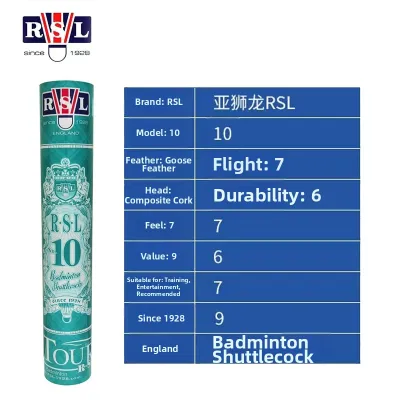
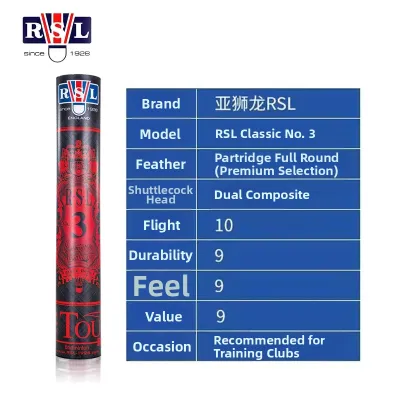
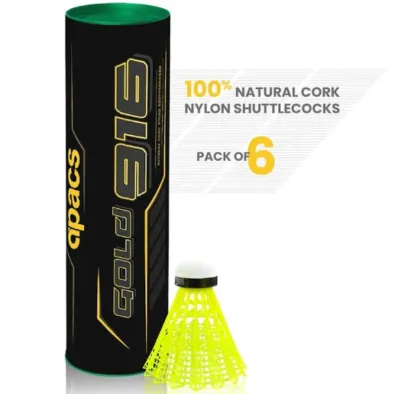
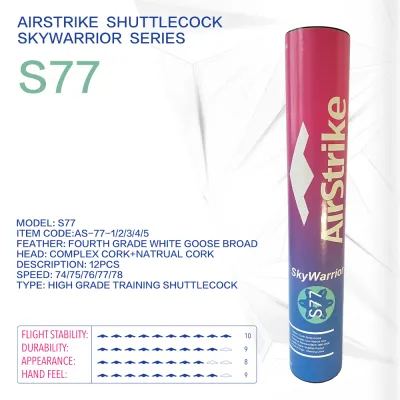
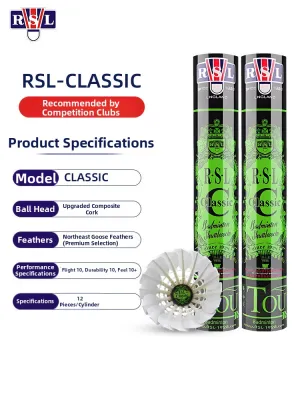
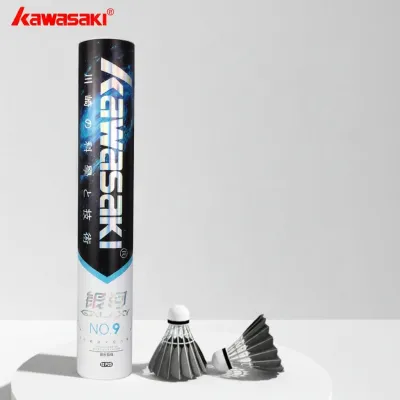
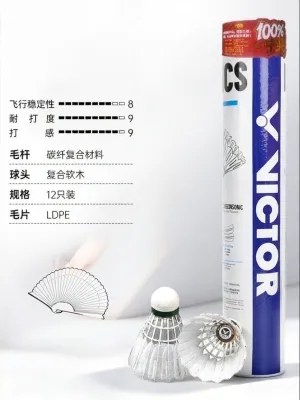
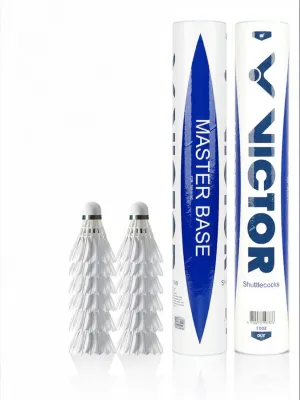
Prices are valid at publication and may change. Please refer to the product page for the latest price.

In contrast, a nylon shuttlecock features a synthetic skirt molded from high-grade nylon or polyamide materials. This skirt mimics the conical shape of a feathered shuttlecock but is manufactured as a single, uniform piece, eliminating the natural variations found in organic feathers. The base of a nylon shuttlecock is typically made of synthetic foam or a composite cork material. This synthetic construction ensures exceptional manufacturing uniformity, meaning every shuttlecock in a tube will perform almost identically out of the box.
When shopping, you should check the product packaging and labels to verify the material grades. High-quality feather models will specify whether they use goose or duck feathers, with goose feathers generally offering greater structural resilience. For nylon models, look at the base material listed on the packaging; a natural cork base paired with a nylon skirt offers a feel closer to a traditional feather shuttlecock, while a foam base is more common in entry-level recreational options.
Flight and Performance: How They Feel on the Court
The physical differences in construction translate directly to how each shuttlecock behaves in the air and feels upon impact with your racket. The flight trajectory of a feather shuttlecock is characterized by a sharp, clean arc. When struck with force, such as during a smash or a clear, the feathers flare outward slightly to create drag, causing the shuttlecock to slow down rapidly and drop almost vertically at the end of its flight path. This steep drop allows players to execute precise baseline shots and tight drop shots with high accuracy.
Nylon shuttlecocks, on the other hand, exhibit a flatter and longer flight trajectory. Because the synthetic skirt is more flexible and does not create the same aerodynamic drag as individual natural feathers, a nylon shuttlecock maintains its speed longer throughout its flight. This can cause shots to travel deeper into the court than expected, requiring players to adjust their power and timing.
Spin and control also differ significantly. The overlapping structure of natural feathers causes the shuttlecock to spin rapidly along its longitudinal axis during flight. This natural spin stabilizes the trajectory and allows advanced players to execute slicing net shots, where the shuttlecock tumbles unpredictably over the tape. Synthetic skirts do not spin as intensely or deform in the same manner, which limits the execution of advanced spinning net play.
To ensure consistent performance, you must pay attention to speed ratings. Manufacturers print speed numbers on the tube packaging, usually ranging from 75 to 79 for feather models, or color-coded bands (such as green, blue, or red) for nylon models. You should locate these ratings on the packaging to match your local playing conditions, rather than assuming all shuttlecocks fly at a universal speed.
Durability and Value: Balancing Lifespan and Budget
Evaluating the long-term cost of your badminton sessions requires a clear understanding of how each material handles wear and tear. Feather shuttlecocks are notoriously fragile. A single mishit on the feathers rather than the cork base can bend or snap a shaft, instantly ruining the aerodynamic balance and causing the shuttlecock to wobble in flight. Furthermore, dry indoor environments can make natural feathers brittle. To prevent premature breakage, players often store feather shuttlecocks in humidified tubes or use specialized steaming techniques before play to restore moisture to the feathers.
Nylon shuttlecocks are exceptionally resilient. The synthetic skirt can withstand repeated heavy impacts, off-center hits, and scrapes against the floor or racket frame without tearing. While a nylon shuttlecock will eventually deform, stretch, or lose its shape over weeks of play, it remains usable for casual games long after a feather shuttlecock would have been discarded.
To make an informed financial decision, you should calculate your cost-per-session rather than comparing upfront retail prices. For example, a single high-quality feather shuttlecock might only last one or two intense games before needing replacement, meaning a group of players could easily go through an entire tube of 12 shuttlecocks in a single multi-hour session. In contrast, a single nylon shuttlecock can often last for multiple sessions. If you play several times a week, the cumulative cost of replacing broken feather shuttlecocks can become a significant ongoing expense, making nylon the more practical choice for recreational training and budget-conscious players.
The Decision Framework: Match the Shuttlecock to Your Needs
To select the ideal shuttlecock for your games, you can use a structured decision framework that evaluates your skill level, your playing environment, and your budget.
First, assess your current skill level and goals. Beginners who are still developing their hand-eye coordination and frequently hit the shuttlecock with the frame or the edge of the racket should stick to nylon. This prevents the frustration and high cost of destroying expensive feather shuttlecocks within minutes. Intermediate players who are transitioning to competitive club play can use nylon for high-volume practice drills and switch to mid-grade feather shuttlecocks for match play. Advanced players who rely on precise net play, deceptive slices, and authentic flight trajectories will find that only feather shuttlecocks meet their performance requirements.
Second, consider your playing environment and local climate. If you play outdoors in parks or open-air courts, wind resistance and physical durability are your primary concerns. Nylon shuttlecocks are far better suited for outdoor environments because they are less affected by light breezes and will not be ruined by contact with rough concrete, dirt, or moisture. If you play indoors, the local climate still plays a major role. In high-humidity regions like Singapore, the dense air can make shuttlecocks feel heavier and fly slower. In these conditions, you will need to select a slightly lighter speed rating (such as speed 76 or 77 for feathers, or a slow/medium nylon option) to ensure the shuttlecock travels the correct distance without requiring excessive physical effort.
Finally, balance your playing frequency with your budget. If you play casually once a month, a single tube of nylon shuttlecocks can easily last you a year or more. If you play three to four times a week in competitive groups, you must decide if the authentic feel of feather shuttlecocks justifies the recurring cost of purchasing multiple tubes each month. Many social clubs split the cost of feather shuttlecocks among players to make regular use more affordable.
Feather vs Nylon Shuttlecocks at a Glance
The following table provides a direct comparison of the key characteristics of feather and nylon shuttlecocks to help you make a quick, informed decision based on your specific playing needs.
| Feature | Feather Shuttlecocks | Nylon Shuttlecocks |
|---|---|---|
| Material Composition | Natural goose or duck feathers with a natural cork base | Synthetic nylon skirt with a foam or composite cork base |
| Flight Trajectory | Steep, natural drop with rapid deceleration and high spin | Flatter, longer flight path with consistent speed retention |
| Durability Profile | Fragile; susceptible to feather breakage from mishits or dry air | Highly resilient; withstands repeated impacts and mishits |
| Best Suited For | Competitive matches, advanced club play, and precision training | Beginners, casual outdoor games, and high-repetition drills |
| Relative Price Tier | Higher ongoing cost due to frequent replacements | Lower long-term cost due to exceptional durability |
Frequently Asked Questions (FAQ)
Can I use feather shuttlecocks for outdoor badminton?
You should generally avoid using feather shuttlecocks for outdoor badminton. Natural feathers are highly sensitive to wind, and even a light breeze can severely disrupt their flight path, making consistent play difficult. Additionally, playing on outdoor surfaces like asphalt, concrete, or grass exposes the fragile feathers to dirt, moisture, and rough impacts that will destroy them almost instantly. For outdoor games, nylon shuttlecocks are much more practical because their heavier synthetic skirts offer better wind resistance and can withstand contact with rough ground without tearing.
How do I know which speed rating to buy?
To choose the correct speed rating, you must check the numbers or color codes printed on the shuttlecock packaging. For feather shuttlecocks, speed ratings typically range from 75 (slowest, for hot or high-altitude areas) to 79 (fastest, for cold or low-altitude areas). In warm, humid climates like Singapore, a speed rating of 76 or 77 is standard because the warm air allows the shuttlecock to fly faster naturally. For nylon shuttlecocks, speed is indicated by color-coded bands on the collar: green represents slow speed, blue represents medium speed, and red represents fast speed. You should select the speed that matches your local temperature and playing venue to ensure a natural flight distance.
Community discussion
Share your experience or ask a question. Comments are reviewed before publication.